
Machine type
Vacuum Filling Machines
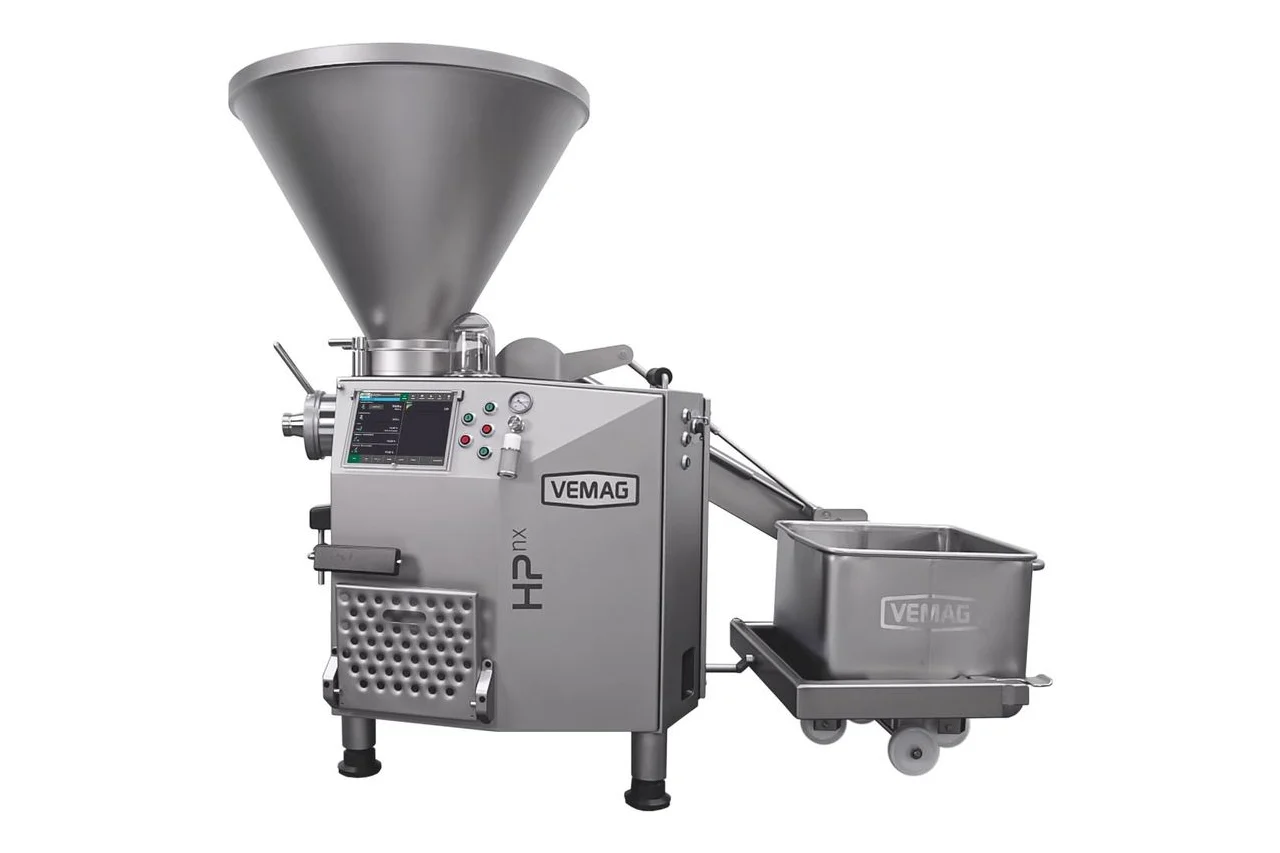
A vacuum filling machine, or vacuum filler, takes a pasty or chunky mass from a hopper and pushes it out through a filling horn or an attachment in portions of a set weight. A vacuum pump draws air out of the product while it is fed, which reduces air pockets, gives a denser and more even product and helps each portion come out at the same weight as the last.
- 11 Machines listed
- 7 Related industries
- 6 Related applications
Overview
About vacuum fillers
Inside the machine, a feeder in the hopper draws the mass into a double screw or a rotary vane pump. Both are positive-displacement pumps that move a fixed volume for each turn, so the controller can meter every portion precisely. What happens at the outlet depends on what is fitted to it: the same filler can stuff casings, link sausages, form burgers and balls, deposit into cans and trays, or divide dough.
Vacuum fillers sit at the centre of sausage, meat, bakery, pet food, prepared food and alternative-protein lines. Butchers and smaller producers usually run a compact machine with a smaller hopper, while industrial plants use larger fillers that drive complete lines, often through multi-lane attachments that split the flow to several outlets. Some also have an inline grinder, so the mass is ground and portioned in one pass.
If sausages are your main product, our guide sets out how to choose a sausage filler by output, casing calibre and the linking you need.
Brands in this category
Equipment
11 vacuum filling machines
The machines in the catalogue classed as vacuum fillers. Models with comparable published size or capacity figures are listed from smallest to largest; others follow in catalogue order. Open one for details or ask which suits your product.
Browse the full catalogue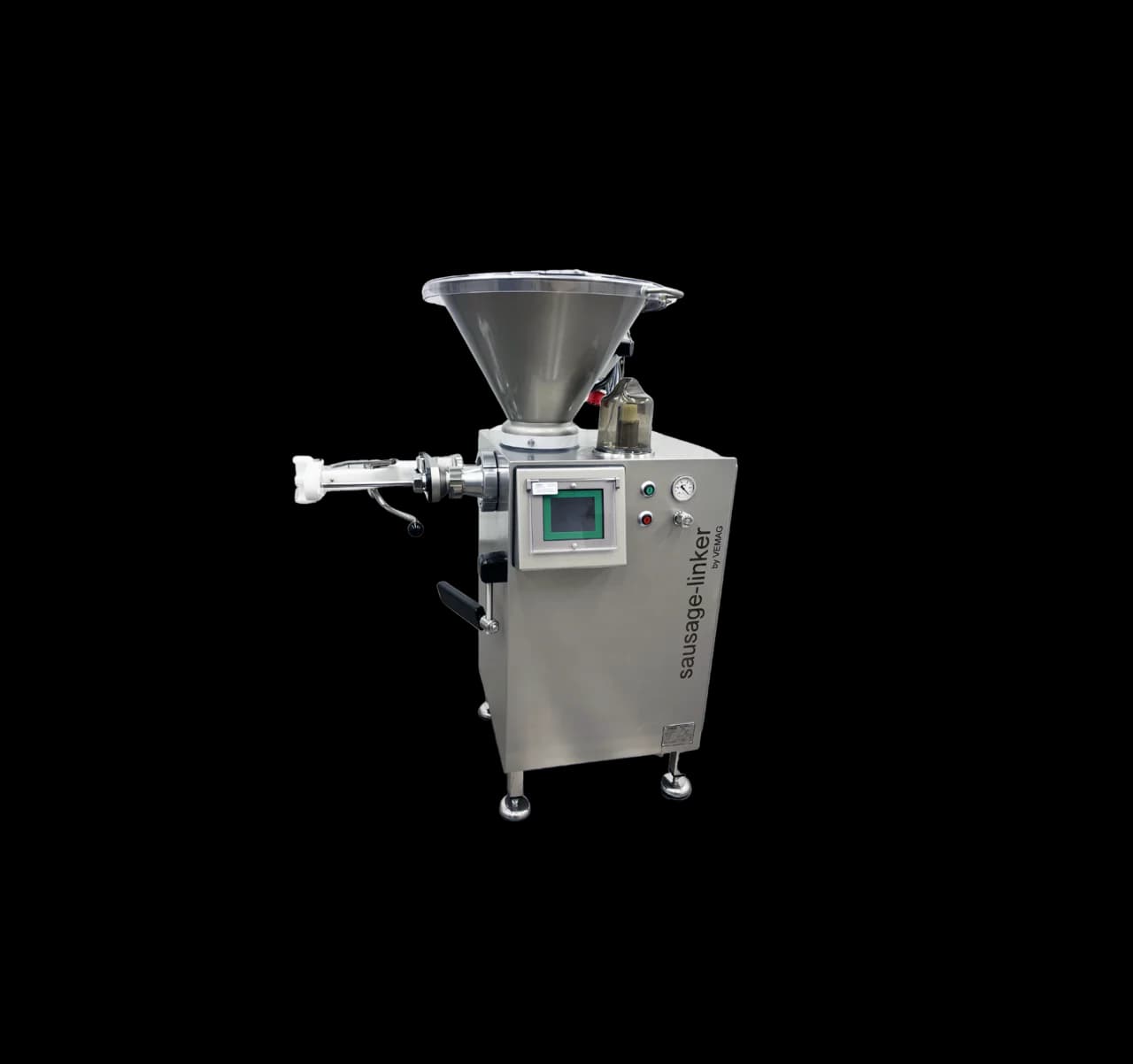
The range
VEMAG vacuum fillers, from butcher shop to industrial plant
Every vacuum filler in our catalogue is a VEMAG machine. They differ mainly in hopper size, feed system and how much product they move in an hour. The figures below come from each machine’s own listing. A published filling capacity is a maximum that depends on the feed element, the product and the portion, so read it as a ceiling rather than a working rate.
Buying equipment for sausage production? Compare our commercial sausage filling machines, then request a quotation for the filler and attachments you need.
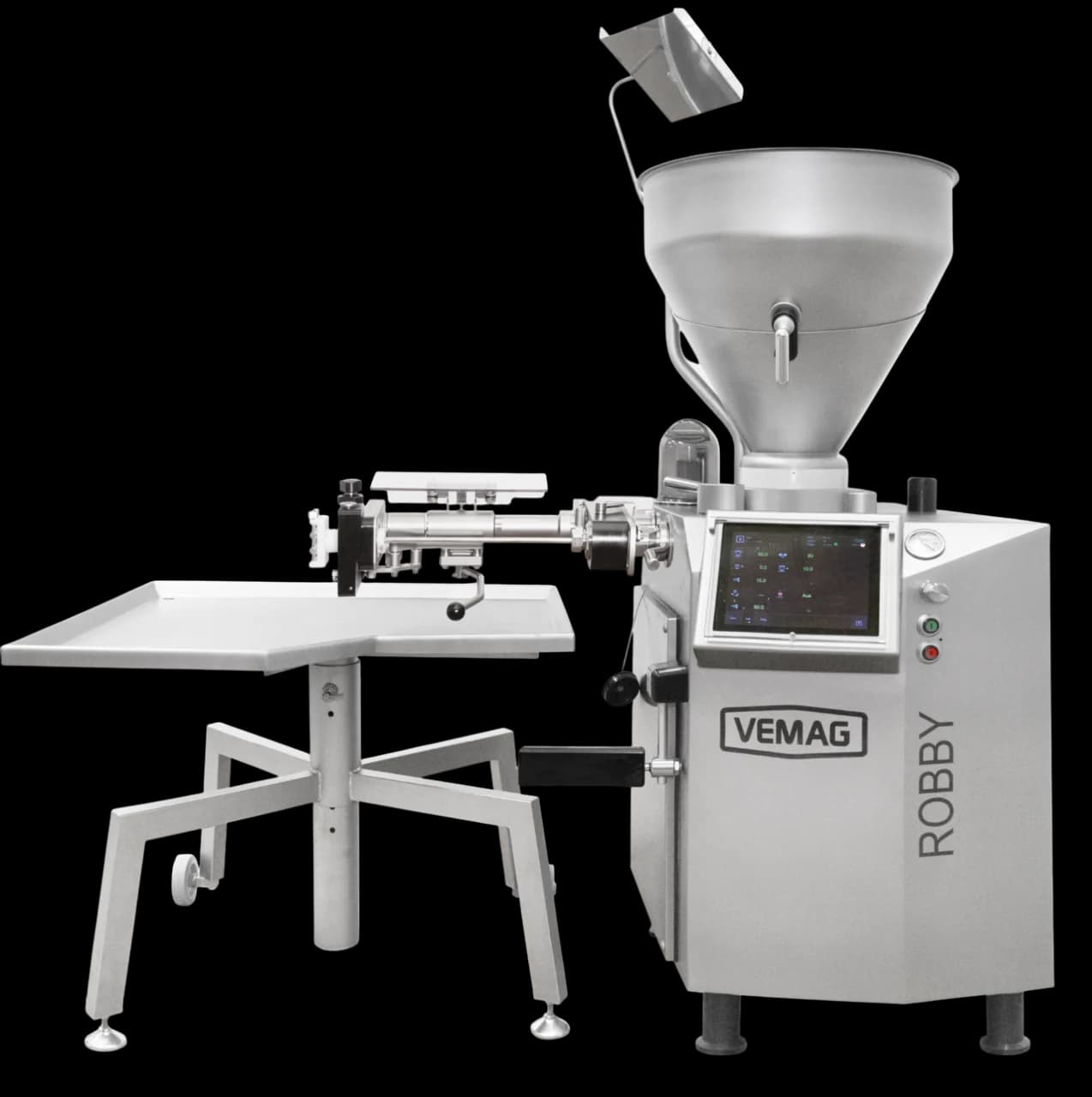
- Small batches and frequent changes: the Lucky Linker has a 40 l hopper and built-in linking, with a filling capacity of up to 2 t/h. Robby is the rotary vane model in the range, designed for smaller batches and frequent product changes, with a 105 l hopper and up to 2,300 kg/h.
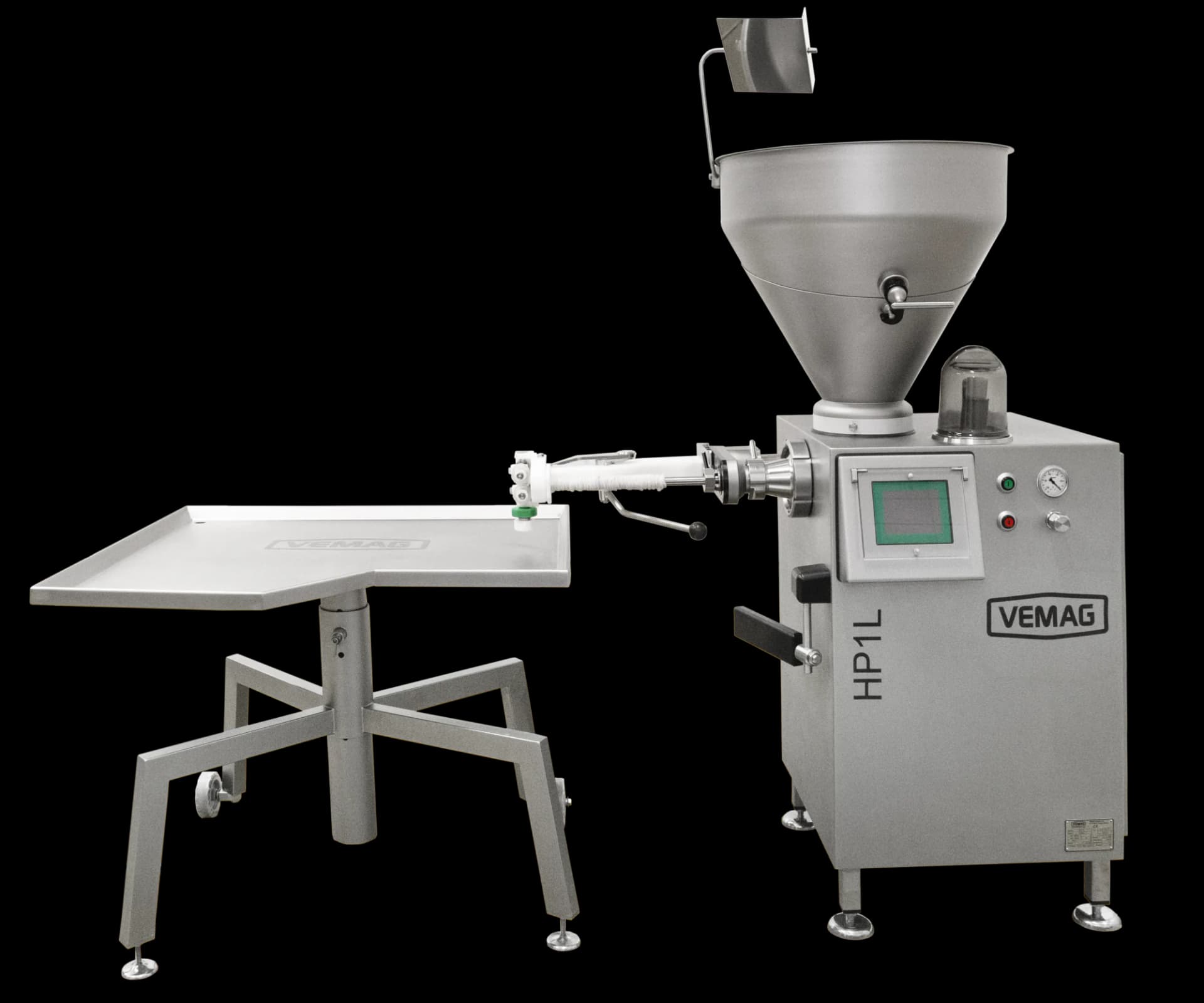
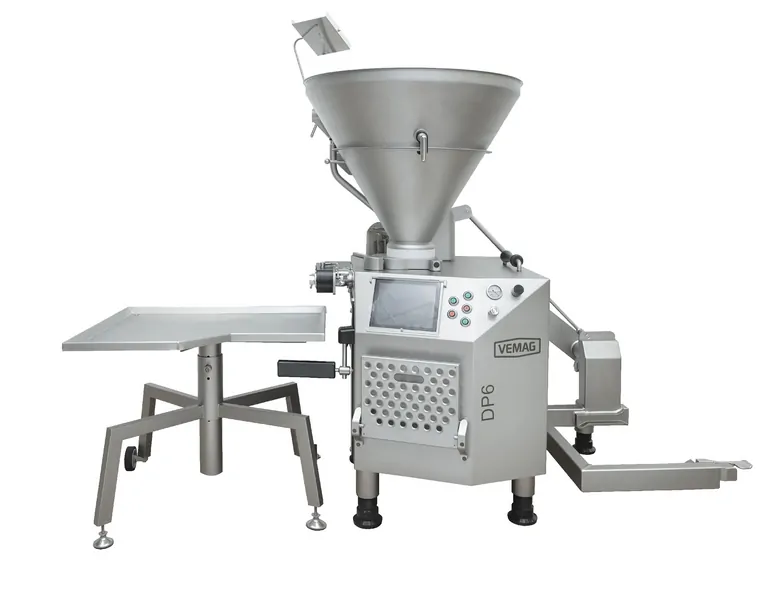
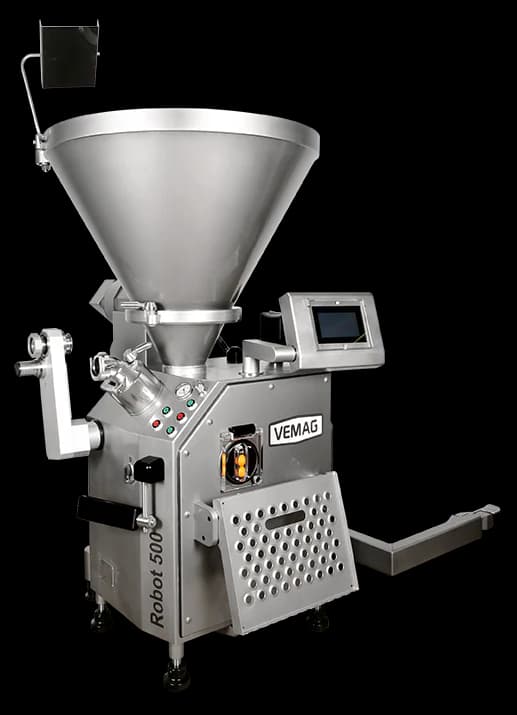
- Butcher shops and smaller producers: the HP1 is made for the butcher’s trade, with a 105 l split hopper and 2.0–2.6 t/h depending on the double screw fitted. The Robot 500 pairs VEMAG double screw technology with a hydraulic system and is listed as compatible with all current VEMAG attachments. The DP6 was developed together with master butchers and has a 250 l divided hopper and a feed rate of up to 2,700 kg/h, depending on the feed element.
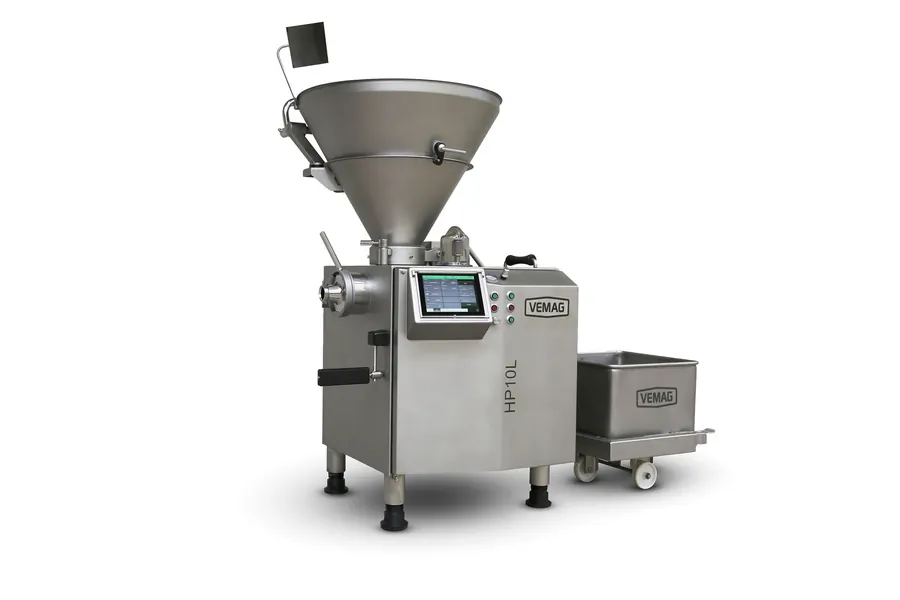
- Dedicated sausage production: the HP10L is a compact filler built around sausage production, with the feed system of VEMAG’s larger fillers, a 250 l hopper and a feed rate of up to 7,000 kg/h depending on the feed element.
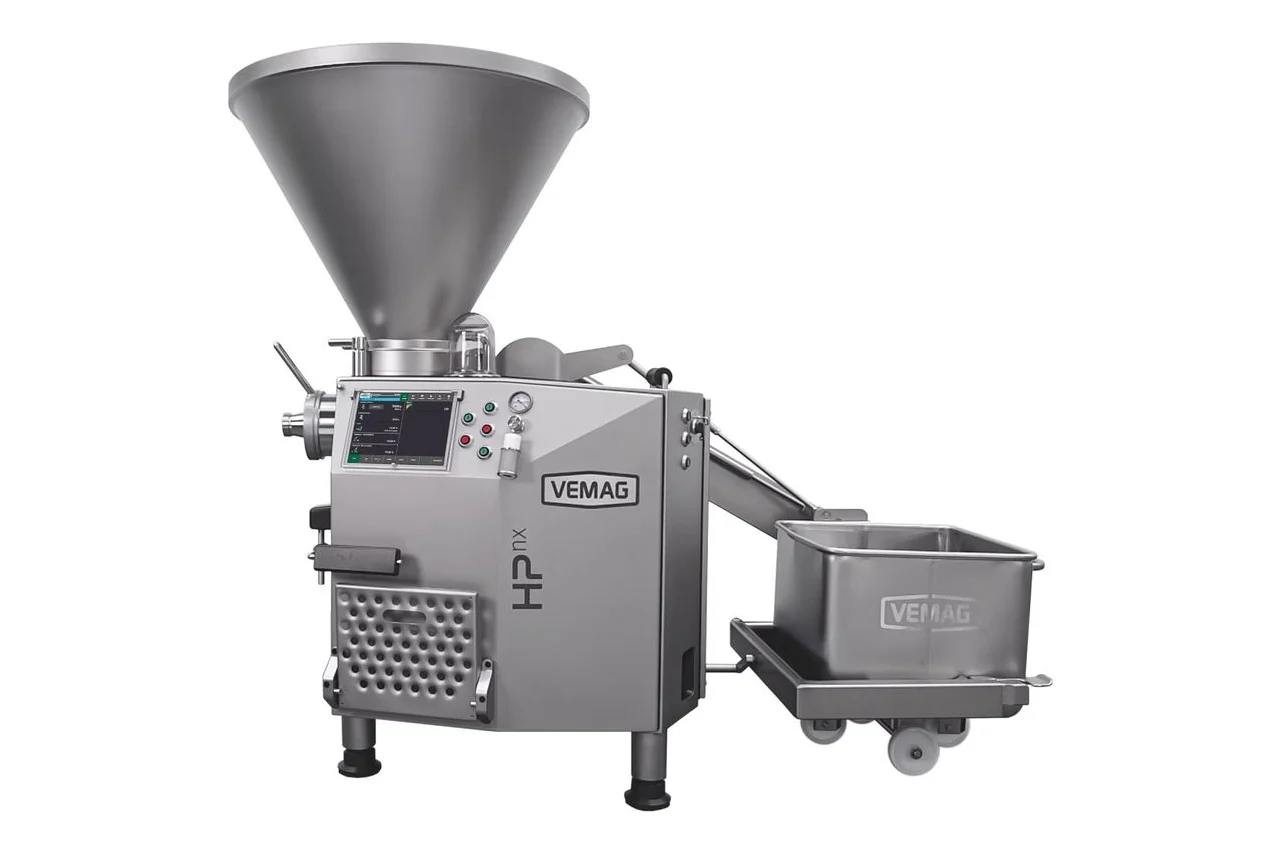
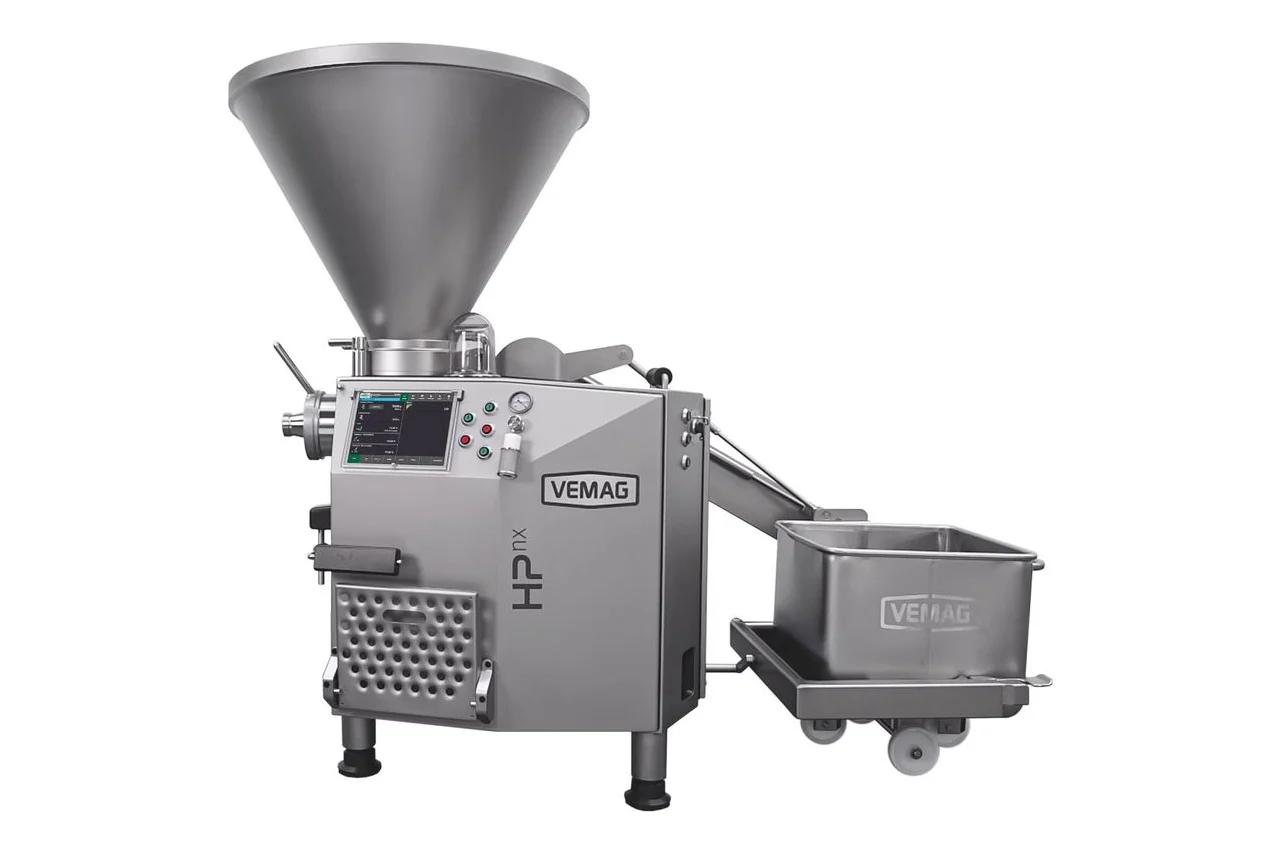
- The HPnx generation: the HP10NX, HP20NX and HP30NX portion from 1 g up to 99,000 g, stepless. The HP10NX has a 250 l hopper and a 16 m³ vacuum system; the HP20NX and HP30NX have 350 l hoppers, and the HP30NX a 40 m³ vacuum system.
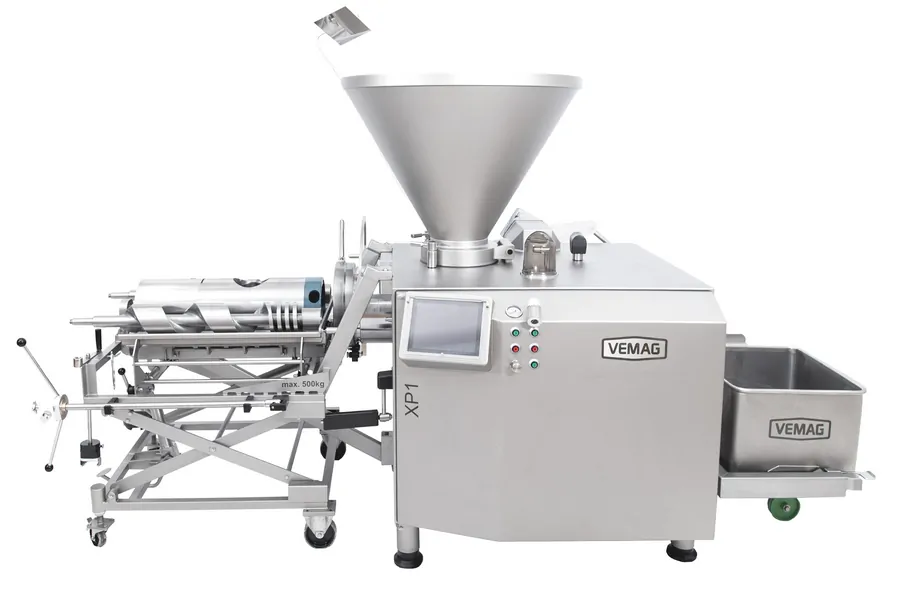
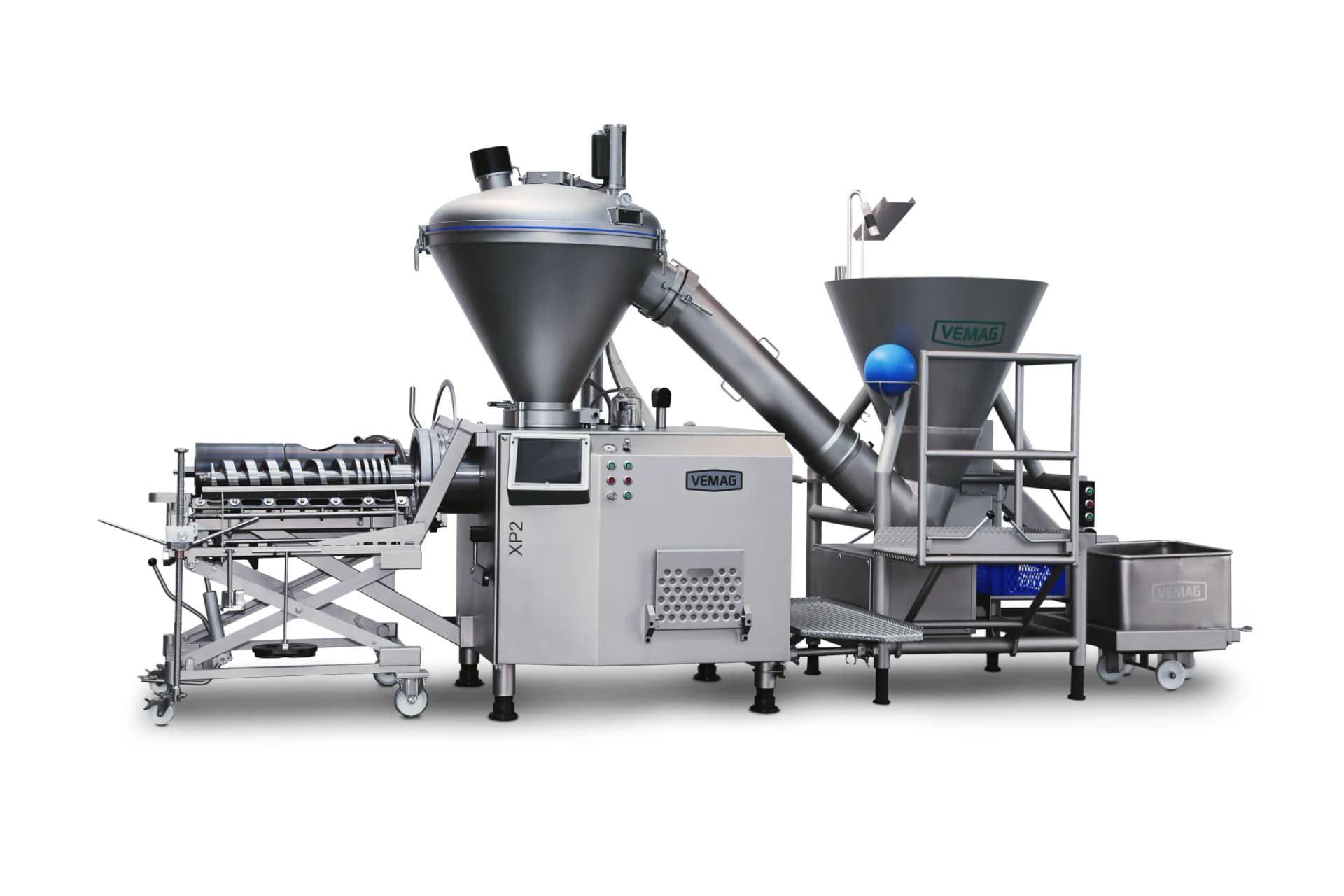
- Industrial volumes: the XP1 is designed for large quantities and high output, suits ham, whole-muscle products and boiled sausage, and has an inline grinder and a published filling capacity of 25 t/h. The XP2, with a 350 l hopper and an inline grinder, is mainly used for grinding in minced-meat production and for salami, and can process frozen meat; for continuous running, product has to be fed by belts or worm conveyors.
Our sausage filler buyer’s guide sets the same fillers side by side with their published power figures. Choose on hopper, feed system and what goes on the outlet as well as output, and ask us which filler suits your product.
On the outlet
What a vacuum filling machine can make
The filler meters the mass; what is fitted to its outlet decides the product. The attachments and outlet machines below are each described from their own listing on this site, to show what a VEMAG filler’s outlet can do. They are illustrations, not configurations we have supplied, and not every attachment suits every filler, so confirm the match for your machine with us.
- Casings and links: the DHV815 universal casing holder and the LPV802 length portioning device, which its listing describes as compatible with all the filling machines in the current range. The CC215 co-extrusion line forms sausages in alginate at calibres of 8–32 mm. The sausage linking and hanging page covers the rest of this equipment.
- Burgers, balls and skewers: the MPF818 manual former connects to the filling horn holder, makes rounds 60–120 mm across and is listed as compatible with any VEMAG filling machine. The BC237 Ball Control is an attachment for the HPnx fillers that makes balls, cylinders, ellipses and drop shapes from 1 g to 120 g, and the Skewer Former MSF931 portions product onto skewers and is listed for all VEMAG vacuum fillers. See portioning and forming.
- Mince: a Grinder 980 or Grinder 982 on the outlet grinds to final particle size as the filler portions, and can separate bone and sinew at the same time. The 980 is listed for the HP series and the Robot 500, depending on product, and the 982 for the HP series. The MMP220 minced meat portioner, also listed for the HP series, makes portions from 10 g to 3,000 g. See filler attachments.
- Cans, jars and cups: the FKL609 fills cans, jars and cups and is listed as fitting all VEMAG vacuum fillers. The FKF607 portions pasty and lumpy products by weight into cans, jars and cups, including coarse, sinewy products such as wet pet food. See depositors.
- Dough and bakery: the HP1 and Robot 500 are also listed under dough dividers and bakery machines. The Rotary Filling Head 863 portions rye, wholemeal and gluten-free doughs directly into moulds, and the FT722 filling table moves the baking tray as cookie doughs, batters, fillings and creams are portioned onto it or into tins and jars.
The line
Where a vacuum filler sits in a processing line
A vacuum filler is rarely the first or the last machine. The stages below illustrate a typical meat or sausage line, each linked to the equipment in our catalogue. Which stages you need, and in what order, depends on the product; this is not a line we have supplied or a set of machines matched to one another.
- Before the filler: grinders and mincers and mixer grinders prepare and season the meat, and bowl cutters and emulsifiers make the fine batter for cooked sausages.
- At the filler: the inline grinder on the XP1 and XP2, or a grinder head on the outlet of an HP-series filler, can take over part of that preparation in the same pass.
- After the filler: sausage linking and hanging machines finish the string, cooking and smoking equipment treats it, and food packaging machines seal the product.
Our guide to planning a processing line works through the stages around your product, and the equipment catalogue lists every machine by type, brand and application.
Next step
What to tell us before you choose a filler
A vacuum filling machine is specified around the product, so a quote starts with what you make rather than a model number. When you contact us, it helps to have:
- the products you make and their consistency: fine batter, coarse mince, whole-muscle pieces, dough or a mass with lumps;
- the portion weights, and the output you need on an ordinary day after changeovers and cleaning;
- what goes on the outlet: casings and calibres, a former, a can or cup filler, or dough portioning;
- your usual batch size and how often the product changes, which bears on hopper size and on a split or divided hopper;
- the power supply and floor space in the room, and what the filler will feed.
You can test your own raw materials and recipes at our Customer Centre before you decide. Once the filler is running, our service and spare parts teams support customers across Australia and New Zealand.
For meat-specific recipes and outlet configurations, compare vacuum fillers for meat.
For a Western Australian project, our vacuum fillers Perth guide combines filler selection with the product, access and site details to include in an enquiry.
For pet-food products, our pet food extruders guide explains feeding, portioning and coextrusion roles and the product brief to prepare.
Related
Industries and applications
Browse equipment by the food sector you work in, or by the product you make.
Equipment
Other machine types
Every machine type in the catalogue, with the number of machines listed under each.
Browse by brand- Portioning & forming machines17 machines
- Sausage linking, hanging & cutting24 machines
- Grinders & mincers16 machines
- Bowl cutters & emulsifiers5 machines
- Brine injectors23 machines
- Brine mixers & tanks7 machines
- Tumblers & massagers4 machines
- Tenderisers & flatteners3 machines
- Slicers & dicers9 machines
- Cooking, smoking & drying2 machines
- Defrosting & pasteurization1 machine
- Dough dividers & bakery machines11 machines
- Depositors7 machines
- Thermoformers & packaging20 machines
- Tray sealers6 machines
- Conveyors & line equipment9 machines
- Inspection & weight control11 machines
- Attachments & accessories24 machines
Contact
Talk to us about vacuum fillers
Ask for advice, a quotation or a consultation — by phone, by email or through the enquiry form.
- Australia(07) 3829 3868
- New Zealand+64 9 415 0137
- Salessales@vemag.com.au