
01Definition
What a bowl cutter does, and what an inline emulsifier does
A bowl cutter (often just called a cutter) is a round stainless steel bowl that turns slowly under a shaft of curved knives spinning at high speed. Every turn of the bowl carries the meat, fat, ice and seasoning back through the knives, so the product is reduced a little more on each pass. Stop early and you have a coarse chop with visible fat for salami; keep cutting and the same machine takes the mass down to a smooth, stable batter for frankfurts, polony and pâté.
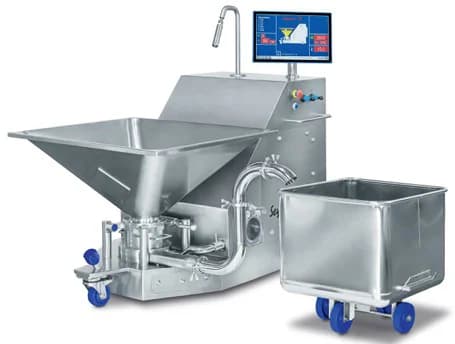
An inline emulsifier works on a flow instead of a batch. Product fed into its hopper is drawn through a set of fixed hole plates and rotating cutting plates and leaves the machine as a fine emulsion, ready for the filler. Seydelmann calls its version the Konti-Kutter: the KK 144 C Vacuum Konti Kutter is the emulsifier in our range.
Both are cutting and emulsification machines, and the two can also work together: the cutter builds the recipe, and the emulsifier gives the final fine texture at line speed. The sections below explain how to decide which one your products need, and at what size.
02Compare
Bowl cutter, inline emulsifier or mixing grinder?
The three machines overlap at the edges, which is why buyers searching for “cutter grinders” or “grinders and cutters” often end up comparing all of them. The table sets out what each one actually does to the product, in general terms; the machines listed under it are the ones in our catalogue.
| Row | Bowl cutter | Inline emulsifier | Mixing grinder |
|---|---|---|---|
| How it cuts | Curved knives on a fast shaft pass through product that the turning bowl carries round to them | Product is drawn through a stack of fixed hole plates and rotating cutting plates | A worm pushes the mixed batch through knives turning against a hole plate |
| Batch or flow | Batch: load, cut, unload | Continuous, fed from a hopper | Mixes a batch in the hopper, then grinds it in a steady stream |
| Texture it can reach | Anything from a coarse chop to a smooth emulsion, set by speeds and cutting time | Fine emulsions; the KK 144 C data sheet says coarse products are possible too | Mince at the grain of the last hole plate, not an emulsion |
| What goes in | Fresh, cooked and, on some models, pre-cut frozen meat, plus ice, fat, salt and seasoning | Material that has already been ground or mixed | Trim, fat and seasoning |
| Where it suits | Building recipes in one machine, with a wide spread of products and batch sizes | Long runs of fine sausage meat where a constant flow to the filler matters | Burger mince and fresh sausage meat at a set grain |
In the Vemag Australia catalogue
Bowl cutter
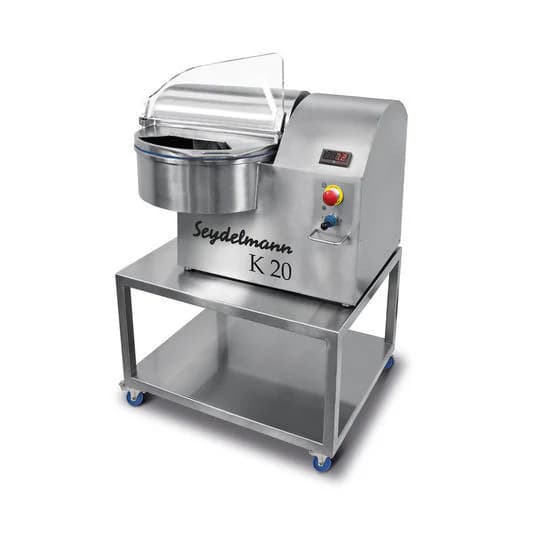
- K20Bowl Cutter
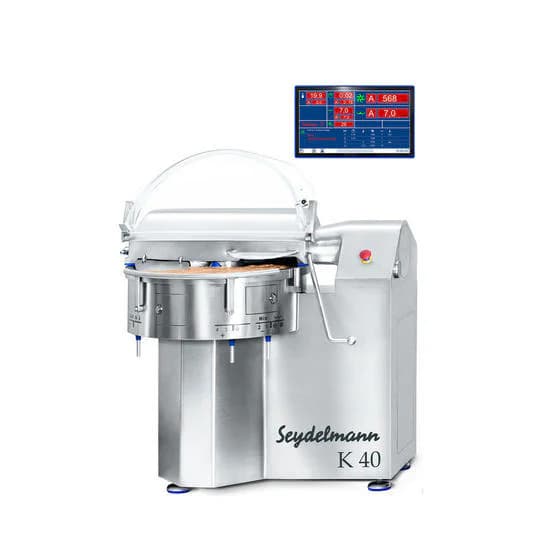
- K40Bowl Cutter
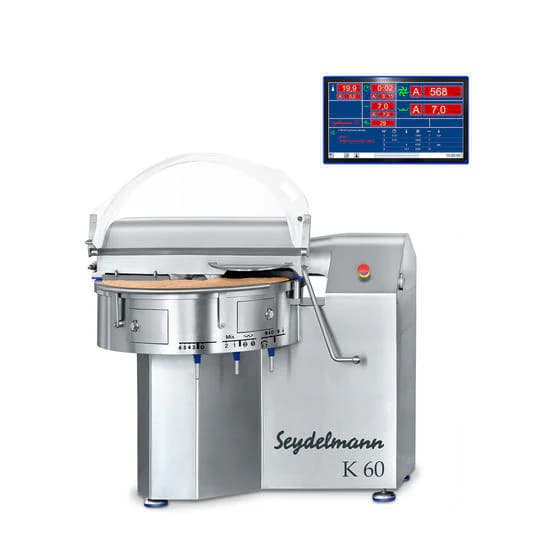
- K 60 High-Efficiency CutterBowl Cutter
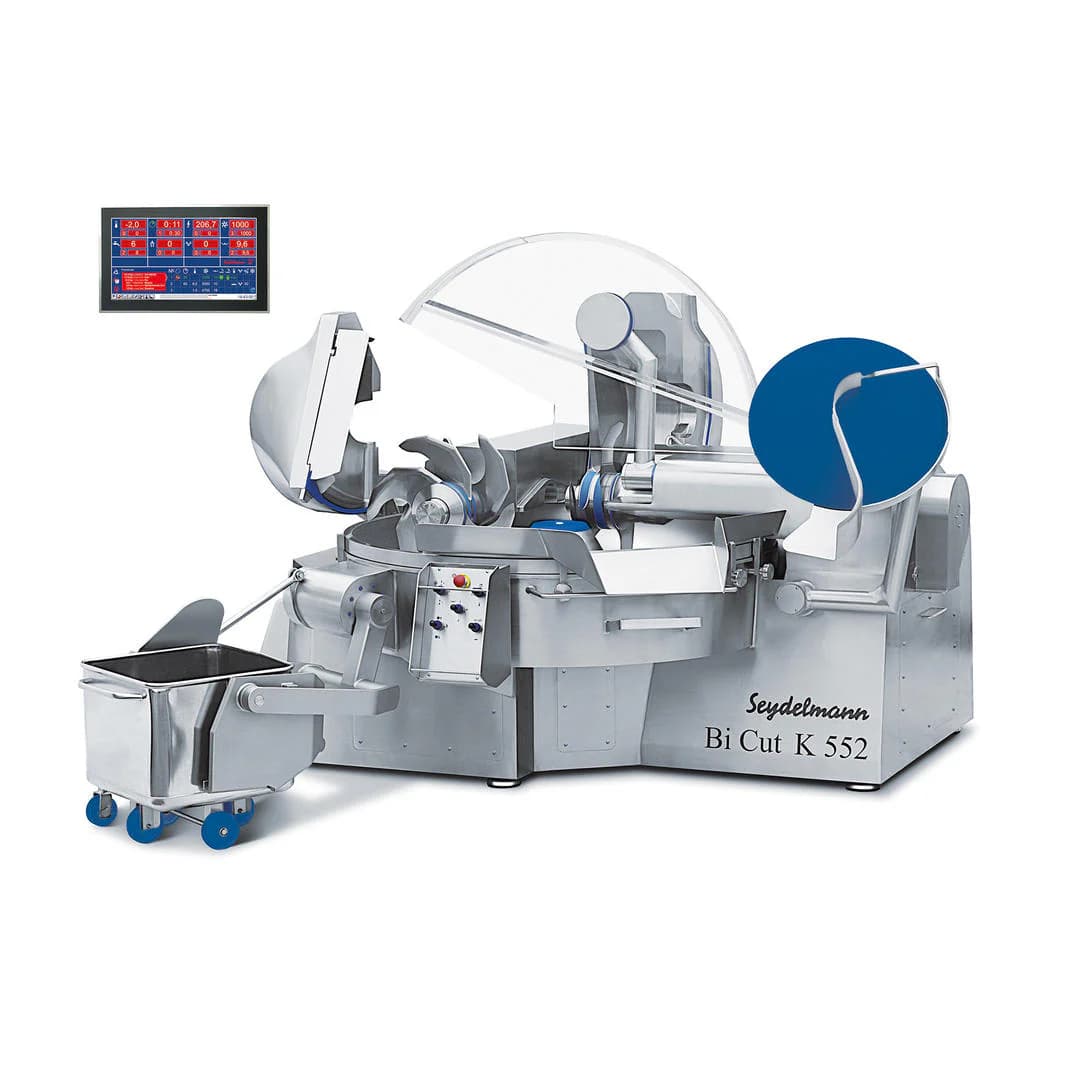
- Bi-Cut K 552 AC-8Bowl Cutter
Inline emulsifier
- KK 144 C Vacuum Konti KutterEmulsifier
If your products are minced rather than emulsified, the meat mixer grinder guide covers that side of the range. A bowl cutter is the machine to look at once a recipe needs a batter, a fine paste or a controlled coarse chop, and the emulsifier comes into the picture when that batter has to be produced continuously.
03How it works
How a bowl cutter works, part by part
Every bowl cutter in the catalogue follows the same layout, whatever its size. The drawing shows it from above, with the four parts that decide how it cuts and how easy it is to live with.
Two speeds do the work: how fast the knives spin, and how fast the bowl turns. Together with the number of bowl turns, they set how many times each piece of product meets a knife, and so how fine the result is.
The bowl
A wide, round stainless steel bowl with a raised centre turns slowly, carrying the product round in a channel and back under the knives on every rotation.
The knife head
Curved knives are mounted on a horizontal shaft that spins at high speed across the channel. The K40 and K 60 descriptions list a knife head with 6 knives.
The lid and knife hood
A hood closes over the knives while they run. The K40 description calls its hood flow-dynamically shaped, with hardly any unchopped residue left in the cover.
Loading and unloading
Table and smaller floor cutters are filled and emptied by hand; larger machines are loaded from bins with a lifting device and emptied with an unloader.
An inline emulsifier has no bowl at all. In the KK 144 C the product is drawn down through a stack of hole and cutting plates; Seydelmann’s data sheet, linked from the machine page, describes the plates running very close together without touching, and a cutting set of 3, 5 or 7 pieces.
04Vacuum
Vacuum cutting: when air in the batter matters
A cutter or emulsifier that works under vacuum removes air while the product is being cut. Air trapped in a batter shows up later as bubbles and pores in the cooked sausage, and it can affect colour and how firmly the product binds. Vacuum matters most on fine cooked sausage and on products sold sliced, where a smooth cut face is part of the appeal.
In our catalogue, vacuum is published for the KK 144 C. Its data sheet says the machine can run with or without vacuum: in vacuum mode the vacuum is drawn in the cutting set, so air is taken out continuously as the product is cut and emulsified, and the vacuum level is set at the control. Among the benefits Seydelmann lists are fewer air bubbles, better colour stability and binding, and a more constant weight in the casing.
Seydelmann’s range also includes vacuum and cooking cutters, but the published data for the K20, K40, K 60 and Bi-Cut K 552 AC-8 in our catalogue does not describe a vacuum version. If vacuum cutting in the bowl matters for your product, ask the sales team which models and options can be quoted.
Vacuum published for
- KK 144 C Vacuum Konti KutterEmulsifier
05Bowl size
Bowl sizes, from the K20 to the Bi-Cut K 552
Bowl content is the volume of the bowl in litres. It is not the weight of a batch: how much product a recipe can put in depends on what is being cut, how much ice it carries and how it moves in the bowl, so ask for the working batch for your own recipe before comparing machines on litres alone.
The four bowl cutters in the catalogue cover a wide spread. The K40 and K 60 are loaded by hand, according to their data. The Bi-Cut K 552 AC-8 lists BW 200 and BW 300 as its loading options, so plan the floor space and bin handling around the cutter as well as the machine itself.
Table cutter
20 l
Bowl content
- Loading
- Not published
- Weight
- Not published
High-efficiency cutters
40 l
Bowl content
- Loading
- Manual
- Weight
- 850 kg
High-efficiency cutters
60 l
Bowl content
- Loading
- Manual
- Weight
- 1,000–1,100 kg
Dry sausage cutter
550 l
Bowl content
- Loading
- BW 200 or BW 300
- Weight
- 6,500 kg
Bowl content is published for every cutter; the batch weight in kilograms is not, so it is not shown here.
06Drives
Knife speeds, bowl speeds and the drive behind them
Knife speed decides how hard each cut is; bowl speed decides how often the product comes back to the knives. A drive that lets you set the two separately gives more control over texture and temperature, and a reverse speed lets the knives mix without cutting, which is useful when the last ingredients go in.
The published speed figures in the catalogue are counts of speeds, not revolutions per minute. Ask for the speed table of the drive you are quoted, and compare machines on the same drive.
- K20: a Rasant drive with 2 knife speeds and 2 bowl speeds is standard. With the optional AC-6 drive it has 6 variable forward speeds, and the knives and bowl share one motor, so a faster knife also means a faster bowl.
- K20 with the optional AC-8 drive: 6 variable forward speeds and 2 variable reverse speeds, with knives and bowl on two independent motors, so either speed can change without the other.
- K40: offered with Rasant v or Ultra v (12 kW), Rasant vs or Ultra vs (17 kW), or AC-8 (30 kW) drives, according to its data.
- Bi-Cut K 552 AC-8: two knife shafts set 90° apart, which doubles how often the material is cut, with 2 × 140 kW on the AC-8 drive. Its data says this raises processing capacity while the space it needs stays almost the same.
Knives are a wear part. A dull or damaged knife tears instead of cutting, warms the batter and can unbalance the head, so keep spare sets, check them at every clean and send them for regrinding on a schedule; our spare parts team offers a specialist sharpening service.
07Temperature
Temperature, ice and frozen raw material
Cutting heats the product. In a fine emulsion, heat is the thing to watch: the fat has to stay bound in the batter, and a batter that runs too warm can break and release fat or jelly when it is cooked. That is why producers add ice or chilled water during the cut and keep an eye on the product temperature throughout.
The published operating ranges differ by model, and they are worth checking against your raw material before you buy.
- K40: fresh meat, pre-cut frozen meat, cooked meat, fish, vegetables, plant-based meat substitutes, fruit and confectionery, from −12 °C up to 85 °C.
- Bi-Cut K 552 AC-8: fresh and frozen meat and other foods, from −18 °C up to 85 °C.
- K20: a digital temperature display is built into the machine as standard.
- KK 144 C: Seydelmann’s data sheet says the cutting process raises the product temperature only slightly.
Temperature limits for the K 60 are not in its catalogue data. Whatever the model, ask how product temperature is measured and whether the cutter can be set to stop at a target temperature, so batches finish the same way whoever is running the shift.
08Sizing
Choosing the right cutter or emulsifier for your production
Start with the products and the batch you make most often, not the largest one. A cutter that is too big for everyday batches may not cut evenly when it is only part-filled, and one that is too small has your team loading and unloading all day. The four groups below match the machines in the catalogue to the kinds of production they suit.
Group 120 l bowl
Test kitchens, laboratories and small batches
The K20 table cutter has a 20 l bowl. Its data describes it as a test machine for laboratories and for institutional and large-scale kitchens, giving reliable and representative results, which makes it a practical place to develop a recipe before production.
Group 240 l and 60 l bowls
Smallgoods production, loaded by hand
The K40 and K 60 high-efficiency cutters, with 40 l and 60 l bowls, are loaded by hand and carry a knife head with 6 knives. They suit producers making several products a day in batches that are loaded by hand.
Group 3550 l bowl
Large batches and dry sausage
The Bi-Cut K 552 AC-8 has a 550 l bowl and two knife shafts, and its data says it is designed for the production of dry sausage types. At 6,500 kg it is a machine for a plant floor, with BW 200 and BW 300 listed as its loading options.
Group 4Continuous, no bowl
Continuous fine emulsion
The KK 144 C Vacuum Konti Kutter suits fine emulsions and fine cooked sausage, and its data names baby food, cheese and pet food as further applications. It works on a flow of pre-ground or mixed material rather than a batch.
KK 144 C Vacuum Konti Kutter
SeydelmannProcessing
Before you buy
Bowl cutter buying checklist
- Which products will the machine make, and what share of them are fine emulsions, coarse chops or pastes?
- What is the usual batch weight, and what is the largest one?
- Will raw material go in fresh, chilled or frozen, and at what temperature?
- Do you need vacuum, and on which products?
- How will product be loaded and unloaded, and by whom?
- Do knife and bowl speeds need to be set separately, with reverse for mixing?
- How long does a full clean take, including taking the knives off and putting them back?
- Is a continuous emulsifier after the cutter worth more to you than a larger bowl?
09The range
The models compared, from their published data
Every figure in the table is taken from the machine’s own catalogue entry. Where a figure is not published, the table says so rather than estimating it.
| Model | Bowl content | Drive | Motor power | Knives | Product temperature | Loading | Weight |
|---|---|---|---|---|---|---|---|
| K20Table cutter | 20 l | Rasant: 2 knife and 2 bowl speeds; AC-6 or AC-8 optional | Approx. 4.4 kW | Not published | Not published | Not published | Not published |
| K40High-efficiency cutters | 40 l | Rasant v / Ultra v, Rasant vs / Ultra vs or AC-8 | 12 kW, 17 kW or 30 kW, by drive | Knife head with 6 knives | −12 °C to 85 °C | Manual | 850 kg |
| K 60 High-Efficiency CutterHigh-efficiency cutters | 60 l | Not published | Not published | Knife head with 6 knives | Not published | Manual | 1,000–1,100 kg |
| Bi-Cut K 552 AC-8Dry sausage cutter | 550 l | AC-8 | 2 × 140 kW | Two knife shafts, offset by 90° | −18 °C to 85 °C | BW 200 or BW 300 | 6,500 kg |
| KK 144 C Vacuum Konti KutterInline emulsifier | No bowl: hole and cutting plate system | Not published | Not published | Not published | Not published | Not published | Not published |
The KK 144 C has no bowl, so the table shows its cutting system instead. Seydelmann’s data sheet for it, linked from the machine page, lists its hopper sizes, hourly output and motor.
10The line
Where a cutter or emulsifier sits in a frankfurt or emulsion line
The stages below show an illustrative layout for frankfurts, polony and other cooked emulsion sausage. It is a way to think about where each machine type fits, not a line we have supplied or a promise that particular machines will work together; every line is specified around the product.
Meat is usually ground coarse first, then cut to a batter in the bowl cutter with ice, salt, fat and seasoning. Where output has to be continuous, the batter or pre-ground mix can be finished in the KK 144 C: its data sheet calls it especially suitable for the final emulsification of pre-ground material. From there the batter goes to the filler.
Stage 01
Grinding
Trim and fat are ground coarse so they go into the cutter as even pieces and cut down quickly.
9 machinesStage 02Covered here
Cutting and emulsifying
The bowl cutter builds the batter with ice and seasoning; an inline emulsifier can give the final fine texture continuously.
5 machinesStage 03
Filling
A vacuum filler takes the batter into its hopper, removes trapped air and portions it into casings at a set weight.
11 machinesStage 04
Linking and hanging
Filled sausage is twisted or divided into links and hung on smoke sticks ready for the cooking chamber.
22 machinesStage 05
Cooking and smoking
Emulsion sausage is cooked, and often smoked, to set the batter and develop colour and flavour.
2 machinesStage 06
Packing
Cooled sausages are packed into retail or bulk packs on a thermoformer or other packaging machine.
14 machines
11Hygiene
Cleaning a bowl cutter
A bowl cutter is washed down after every shift and between recipes that must not mix, and the knife head, hood and bowl are where product hides. The published descriptions of the K40 and the Bi-Cut K 552 AC-8 describe the same construction for wash-down.
Before you order, ask to see the knives taken off and refitted and the hood and bowl cleaned, and time it. That routine, repeated every day, matters as much as the cutting figures.
- The machine frame is almost entirely solid stainless steel.
- Edges are rounded, and surfaces are finely polished and sloped so cleaning water drains off completely.
- Covers are set into the frame and the bottom is closed and ventilated, keeping water and dirt out of the machine.
- The gap between the knives and the hood or bowl is very small, and the hood leaves hardly any unchopped product in the cover.
- On the Bi-Cut K 552 AC-8, the main cover swings clear sideways to the rear of the machine, which makes cleaning and knife changes easier.
12Applications
Bowl cutters and emulsifiers by product
The cutters and the emulsifier appear on these product pages in the catalogue, alongside the other machines matched to each product. The sausage industry page brings the whole range for sausage production together.
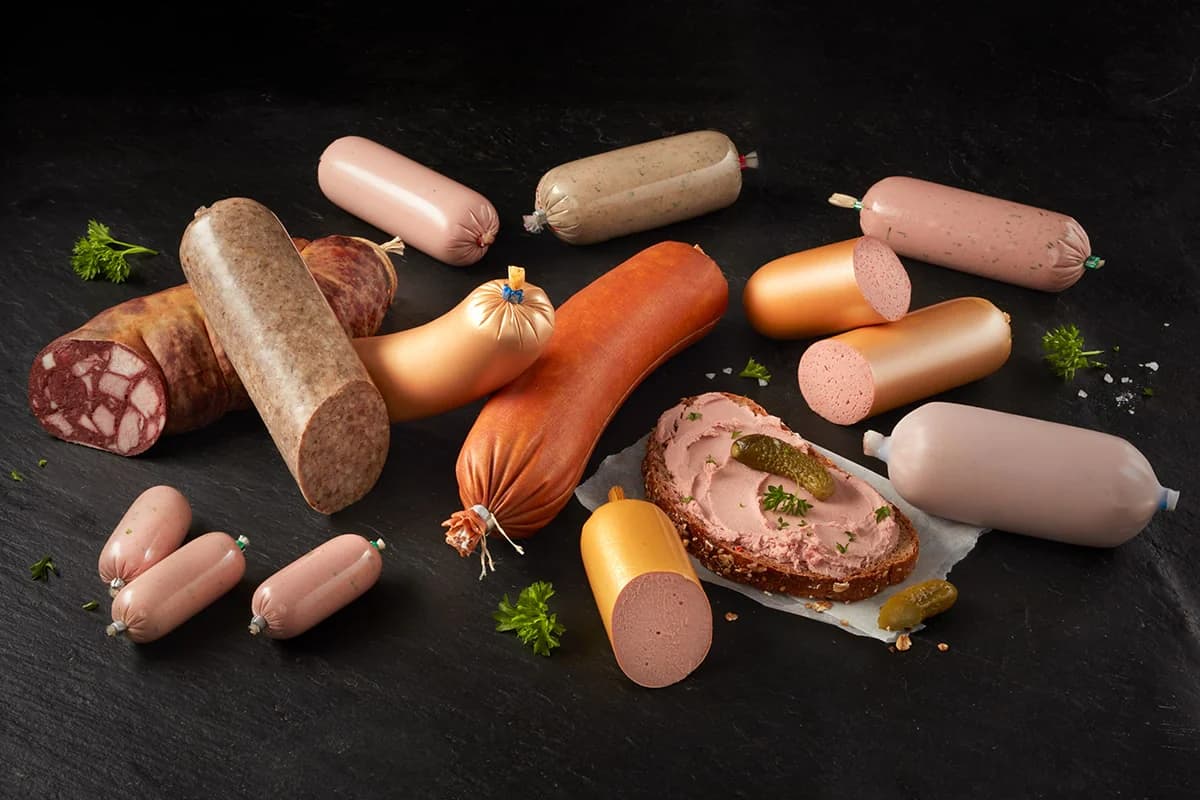
Smoked and cooked sausage
Frankfurts, polony and other cooked and smoked sausage built on a fine batter, the classic job for a bowl cutter.
36 machinesCooked meat and deli
Pâté, meat loaf and deli lines cut to a smooth paste or a set coarse texture before they are filled and cooked.
63 machines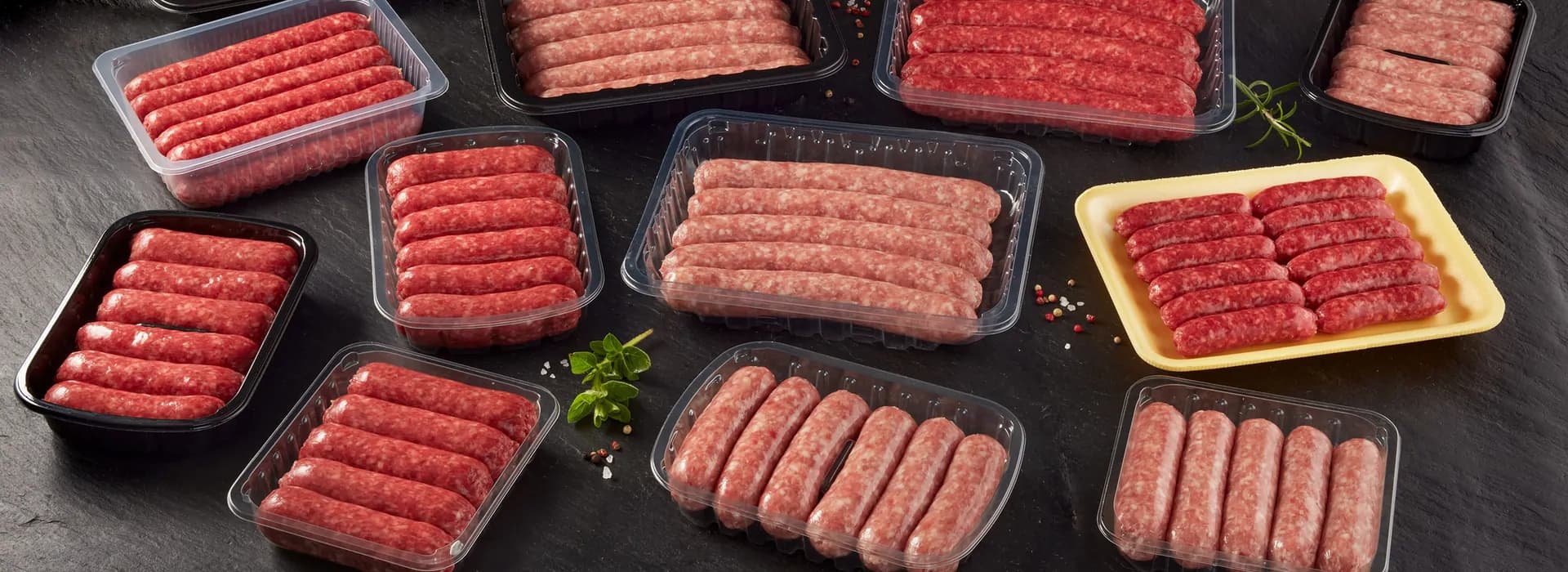
Fresh sausage
Fresh sausage meat chopped and mixed with its seasoning and water, where the cutter controls how coarse the bite is.
44 machines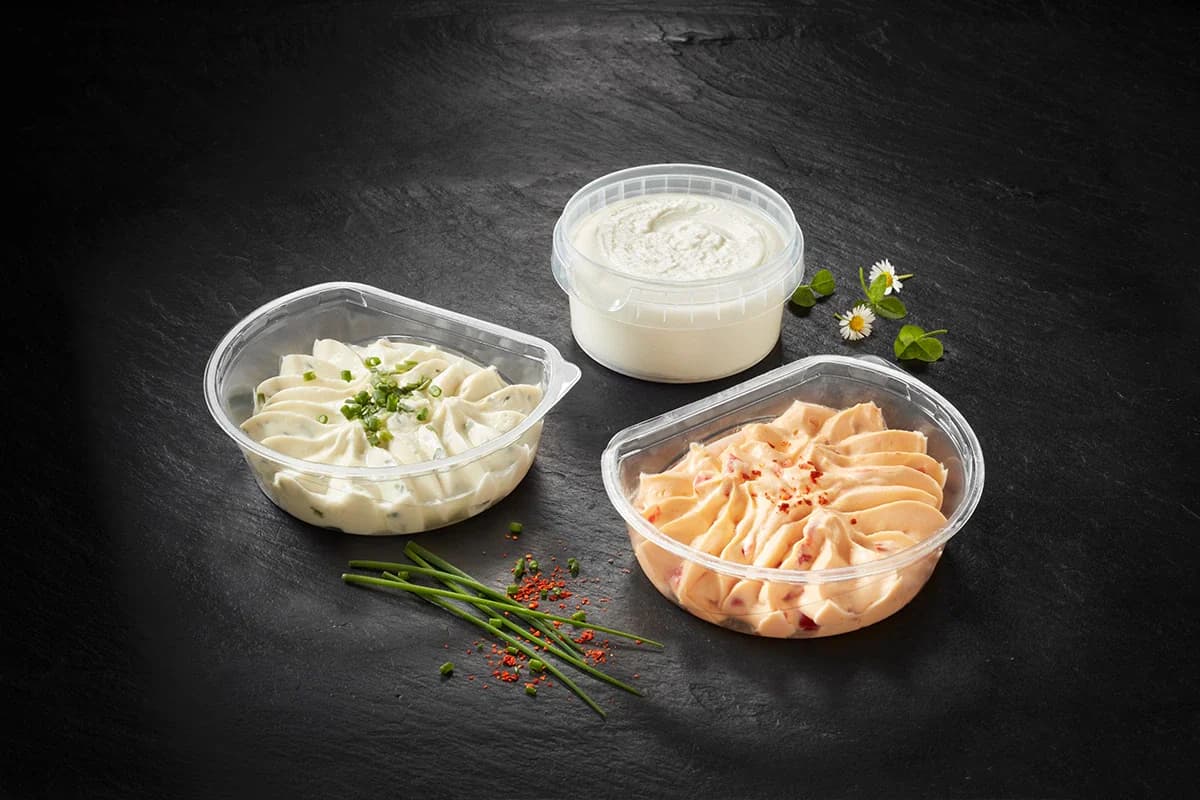
Cheese spreads and dips
Spreads and dips cut smooth from cheese and other ingredients, on the cutters and the emulsifier listed for them.
6 machines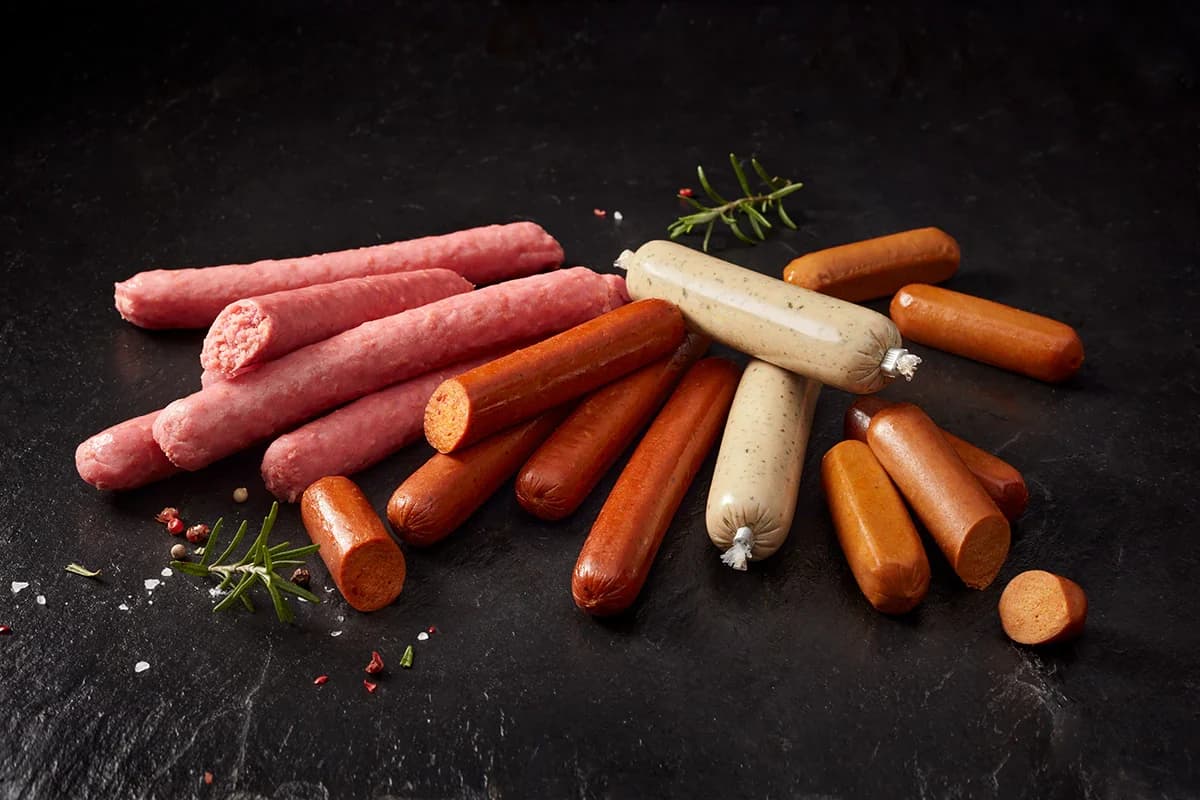
Plant-based sausage
Sausages made from plant proteins, which need the same chopping and binding as a meat batter.
26 machines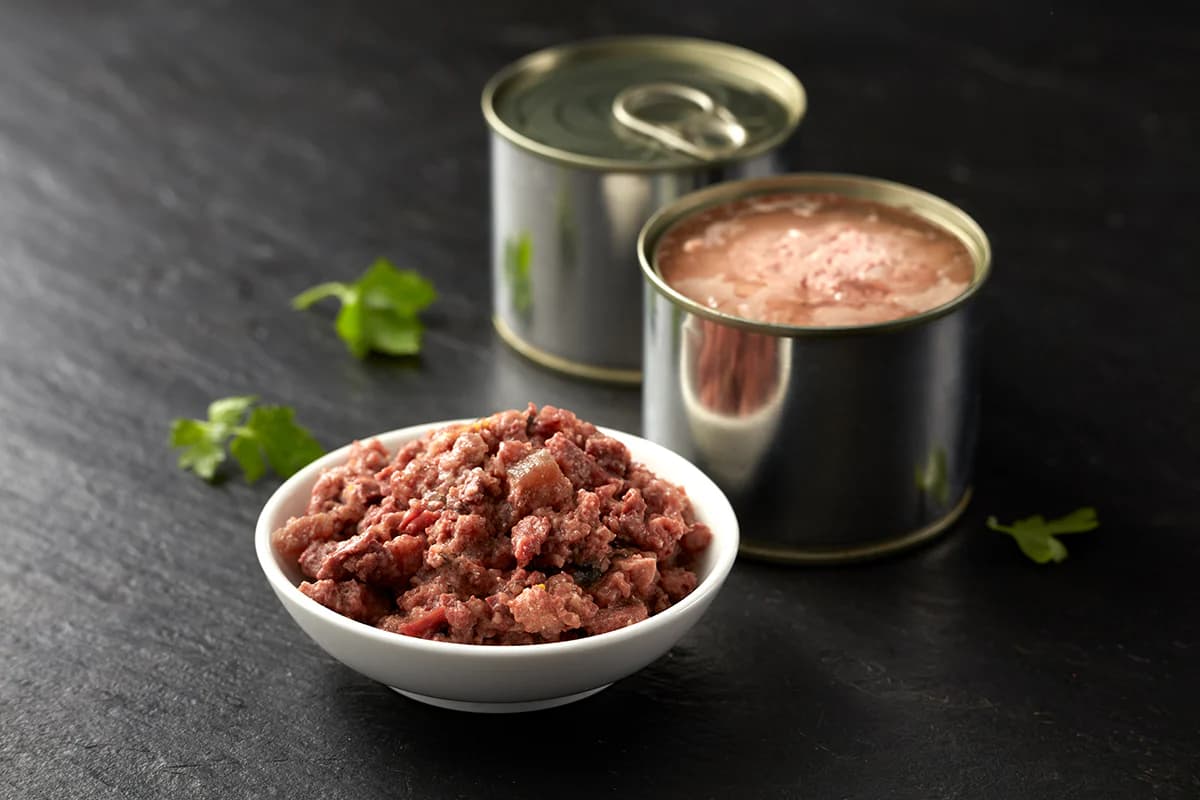
Wet pet food
Chunks and loaf-style pet food made from a fine emulsion, an application the KK 144 C is listed for.
14 machines
13Support
Trial your recipe, then keep the knives sharp
Vemag Australia is the official Seydelmann distributor for Australia and New Zealand, with offices at Redland Bay in Queensland and Rosedale in Auckland. Quotations are put together around your production, whether that is one table cutter or a complete line.
01
Test with your own product
The Customer Centre lets you try your own raw materials and recipes on machines under real production conditions. Ask the sales team which cutting and emulsifying equipment can be arranged for a trial.
02
Service across Australia and New Zealand
Service technicians install machines, find and fix faults, carry out repairs and maintenance, move machines between sites and train operators and maintenance staff.
03
Parts and sharpening
Genuine spare parts are kept in stock locally, and the parts team runs a specialist sharpening service for knives and blades.
14FAQs
Bowl cutter and emulsifier questions
What is the difference between a bowl cutter and an emulsifier?
A bowl cutter works in batches: knives spinning on a shaft cut product that a turning bowl carries round to them, and it can mix in ice, fat and seasoning as it goes. An inline emulsifier, such as the KK 144 C, works continuously, drawing pre-ground or mixed material through a set of hole and cutting plates to give a fine emulsion.
What is a sausage emulsifier machine?
It is any machine that turns meat, fat and water into the fine, stable batter used for frankfurts, polony and other emulsion sausage. Both a bowl cutter and an inline emulsifier can do it; the comparison explains when each one makes sense.
Do I need a grinder as well as a bowl cutter?
Often, yes. Grinding trim coarse before it goes into the cutter gives even pieces that cut down faster and more consistently. The grinders and mincers page lists the grinders in the catalogue.
Are Seydelmann cutters available in Australia and New Zealand?
Yes. Vemag Australia is the official Seydelmann distributor for Australia and New Zealand. The Seydelmann brand page lists the Seydelmann machines in our catalogue, including the K20, K40 and K 60 cutters and the KK 144 C emulsifier.
What size bowl cutter do I need?
Size the cutter for the batch you make most often. The catalogue runs from the 20 l K20 table cutter to the 550 l Bi-Cut K 552 AC-8; the sizing section groups them by the kind of production they suit, and the sales team can work out the batch for your recipe.
Can a bowl cutter process frozen meat?
Some can. The K40’s data lists pre-cut frozen meat and a range from −12 °C, and the Bi-Cut K 552 AC-8 lists frozen meat from −18 °C. Check the published range for any model against the temperature of your raw material.
Does a bowl cutter need vacuum?
Not always. Vacuum takes air out of the batter as it is cut, which matters most for fine cooked sausage and sliced products. In our catalogue vacuum is published for the KK 144 C emulsifier; see the vacuum section for the cutters.
Can bowl cutters make plant-based or cheese products?
Yes. The K40’s data lists meat substitutes made from plant-based proteins, and the KK 144 C names cheese, baby food and pet food as further applications. The cutters also appear on the catalogue’s cheese spread and plant-based product pages.
How do you clean a bowl cutter?
After each shift the knives come off, and the bowl, hood, knife head and frame are washed and sanitised to your plant’s procedure. A machine with rounded, sloped surfaces that drain, a closed base and a cover that moves clear of the bowl is quicker to clean; the cleaning section lists what the published data describes.
How much does a bowl cutter cost?
Prices are not published, because they depend on the model, the drive, the options and how the machine is loaded and unloaded. Send an enquiry with your products and batch sizes and we will put a quotation together.