
Machine type
Portioning & Forming Machines
Portioning and forming machines turn a continuous flow of mass, such as minced beef, chicken or a plant-based mixture, into individual products of a set weight and shape. Many are fed by a vacuum filler, which meters the mass, and others, such as plate formers, have their own hopper and feed system. The forming unit shapes the mass and separates each piece, by pressing it through a nozzle, filling a mould, or cutting a strand to length.
- 17 Machines listed
- 4 Related industries
- 6 Related applications
Overview
About portioning & forming machines
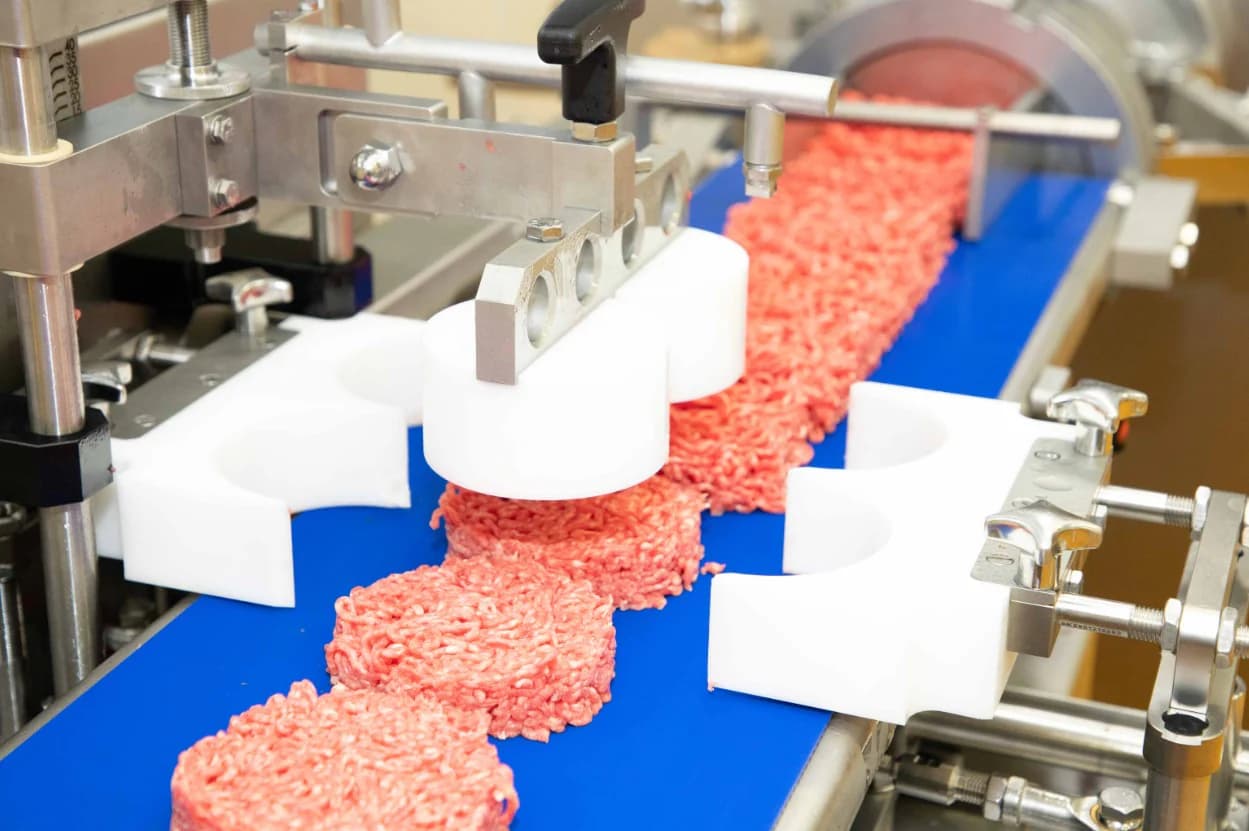
Burger and patty formers fill a mould plate or press the mass into a disc and release it onto a belt. Ball formers use shaped nozzles and cutting plates to make meatballs, vegetable balls, croquettes and skinless sausages, and some load the finished pieces straight into trays. Minced meat portioners and cutters divide an extruded strand into blocks or tray-sized portions of ground meat, skewer formers press the mass onto skewers, and kebab lines shape and flatten portions into slices for stacking.
These machines are used by meat and poultry processors and butchers, ready-meal and convenience food producers, pet food manufacturers and makers of plant-based products. Changing the nozzle, mould or plate lets one line run several shapes and sizes, and paper interleavers, loading lines and checkweighers can be added after the former to automate the rest of the line.
Forming is one stage of the work after primary processing; our overview of chicken processing equipment covers the others, from marinating to X-ray bone checks and packing.
Brands in this category
Equipment
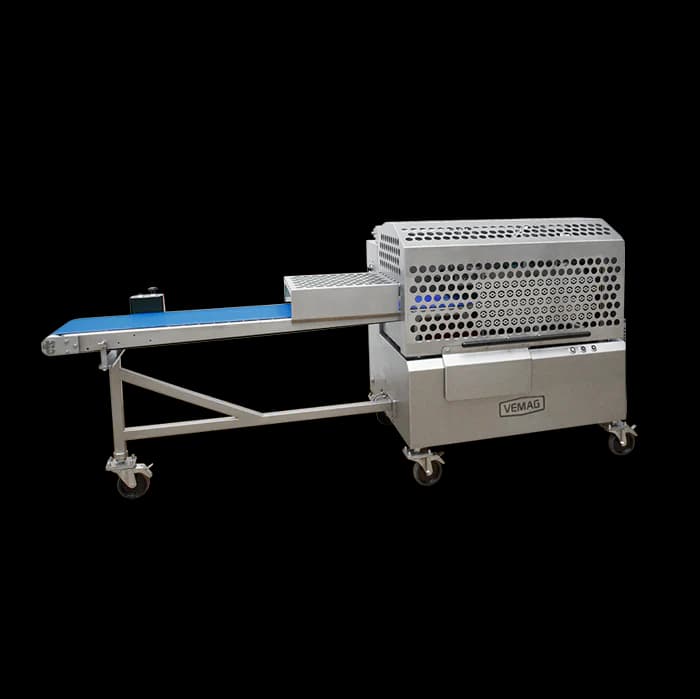
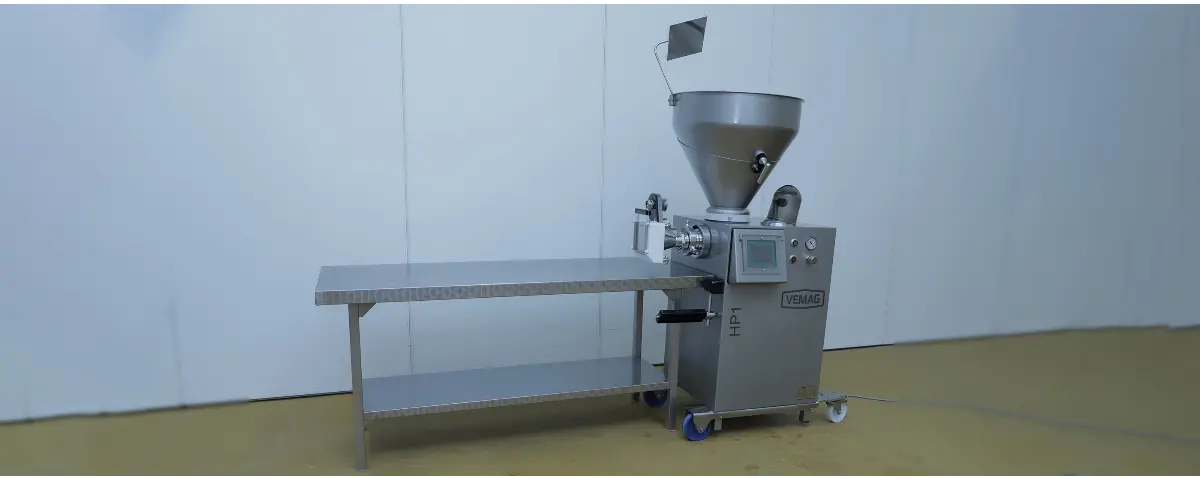
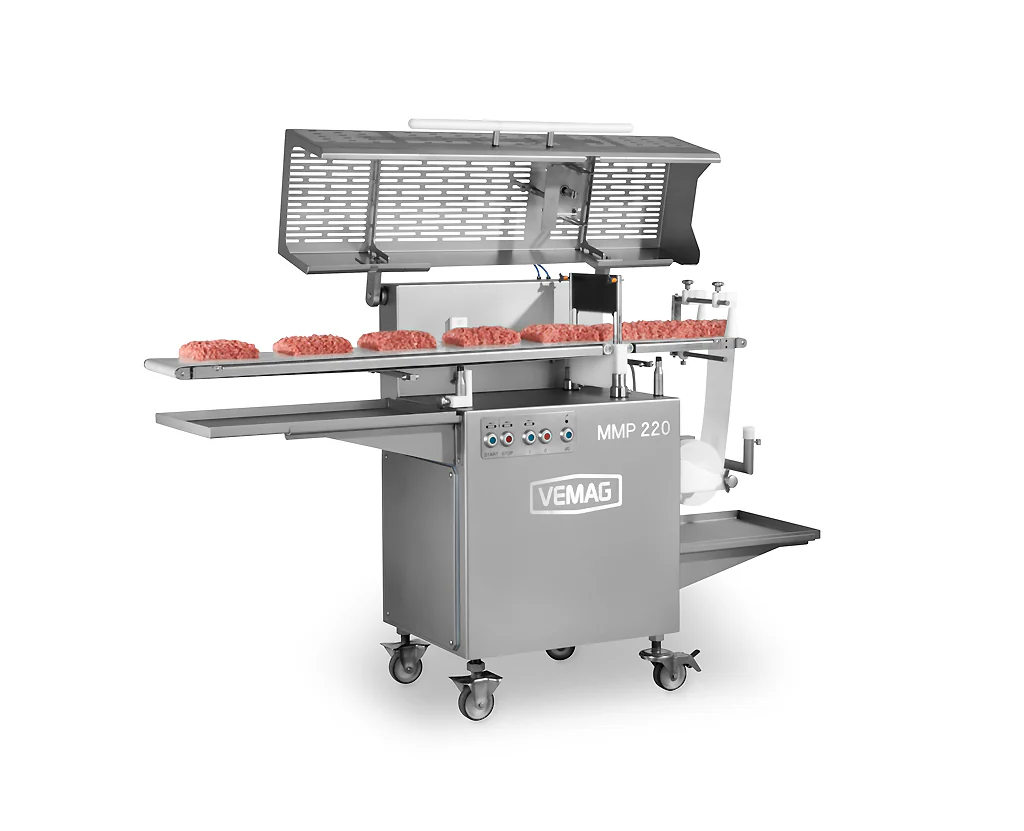
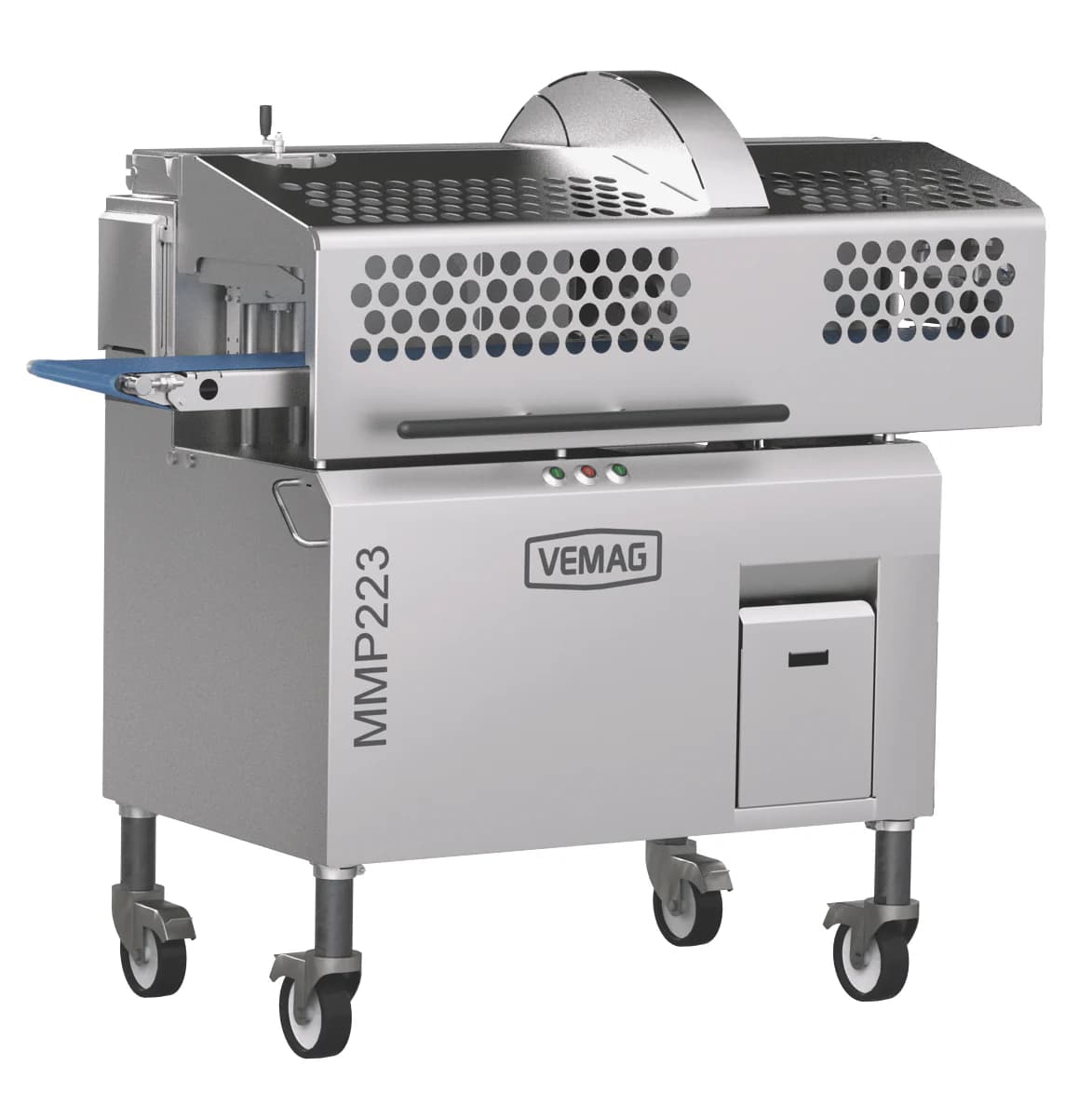
15 portioning & forming machines
The machines in the catalogue classed as portioning & forming machines. Models with comparable published size or capacity figures are listed from smallest to largest; others follow in catalogue order. Open one for details or ask which suits your product.
Browse the full catalogue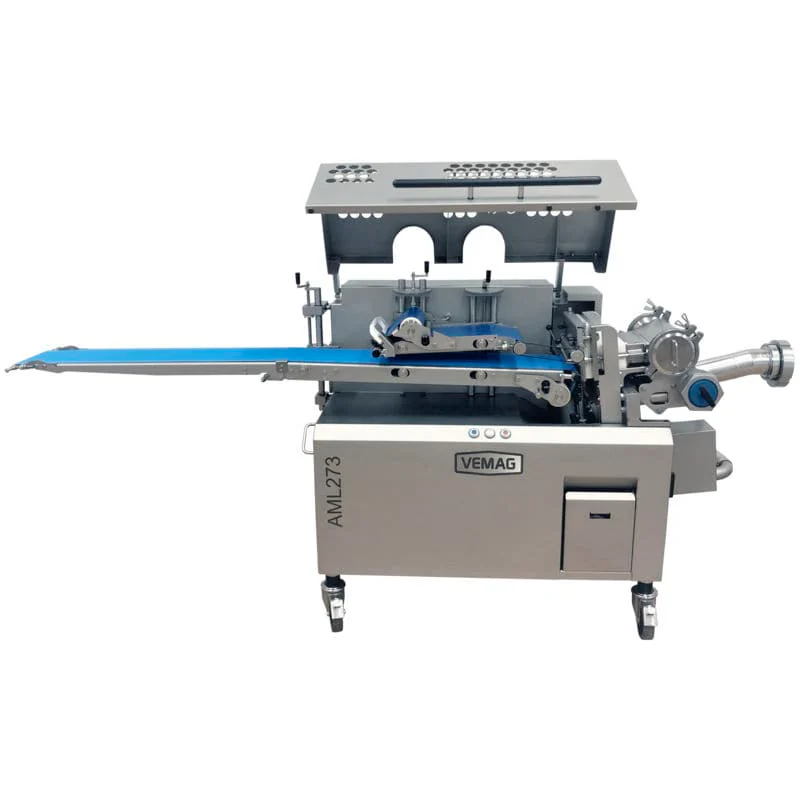
Also in this category
2 machines with another main type are also listed under portioning & forming machines. Each card shows what the machine is.
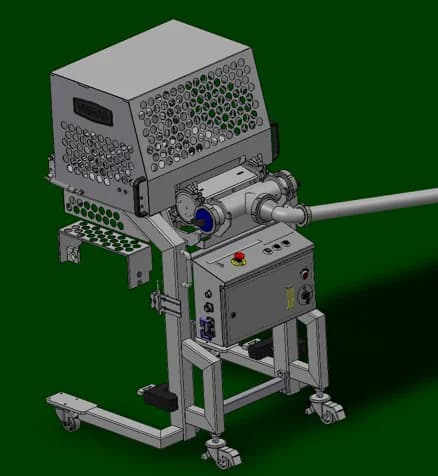
Chicken and poultry
Chicken portioning machines for nuggets, burgers and other formed products
Chicken portioning covers two quite different jobs. One is forming: chicken mince or a mixed poultry mass is shaped into nuggets, burgers, schnitzels, balls or sausages of a set weight, which is what the machines on this page do. The other is cutting whole breasts and fillets to size, covered further down.
Each machine below is described from its own listing on this site. Only the BF255, DJM-VF06 and CC225 listings name poultry or chicken; the others are listed for meat or vegetable masses in general, so ask us how your chicken product behaves on them before you choose.
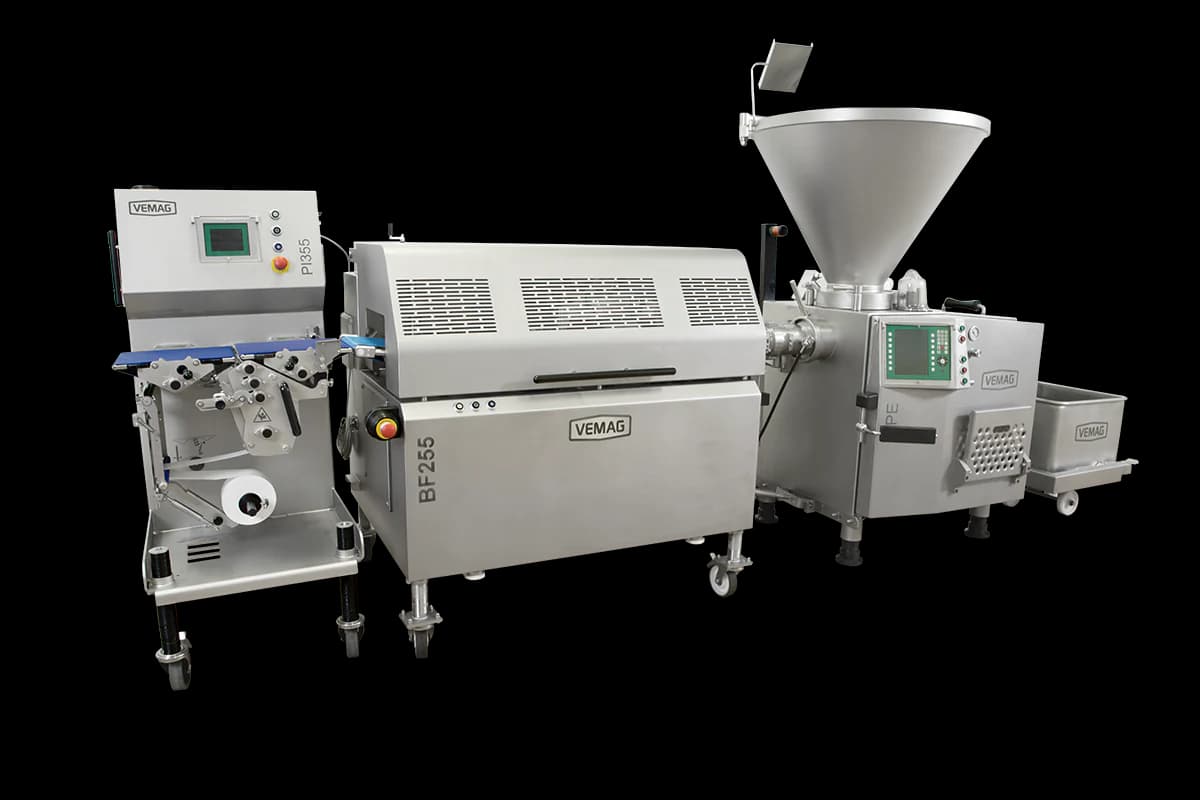
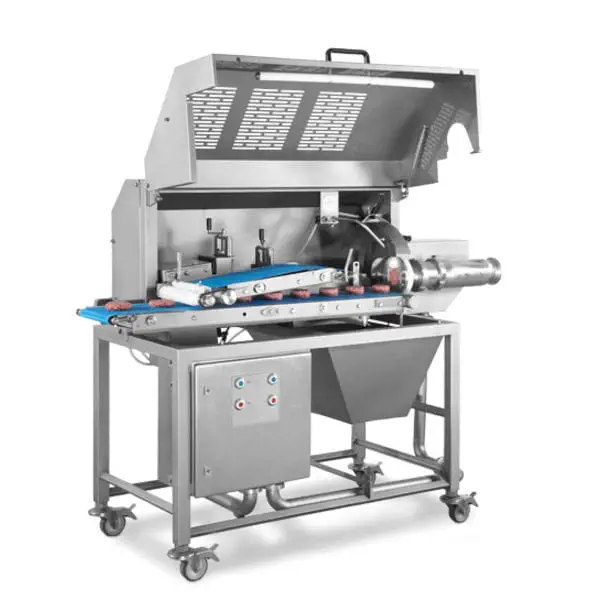
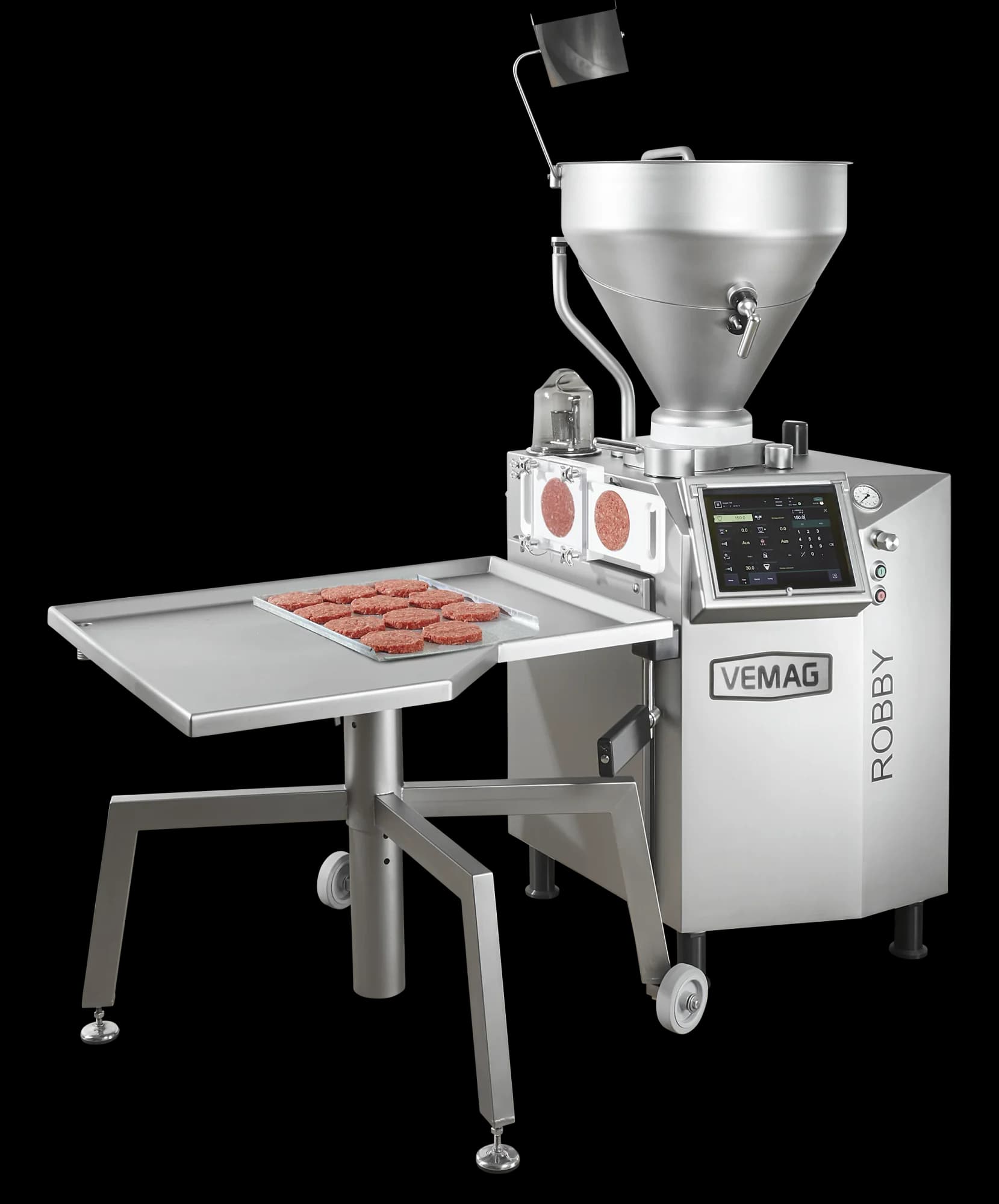
- Chicken burgers and patties: the BF255 burger former is described for burgers made from beef, pork or poultry, and from meatless and vegan masses. It makes round and oval burgers, with special shapes on request, from 50 g to 300 g and up to 130 mm across, at up to 40 strokes a minute.
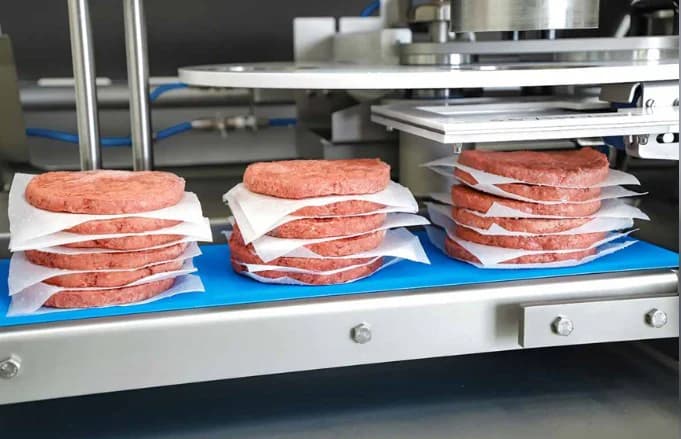
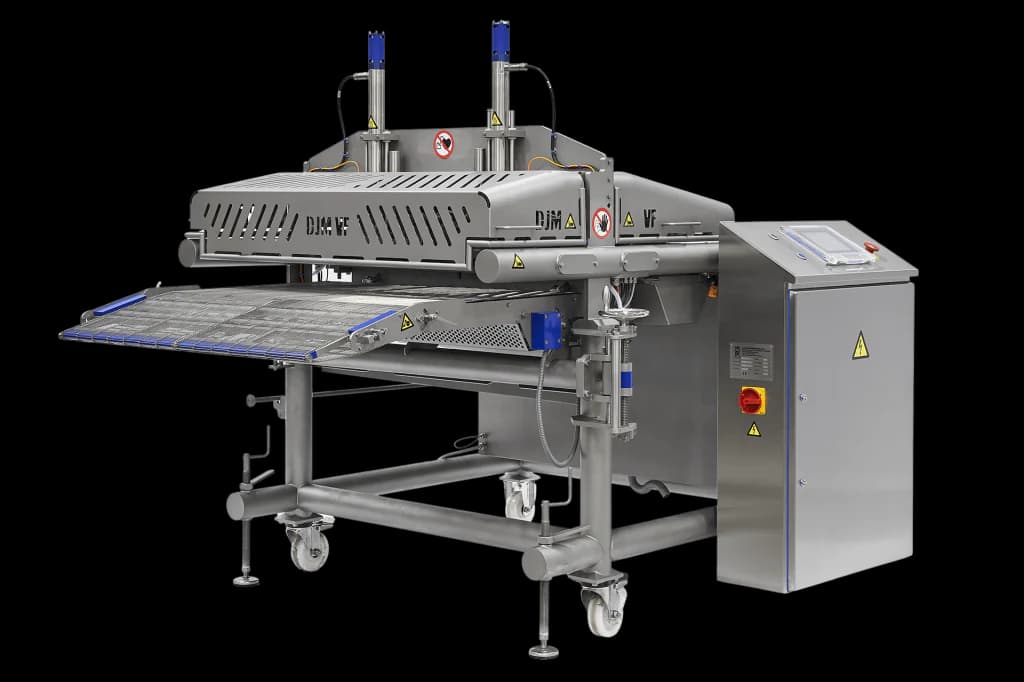
- Nuggets and schnitzels on a plate former: the DJM-VF06 listing describes VacForm machines built for hamburgers, on which schnitzels, chicken nuggets, fish sticks and vegetable products are also possible. They can be fitted with an automatic paper interleaver, so products come off in stacks with a sheet of paper between each one.
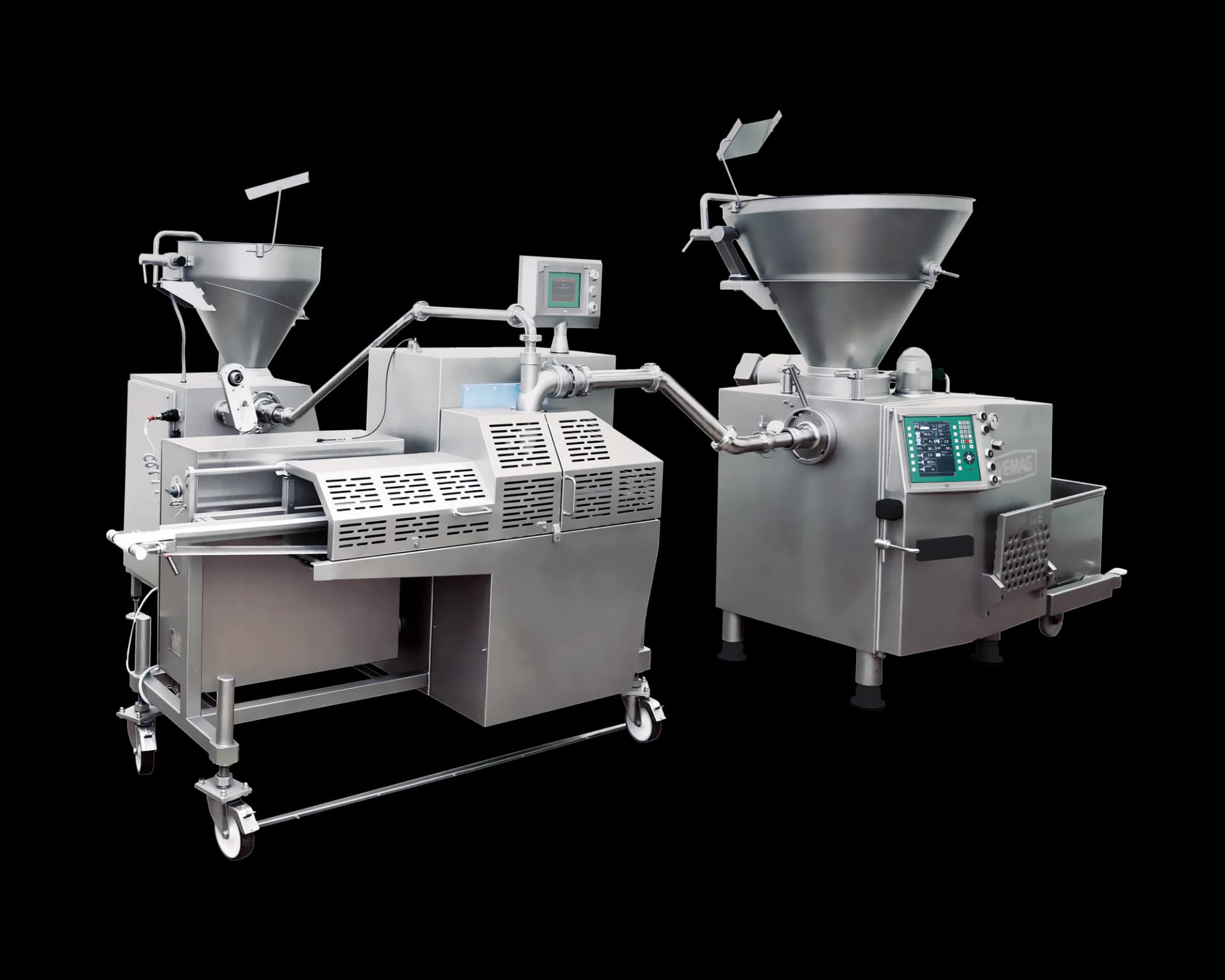
- Nuggets formed from a filler: the FM250 forming machine lists nuggets of 10–30 g and 10–15 mm thick among its products, alongside rissoles, burgers, spiced mince fingers and ribs, at up to 300 portions a minute. Shape and size are changed with quick-change forming nozzles or on the portioning computer of the vacuum filler that feeds it.
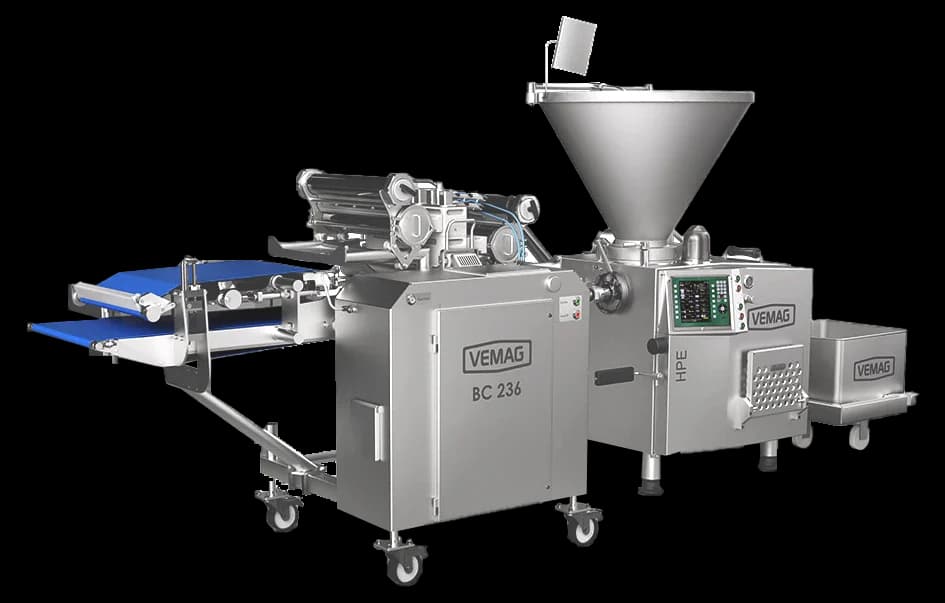
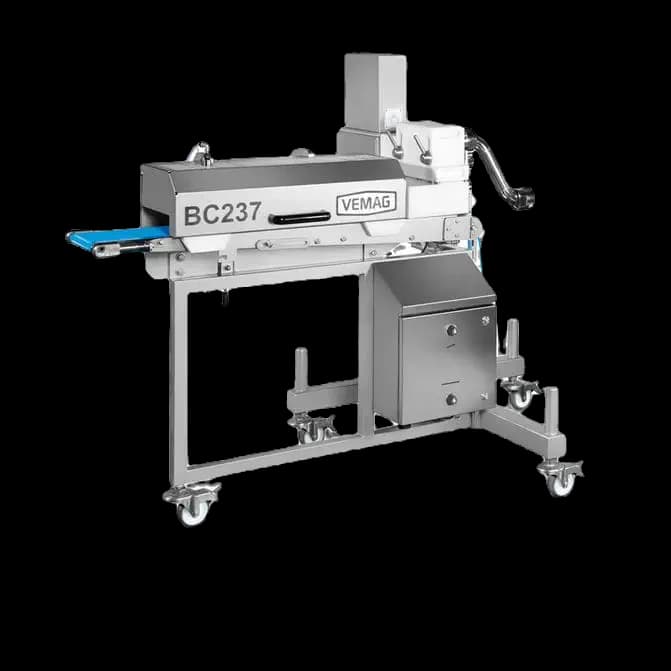
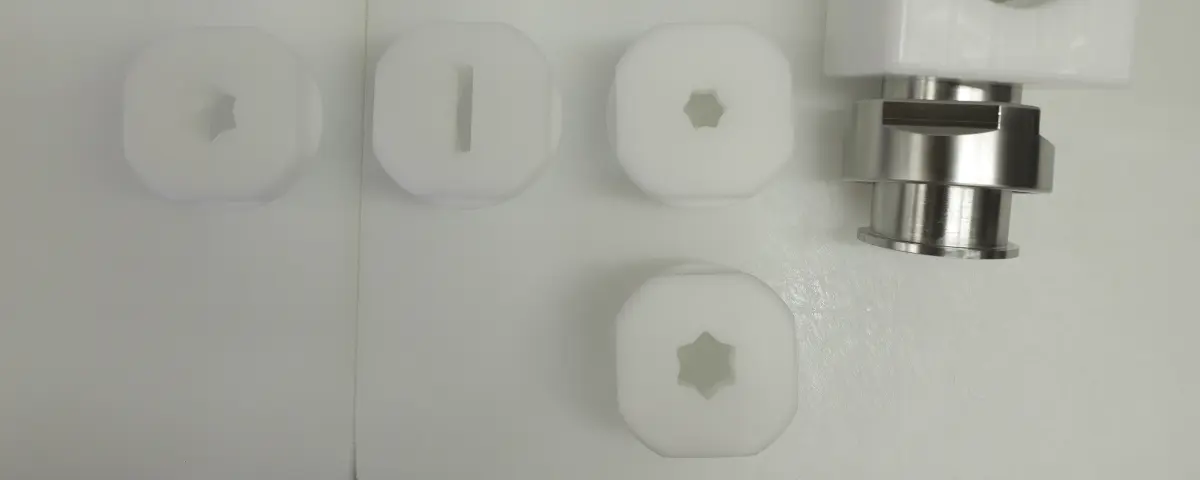
- Balls and drop shapes: the AML273 makes meatballs, vegetable balls, skinless sausages and croquettes from 5 g to 115 g and loads them straight into trays. The BC236 and the BC237, an attachment for the HPnx fillers, make balls, cylinders, ellipses and drop shapes.
- Chicken sausages: the CC225 alginate co-extrusion line, listed under sausage linking and hanging, names halal, poultry, vegetarian and kosher products among those it can make.
After the former, the PI355 paper interleaver is listed as an accessory for the FM250 and the BF255 and lays each portion on paper or plastic foil. Loading lines such as the SL309 put patties and meatballs into trays, and the DL302 lists schnitzels among the products it can deposit. See conveyors and line equipment for the rest.
Breasts and fillets
Portioning whole chicken breasts and fillets
A whole breast fillet is not formed, so its portion comes from flattening, tenderising and cutting rather than from a mould or nozzle. The machines below cover several of those steps. They show where each one fits; they are not a line we have supplied or a set of machines matched to each other.
- Even thickness: the Ross RCF-400 is a flattener for fresh or soft frozen meat and poultry products. A breast pressed to an even thickness cooks in the same time as the next one and can be sized to a product specification. See tenderisers and flatteners.
- Tenderising: the Ross TC710 Tenderizer tenderises and stretches bone-in and boneless cuts, such as poultry and beef, before frying or grilling.
- Marinating: brine and marinade injectors and vacuum tumblers put the marinade into the meat and work it through before cooking.
- Strips and dice: slicers and dicers cut meat into cubes, strips and slices of a consistent size for stir-fries, ready meals and food service packs. Ask us whether a particular dicer suits raw chicken.
- Bone checks: the Aicon XR-500 Poultry is an X-ray system for quality control of raw meat, and its listing states it can detect calcified bone of 1 mm. See inspection and weight control.
If you need fillets cut to a fixed weight, tell us the product and the target weight and we will say whether anything in our range fits the job.
The line
Where the former sits in a chicken nugget or burger line
The stages below illustrate a formed chicken product line using equipment types from our catalogue. Which stages you need, and in what order, depends on the product; this is not a line we have supplied.
- Preparing the mass: grinders and mincers and mixer grinders mince the meat and blend in seasoning, and bowl cutters make a finer batter where the product calls for one.
- Metering: a vacuum filler sets the portion weight and feeds formers such as the FM250 and the BC237 attachment.
- Forming and handling: the former shapes each portion, then paper interleavers and loading lines stack it or place it in trays.
- Checking and packing: checkweighers, metal detectors and X-ray systems check each portion or pack, and tray sealers or thermoformers seal it.
For a wider view, planning a processing line walks through each stage around your product, and the full equipment catalogue can be filtered by type, brand and application.
Next step
What to tell us about your chicken product
A former is chosen around the product, so the useful starting point is what you make. When you contact us, it helps to know:
- whether you start from mince, a mixed mass or whole fillets, and how coarse the mince is;
- the shapes, portion weights and thicknesses you need, and whether the product is coated or cooked afterwards;
- the output you need on a normal shift, once changeovers and cleaning are allowed for;
- how portions should leave the former: stacked on paper, loaded into trays or carried on a belt to the next machine;
- the vacuum filler or other equipment you already run, if any.
You can try machines with your own chicken mass and recipes at our Customer Centre before you decide. Once a machine is running, our service and spare parts teams look after it.
Dairy forming
Forming individual soft cheese portions
For cream cheese balls and shaped dairy portions, compare soft cheese forming equipment. The guide covers documented BC237 and AML273 cheese applications, the working mixture and receiving tray specification.
Related
Industries and applications
Browse equipment by the food sector you work in, or by the product you make.
Equipment
Other machine types
Every machine type in the catalogue, with the number of machines listed under each.
Browse by brand- Vacuum fillers11 machines
- Sausage linking, hanging & cutting24 machines
- Grinders & mincers16 machines
- Bowl cutters & emulsifiers5 machines
- Brine injectors23 machines
- Brine mixers & tanks7 machines
- Tumblers & massagers4 machines
- Tenderisers & flatteners3 machines
- Slicers & dicers9 machines
- Cooking, smoking & drying2 machines
- Defrosting & pasteurization1 machine
- Dough dividers & bakery machines11 machines
- Depositors7 machines
- Thermoformers & packaging20 machines
- Tray sealers6 machines
- Conveyors & line equipment9 machines
- Inspection & weight control11 machines
- Attachments & accessories24 machines
Contact
Talk to us about portioning & forming machines
Ask for advice, a quotation or a consultation — by phone, by email or through the enquiry form.
- Australia(07) 3829 3868
- New Zealand+64 9 415 0137
- Salessales@vemag.com.au