
Machine type
Tray Sealers
A tray sealer closes a pre-made tray with a lidding film once the product is in it. Depending on the machine and its tooling, the film is simply sealed onto the tray rim, sealed after the air in the tray has been replaced with a protective gas (modified atmosphere packaging, or MAP), or drawn down over the product as a vacuum skin pack. On a food tray sealer the tray, the film and the sealing tool together decide how the pack presents on the shelf and how firmly it holds the product.
- 6 Machines listed
- 3 Brands
- 6 Related industries
- 6 Related applications
Overview
About tray sealers
The difference from a thermoformer is where the tray comes from. A thermoformer forms its pockets on the machine from a roll of bottom film. A tray sealer has no forming station: trays are bought in, filled before they reach the sealing tool, and then lidded. The published descriptions of the sealers on this page cover fresh meat and sausages, refrigerated and frozen food, convenience food, baked goods and menu components.
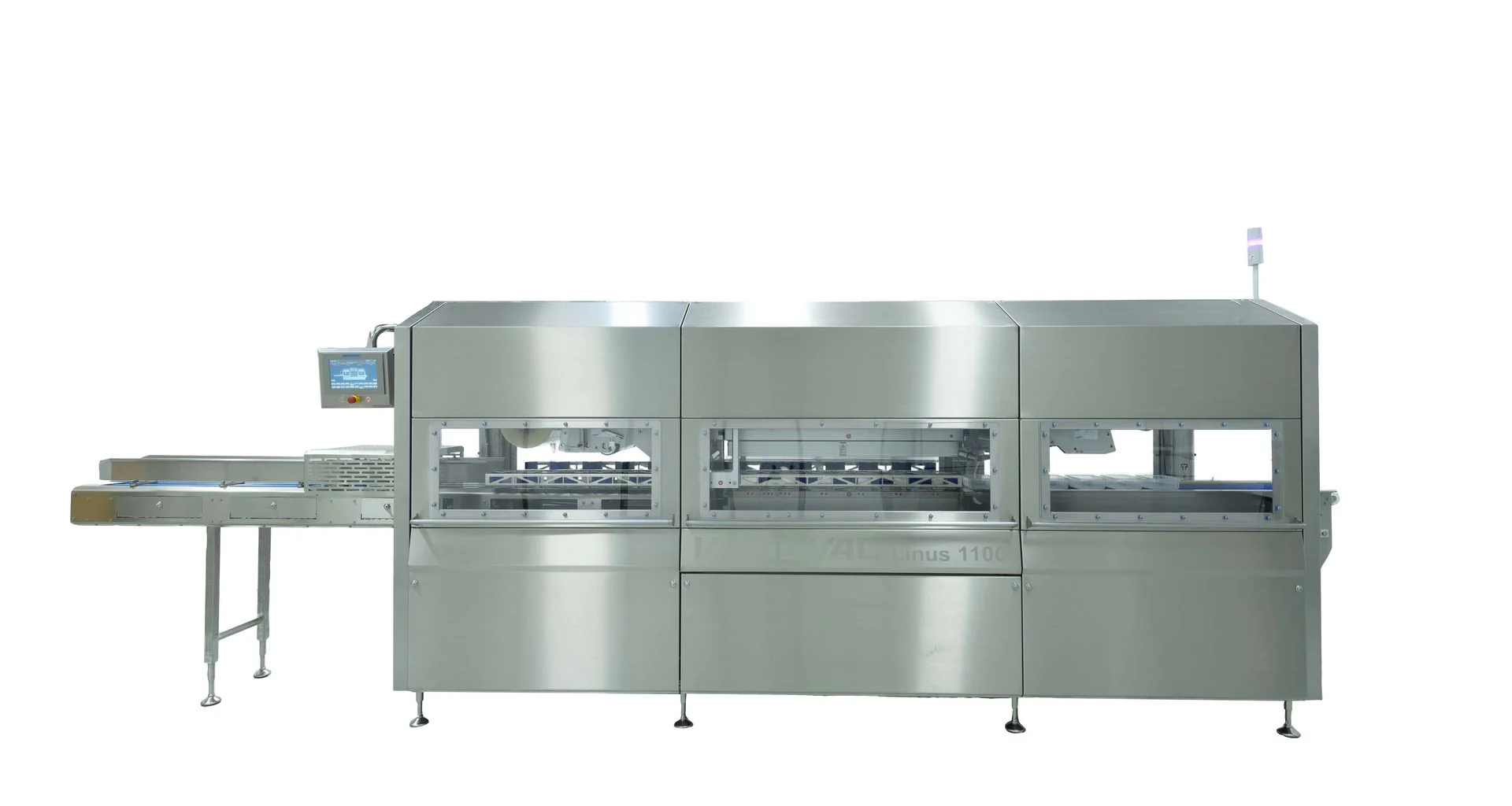
Variovac and Ross build the four machines listed here. They run from semi-automatic sealers, where an operator loads each tray, for small companies and stores, to fully automatic machines, including the Linus 1100 for medium- and high-volume production, and their published data is set out side by side below.
Tray sealers close trays that are made elsewhere, and our page on thermoformers and packaging machines covers packs formed from a roll of film on the machine.
Brands in this category


Equipment
4 tray sealers
The machines in the catalogue classed as tray sealers, listed by manufacturer range. Open one for details or ask which suits your product.
Browse the full catalogue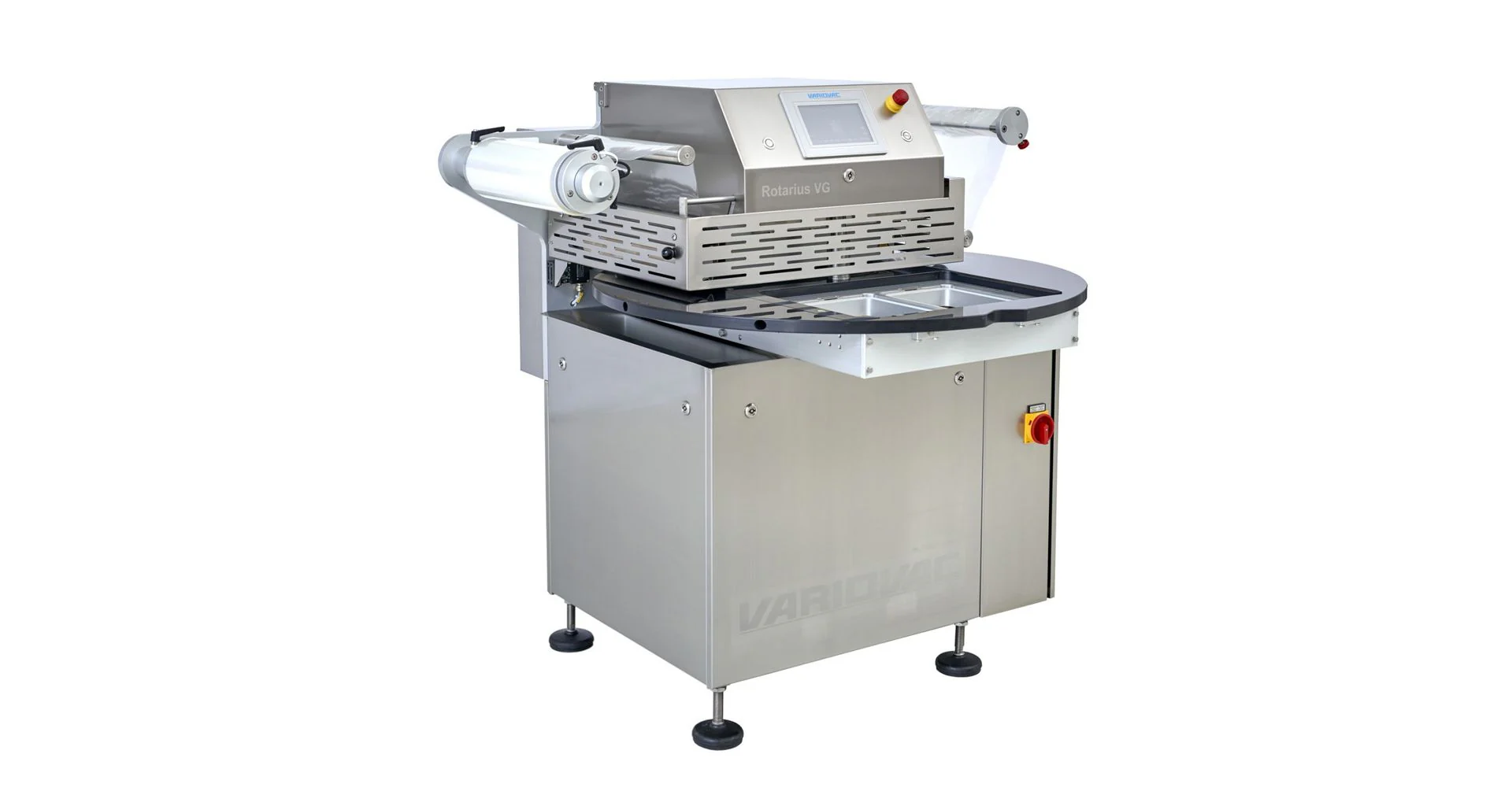
Side by side
Compare the tray sealers
The table lists what has been published for each tray sealer, row by row. The listings for the Rotarius and Linus 1100 carry technical data; for the two Ross machines the published data is a short description, so most of their cells read “Not published”.
| Published data | RotariusVariovac | Linus 1100Variovac | X450 Semi-AutomaticRoss | IN 1100Ross |
|---|---|---|---|---|
| Operation | Semi-automatic, rotary table, double tool | Fully automatic, inline | Semi-automatic | Fully automatic |
| Pack types | MAP, skin seal | Simply sealed, protective gas or skin | Not published | MAP, VSP |
| Suited to | Small companies | Medium- and high-volume production | Small processors, stores, food labs | Not published |
| Trays | Ready-made trays | PP, PE, PET, PS, aluminium | Not published | Not published |
| Tray depth | Up to 100 mm; up to 40 mm for skin | Not published | Not published | Not published |
| Film roll diameter | Up to 300 mm | Up to 300 mm | Not published | Not published |
| Max. film width | Not published | 410 mm outside cut, 350 mm inside cut | Not published | Not published |
| Control | IPC, 7” touchscreen | IPC, 10” swivel touchscreen, 80 recipes | Not published | Not published |
| Cycle rate | 4–8 cycles/min | Not published | Not published | Not published |
| Compressed air | Min. 6 bar | Min. 6 bar | Not published | Not published |
“Not published” means the figure is not in the published data for that machine, not that the machine lacks the feature.
- Only the Rotarius has a published cycle rate: 4–8 cycles per minute, which is a machine cycle, not a pack count.
- Tray depth is published for the Rotarius; tray materials and maximum film width for the Linus 1100.
- Tray formats are not published for any of the four machines, and the Rotarius cycle rate is the only speed figure, so confirm formats and output for your trays and products before comparing the machines on speed.
Automation
Semi-automatic or fully automatic tray sealer
The first decision is who handles the trays. On a semi-automatic sealer an operator places filled trays in the tool and takes the sealed packs out. On a fully automatic machine the trays are carried into the sealing station and out again without an operator handling each one, which matters once trays arrive from a loading line rather than a packing bench.
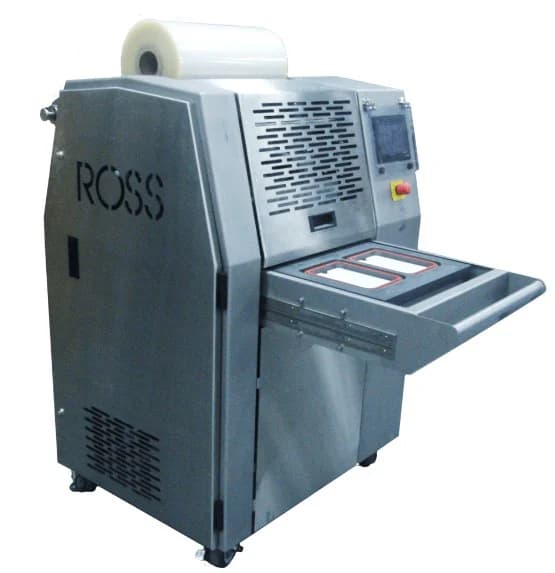
The Variovac Rotarius is semi-automatic, with two sealing tools on a rotary table. While one tool is sealing, the operator at the front removes finished trays and inserts new ones, so the machine avoids empty runs. It needs 1.6 m² of floor space and is described as suited to small companies. Of the Ross tray sealers, the X450 is the semi-automatic model, aimed at small processors, retail stores and food labs that want a compact, portable unit.
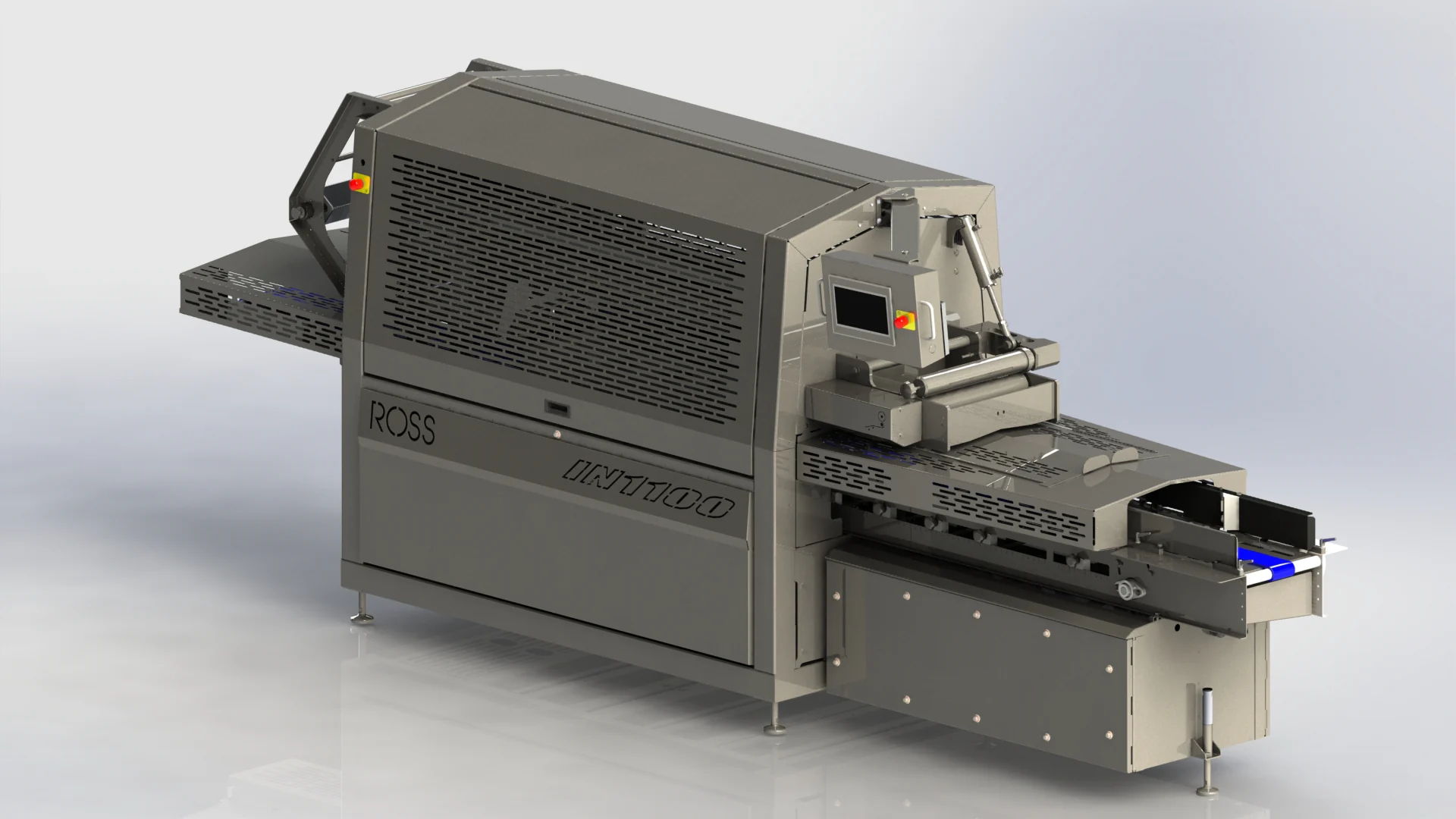
For continuous production, the Linus 1100 is a fully automatic inline sealer built for medium- and high-volume work. The Ross IN 1100 is fully automatic and designed for MAP and VSP packs.
Pack types
MAP and vacuum skin tray sealing
A simply sealed pack has the lidding film sealed to the tray rim with the air left inside. In modified atmosphere packaging the air in the tray is replaced with a protective gas before the film is sealed, so the product sits under a lid with headspace. In vacuum skin packaging (VSP) the heated top film is pulled down tight over the product and seals to the tray around it, holding the product in place without headspace.
The Rotarius vacuumises the trays and flushes them with gas inside the sealing tool, so it works as a vacuum tray sealer for MAP and also lists skin sealing, with a tray depth for skin packs of up to 40 mm. The Linus 1100 seals trays plain, under protective gas or as skin packs, so it covers skin tray sealer work on a fully automatic machine. The IN 1100 is a MAP and VSP tray sealer from Ross. No pack types are published for the X450.
Trays and film
Trays, film and changeover
Tray choice sets much of what follows: the sealing tool and format parts are matched to the tray, and the lidding film has to seal to the tray material. The Linus 1100 processes almost all types of sealable tray, with PP, PE, PET, PS and aluminium named. It converts between tray sizes from either side, with fold-up wing doors for access, and a mobile tool trolley carries the format parts and can heat the sealing tools, which shortens set-up. The Linus takes film rolls of up to 300 mm diameter, with a maximum film width of 410 mm for an outside cut and 350 mm for an inside cut.
The Rotarius packs into ready-made trays up to 100 mm deep, or up to 40 mm deep for skin packs. Products may overhang the tray by up to 25 mm, and the Rotarius also takes film rolls of up to 300 mm diameter. Check your tray dimensions against the tooling before ordering.
Upstream
Tray denesters and loaders
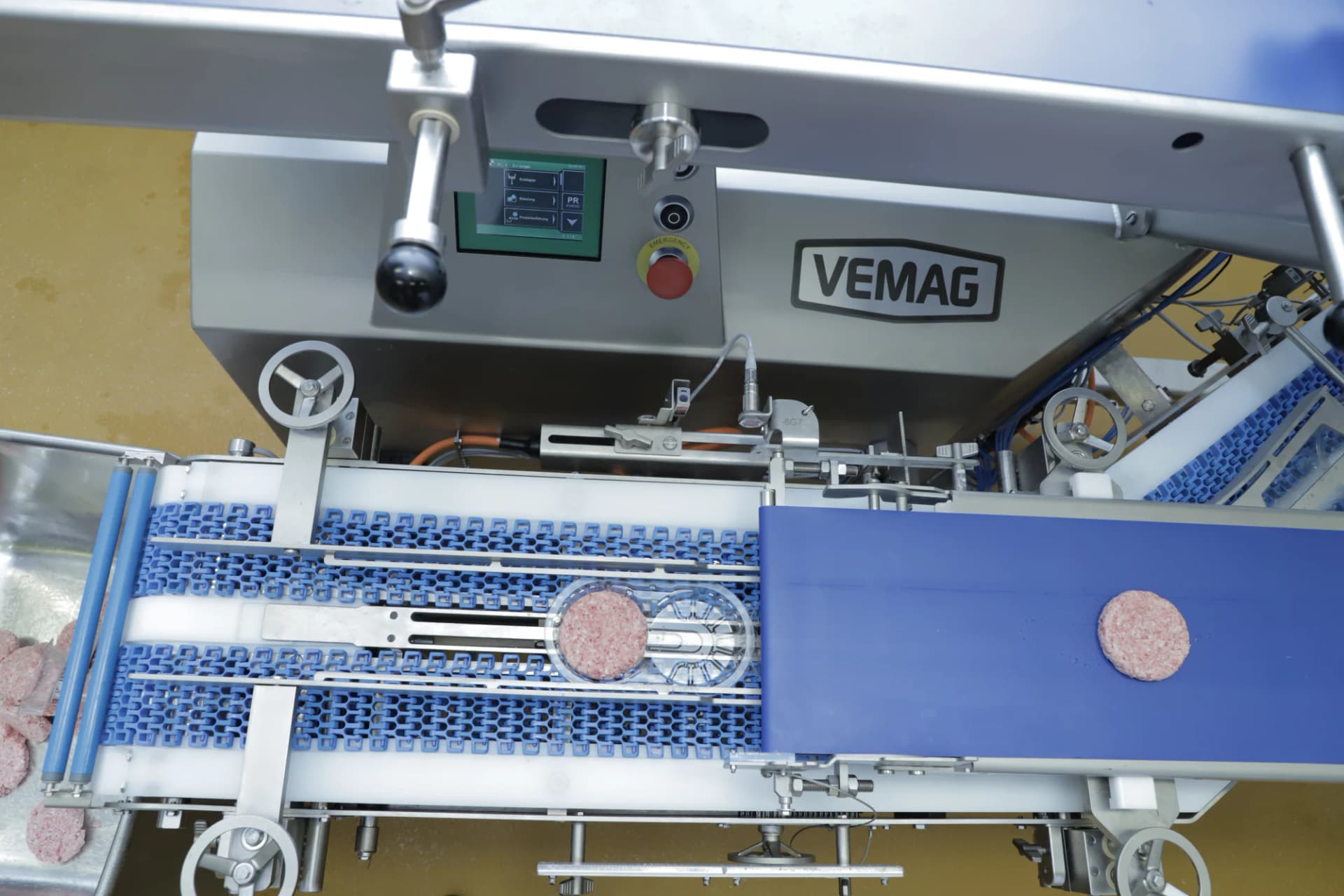
Before a tray is sealed it has to come off the stack and be filled. The catalogue includes VEMAG machines for those steps. The examples below are illustrative: each is described from its own published data, and none is presented as connected to a particular sealer on this page.
- TD315: a denester cassette. Formats change by swapping the cassette, and the cassettes also work on other VEMAG machines, including the DL302 and LL335, or stand alone to supply trays to machines like chop cutters.
- SL309: a loading line with an integrated tray denester, up to 300 products per minute, for minced meat, cevapcici, meatballs, burgers and sliders.
- DL302: a loading line that inserts products into commercially available trays.
- LL335: loads cut fresh sausage into trays and thermoformed pouches.
- AML273: forms balls and loads them directly onto trays.
- MMP220: a minced meat portioner that can transfer portions to an optional tray denester.
For the equipment that moves product between these stages, see loading lines and conveyors, and talk to us when you are planning a processing line.
Related
Industries and applications
Browse equipment by the food sector you work in, or by the product you make.
Equipment
Other machine types
Every machine type in the catalogue, with the number of machines listed under each.
Browse by brand- Vacuum fillers11 machines
- Portioning & forming machines17 machines
- Sausage linking, hanging & cutting24 machines
- Grinders & mincers16 machines
- Bowl cutters & emulsifiers5 machines
- Brine injectors23 machines
- Brine mixers & tanks7 machines
- Tumblers & massagers4 machines
- Tenderisers & flatteners3 machines
- Slicers & dicers9 machines
- Cooking, smoking & drying2 machines
- Defrosting & pasteurization1 machine
- Dough dividers & bakery machines11 machines
- Depositors7 machines
- Thermoformers & packaging20 machines
- Conveyors & line equipment9 machines
- Inspection & weight control11 machines
- Attachments & accessories24 machines
Contact
Talk to us about tray sealers
Ask for advice, a quotation or a consultation — by phone, by email or through the enquiry form.
- Australia(07) 3829 3868
- New Zealand+64 9 415 0137
- Salessales@vemag.com.au