
Vacuum fillers for meat
Compare vacuum fillers for meat by recipe, portion format and production pattern, from butcher-shop batches to industrial meat processing.
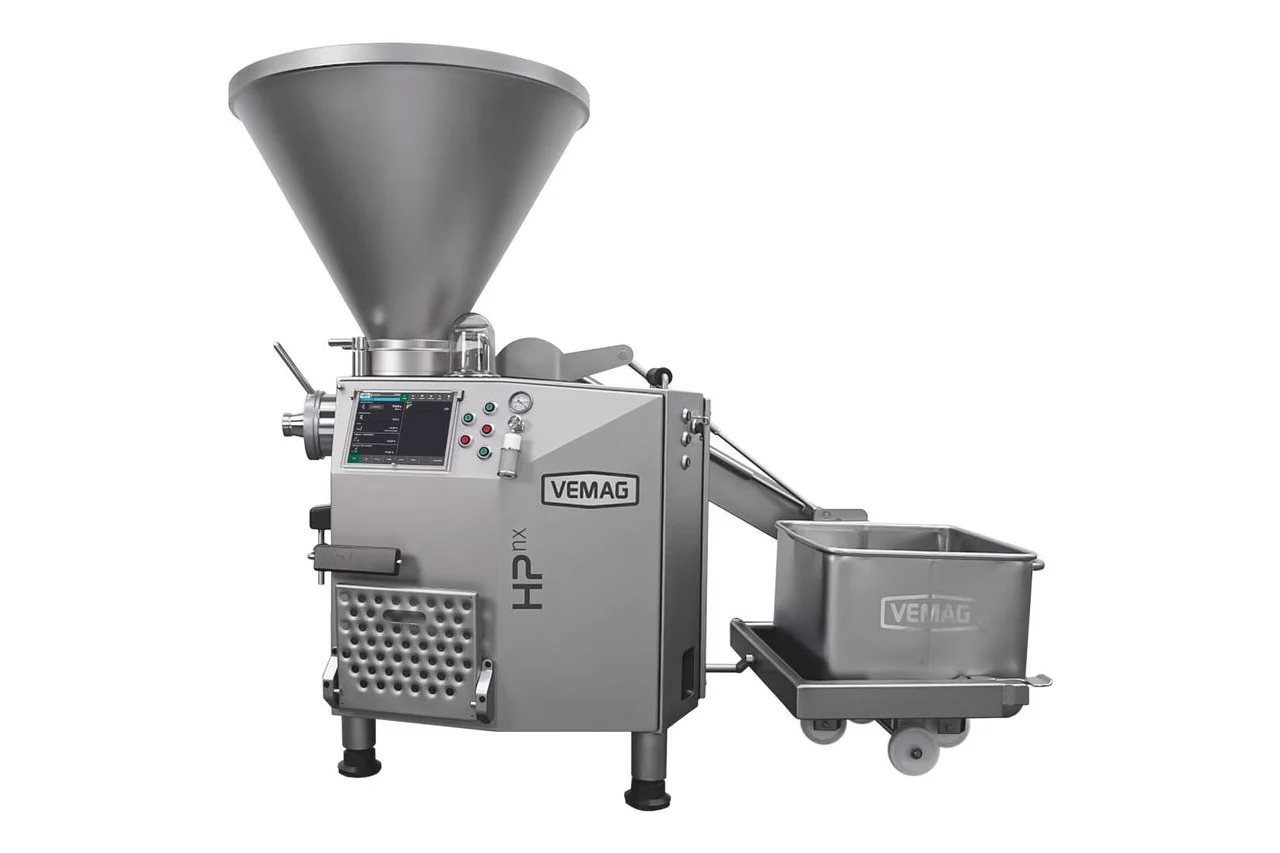
Choose the filler around the meat product
A vacuum filler meters a prepared meat mixture and feeds it through a filling horn or an attachment. Vacuum removes air during feeding; the outlet configuration determines whether the product goes into a casing, a former, a container or a minced-meat portioning system. Vemag Australia supplies VEMAG vacuum fillers for meat production in Australia and New Zealand.
Start with the recipe and finished product. Coarse sausage mixtures, fine emulsions and minced meat place different demands on feeding and discharge. The filler, feeding element and attachment need to be assessed together for the actual mixture and production task.
Fresh and cooked sausages
Match the filler to the casing, calibre and linking or clipping method. Include the recipe and required portion format in the enquiry.
Burgers and formed meat
A filler meters the mixture into a compatible former. The mould or nozzle creates the shape, so the proposed combination needs to be specified.
Mince and industrial meat products
The XP2 is described for minced-meat grinding applications, salami and other meat products. Compare the preparation and feed arrangement as part of the selection.
What the vacuum filler does in a meat process
The filler sits between preparation and the operation at its outlet. Grinding, mixing or bowl cutting prepares the mass; the filler feeds and meters it; a downstream device fills, shapes, links or portions it. A filler’s headline capacity alone does not establish the output of the complete process.
Feed the prepared mixture
Define the material entering the hopper: particle size, consistency, temperature and how it is loaded. The choice of feeding element and hopper arrangement forms part of the machine specification.
Meter each portion
Set the required product weight and format. Discuss the actual recipe and working conditions when evaluating portioning performance rather than assuming every mixture behaves the same.
Match the outlet operation
Identify the casing, former, grinder, container or loading equipment receiving the product. Confirm mechanical connections and controls for the proposed filler and attachment.
Vacuum fillers for meat production: models to compare
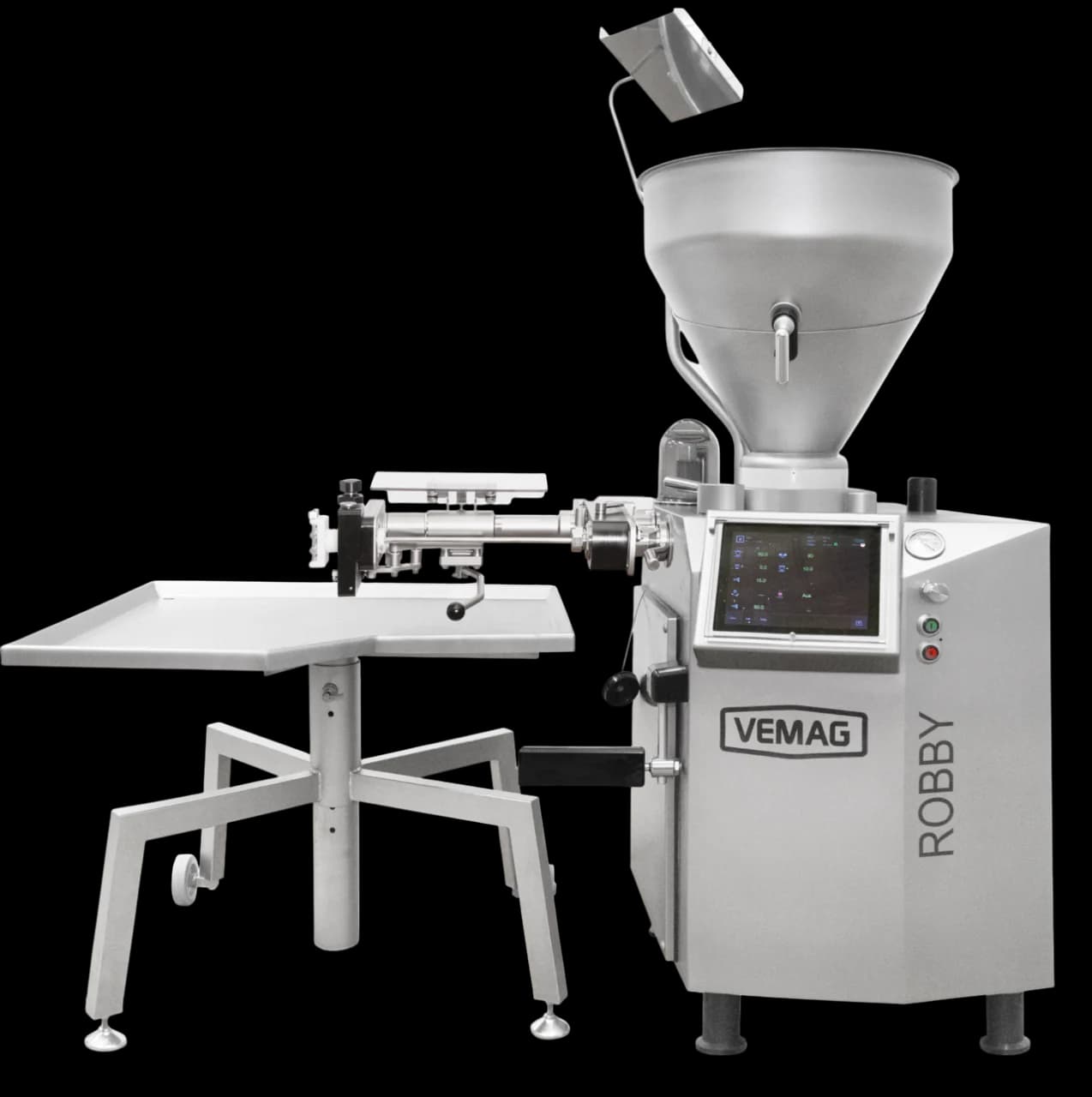
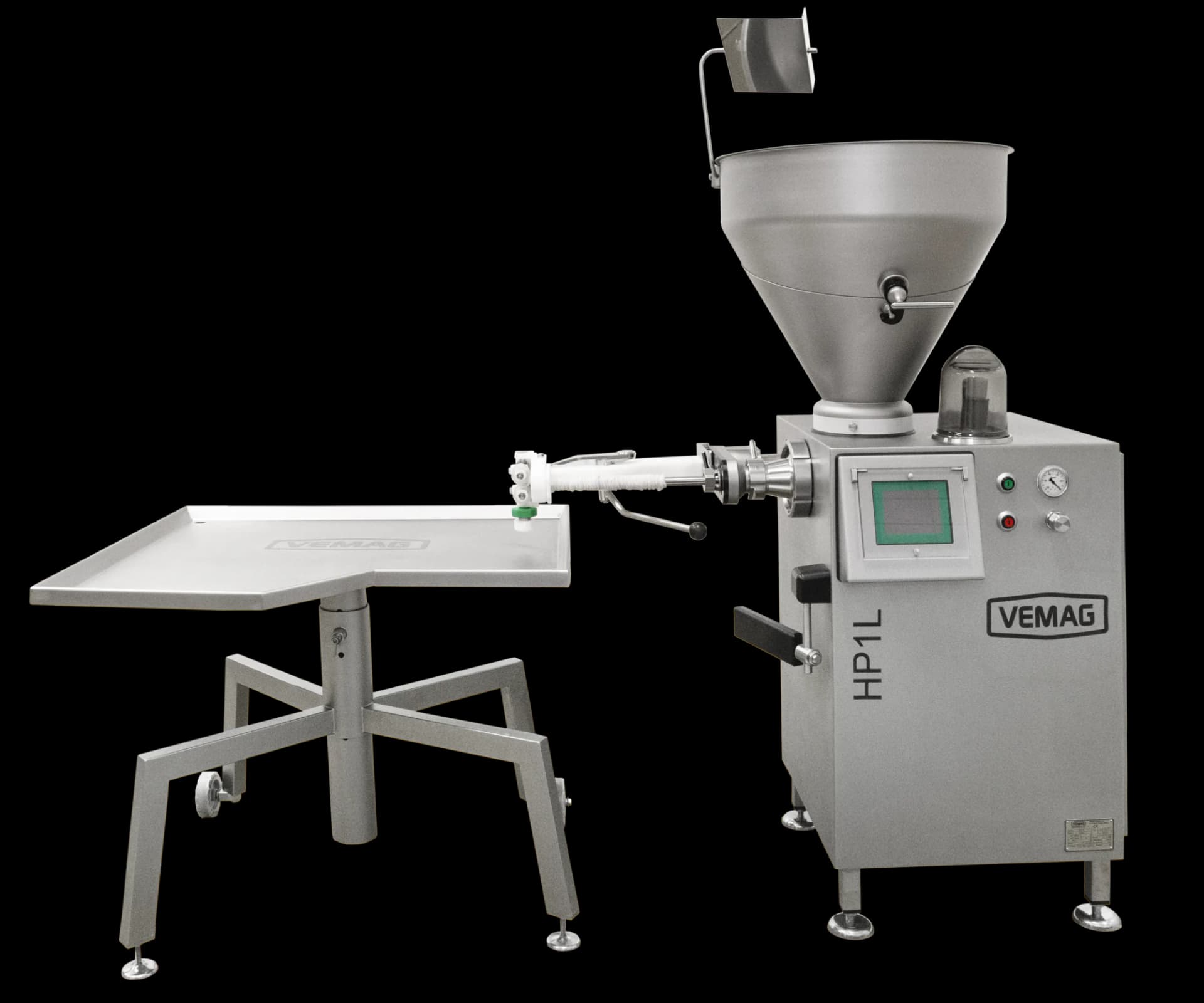
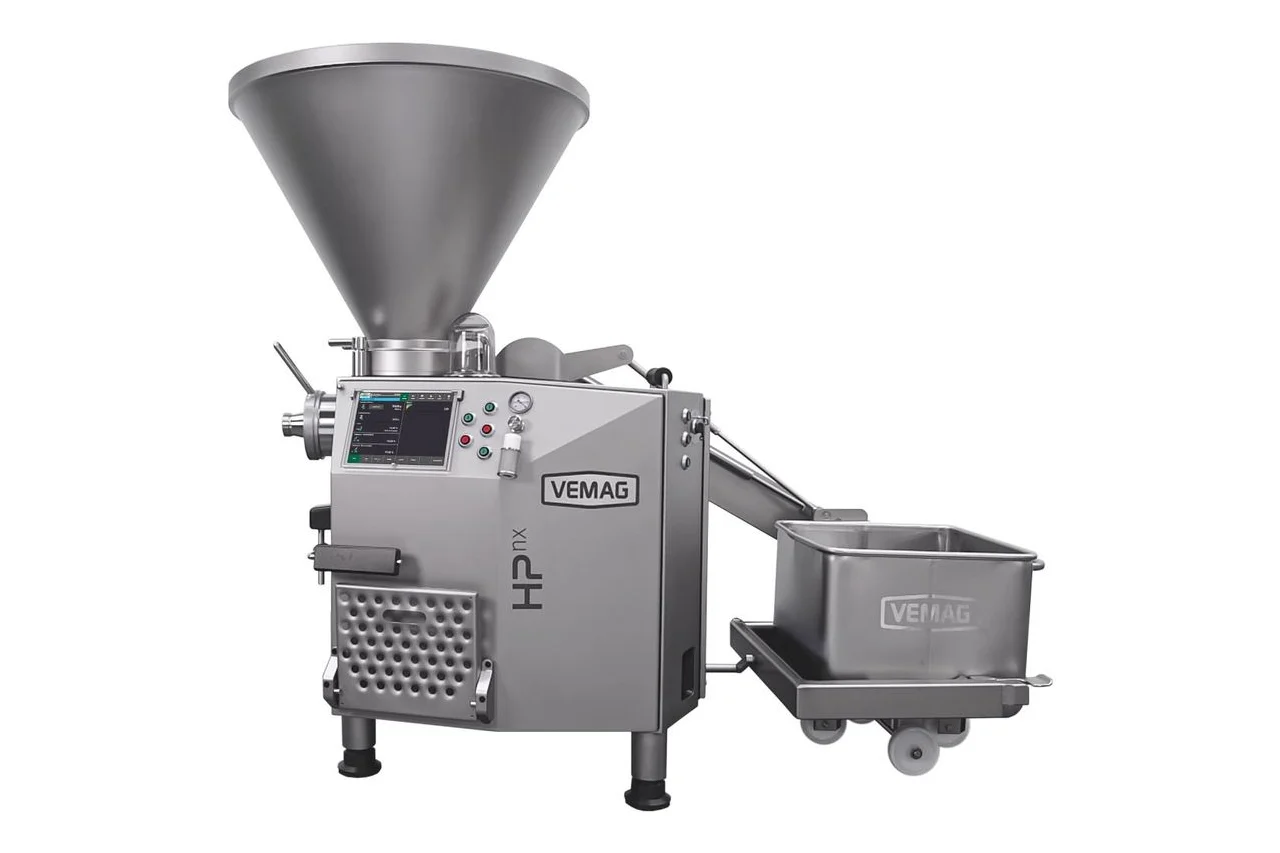
These six catalogue models cover different production patterns. Robby is described for smaller batches and frequent changes; HP1 is described for meat and sausage products with interchangeable attachments; the HPnx models offer another range of feeding and portioning configurations; XP2 includes an inline grinder. Select a model to review its published specifications.
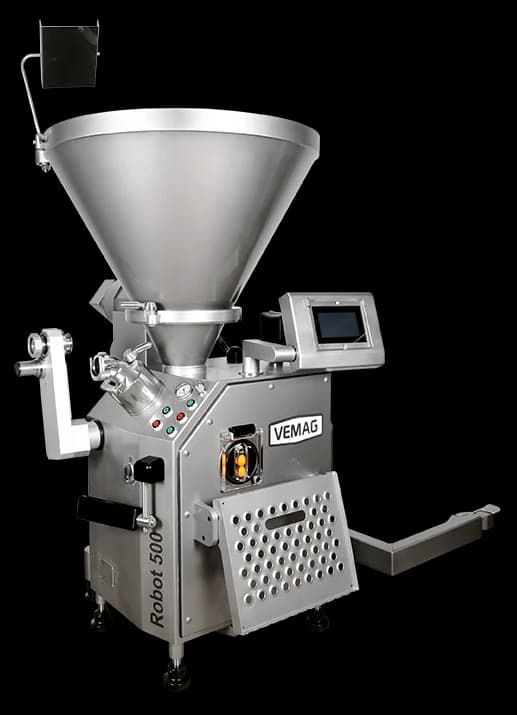
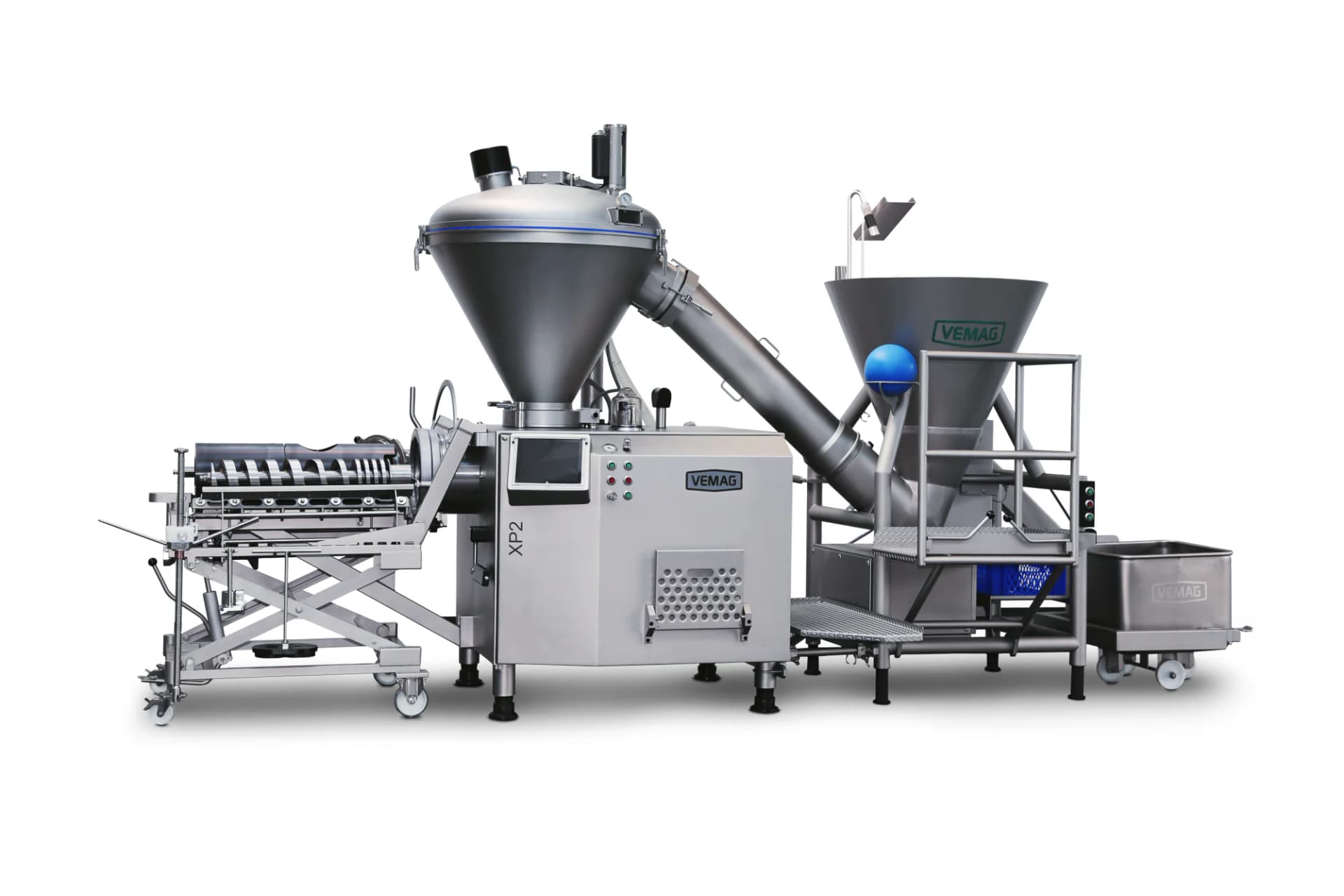
| Machine | Production task | Discuss with the sales team |
|---|---|---|
| Robby | Rotary-vane vacuum filler described for smaller meat-production batches | Batch pattern, product changes and required outlet operation |
| HP1 | Fills and portions meat and sausage mixtures with interchangeable attachments | Feeding element, attachment, casing or forming operation |
| HP10NX | HPnx vacuum filling and portioning configuration | Feeding element, portion format and receiving equipment |
| HP20NX | HPnx model with a different published hopper and drive specification | Material feed, required process rate and full configuration |
| Robot 500 | Double-screw vacuum filler described for butcher production | Recipes, hopper loading and the proposed attachments |
| XP2 | Vacuum filler with inline grinder for industrial minced-meat and other meat applications | Material condition, grinder arrangement and belt or worm feeding |
Choose the attachment as carefully as the filler
One vacuum filler can support several tasks when the appropriate attachments are available. Compatibility is model-specific: sharing a manufacturer or appearing in the same catalogue does not establish that two machines connect. Specify the filler and the device at its outlet as a proposed configuration.
Sausage linking and hanging
Casing holding, length portioning, cutting and hanging equipment serves different sausage formats. Match the casing and product to the relevant machines.
Burger forming
Burger formers and forming attachments turn a metered meat mixture into a defined shape. Include the recipe, dimensions and receiving belt or tray.
Grinding and meat preparation
The mixture reaching the filler depends on the grinder, mixer or cutter upstream. Include the existing preparation equipment in the discussion.
For the wider sequence from raw material to a packed product, see meat processing systems.
What to specify before comparing a meat filler
Send the sales team a representative production brief. A long run of one product needs a different assessment from several short batches with changes in recipe, casing or attachment. Include loading, changeovers and cleaning when discussing the working shift.
- Meat species, recipe, particle size and required finished texture.
- Product temperature and any frozen material entering the proposed process.
- Batch sizes, daily product mix and the output required over the working shift.
- Portion weight, casing calibre, shape and how the product is received after filling.
- Existing grinder, mixer, cutter, clipping or linking equipment and its connections.
- Hopper loading method, available space, utilities and access for cleaning and maintenance.
The XP2 description includes minced-meat applications with a high frozen-meat content and says continuous operation requires feeding by belt or worm conveyor. That is a model-specific description, not a capability to assume across the vacuum filler range.
Evaluate the recipe and agree the quotation scope
Discuss a trial at the Vemag Australia Customer Centre with your own raw materials and recipe. Agree which filler and attachments can be evaluated, and what you want to assess: feed behaviour, portion presentation, weight targets, product changes and operator tasks.
Ask the quotation to identify the filler, feeding element, hopper, attachments, controls and installation requirements. Confirm pricing, availability and the scope of training with the sales team.
Vemag Australia’s service team supports installation, operator and maintenance training, maintenance and repairs. The spare parts team helps identify genuine components. Include support requirements when comparing the proposed machines.
Vacuum fillers for meat: questions
What is a vacuum filler used for in meat processing?
A vacuum filler feeds and meters a prepared meat mixture, removing air during feeding. With the appropriate outlet configuration it can fill casings, feed a former or supply a portioning operation. The finished product depends on the recipe, filler and attachment.
Which vacuum fillers suit smaller meat-production batches?
Robby is described for the meat industry, smaller batches and frequent product changes. HP1 is described for butcher businesses making meat and sausage products with interchangeable attachments. Compare the actual recipes, batch pattern and attachments before choosing.
Can a vacuum filler make both sausages and burgers?
A proposed setup may use different attachments for those tasks. Sausage production needs the relevant casing and linking or clipping arrangement; burgers need a suitable forming device. Ask the team to confirm the filler, attachment and control compatibility for both products.
Can vacuum fillers process frozen meat?
The XP2 listing describes minced-meat grinding applications with a high frozen-meat content. This does not establish the same capability for every filler or recipe. Provide the material condition and proposed process so the appropriate machine and feeding arrangement can be assessed.
Is a vacuum filler the same as a vacuum packaging machine?
No. A vacuum filler feeds and portions the food mixture during processing. A vacuum packaging machine removes air from a pack and seals it around the product. They perform different tasks and are specified separately.
How do I get a quote for a meat vacuum filler?
Send the recipe and material condition, batch sizes, required portion format, production target and existing equipment. Include site details and any attachment or support requirements. The team can discuss a proposed configuration, product trials and quotation scope.
Contact
Choose a vacuum filler for your meat products
Send the recipe, portion format and production pattern. Discuss a suitable filler, attachments, product trials and quotation scope with our sales team.
- Australia(07) 3829 3868
- New Zealand+64 9 415 0137
- Salessales@vemag.com.au