
01Scope
What makes a food processing line automated
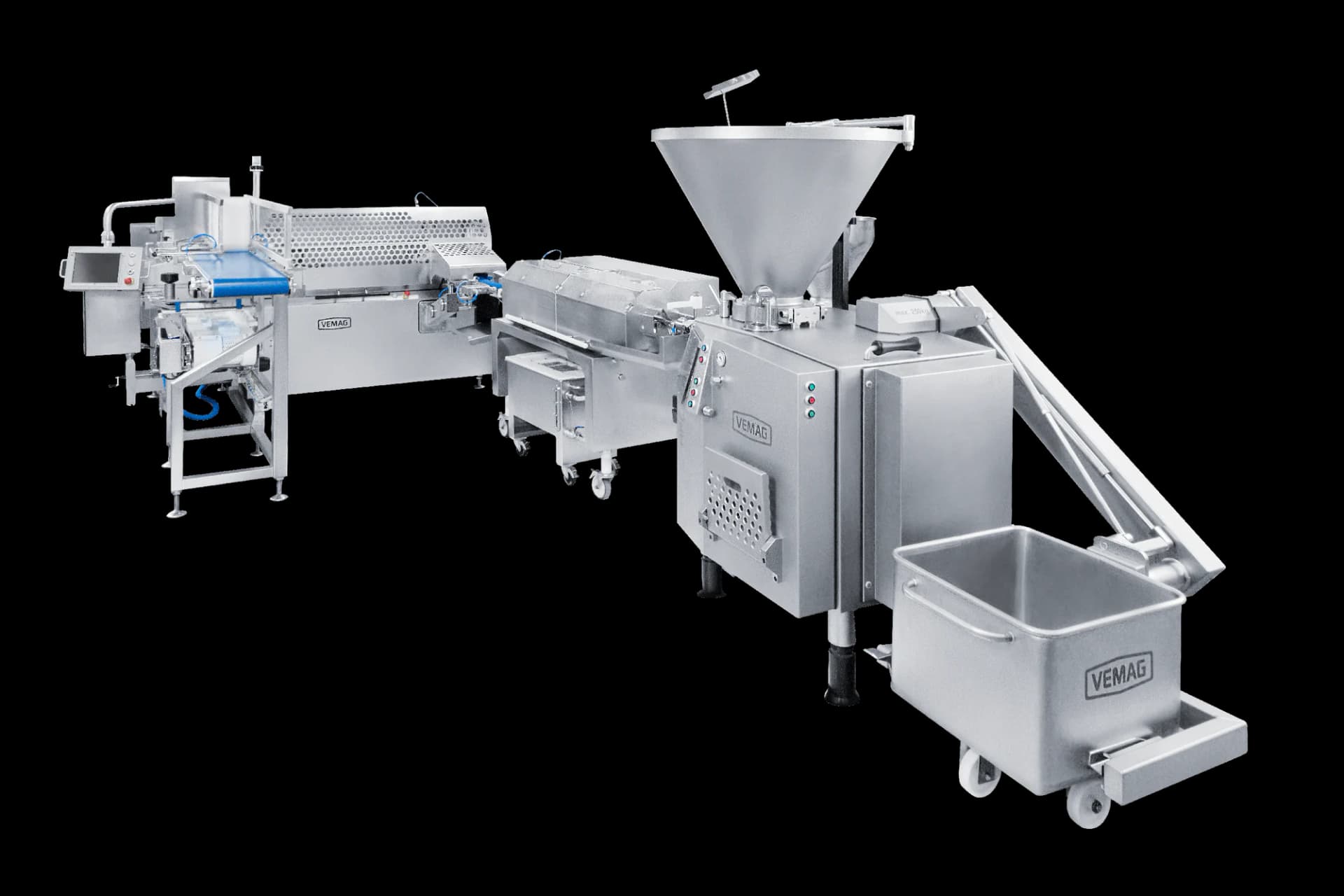
Many food plants already run automatic machines. A vacuum filler portions on its own, a thermoformer forms and seals packs on its own. What usually is not automatic is the space between them, where someone loads, carries, cuts, hangs, places, weighs or checks product before the next machine can take it.
Automating a line means closing those gaps, one at a time. Each stage below is one such gap, with the machines in our catalogue whose own listings describe doing that job. They are examples of what can be automated, not a line we have installed, and whether a given machine suits your product and your existing equipment is worked out when the line is specified.
- Covered here: feeding the first machine, portioning and forming, interleaving, casing loading, cutting and hanging sausages, grouping onto belts, lane handling, tray denesting and loading, robotic loading and case packing, weight control, metal and X-ray inspection, tray sealing, thermoforming, and bakery dividing and depositing.
- Not in our catalogue: palletising, labelling and printing, freezers and chiller rooms, and software that controls a whole line. Plan those with their own suppliers.
For complete example lines by product (mince, sausage, bacon and ham, pet food and bakery), see production lines. For every machine type in a meat plant, stage by stage, see meat processing systems, and for getting raw material into the first machine, ingredient handling equipment.
02By stage
The handoffs a line can automate, and the machines for each
The stages run roughly in line order, from the first hopper to the sealed pack, with bakery last. Every machine named here is described from its own listing, and each stage links to the full machine type so you can compare the rest of the range.
Stage 1Grinders & mincers
Feeding the first machine
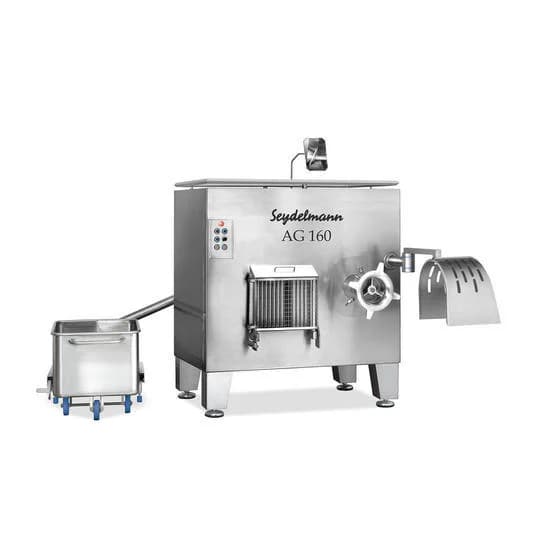
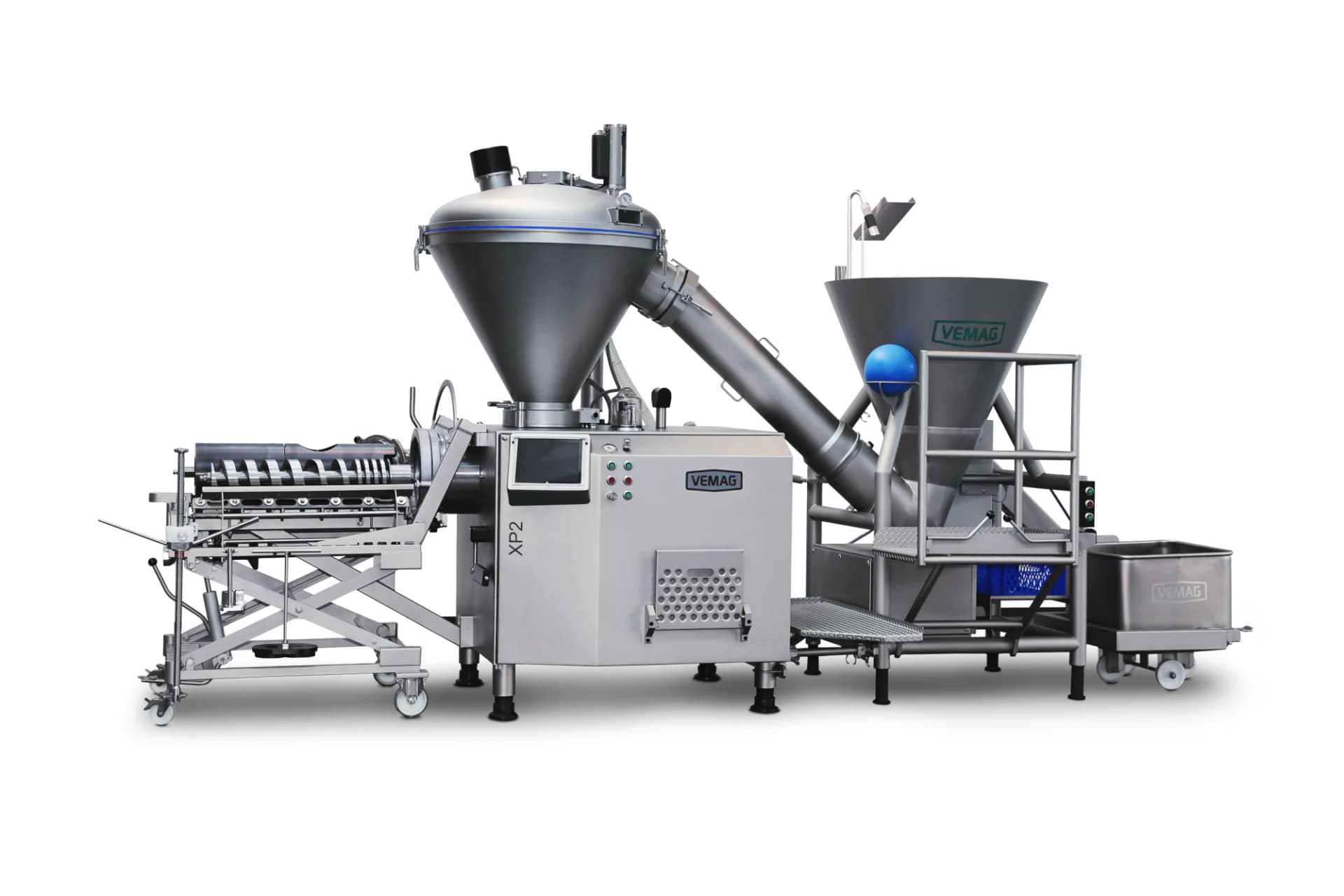
An automated line can still start with a person tipping a bin, but it does not have to. The Seydelmann AG 160 automatic grinder can be loaded by an integrated hydraulic or vertical loading device, or fed by angled conveyor belts or screw conveyors. The VEMAG XP2 vacuum filler is mainly used for grinding minced meat, and its listing says continuous operation needs product fed by belts or worm conveyors. Loading is covered in more detail on our ingredient handling equipment page.
Stage 2Portioning & forming machines
Portioning mince and forming balls
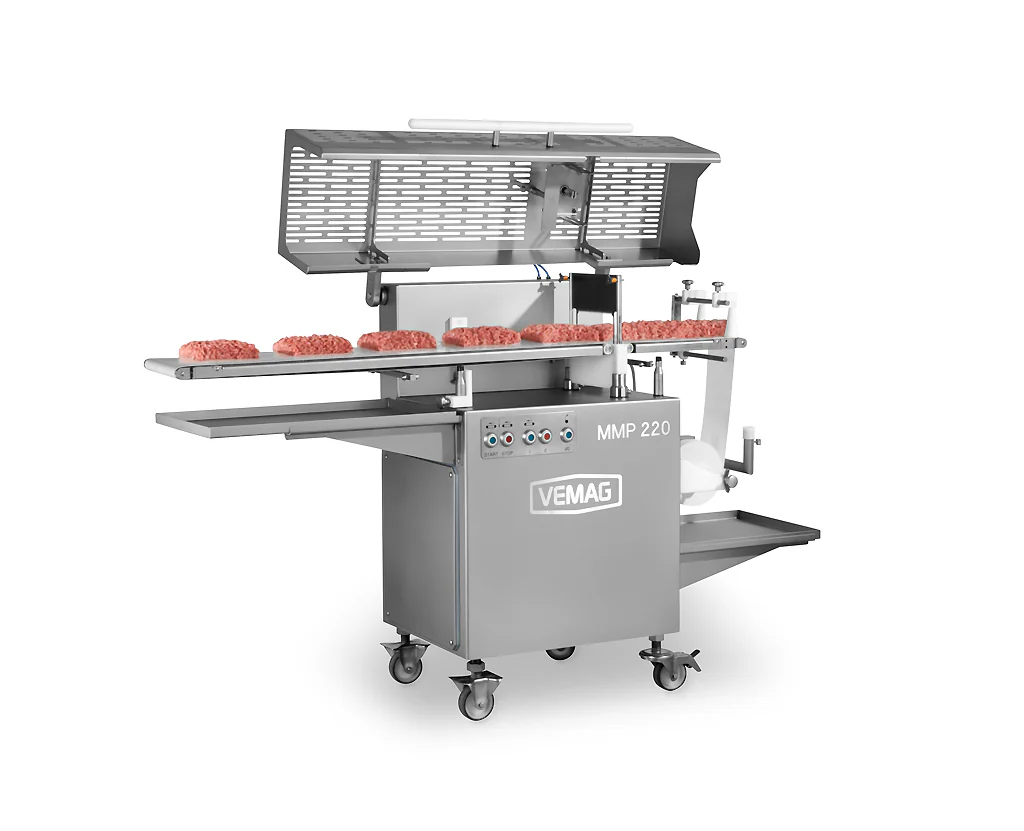
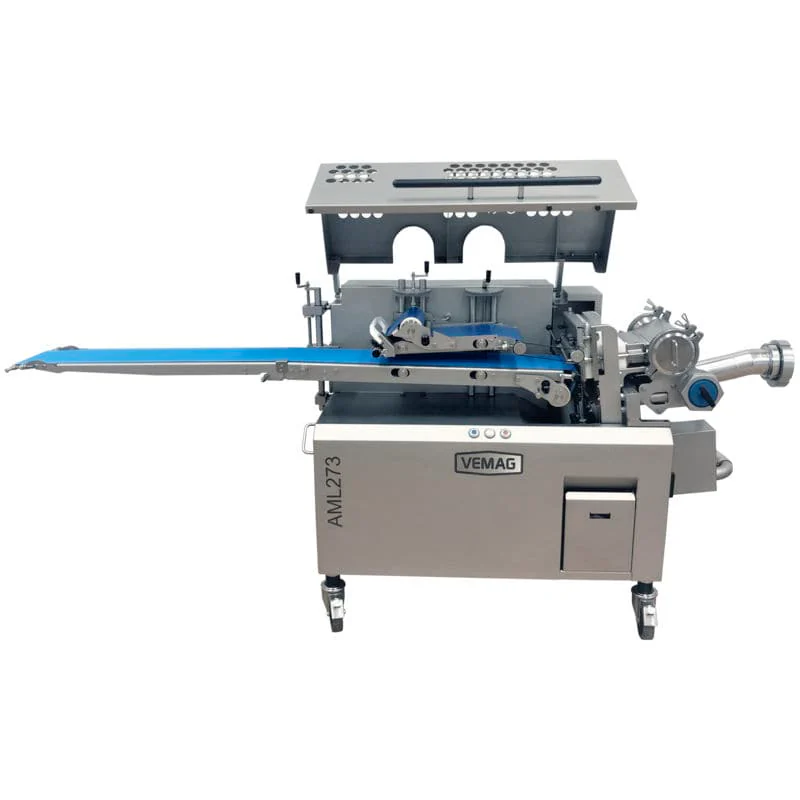
The MMP220 minced meat portioner grinds, separates and portions, and its listing describes it as the way to expand a VEMAG grinding system into an automated production line. Add the optional tray denester and conveyor and the portions are placed in trays and moved on automatically. The AML273 forms meatballs, vegetable balls, skinless sausages and croquettes and loads them fully automatically into trays.
Stage 3Conveyors & line equipment
Interleaving burgers and patties
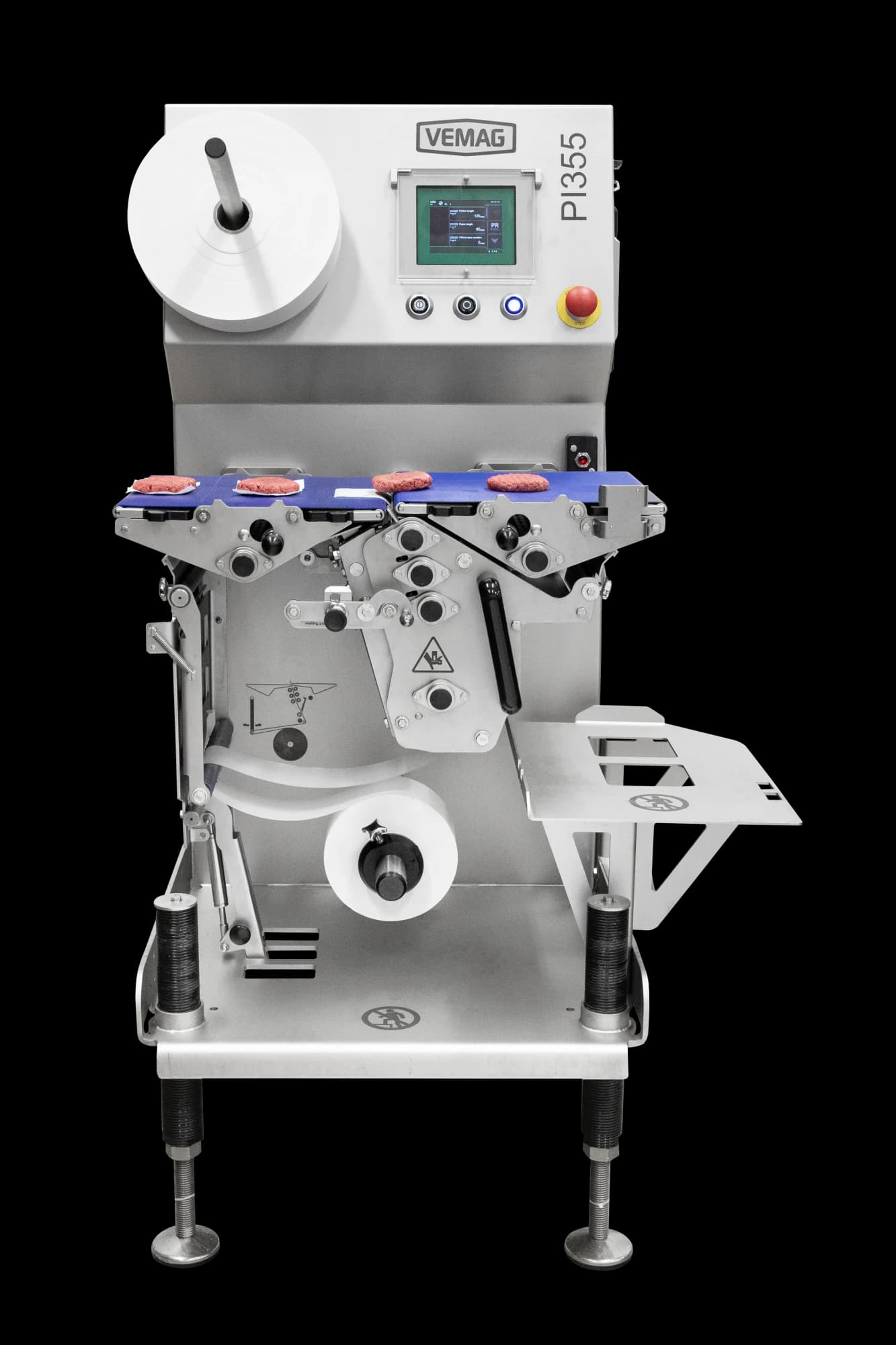
Stacked patties need a sheet between them so they separate cleanly. The PI355 paper interleaver deposits products automatically on paper or plastic film of variable length and width, in a single or double lane. It is listed as an accessory for the BF255 burger former, the FM250 forming machine and the ASV811 cutting device, and its compact design adds little length to the forming line.
- PI355Paper Interleaver
Stage 4Sausage linking, hanging & cutting
Putting casings on the horn
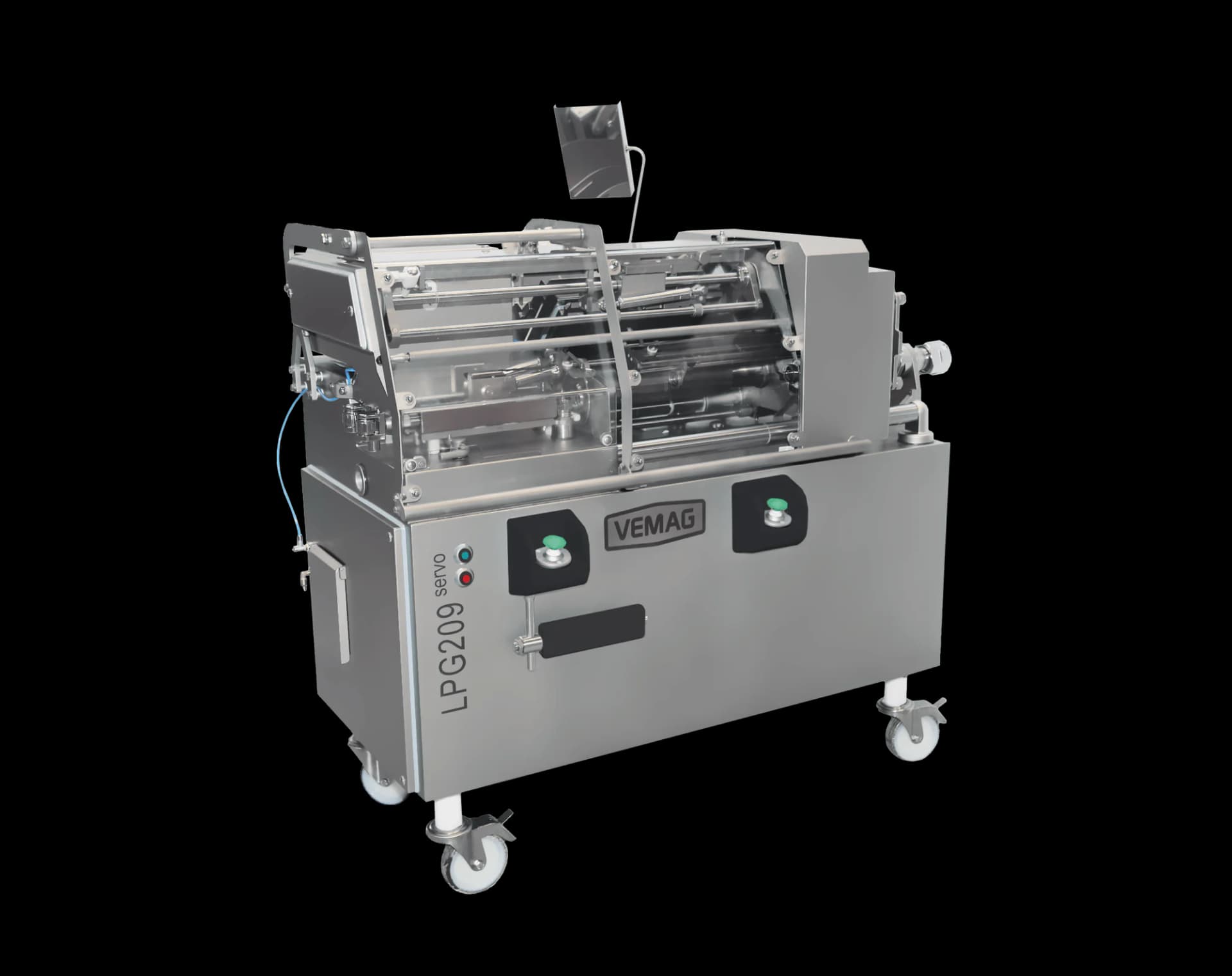
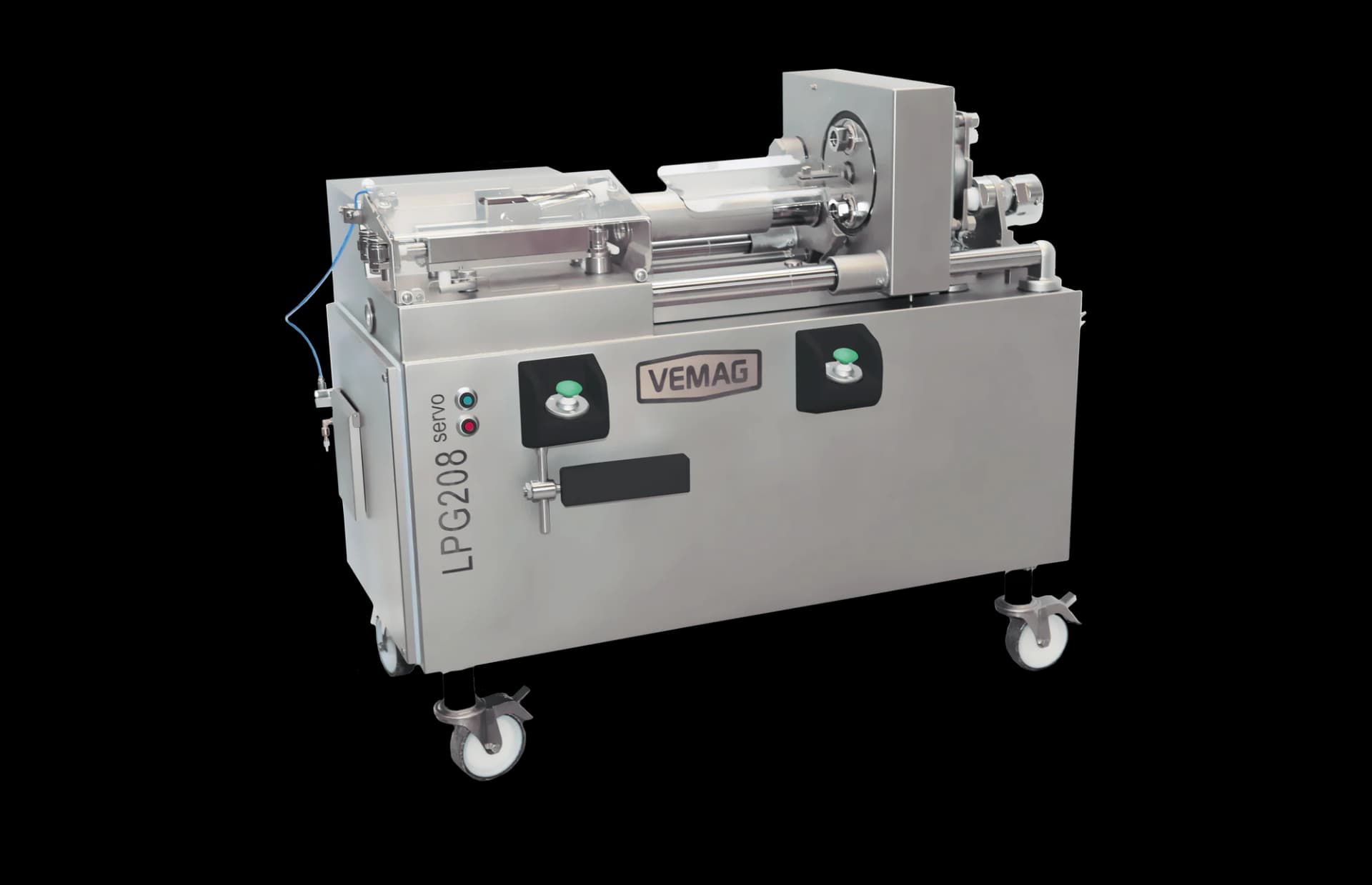
Where casings go on by hand, filling stops while each one is loaded. The LPG209 length portioning machine has an automatic casing magazine that does that work, and the LPG208 has a fully automatic casing usher, which its listing says makes casing changes considerably shorter. On portioning and linking machines such as the VS227, sensors detect casing ends and breakages and keep the linking unit synchronised with the filling process.
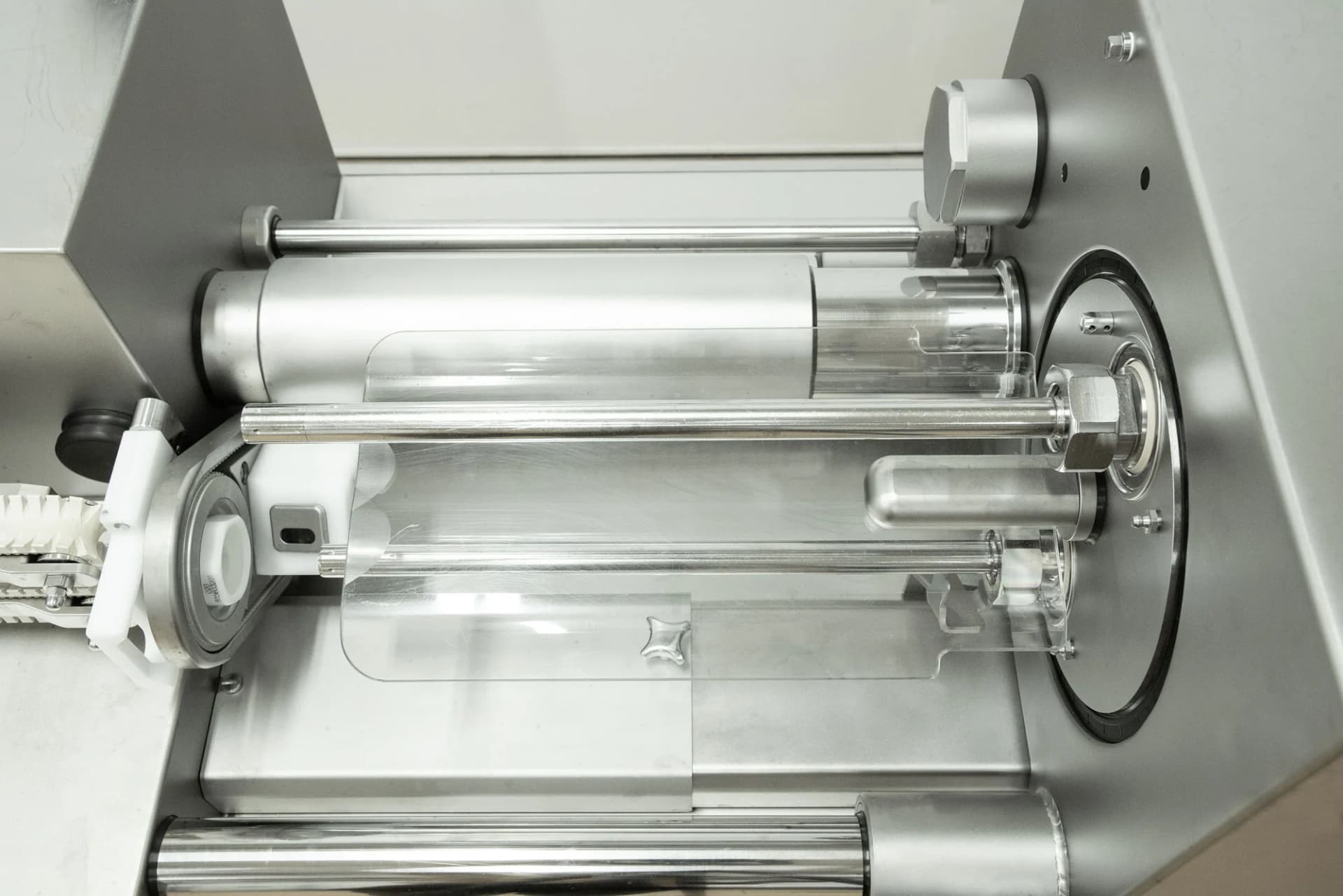
Stage 5Sausage linking, hanging & cutting
Cutting strings and hanging sausages
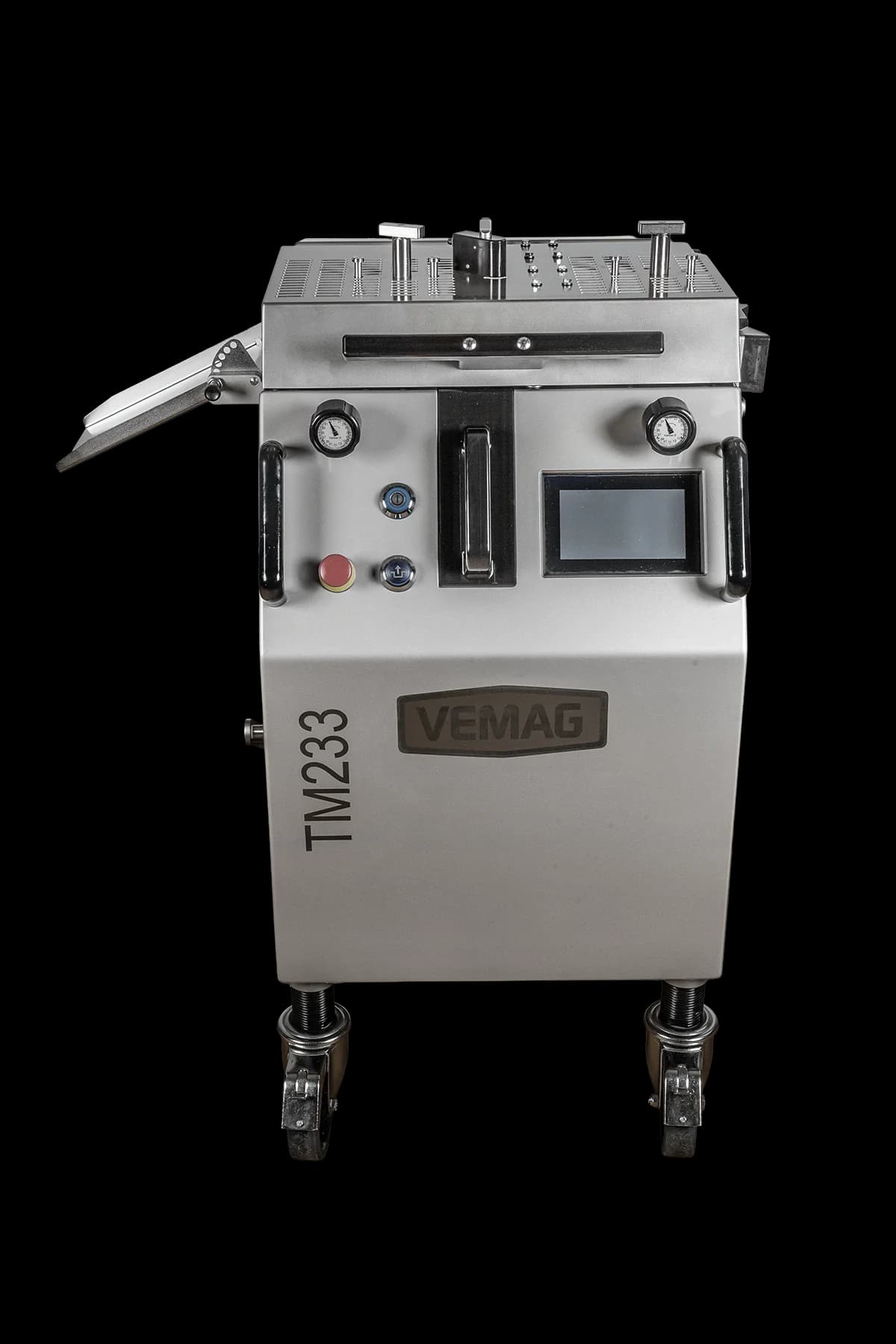
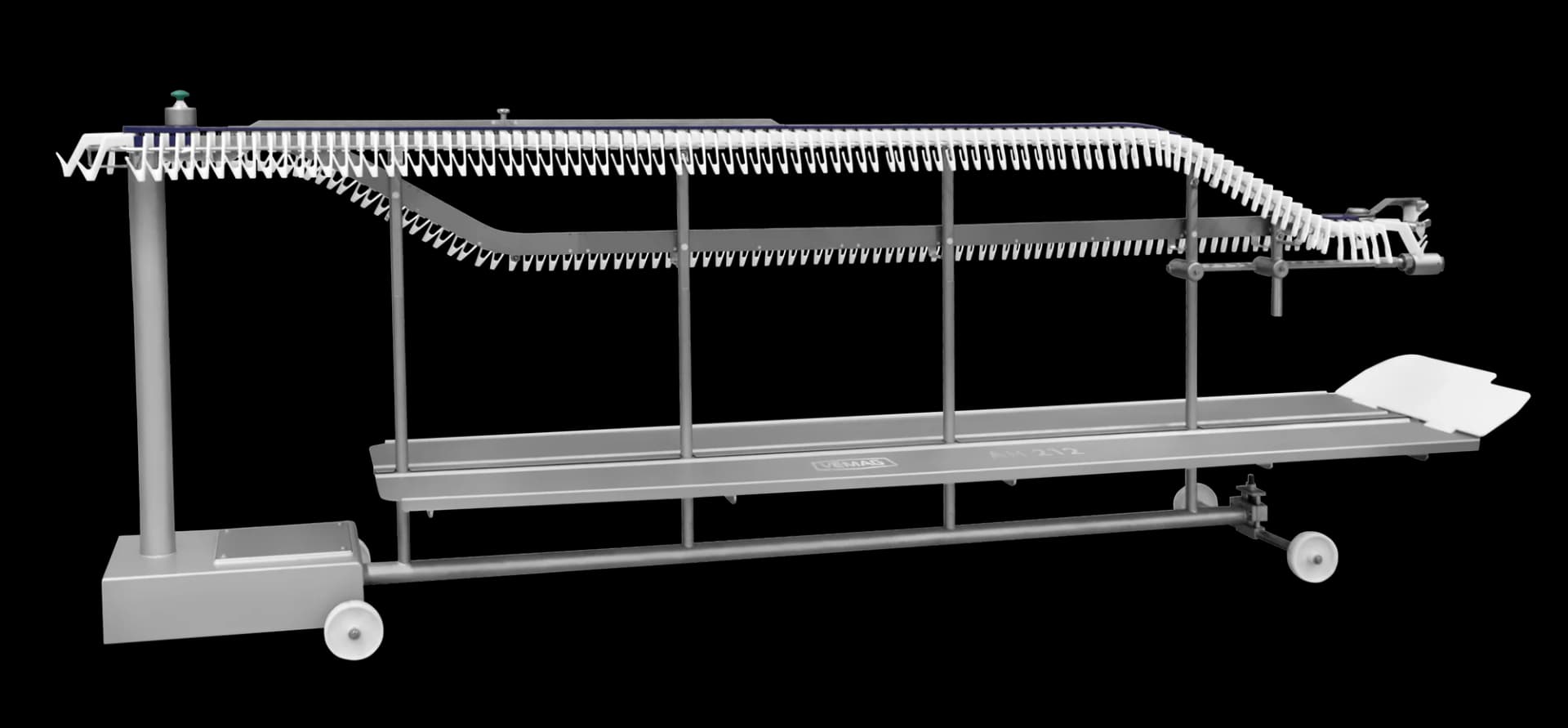
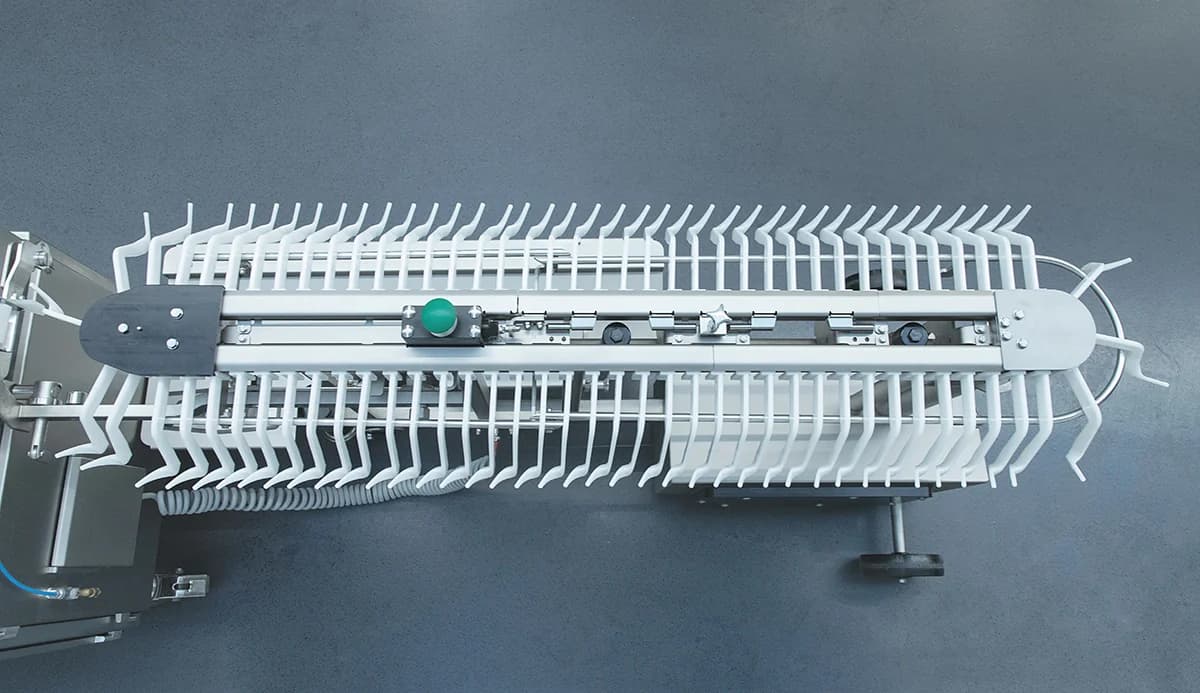
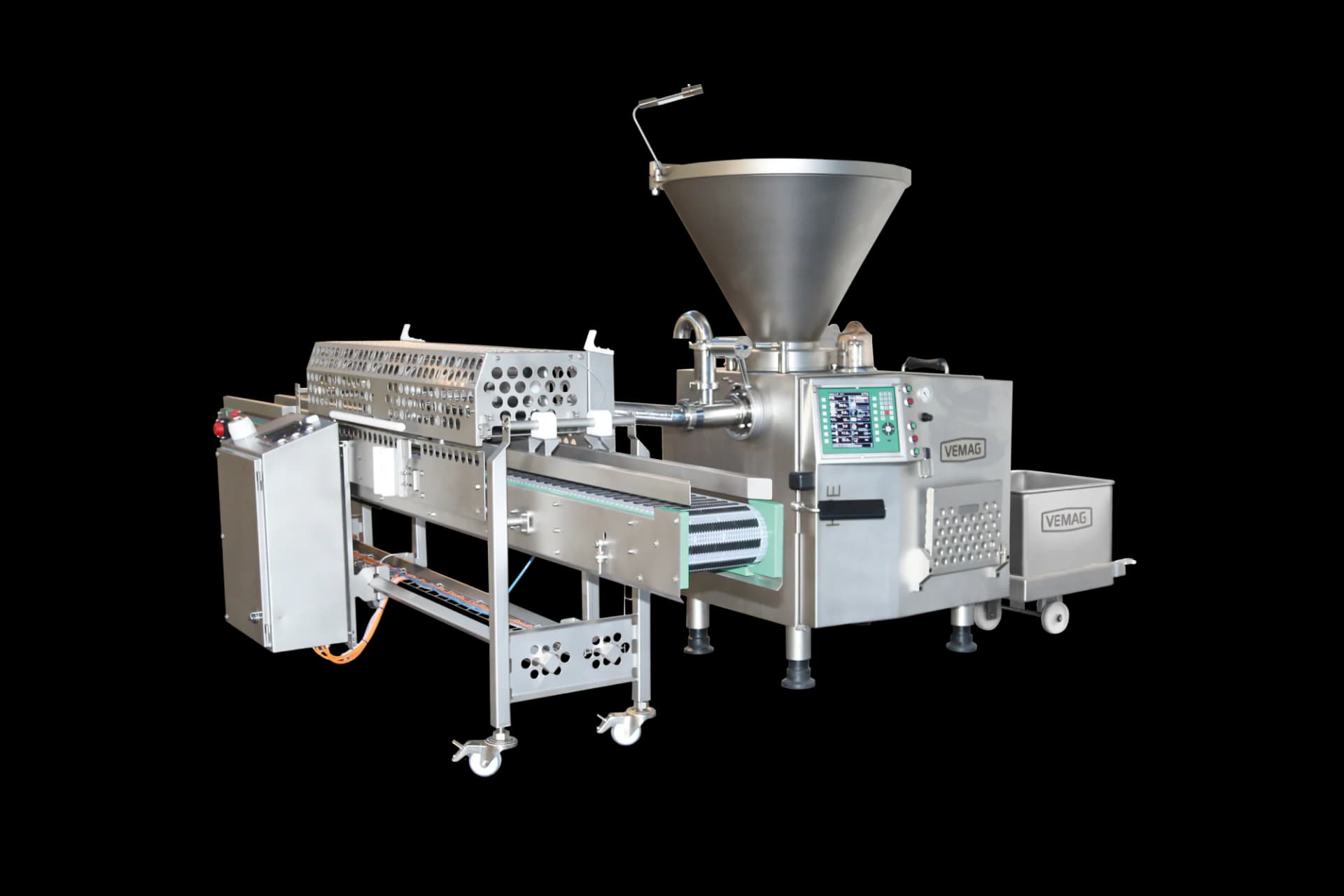
A linker produces a continuous string, and someone or something has to turn it into single sausages or hang it for the smokehouse. The TM233 cutting machine separates the string: at a filling table the operator guides strings into it by hand, while combined with an LPG202 or LPG208 length portioning machine it makes a fully automatic sausage line. The AH212 and AH249 hanging machines hang strings of sausages automatically, and their hook spacing is adjusted to suit the smoke trolley and sticks.
Stage 6Conveyors & line equipment
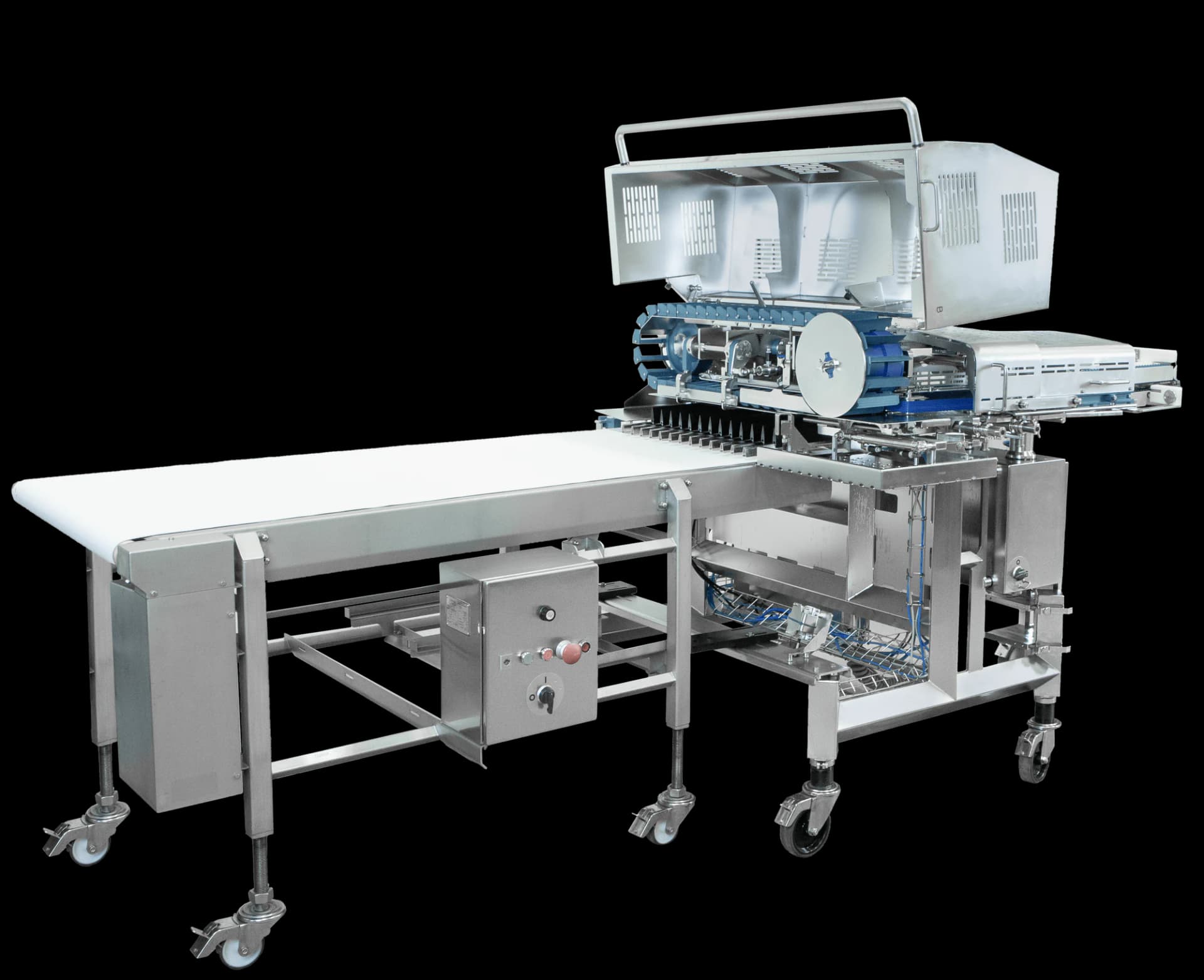
Grouping sausages onto freezer or oven belts
Fresh sausages that are frozen or cooked before packing have to be laid on a belt in rows. The LG336 is mechanically linked to the sausage line, forms groups of sausages and deposits them onto conveyor belts such as freezer or oven belts from 600 mm to 1,200 mm wide. The first, last and incorrect portions, such as uncut or burst sausages, are rejected, and the number of sausages in each row can be reselected.
- LG336Link Grouper
Stage 7Conveyors & line equipment
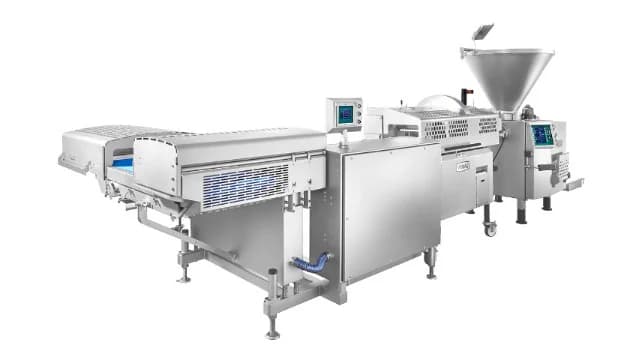
Splitting and joining lanes
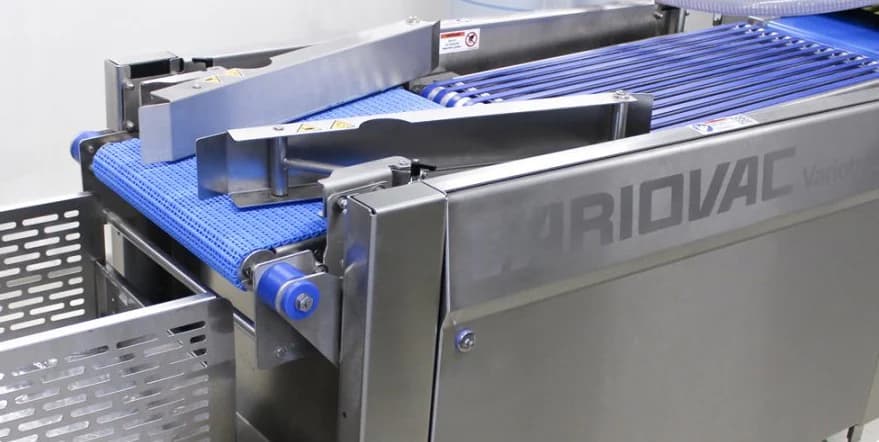
When one machine produces in a single lane and the next works across several, or the other way round, the lanes have to be matched without people rearranging product. The MLR380 distributes product across several lanes with full synchronisation and precise positioning, switches product by changing programs, and also runs single-lane applications. The Variotrack Eco 2.0 line converger does the reverse, combining product lanes into a single lane, and is listed as a complement to a thermoforming machine.
- MLR380Multi-Lane Loader
- Variotrack Eco 2.0Line Converger
Stage 8Conveyors & line equipment
Denesting and loading trays
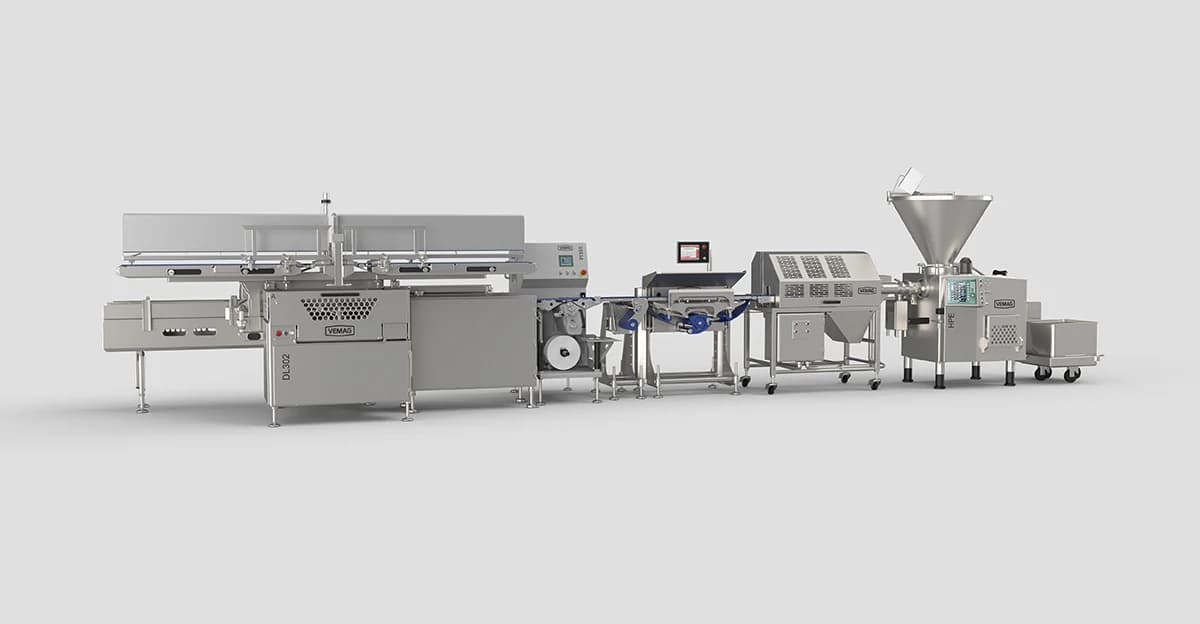
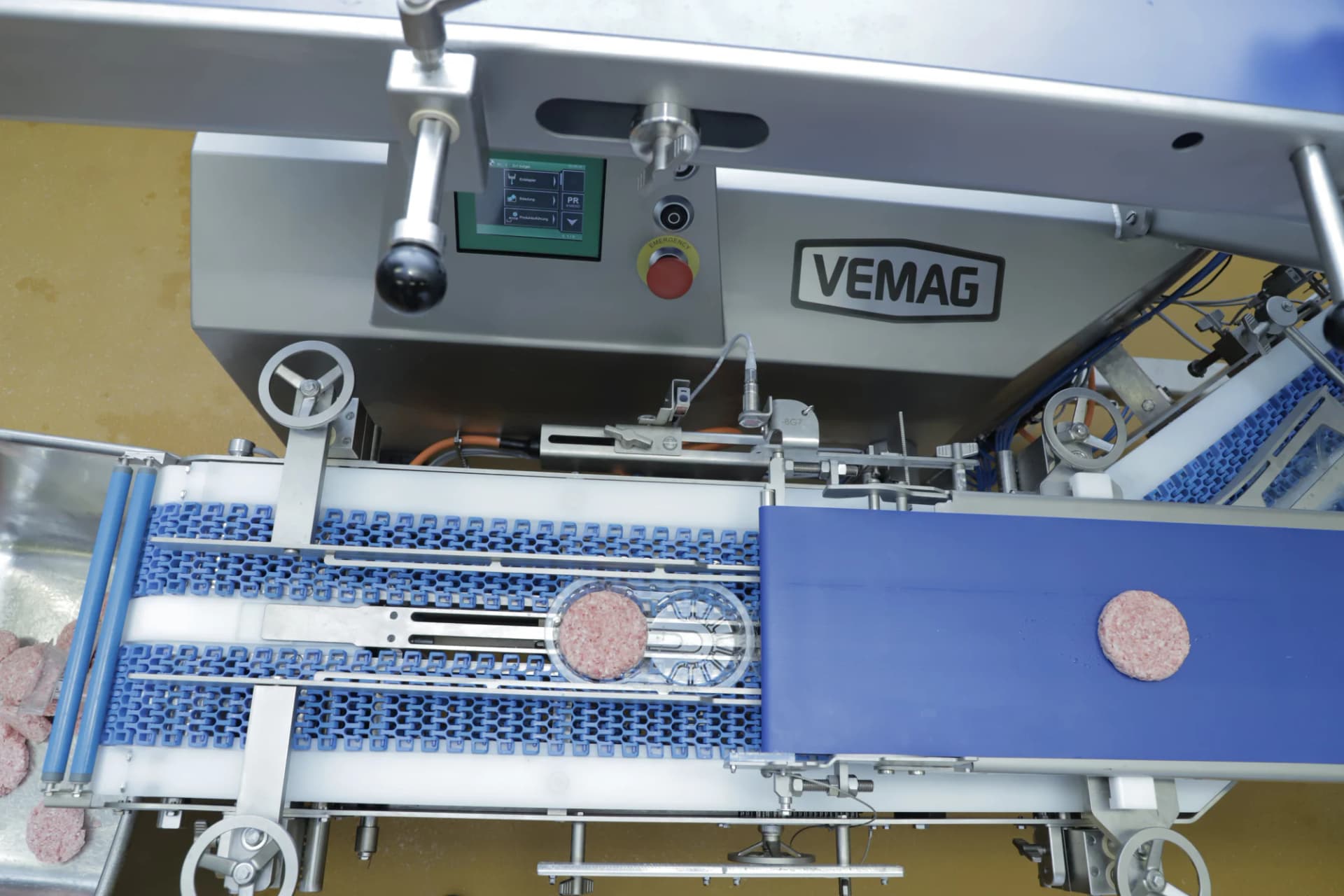
The DL302 loading line's own listing describes the job it replaces: inserting products into trays, which previously involved manual work. It needs no modifications for product changes, works with commercially available trays, and can deposit goulash, schnitzel or chops as well as formed products. The SL309 loading line places minced meat, cevapcici, sliders, burger patties and meatballs into a variety of tray types and formats, with an integrated tray denester that takes different cassettes. Denester cassettes such as the TD315 change tray format by exchanging the cassette, and the same cassettes fit other machines including the DL302 and LL335. For cut sausage, the LL335 link loader aligns portions, discharges broken ones and loads groups into trays and thermoformed pouches.
Stage 9Conveyors & line equipment
Robotic loading and case packing
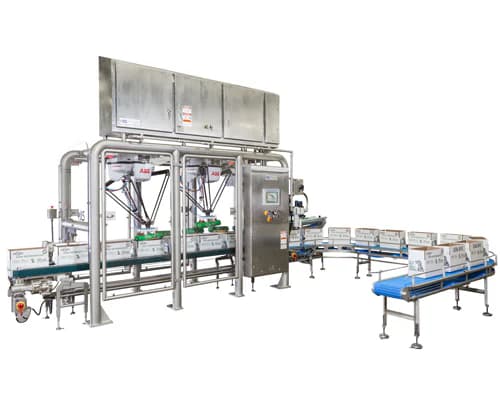
Some products have to be picked up and set into a pack in a fixed position, or packed into cartons and cases at the end of the line. JLS Automation builds hygienic, vision-guided robotic packaging systems for food, made for sanitary production environments. They load product into thermoformed packs, trays and vacuum skin packs, and handle carton loading and case packing. JLS robotic packaging systems are available in Australia and New Zealand through Vemag Australia.
- JLS Robotic SystemsRobotic Packaging System
Stage 10Inspection & weight control
Weighing every portion and correcting the filler
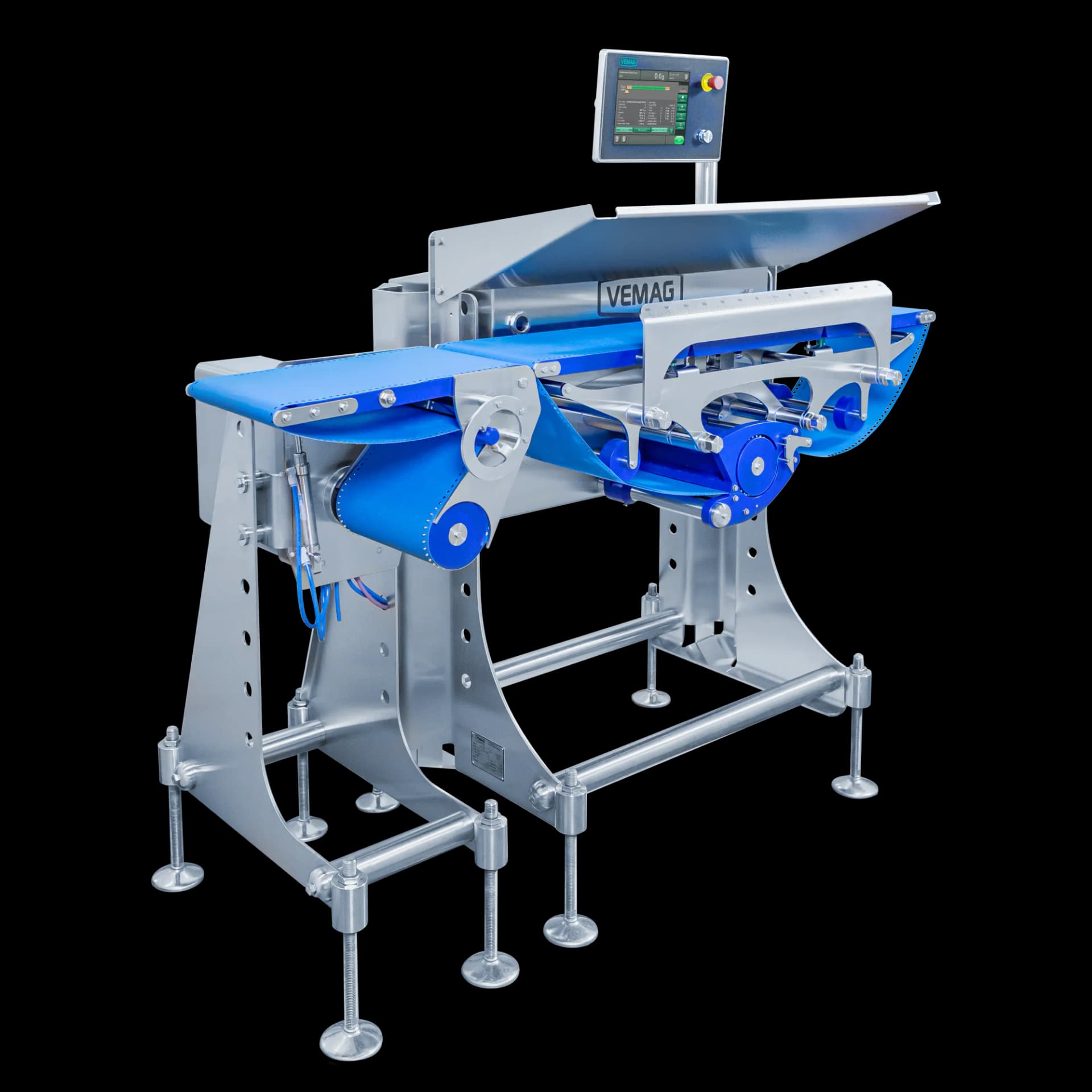
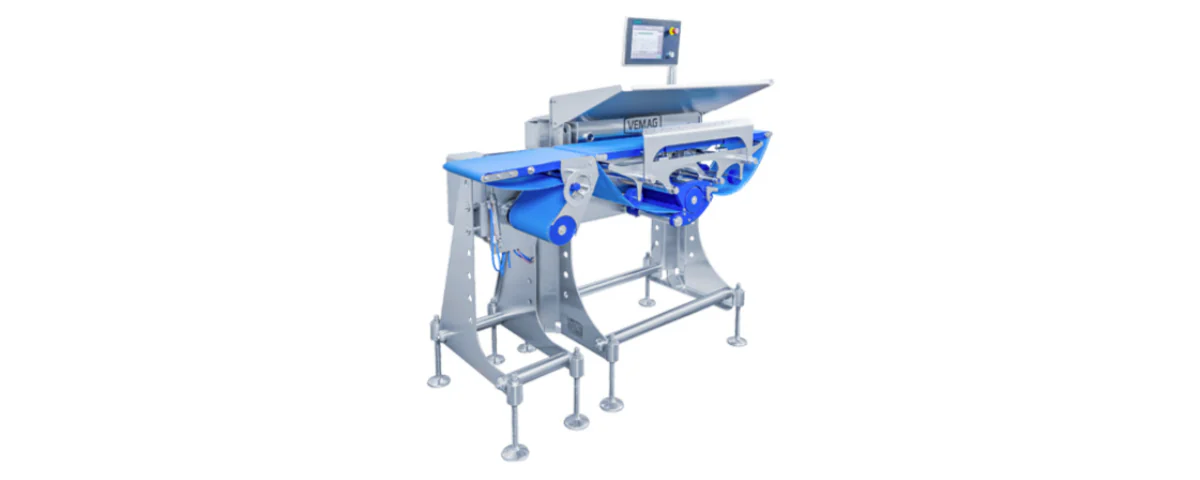
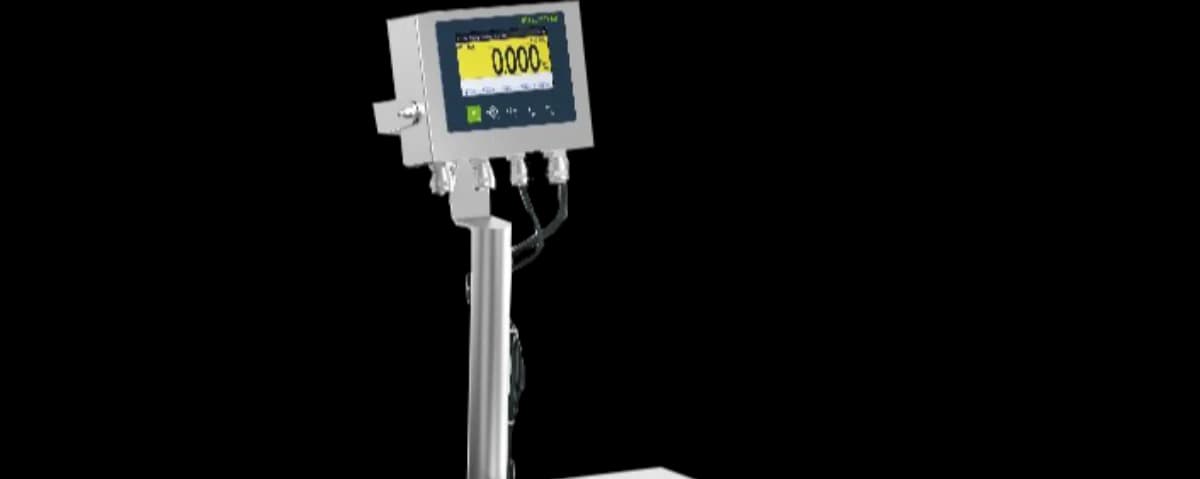
Spot checks at the end of a line find a weight problem after the product is made. The VEMAG Process Check VPC716, made for minced meat products and all kinds of forming line, weighs every product, regulates the vacuum filler from the result, and sends portions outside tolerance off on a connected ejection belt. It also records production data and reports faults. The VPC715 Process Check is integrated into bakery lines to weigh dough portions lane by lane. Where sampling is enough, Scale 877 is used for random weight checks and can adjust the portion size on a VEMAG dough portioner automatically.
Stage 11Inspection & weight control
Metal detection and X-ray inspection inline
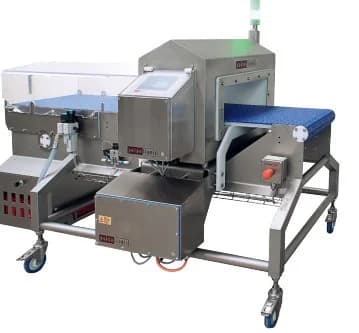
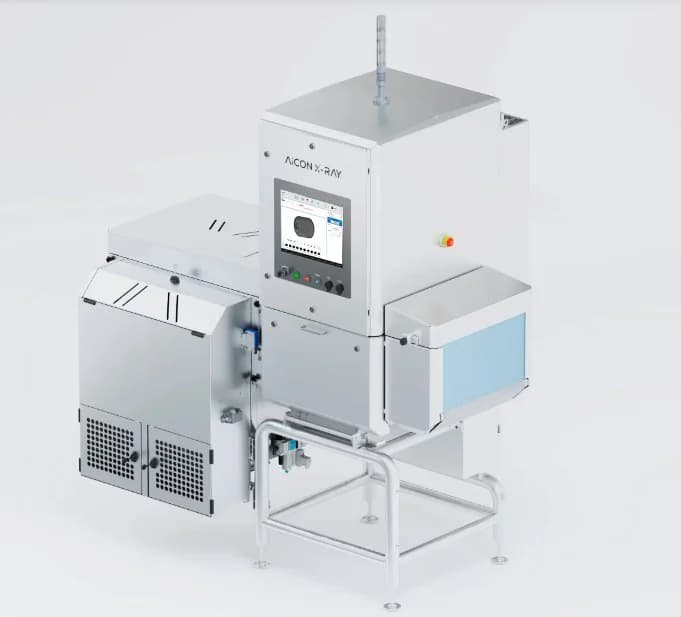
Inspection can sit straight after the filler or over a belt. The Pulsotronic M-Pulse2pro Inflex 65 is a metal detector designed for use with stuffers and filling machines; it is height adjustable and mobile, and linking gear for automatic reject systems is an option. The M-Pulse3 BD-XD carries product through the detector on a conveyor belt and analyses the data in real time to detect and separate metal. The Aicon XR-500 HD X-ray system inspects unpacked products, and its listing says its robust, hygienic construction supports cleaning.
- M-Pulse2pro Inflex 65Metal Detector
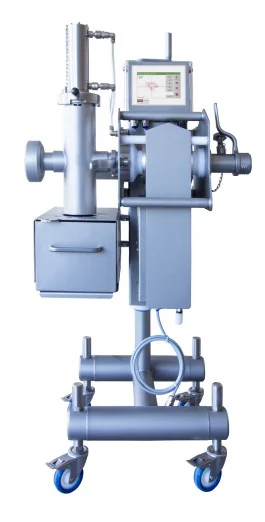
- M-Pulse3 BD-XDMetal Detector
- Aicon XR-500 HDX-Ray System
Stage 12Tray sealers
Sealing pre-made trays
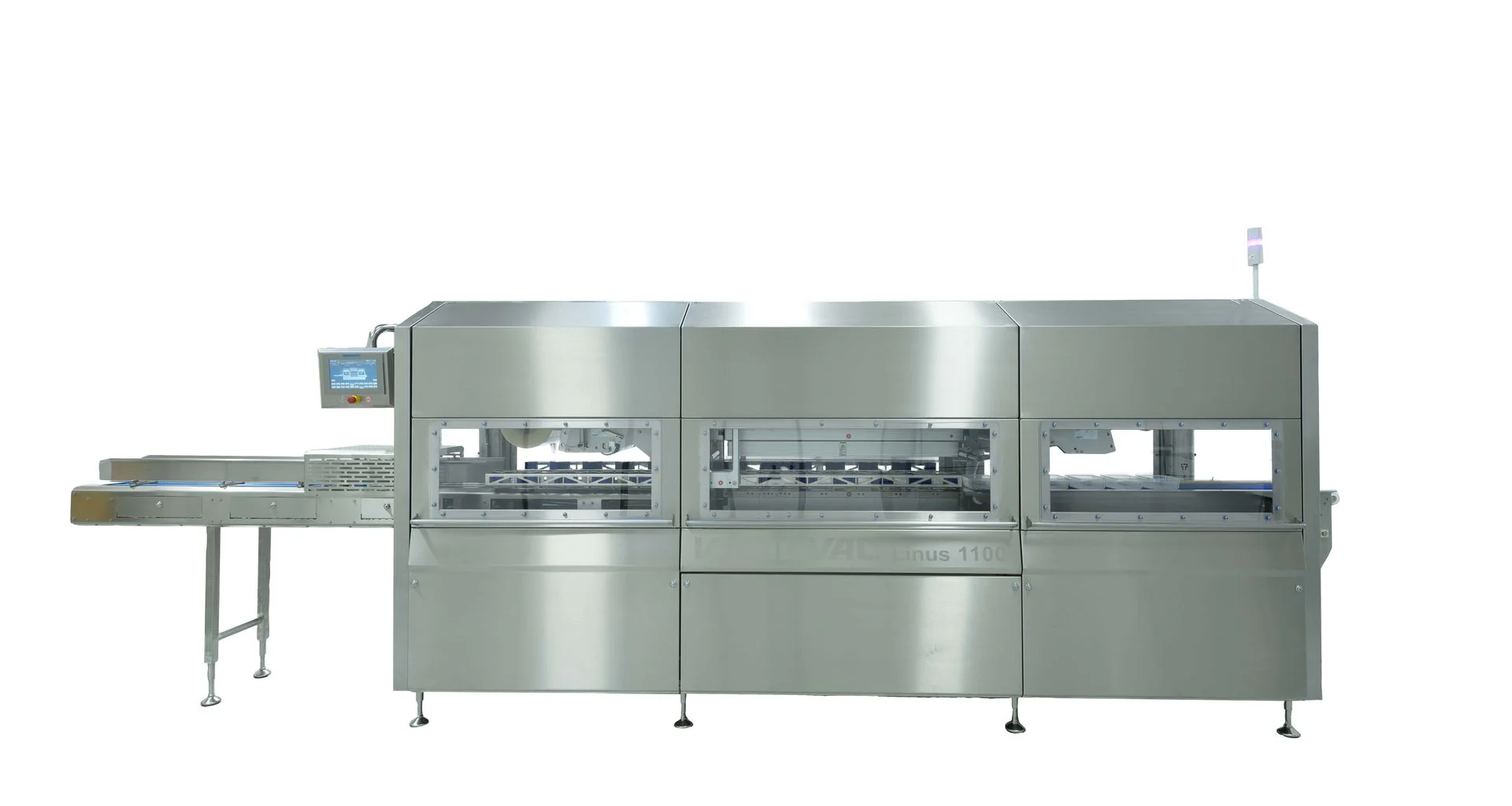
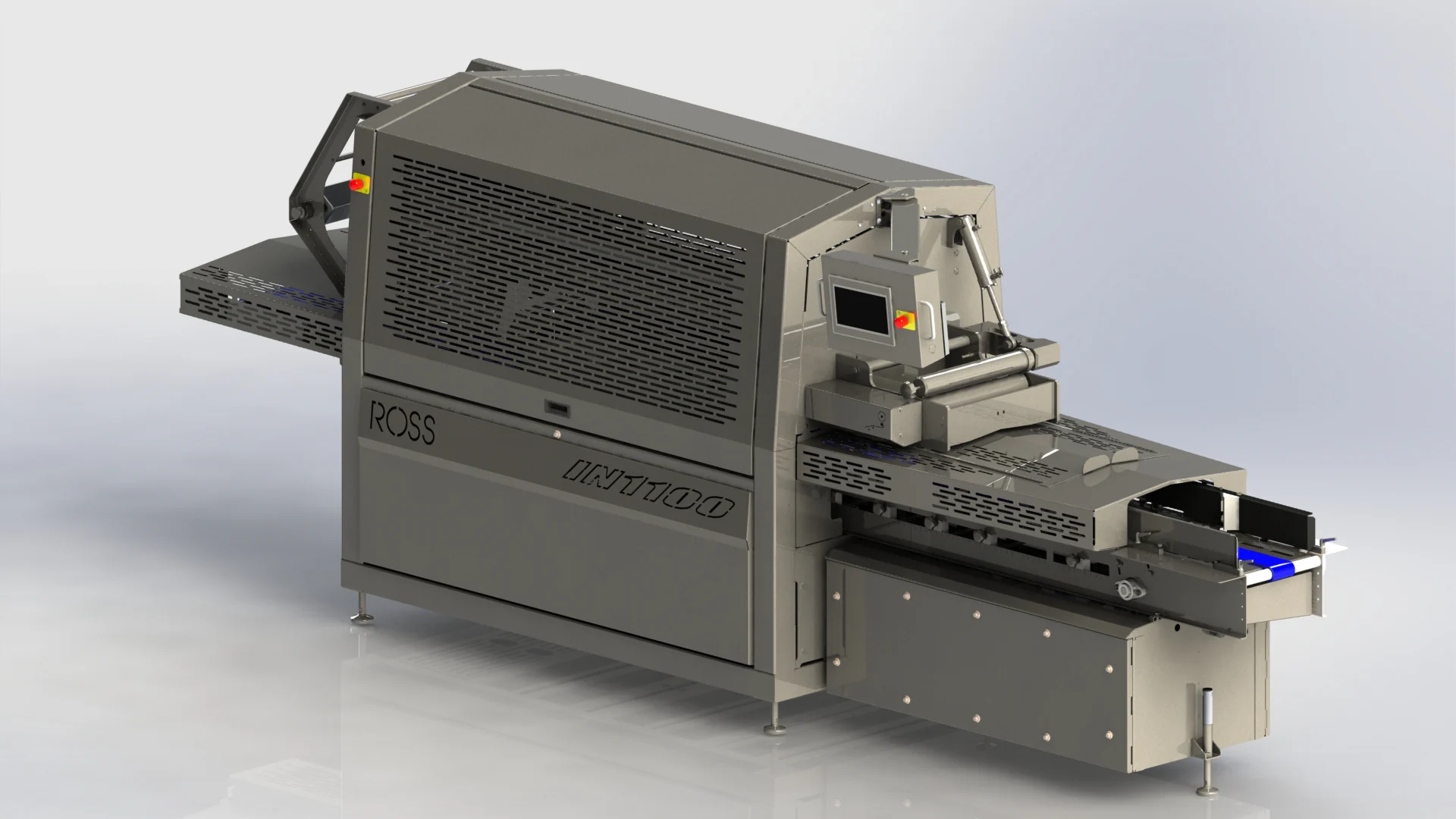
The Variovac Linus 1100 is a fully automatic inline tray sealer for medium- and high-volume production. It processes almost all types of sealable tray, PP, PE, PET, PS and aluminium, which are simply sealed or packed under protective gas or skin. Tray sizes are changed from both sides of the machine, a mobile tool trolley carries the format parts and can heat the sealing tools to cut set-up time, and its control stores recipes. The Ross IN 1100 is a fully automatic machine for MAP and VSP packs.
- Linus 1100Tray Sealer
- IN 1100Tray Sealer
Stage 13Thermoformers & packaging
Forming, filling and sealing packs from film
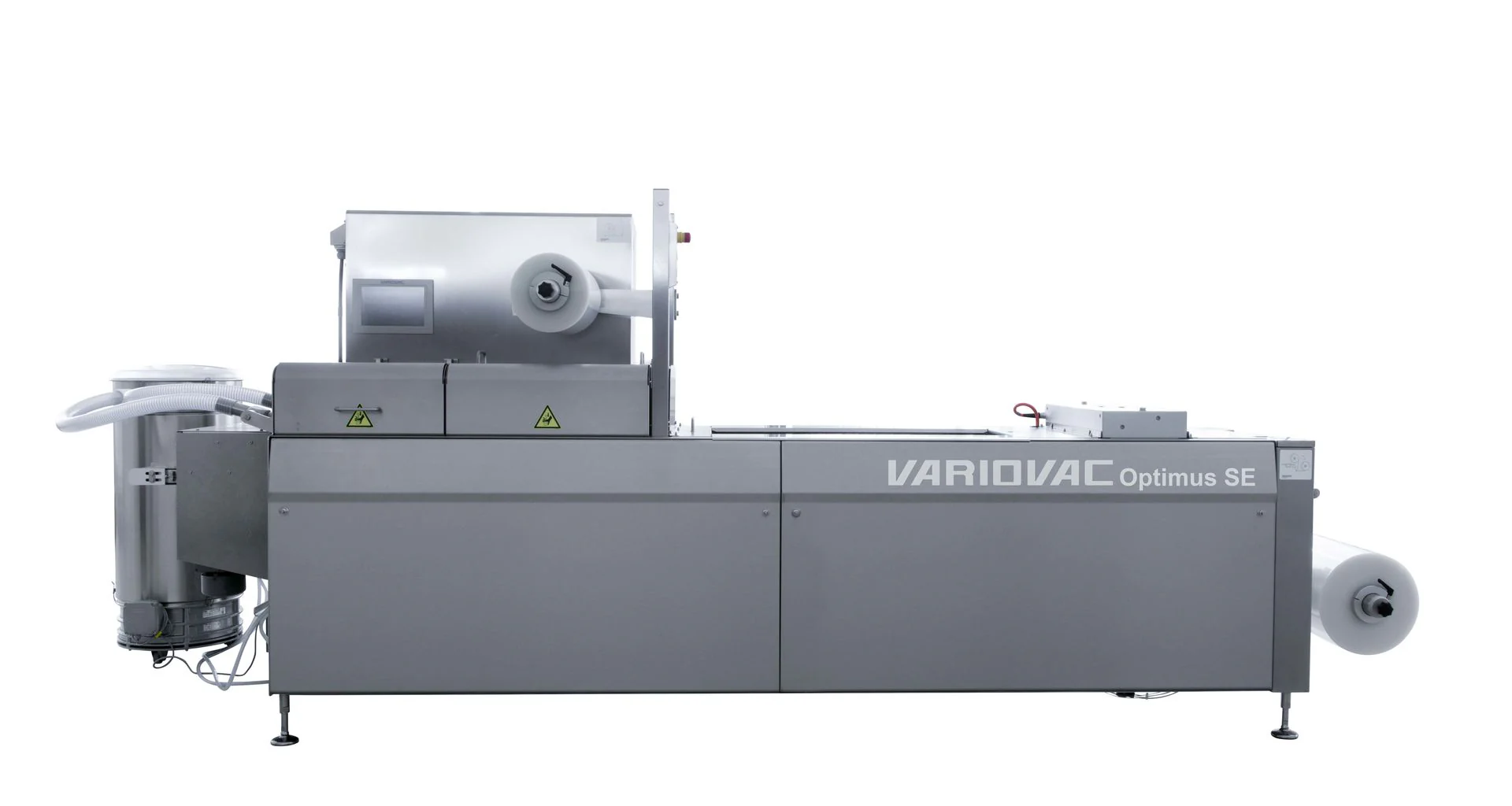
A thermoformer makes the pack from a roll of film, so no trays are handled at all. The Variovac Optimus SE and SEL, with frame lengths of 3 m and 3.5 m, are listed as entry-level models for fully automatic packaging. Their basic equipment includes a trim removal system and a discharge conveyor, so sealed packs leave the machine on a belt. Loaders such as the LL335 fill thermoformed pouches upstream.
- Optimus SE/SELThermoformer
Stage 14Dough dividers & bakery machines
Dividing and depositing dough
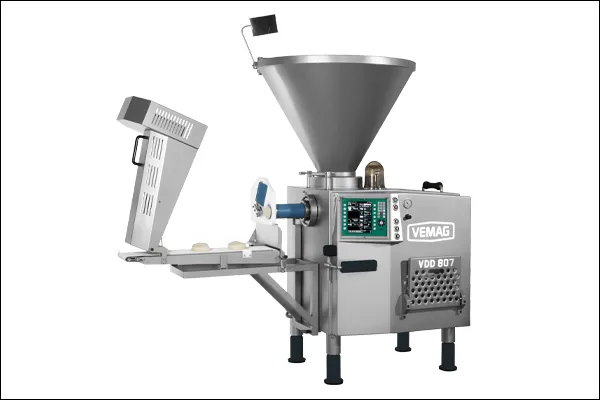
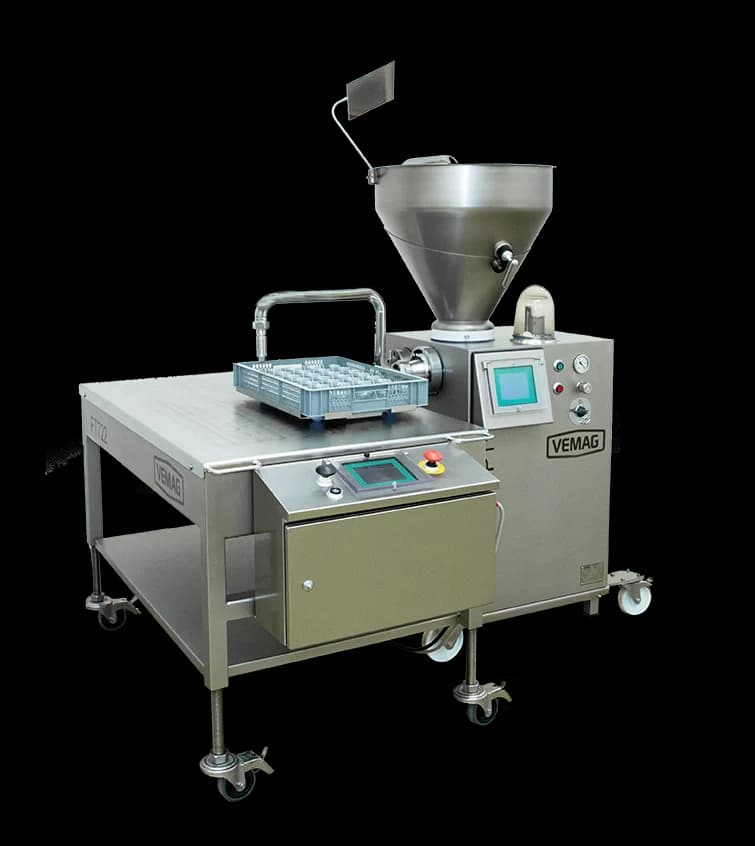
Bakery lines have their own handoffs. The VDD807 divides dough with a high wheat content, using an integrated cutting device and conveyor belt, and deposits the portions on the belt without cutting oil. The rotary filling head 863 is designed for fully automated industrial portioning of French bread, filling dough directly into moulds. The FT722 filling table moves the baking tray in the X and Y directions while it portions dough onto trays, and fills masses into tins and jars automatically.
- VDD807Dough Divider
- Rotary Filling Head 863Dough Filling Head
- FT722Filling Table
03Illustration
Example automated configurations by product
The table strings the stages above together for some common products. It is an illustration of how a line could be automated, not a record of lines we have supplied, and not a statement that these machines are matched to each other. Each real line is specified around the product, the pack and the equipment already in place.
| Product | Stages a line could automate, in order | Also decide with us |
|---|---|---|
| Fresh sausage in trays or pouches | Vacuum filler with length portioning and automatic casing loading, cutting into single sausages, link loading into trays or thermoformed pouches, then thermoforming or tray sealing | Casing type and calibre, pack format, and where metal detection sits |
| Fresh sausage frozen or cooked before packing | Length portioning, cutting, then grouping onto the freezer or oven belt | Belt width, and the freezer or oven itself |
| Smoked or cooked sausage | Length portioning and linking, then automatic hanging spaced to the smoke trolley and sticks | Stick and trolley sizes, and the smoking and cooking stage |
| Mince in trays | Grinding, mince portioning, tray denesting and conveying, weight control with rejection, then tray sealing | Portion weights, tray format, and sealed, gas or skin packs |
| Burgers and patties | Vacuum filler and former, paper interleaving, loading into trays, then sealing | Patty size, stack count and number of lanes |
| Meatballs and formed balls | Vacuum filler with ball forming and automatic tray loading, then sealing | Ball size and shape, and tray format |
| Bread and bakery portions | Dividing or portioning, weighing each lane, then depositing onto belts, trays, tins or jars | Proving and baking, which these machines do not do |
Whole-muscle products such as bacon and ham follow a different route, through brine mixing, injection and tumbling; it is set out on our production lines page.
04Planning
How to automate a line one stage at a time
A line does not have to be replaced in one go. A steadier approach is to automate one handoff, run it, and move to the next, so each step is proven before the following one depends on it.
Count the touches
Walk the line and write down every point where someone lifts, places, cuts, hangs, weighs or checks product, and how many people each one needs on a shift.
Pick the stage that holds you back
Start with the handoff that limits output, causes the most rework or puts hands closest to the product. Your own list decides, not a standard order.
Match what the next machine needs
A loader needs product spaced and aligned; a packer needs the right number of lanes and the right pitch. Describe the handoff format as well as the machine.
Put checks where they can act
Weigh and inspect at a point where a fault can be rejected or corrected upstream, as the VPC716 does when it regulates the filler.
Plan the changeovers
Count the recipes and pack formats you run. Stored programs and recipes, denester cassettes and format parts decide how long a product change takes.
Trial it with your product
Bring your raw material and recipes to our Customer Centre and run the stages you are considering before you commit.
05Buying
What to send us before we suggest automation
A useful first enquiry describes the line as it runs now, not only the machine you think you need. These details let our sales team suggest which stages in our range are worth a closer look.
- The products, their portion weights and the pack each one ends up in.
- A list or sketch of the current line, including the make and model of the filler or grinder you already run.
- Every point where people handle product today, and how many people each one takes.
- The output you need now and the output you expect to need, with your shift pattern.
- Casing types and calibres, tray types and film, and the number of formats you change between.
- Floor space and services. Compressed air, for example, is listed as necessary for the LG336, and the Linus 1100 needs at least 6 bar.
- Your cleaning routine, the weight and production records you need to keep, and any metal or X-ray inspection your customers require.
06Support
Quotes, trials, installation and service in Australia
Our sales managers are based across Australia and New Zealand and quote for anything from a single stand-alone machine to a complete production line. Once machines are chosen, our service technicians install them, train operators and maintenance staff, and handle maintenance, repairs, fault finding and relocations, and our spare parts department keeps genuine parts in stock.
01
Sales and quotations
Quotations for one machine, a stage added to a line you already run, or a complete production line.
02
Customer Centre
Test your own raw materials and recipes on our machines under real production conditions, with our specialists.
03
Service and installation
Installation of new machines, operator and maintenance training, maintenance, repairs and relocations.
04
Spare parts
Genuine parts in stock, and help identifying the right part for your machine.
Comparing machines to buy? Our page on food processing machinery for sale groups the whole catalogue by job and explains how quotations work.
07FAQs
Automated food processing line questions
What is an automated food processing line?
It is a set of machines linked so that product is moved, handled and checked between stages by equipment instead of by people. In meat, sausage and bakery production the jobs that can be taken over include casing loading, cutting and hanging, grouping, tray loading, weight control, inspection and sealing. Most real lines mix automated and manual stages.
Which stage should we automate first?
The one that limits output, causes rework or puts hands closest to the product in your plant. List every manual touch on the line, then start where a machine removes the biggest problem. The steps on this page set out a way to do that.
Can automation be added to the filler we already run?
It depends on the filler and the product, so tell us the make, model and attachments. Some listings name the fillers they work with: the MMP220 is combined with HP Series fillers, and the M-Pulse2pro Inflex 65 metal detector is listed as suitable for all common fillers. Whether a stage suits your machine is checked before it is quoted.
Do you supply robots?
For packaging, yes. JLS Automation's vision-guided robotic systems load product into thermoformed packs, trays and vacuum skin packs and handle carton loading and case packing, and are available through Vemag Australia. Palletising robots are not in our catalogue.
How is portion weight kept in tolerance on an automated line?
By weighing every portion inline and feeding the result back to the filler. The VPC716 does this for minced meat and forming lines and rejects portions outside tolerance on an ejection belt. Spot checks with a scale such as Scale 877 suit lines where sampling is enough.
Can one automated line run several products?
Yes, if changeovers are planned. The MLR380 switches product by changing programs, the DL302 loading line needs no modifications for product changes, the TD315 changes tray format with a cassette swap, and the Linus 1100 stores recipes in its control. Count your recipes and pack formats before the line is specified.
Can we test our product on the equipment first?
Yes. At our Customer Centre you can run your own raw materials and recipes on our machines under real production conditions and go through the results with our specialists. Ask in advance which equipment is available for the trial you want.
Who installs and services the line in Australia?
Vemag Australia's own service technicians, who install new machines, train operators and maintenance staff, and carry out maintenance, repairs and relocations. Genuine spare parts come from our local parts department.