
01Scope
What a meat processing system covers
In this guide a meat processing system starts where boned meat, trim, fat or frozen blocks arrive at the production room, and ends when the product is sealed in its pack. Between those two points sit some or all of the same jobs: reducing the meat, curing or marinating it, portioning, shaping, treating with heat, smoke or air, cutting to the final size, checking, and packing.
Few plants need every stage, and a butcher making sausages and mince needs a very different system from a smallgoods plant running bacon, ham and frankfurts. Start with the products you make, then pick out the stages below that apply to them.
- Covered here: grinding, bowl cutting and emulsifying, brine injection, tumbling, vacuum filling, forming, sausage linking and hanging, smoking, drying and maturing, slicing and dicing, weight and foreign-body checks, product loading and packing.
- Not covered: slaughter, carcass breaking and boning, chiller and freezer rooms, and coating or frying equipment. None of these is in our catalogue.
Processing chicken? The poultry processing equipment page follows the same idea for marinated, formed and packed poultry products. For red meat equipment by product and application, see our meat industry page.
02Stages
The stages of a meat processing system and the machines for each
Each stage below opens the machine type page for the full range and lists a few catalogue machines whose own listings describe that job. The order is the usual one for meat, but products skip stages and some loop back: cured meat is often tumbled after injection and checked again after slicing.
Stage 1Grinders & mincers
Grinding fresh and frozen meat
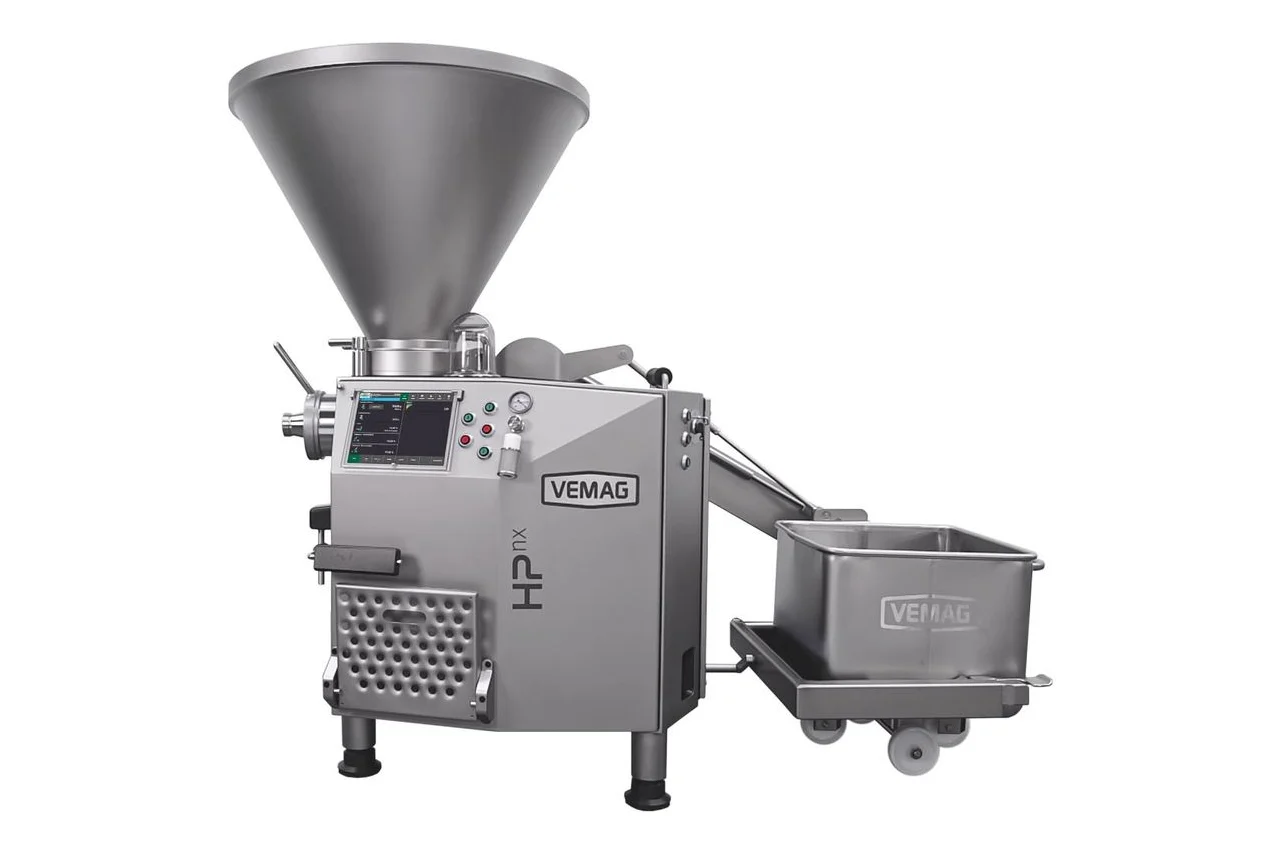
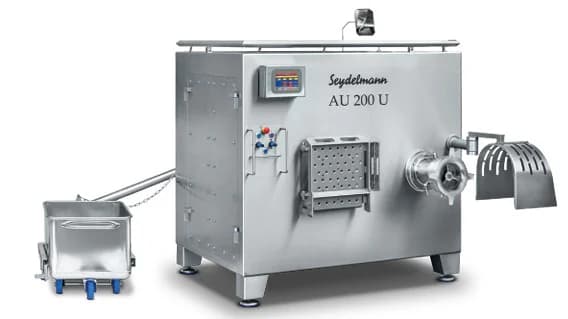
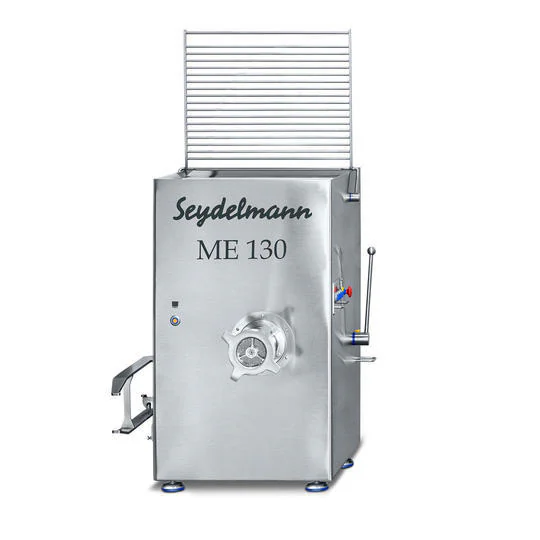
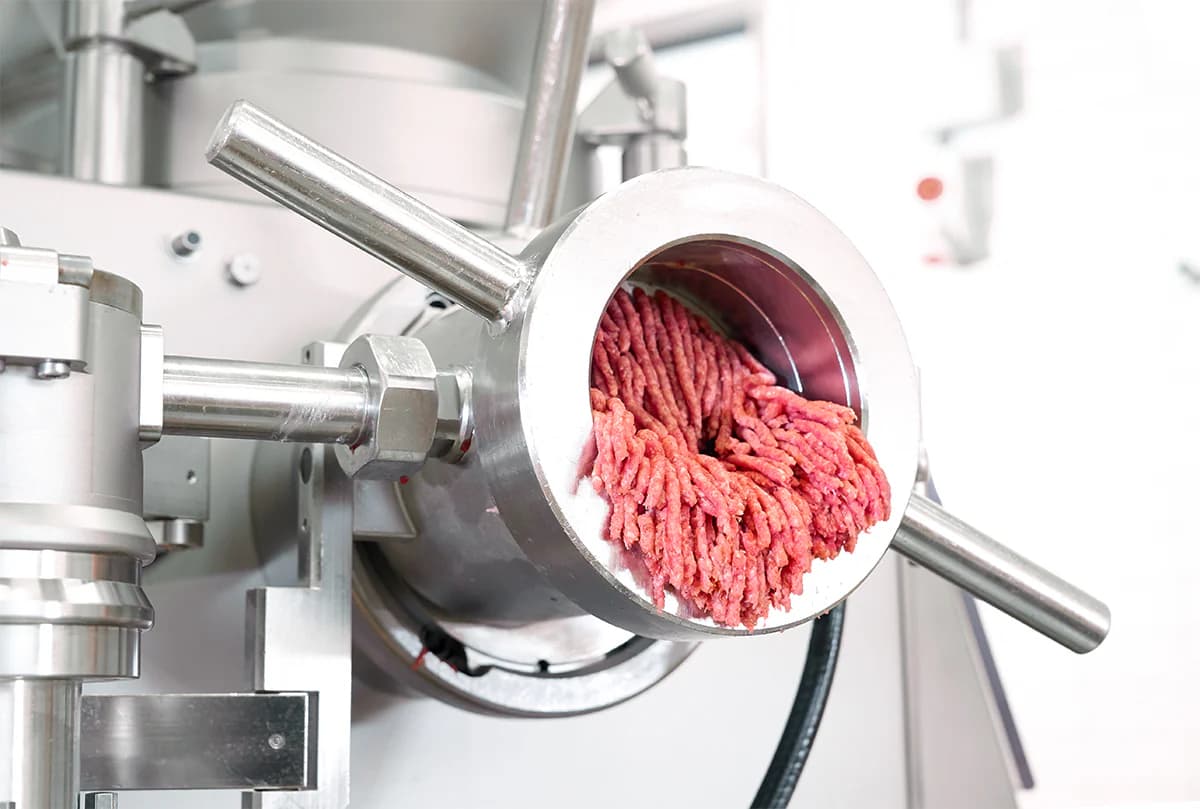
Grinding sets the particle size of everything made from minced meat, so it is often the first machine in the system. The AU 200 U universal grinder is described as cutting fresh meat, cooked meat and frozen meat blocks with the same worm and cutting plate system. A mixing grinder such as the ME 130 mixes a seasoned batch before mincing it. Grinding can also happen at the filler: the VEMAG Grinder 982 sits on an HP series vacuum filler, and its optional separation device takes bone, rind and sinew out of the meat as it is ground. Our meat mixer grinder guide explains how to size one.
- AU 200 U Universal Grinder
- ME 130Mixing Grinder
- Grinder 982Grinder Attachment
Stage 2Bowl cutters & emulsifiers
Bowl cutting and emulsifying
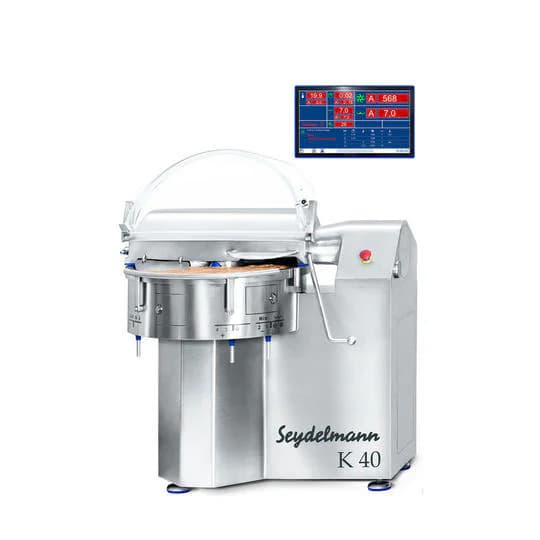
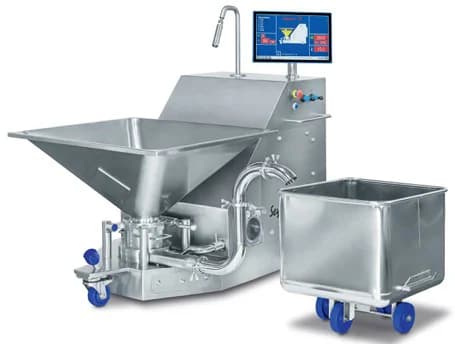
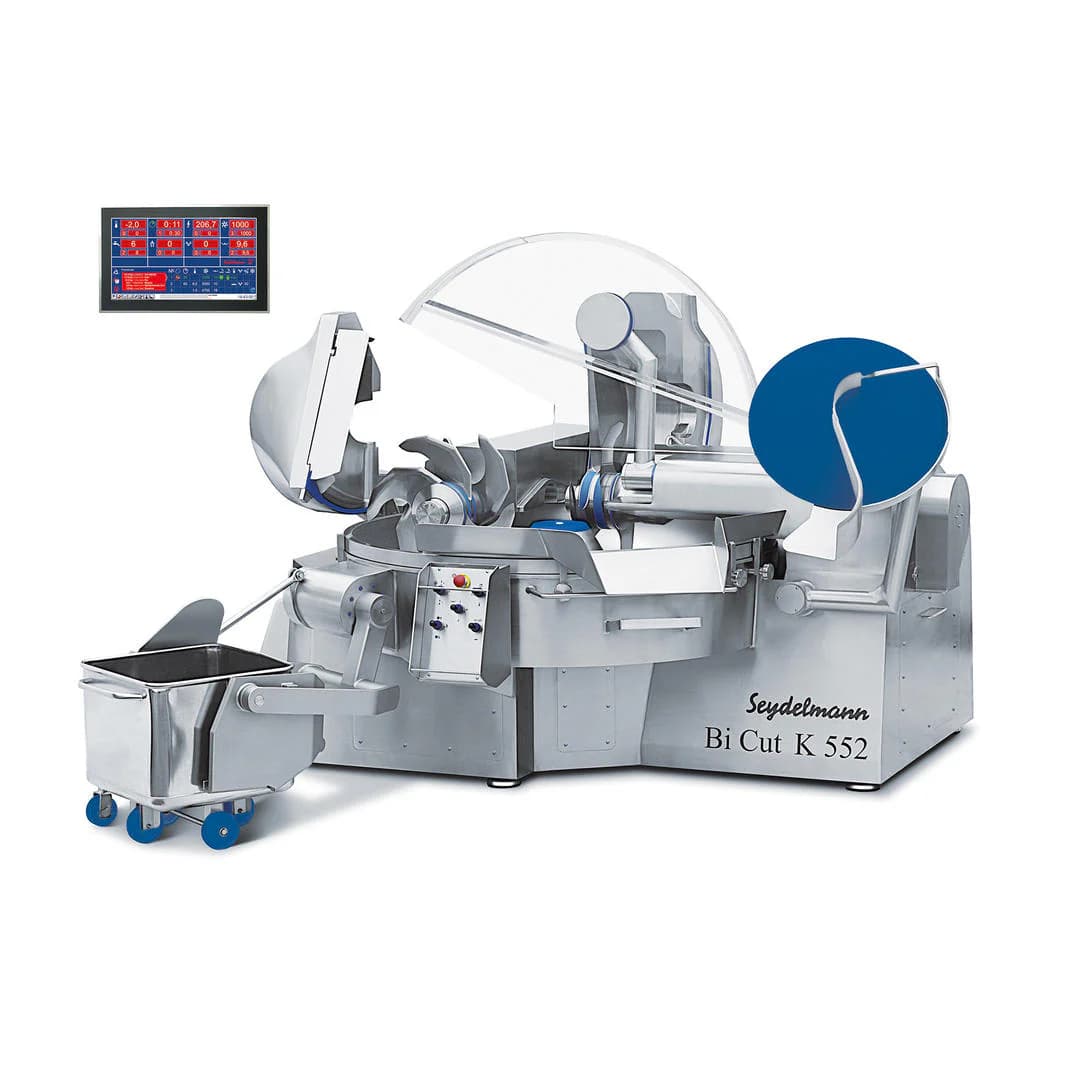
Frankfurts, cooked sausages and other fine products need the meat taken past mince to a smooth batter. A bowl cutter does that in batches, with fast-turning knives working through the meat in a rotating bowl. The Seydelmann KK 144 C Konti-Kutter does it continuously through a hole and cutting plate system, for fine emulsions and fine cooked sausage. The Bi-Cut K 552 AC-8 is built for dry sausage, with two knife shafts set 90° apart. The bowl cutter guide compares the cutters by size.
- K40Bowl Cutter
- KK 144 C Vacuum Konti KutterEmulsifier
- Bi-Cut K 552 AC-8Bowl Cutter
Stage 3Brine injectors
Brine injection for bacon, ham and whole muscle
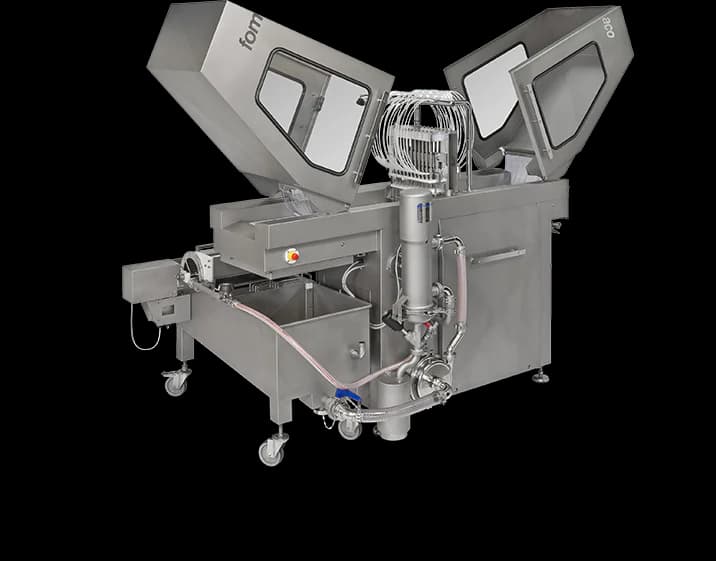
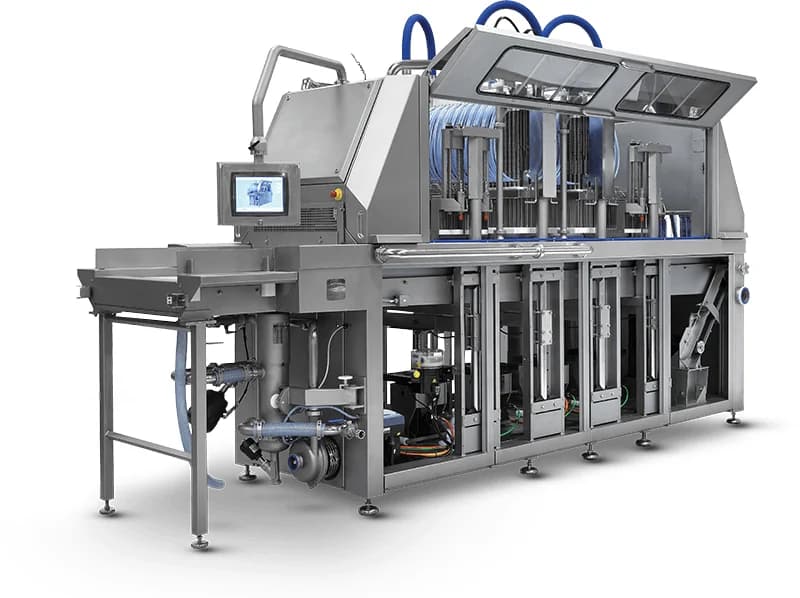
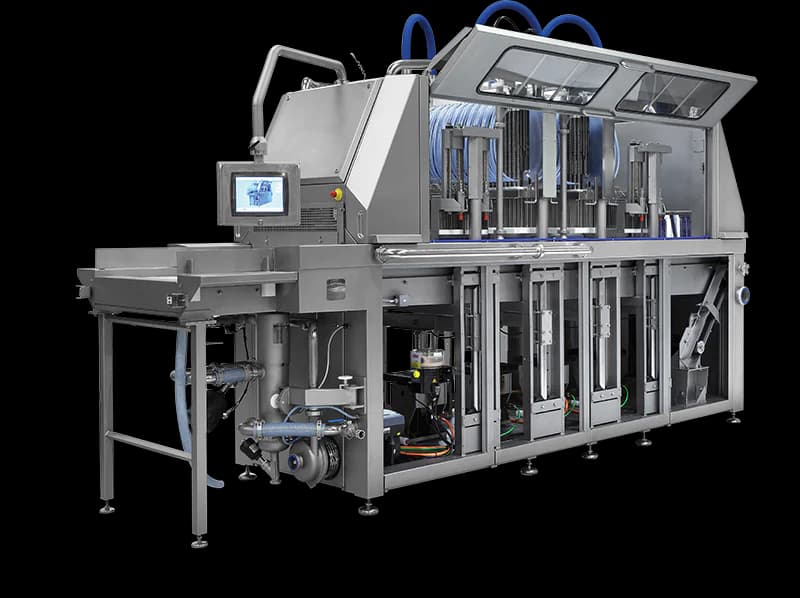
Whole-muscle products are cured from the inside. The brine is made up first in a brine mixer or tank, then a needle injector doses it into each piece as the belt carries the meat under the head. The Fomaco M2 injectors switch the valves in the needle head individually, injecting only while the needles are in the meat, so less brine comes back to the tank. The FGM 48 is listed for bone-in as well as boneless meat, and belt widths in the range run from 350 mm on the FGM 26 M2 to 950 mm on the FGM 112.
Stage 4Tumblers & massagers
Tumbling and massaging
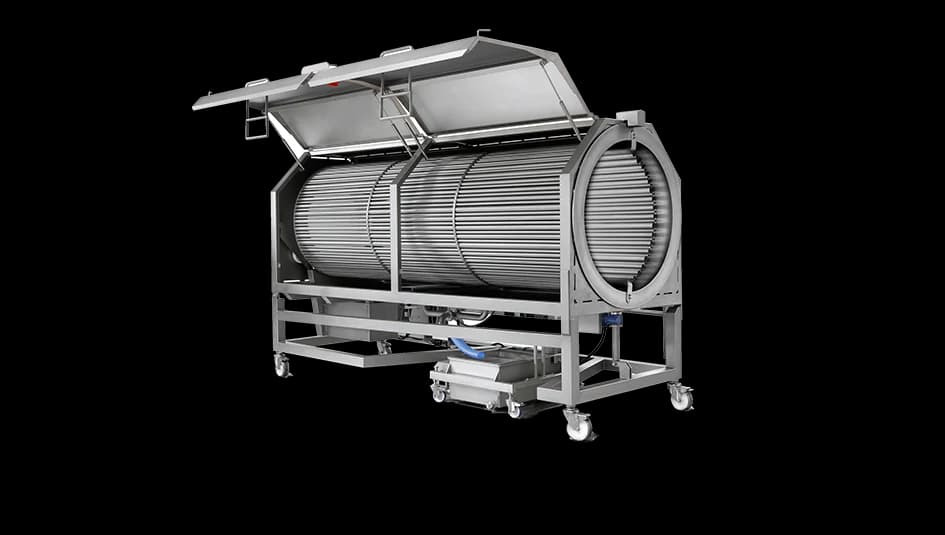
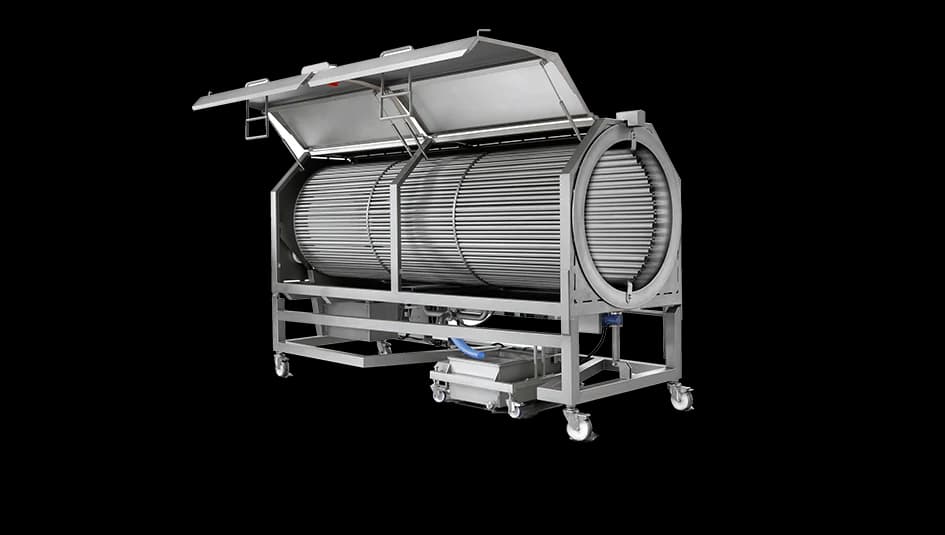
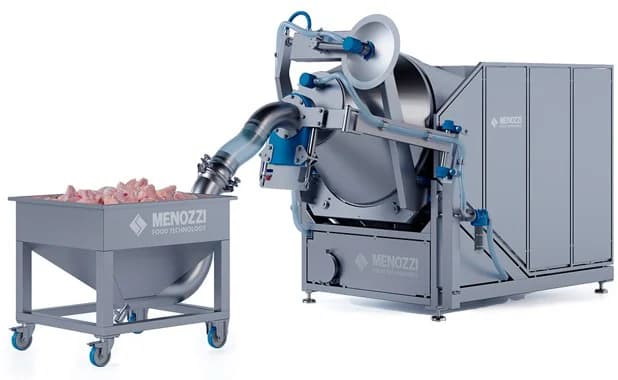
After injection the meat is worked in a drum so the brine spreads evenly and the surface protein comes up. Fomaco's CT 250 is a compact continuous tumbler for small and medium injectors, with a PFS 90 coarse filter and a pump that collect the brine. The CT 375 adds an incline conveyor for the larger M3 injectors. The Menozzi Tumbler 700 is a batch vacuum tumbler. Boneless cuts can be run through a roller tenderiser before tumbling.
- CT 250Continuous Tumbler
- CT 375Continuous Tumbler
- Menozzi Tumbler 700Vacuum Tumbler
Stage 5Vacuum fillers
Vacuum filling and portioning
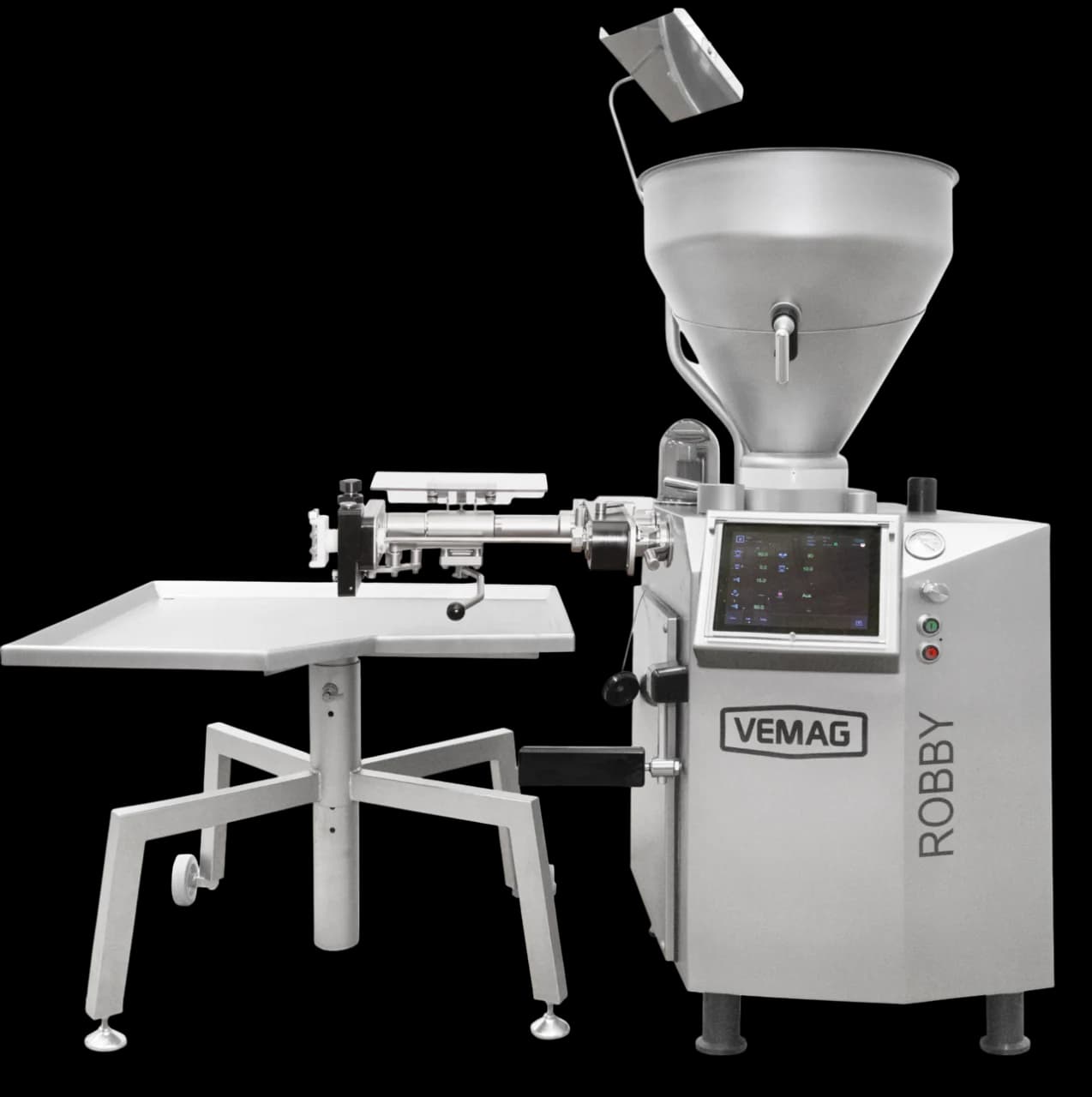
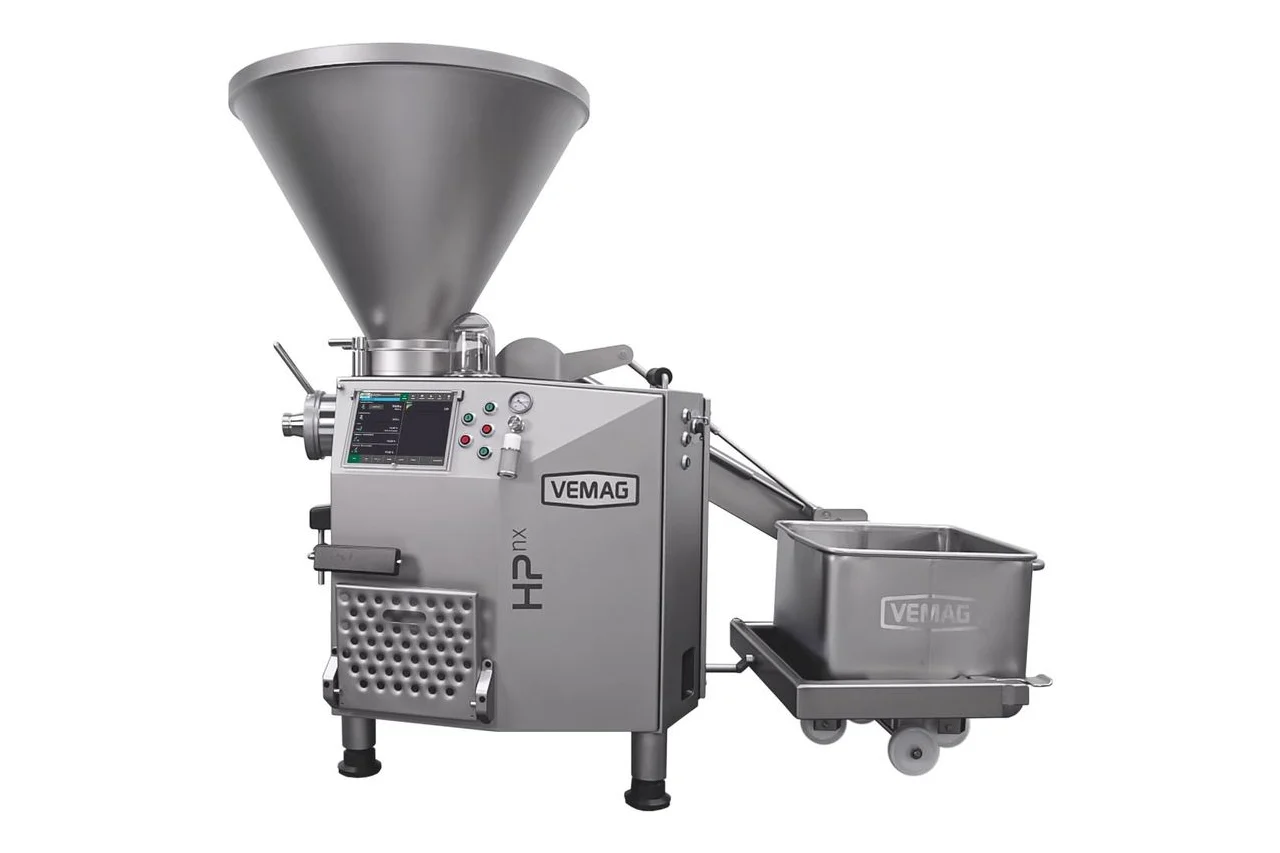
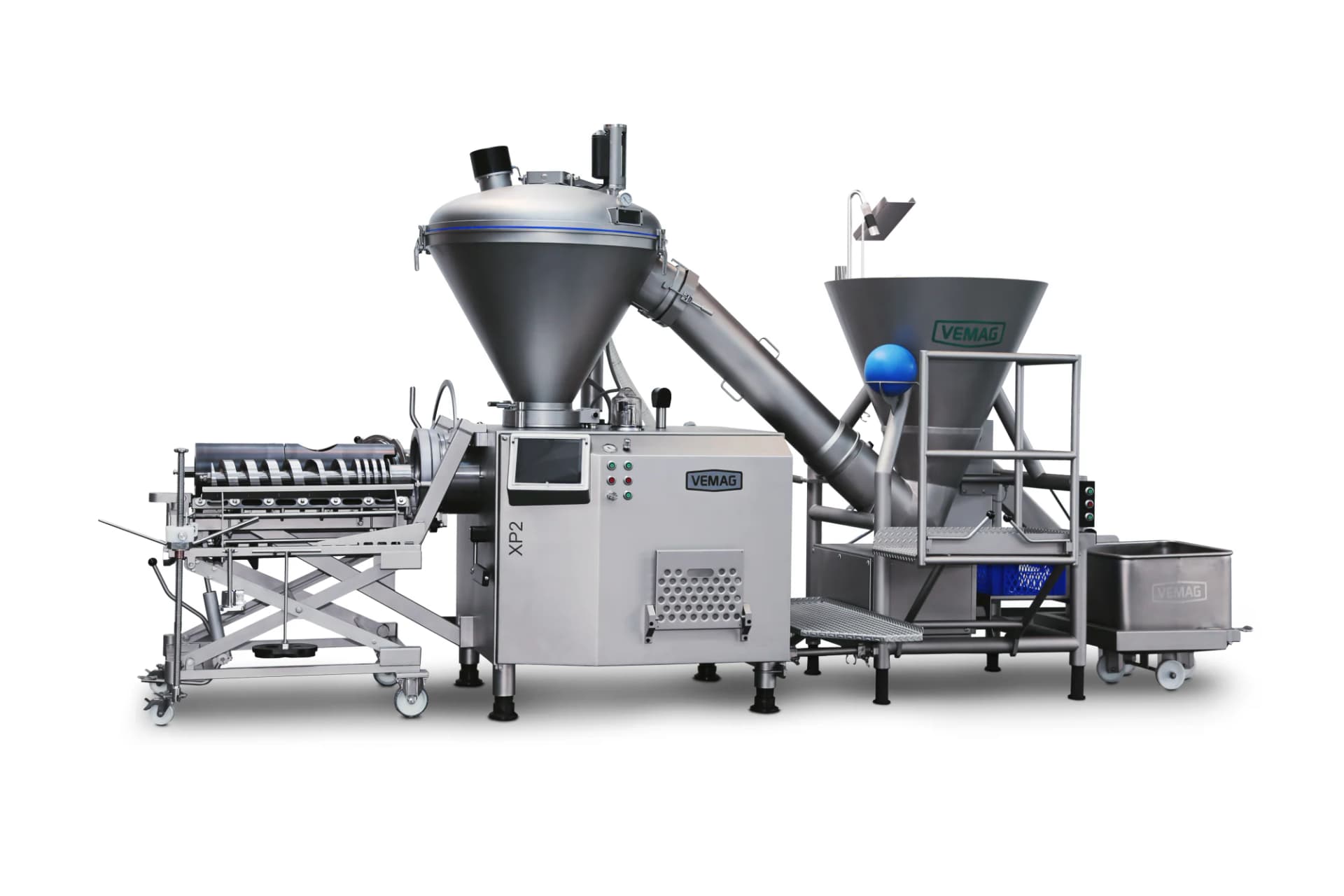
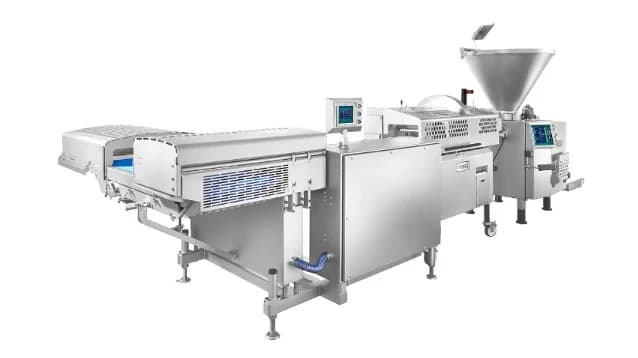
For sausages, burgers, meatballs and mince, the vacuum filler is the centre of the system. It draws air out of the mass and divides it into portions, and the attachment on its outlet decides what each portion becomes. The Robby is designed for smaller batches and frequent product changes in butcher shops. The HP10NX and HP30NX belong to the HPnx series, described for gentle, weight-accurate portioning of a wide range of products. The XP2 is mainly used for grinding minced meat and for salami, can take large amounts of frozen meat, and needs product fed by belt or worm conveyor for continuous running. Our sausage filler guide covers choosing one.
Stage 6Portioning & forming machines
Forming burgers, mince portions and kebabs
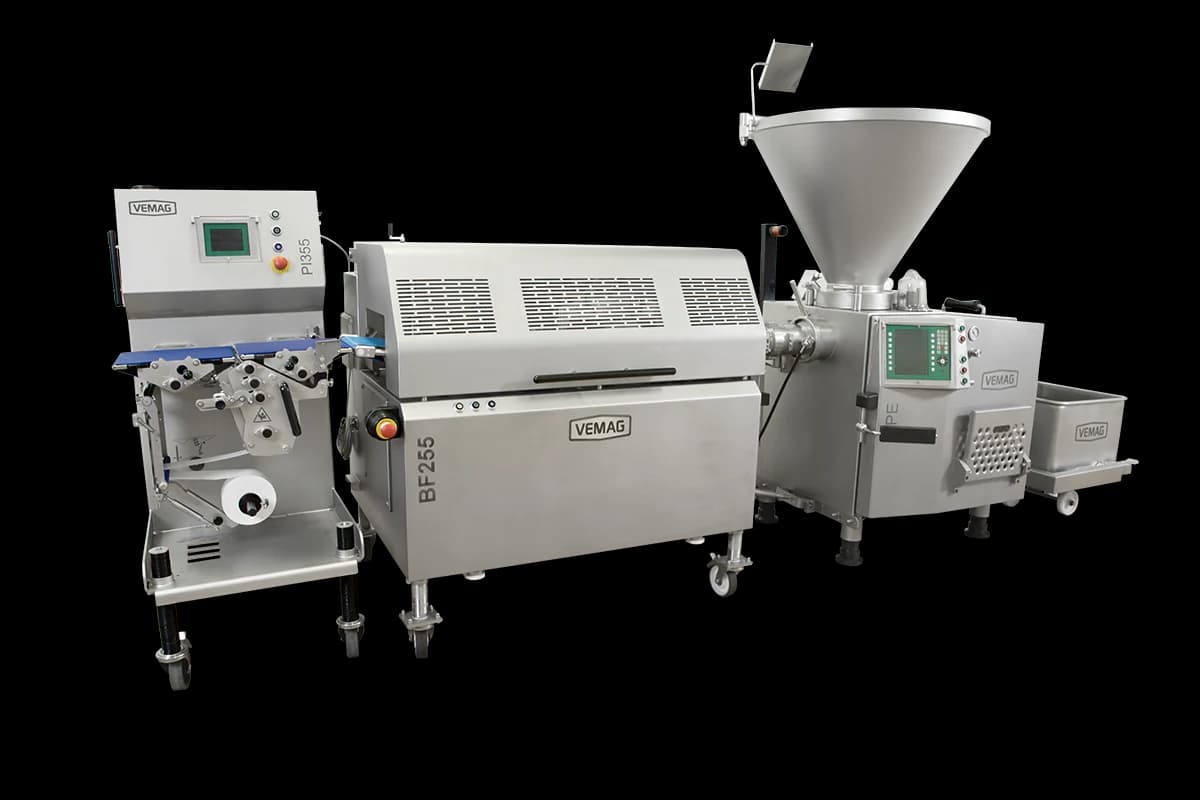
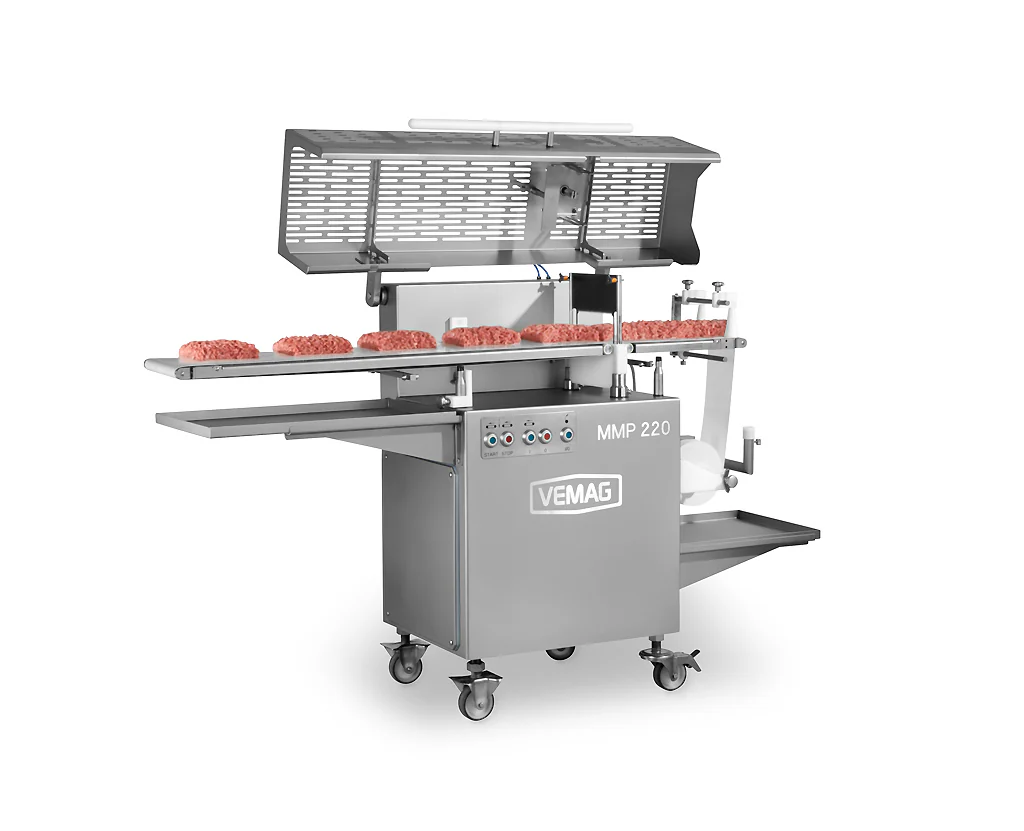
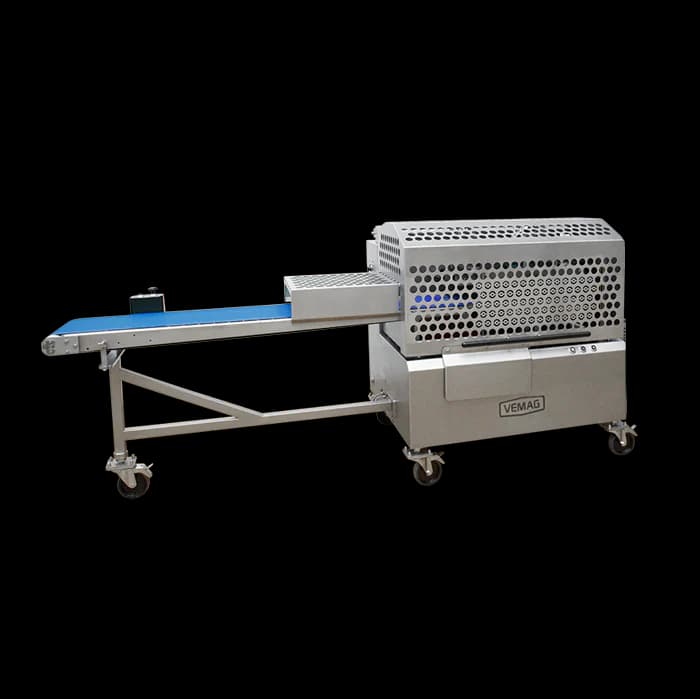
Formers shape the portion the filler delivers. The BF255 burger former is described for burgers made from beef, pork or poultry. The MMP220 minced meat portioner extends a VEMAG grinding system into a mince line, laying portions on backing paper, and a tray denester and conveyor can be added after it. The KLS770 kebab line cuts each shaped and flattened portion with a servo-driven blade and carries it by conveyor to stations where the cone is stacked by hand.
Stage 7Sausage linking, hanging & cutting
Sausage linking, hanging and co-extrusion
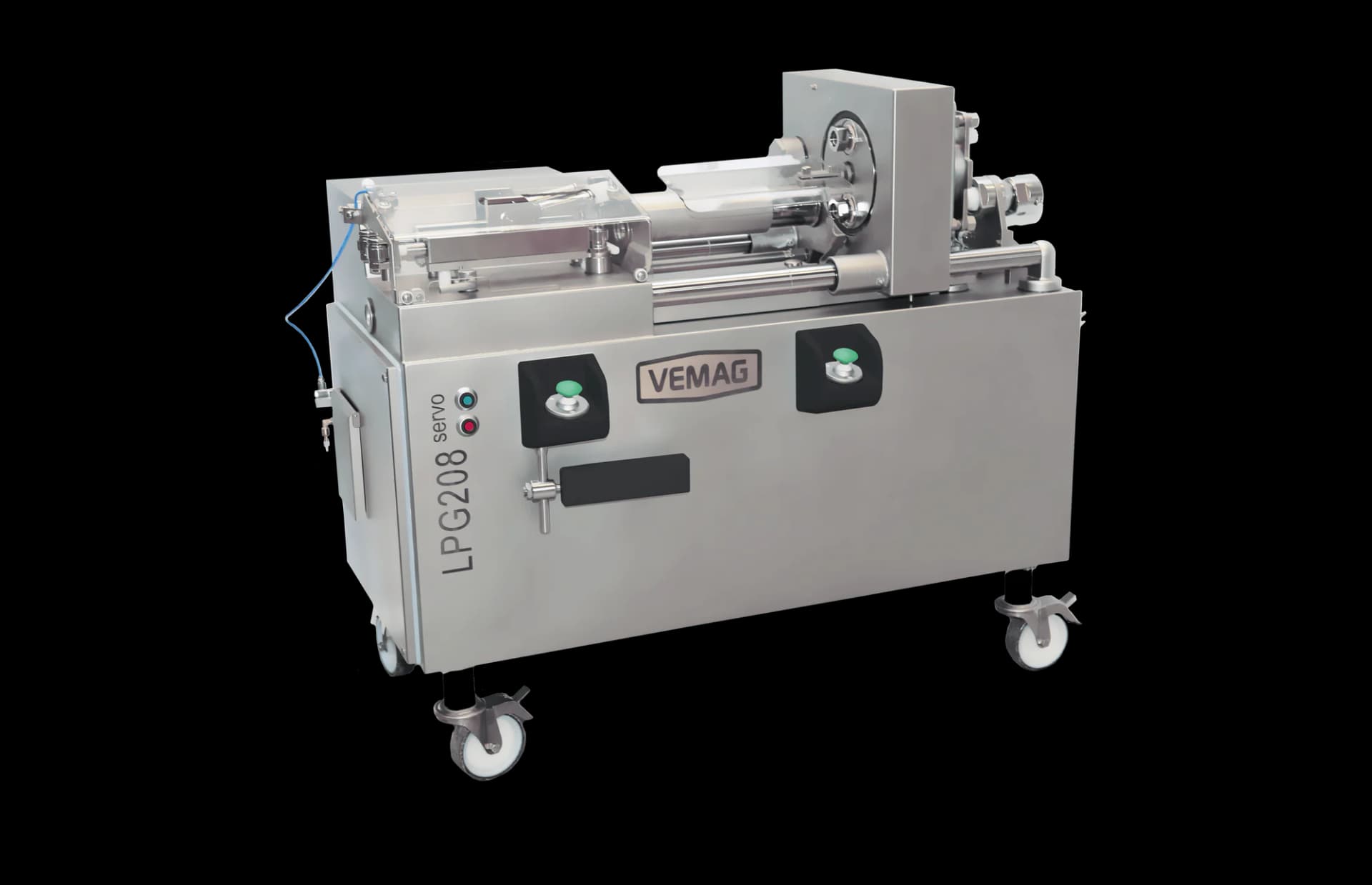
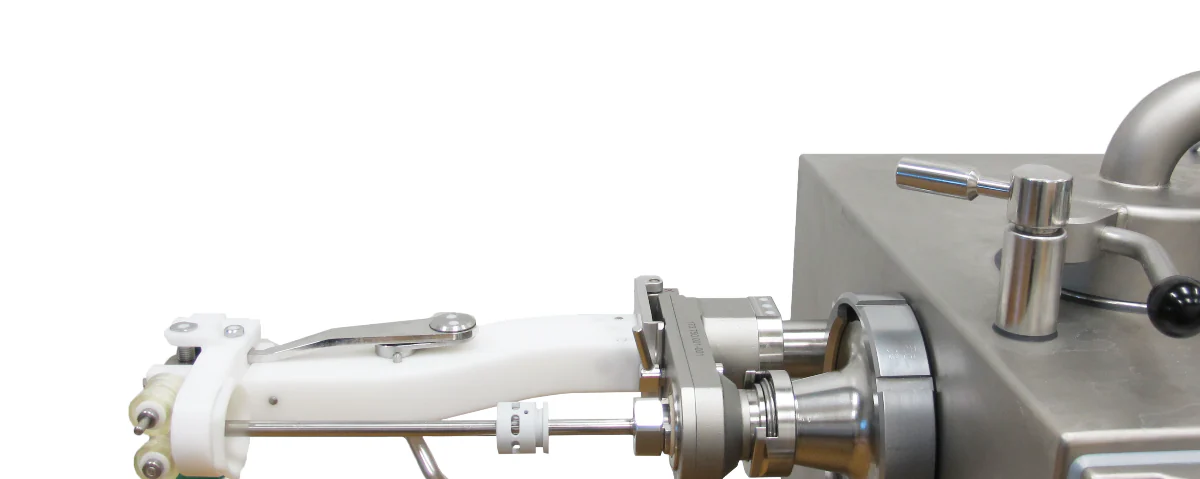
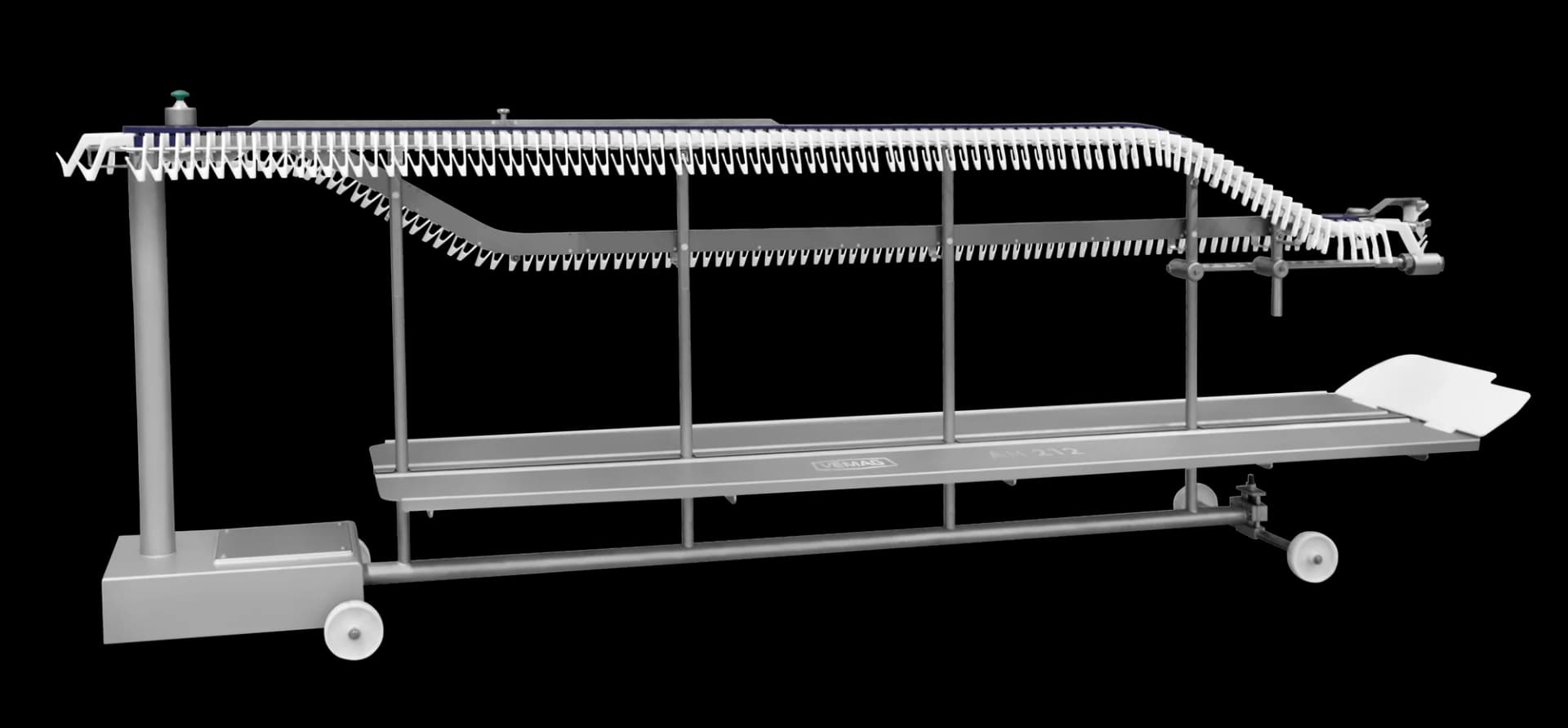
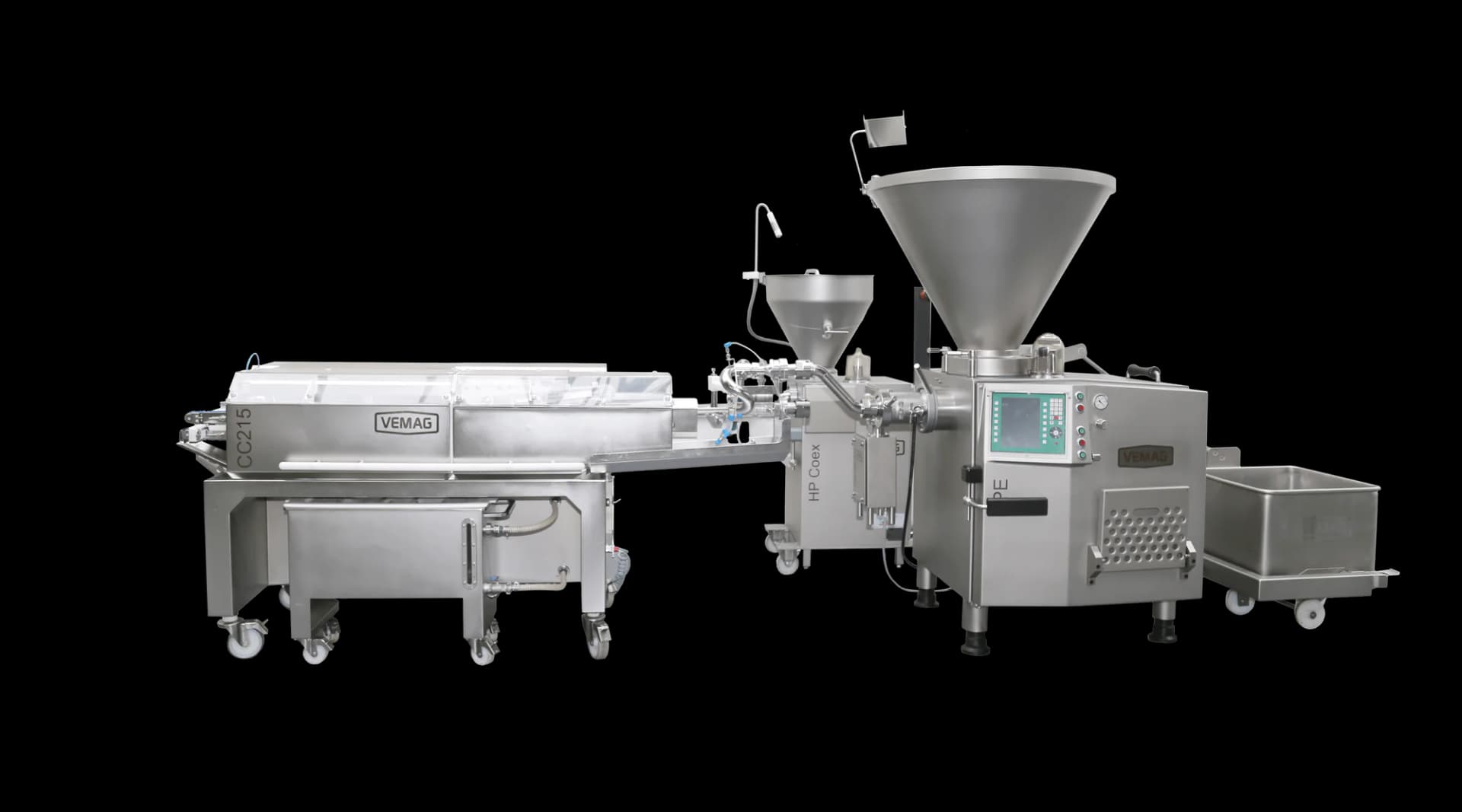
Linking turns a filled casing into portions of the same length and weight. The LPG208 length portioning machine is listed for natural, collagen, polyamide and cellulose casings, for cooked, raw and fresh sausages, and has a fully automatic casing usher. The DHV937 casing holding device links sheep or hog casings and can be adapted for artificial casings. The AH212 hangs the strings, with hook spacing set to suit the smoke trolley and sticks. The CC215 co-extrusion line makes sausages in an alginate casing instead.
Stage 8Cooking, smoking & drying
Smoking, drying and maturing
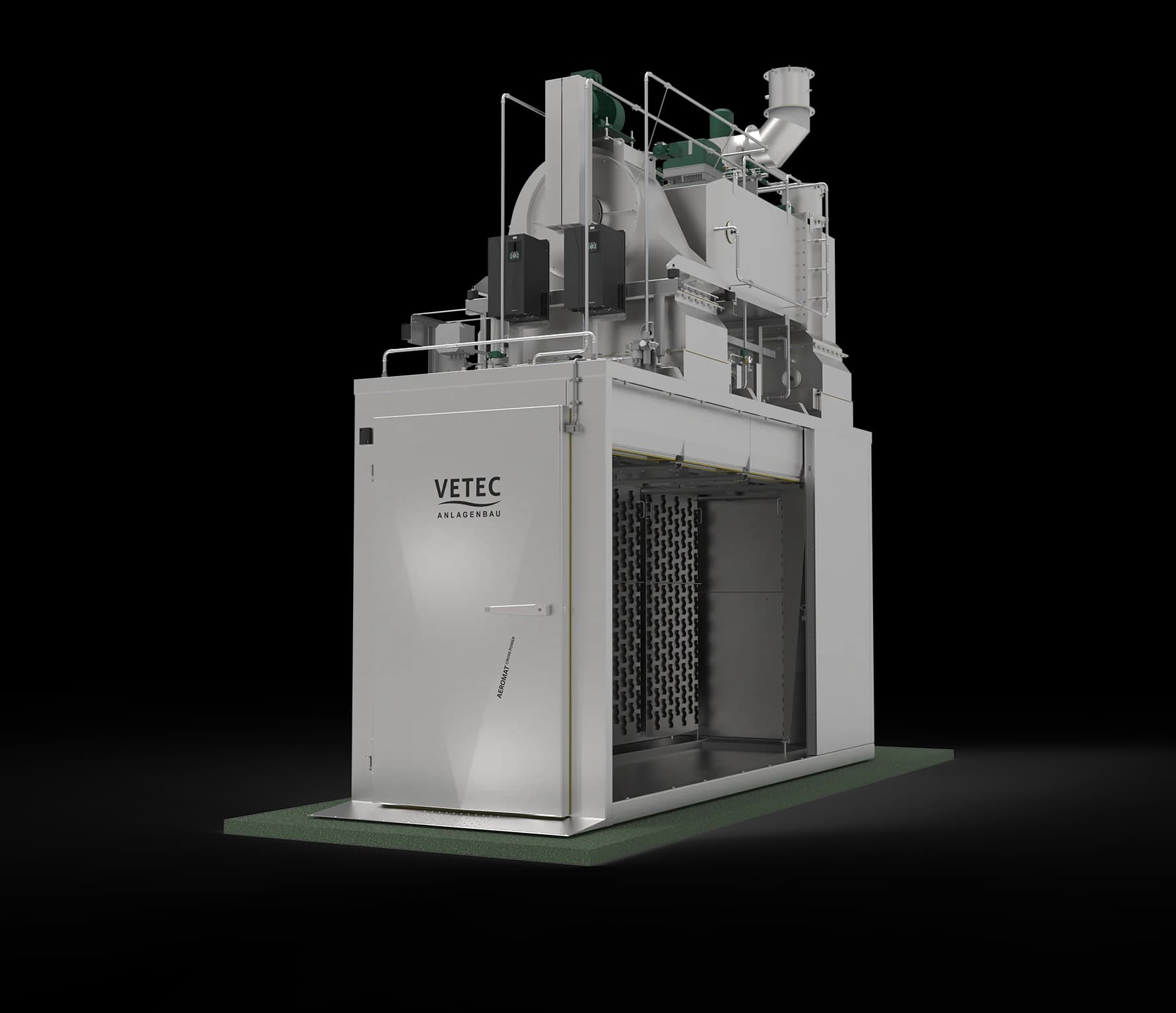
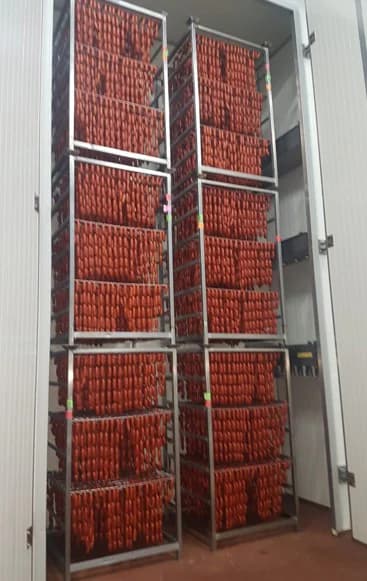
Vetec builds thermal treatment installations for smoking, cooking, cooling, drying, fermentation and thawing. In our catalogue, the Aeromat Cross Power is listed for drying and smoking meat products such as brisket, bacon and jerky, using a horizontal air flow. Climamat installations are for maturing and cold smoking, and are adapted to the product, the production capacity and local conditions. These are installations planned around your site, so expect the conversation to start with the room and the products.
- Vetec Aeromat Cross PowerSmoking System
- ClimamatMaturing & Smoking System
Stage 9Slicers & dicers
Slicing and dicing
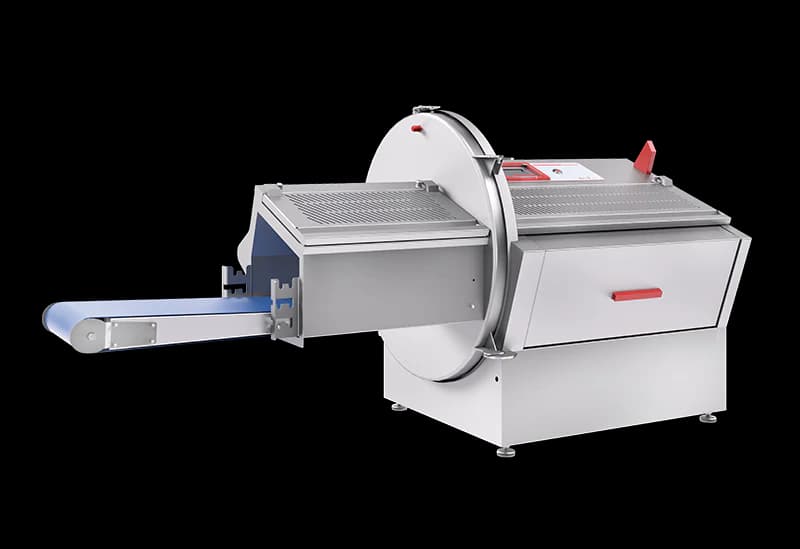
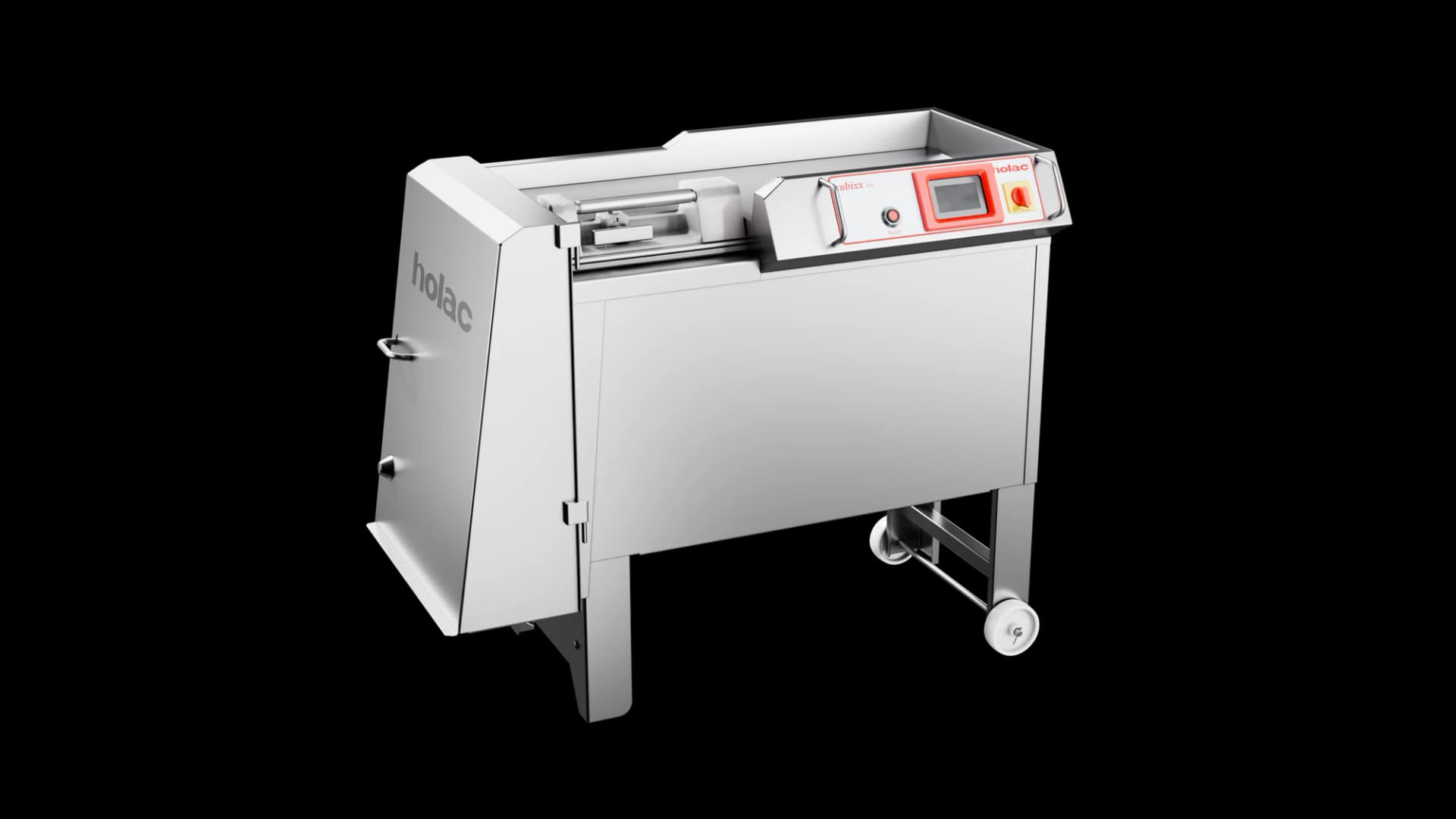
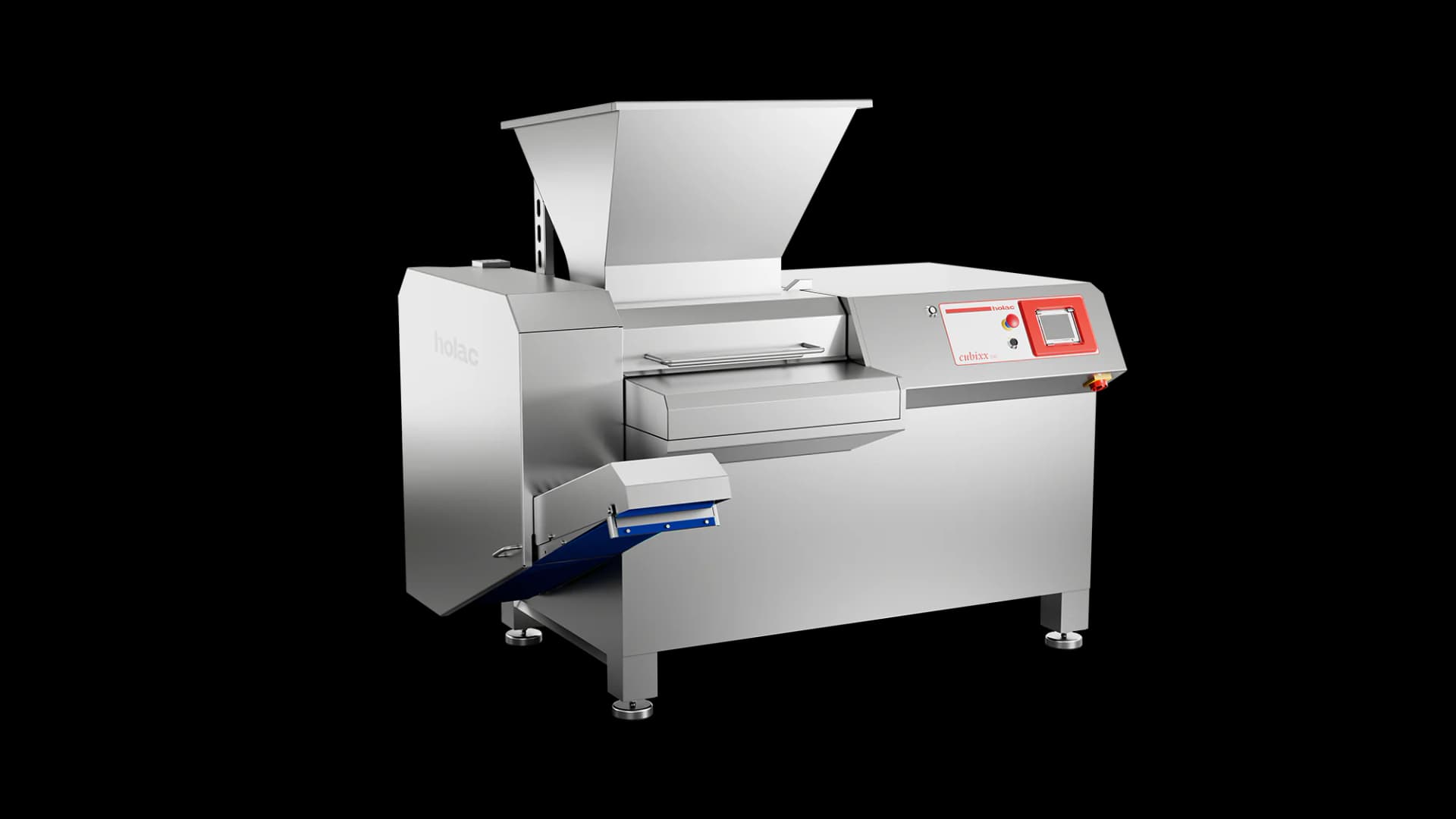
Many cured and cooked products leave the system sliced, diced or cut into strips. The Holac SECT 360 TC slices larger products into groups at the same or a varying thickness, with servo-controlled feed, first-cut control and a discharge conveyor. The Cubixx dicers cut meat into cubes and strips: the Cubixx 100 L is listed for diced meat for stews, meat strips and ham strips, and the Cubixx 150 LP is the largest in the series, with a hydraulic magazine.
- SECT 360 TCSlicer
- Cubixx 100LDicer
- Cubixx 150 LPDicer
Stage 10Inspection & weight control
Weight control and foreign-body inspection
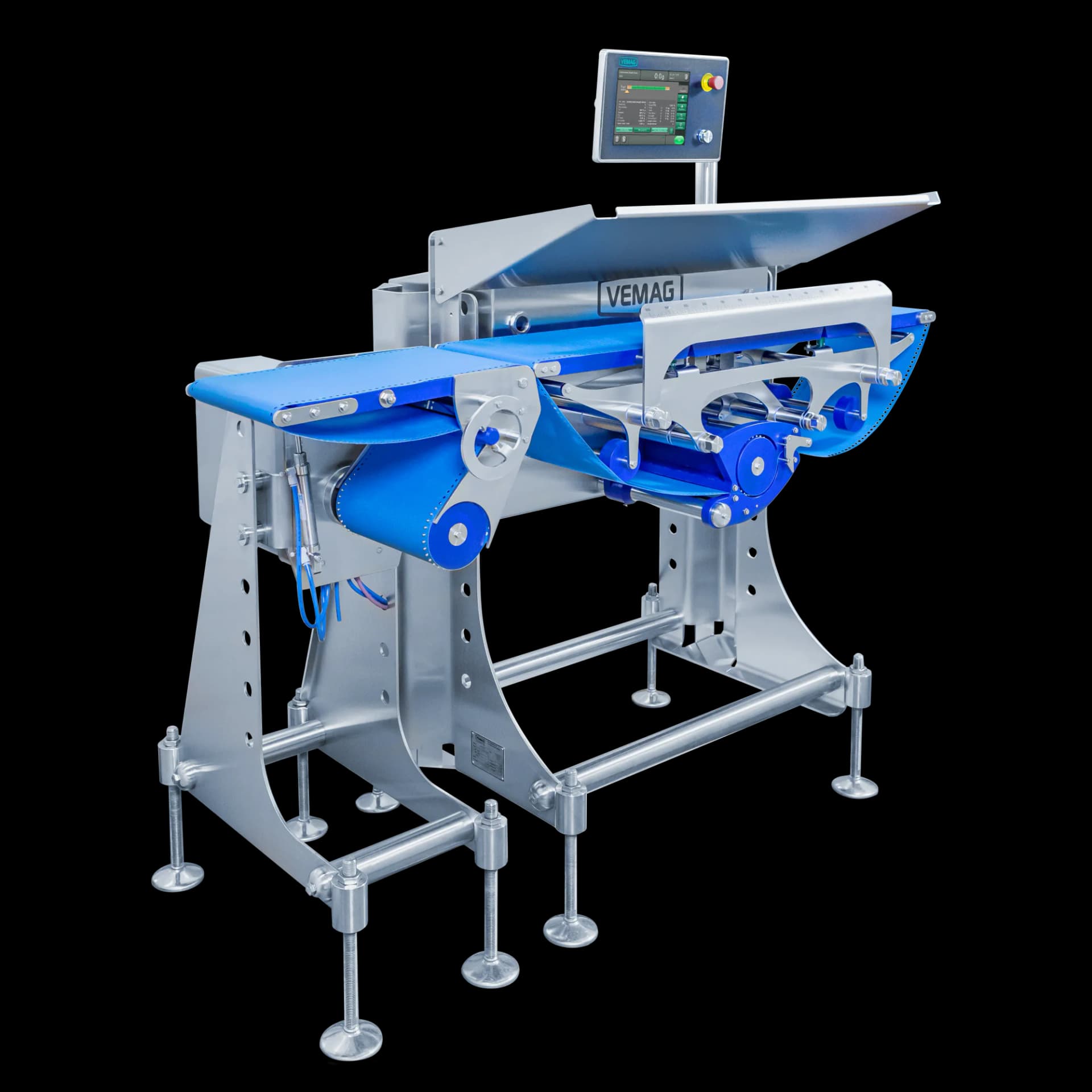
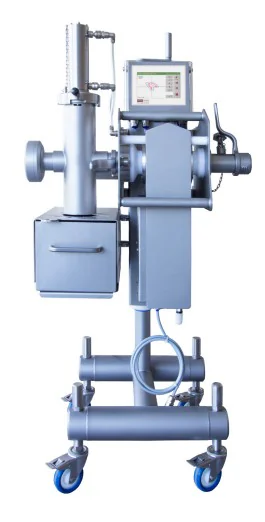
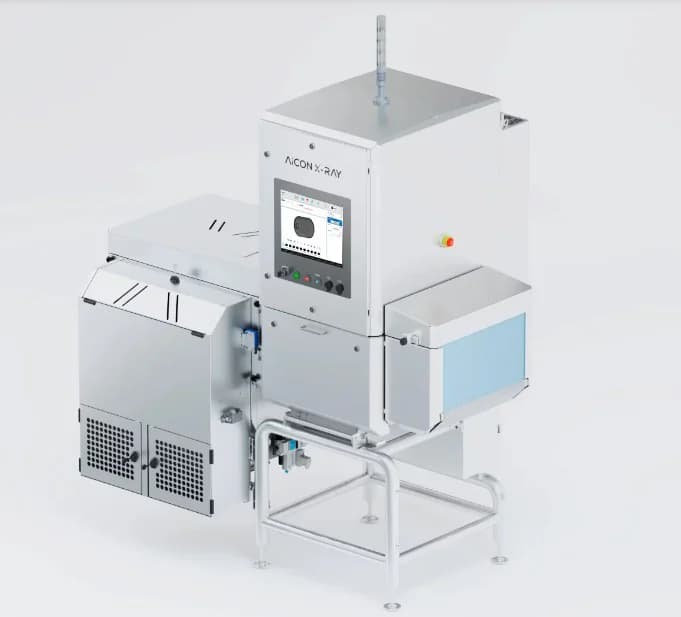
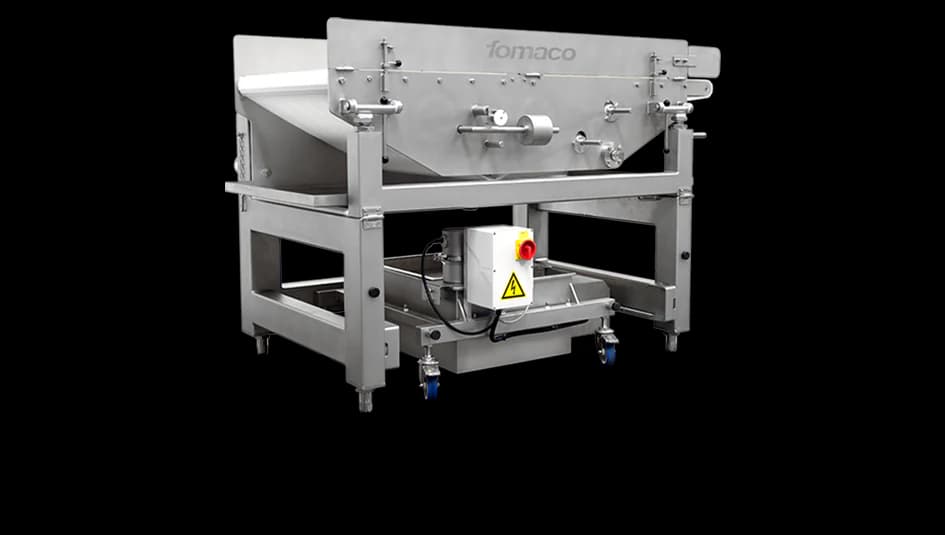
Checks belong where a fault can still be corrected. The VEMAG Process Check VPC716, for minced meat products and forming lines, weighs each product continuously, adjusts the vacuum filler from the result and sends portions outside tolerance off on an ejection belt. The M-Pulse2pro Inflex 65 is a mobile, height-adjustable metal detector made for use with fillers. The Aicon XR-500 HD is an X-ray system for unpacked products. On an injection line, Fomaco IWC units weigh the meat before and after injection.
- VPC716Checkweigher
- M-Pulse2pro Inflex 65Metal Detector
- Aicon XR-500 HDX-Ray System
- IWC 64Weight Control Unit
Stage 11Conveyors & line equipment
Interleaving, lane handling and tray loading
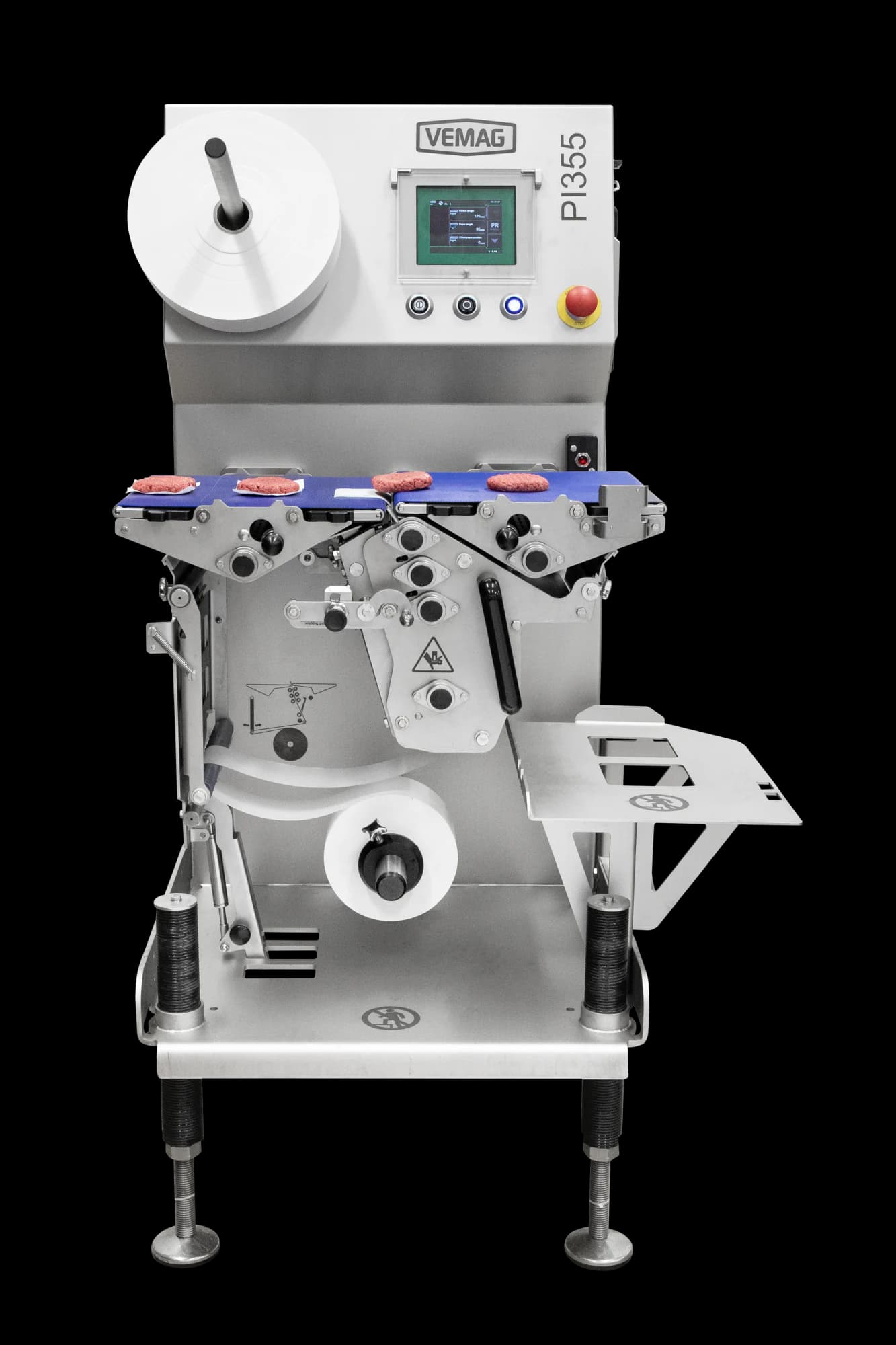
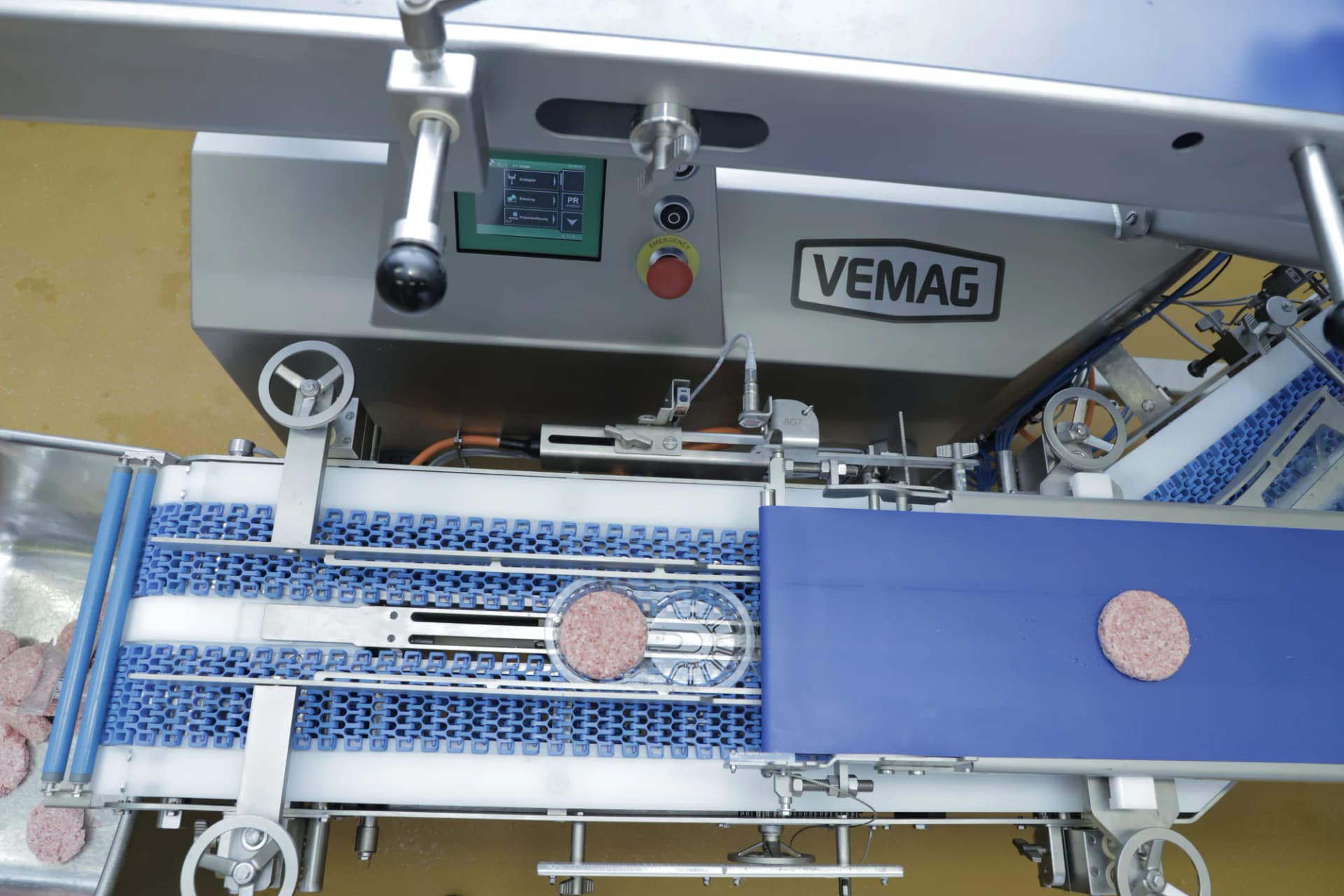
Between forming and packing, product has to be spaced, counted and put into the pack. The PI355 paper interleaver lays products from the FM250, ASV811 or BF255 onto paper. The SL309 loading line places minced meat, cevapcici, sliders, burger patties and meatballs into a range of tray types, with a built-in tray denester. The MLR380 distributes product across several lanes and is made to fit into VEMAG production lines.
Stage 12Thermoformers & packaging
Sealing and packing
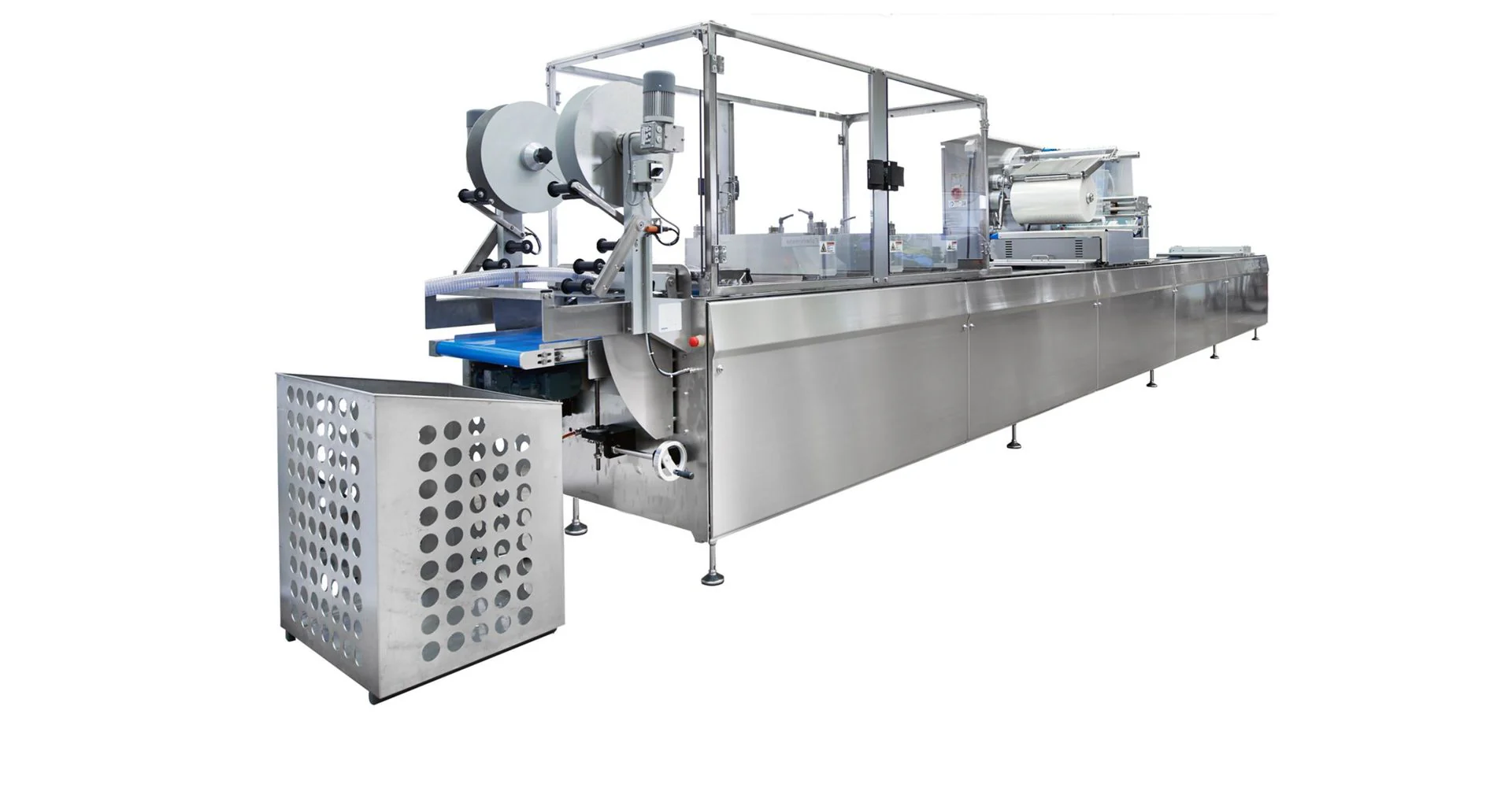
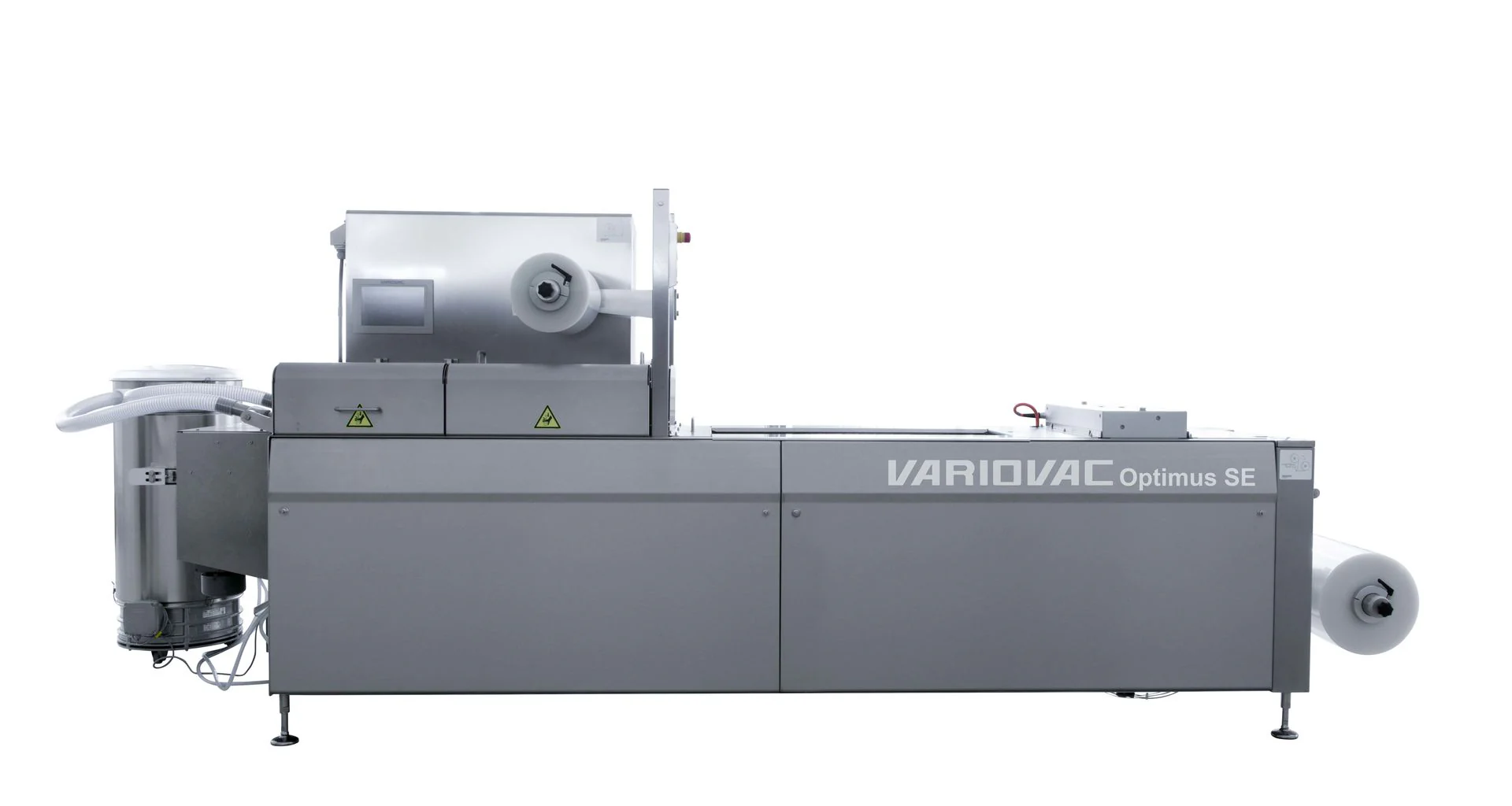
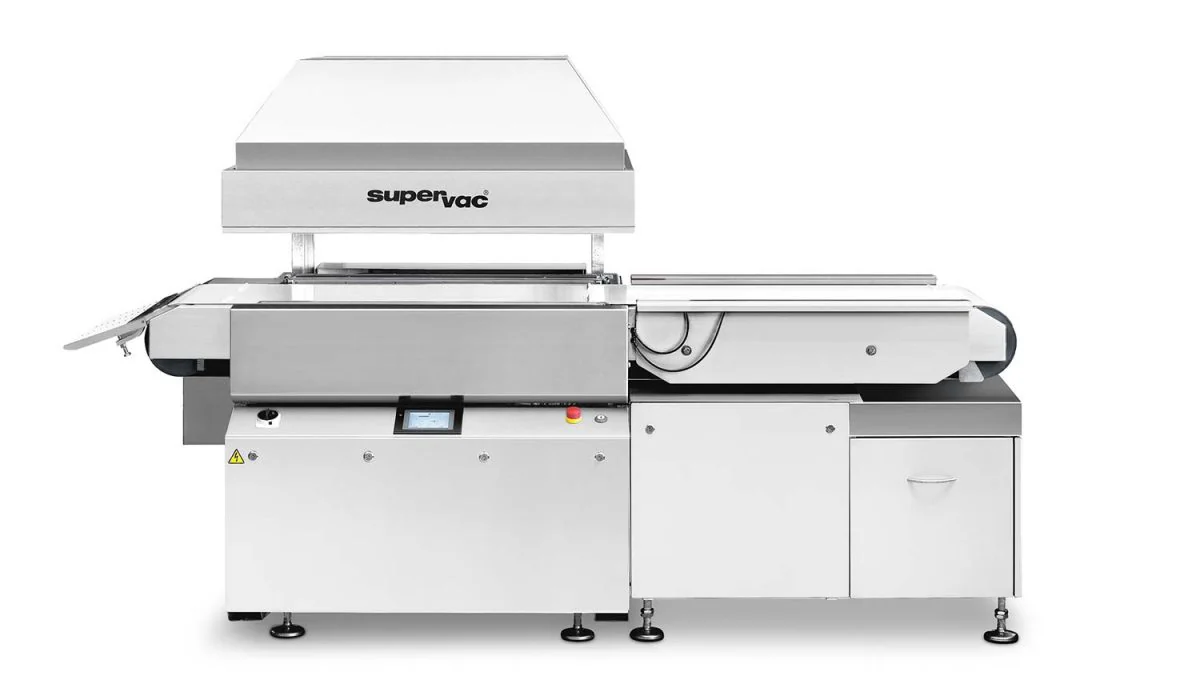
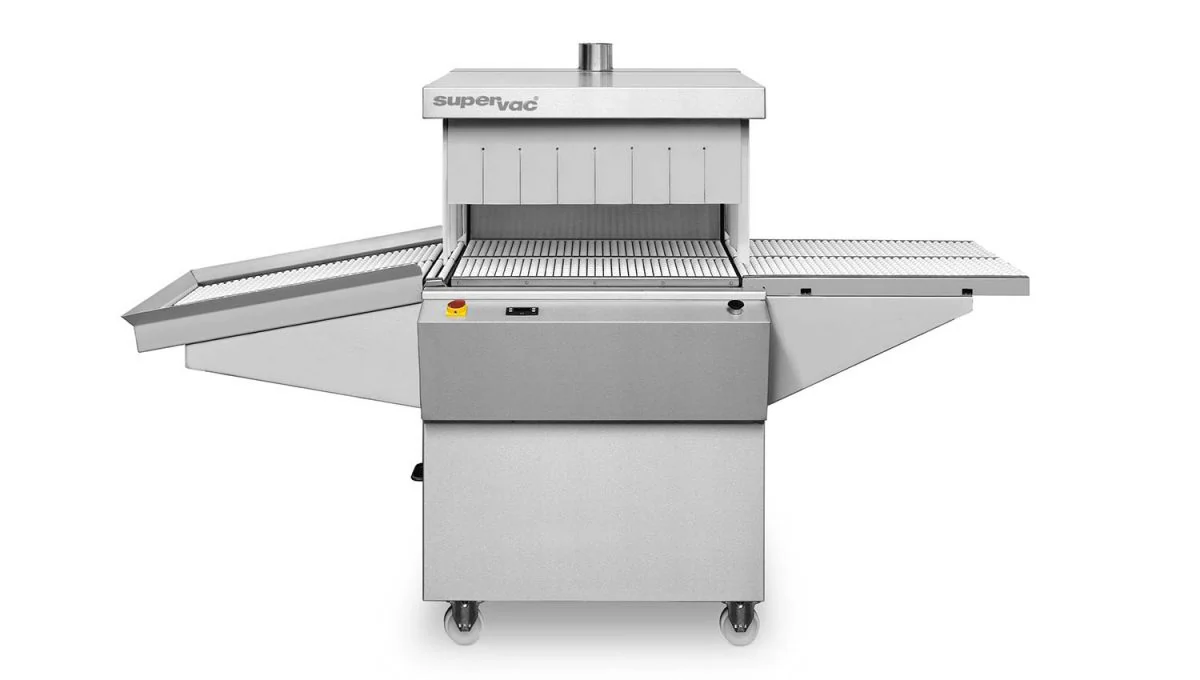
The last stage seals the product and sets its shelf life. Variovac thermoformers form the pack from film: the Primus lists sealing, vacuum, MAP, skin, steam and shrink packaging. The Supervac GK501B is a conveyorised stainless steel vacuum packaging machine, and Supervac AT shrink tanks shrink the bag by full immersion in water. For products that go into ready-made trays, see the tray sealers.
- PrimusThermoformer
- Optimus SE/SELThermoformer
- GK501BVacuum Packaging Machine
- AT 6Shrink Tank
03Illustrations
Which stages each meat product passes through
The table shows, as illustrations, the stages common meat products usually pass through. It is built from the machine types in our catalogue. It is not a record of systems we have installed, and the machines on each row have not been matched to one another: which ones work together is settled for your product when the system is specified.
| Product | Preparation | Portioning and shaping | Treatment | Finishing and packing |
|---|---|---|---|---|
| Mince and burgers | Grinding, or a mixing grinder for seasoned mince | Vacuum filler with a mince portioner or burger former | Usually none | Weight check, interleaving or tray loading, then sealing |
| Fresh sausages | Grinding and mixing | Vacuum filler with linking, or alginate co-extrusion | Usually none | Cutting the strings, grouping, then packing |
| Frankfurts and cooked sausages | Pre-grinding, then a bowl cutter or Konti-Kutter for the batter | Vacuum filler with linking | Hanging, then smoking and cooking | Peeling where needed, then packing |
| Salami and dry sausage | Bowl cutting for dry sausage | Vacuum filler, often into larger casings | Hanging, then climatic maturing and cold smoking | Slicing, then packing |
| Bacon and ham | Brine mixing | Injection, tenderising and tumbling | Smoking or drying for bacon; cooking for ham | Slicing or dicing, then packing |
| Diced meat and strips | Trimming by hand | Dicing or strip cutting | Usually none | Weight check, then tray sealing or vacuum packing |
Cooking ham and peeling cooked sausages are stages none of the machines on this page carries out, so include them when you describe the process to us. The production lines page works through complete mince, sausage, bacon and ham, pet food and bakery lines in more detail.
04Planning
Building a meat processing system in steps
A meat processing system does not have to be bought in one go. Many of the machines in our catalogue are made to be added to a machine you already run, so a system can grow as volumes and the product range grow. These are examples taken from the machines' own listings.
Start with a filler
A vacuum filler with a linking attachment covers filling and portioning for sausages, and other attachments let the same filler form burgers, balls and mince portions.
Put the grinder on the filler
The Grinder 980 is listed as upgrading double-screw fillers to a full line for cooked and raw sausage, and suits the HP series and Robot 500, depending on product.
Add mince portioning
The Minced Meat Attachment 801 can be retrofitted to the Grinder 982 at any time, and the MMP220 extends a VEMAG grinding system into an automated mince line.
Take out hand loading
A tray denester and conveyor can follow the MMP220, and the SL309 loading line places formed products straight into trays.
Add checks
A metal detector such as the Inflex 65 fits common fillers, and the VPC716 weighs every portion on a mince or forming line.
Extend the line
The KLS770 kebab line takes more conveyor belts when more hand stations are needed, and on an injection line a CT 250 or CT 375 continuous tumbler follows the injector.
Before you add a machine, tell us what it has to join: the make and model of the filler or grinder already in place, and how product moves now. Whether a given attachment suits your existing machine is checked before it is quoted.
05Buying
Questions that shape a meat processing system
The same products can be made on very different systems. These questions do most to narrow the choice, and having the answers ready makes the first conversation with our sales team much shorter.
- What state does the meat arrive in? Fresh, chilled and frozen meat need different machines. The AU 200 U is described for frozen meat blocks, and the XP2 for minced meat with a frozen meat content above 70%.
- How many products, and how often do you change over? A system that runs one product all day can be built for speed; one that changes recipe several times a shift needs fast cleaning and changeovers. The Robby, for example, is designed for smaller batches and frequent product changes.
- Which casings do you use? Natural, collagen, cellulose and alginate casings call for different linking equipment. The DAG804 casing applier, for sheep and hog casings, fits the LPG208 and LPG209.
- Where will bone, sinew and metal be caught? Separation at the grinder, as on the Grinder 982 and Separator 813, removes hard particles before portioning; a metal detector or X-ray system checks the product after it.
- How is weight controlled? Decide whether portions are checked by sampling or every one is weighed and the filler corrected, as the VPC716 does.
- What does the finished pack look like? Thermoformed, tray-sealed, vacuum bagged or skin packed: the pack decides the loading and packing machines at the end of the system.
- How will it be cleaned? Look for open, sloped surfaces that drain; the K40 cutter's frame, for example, is designed so that cleaning water drains from every surface.
06Support
Trials, installation and support in Australia
Our sales team quotes on single stand-alone machines and on complete production lines, and our own service technicians and spare parts desk support the equipment we supply. You can bring your own products to our Customer Centre and run them on a range of machines before you decide.
01
Customer Centre
Test your own meat products and recipes on our machines under production conditions, with our specialists alongside.
02
Sales and quotations
Quotations for one machine or a whole production line, based on your products and volumes.
03
Service
Installation, maintenance, repairs and operator training from our service technicians.
04
Spare parts
Genuine parts from stock, and help finding the right part for your machine.
07FAQ
Meat processing system questions
What is a meat processing system?
It is the group of machines that takes meat from raw material to packed product, plus the conveyors, controls and checks that link them. A typical system combines some of these stages: grinding or cutting, curing, filling and portioning, forming or linking, smoking or drying, slicing, inspection and packing. See the stages above.
Do you supply complete systems or individual machines?
Both. Our sales team quotes on single stand-alone machines and on complete production lines. Tell us your products, volumes and the machines you already run, and we will suggest what fits.
Can new machines be added to the equipment I already have?
Often, yes. Many attachments in our catalogue mount on a vacuum filler or grinder, such as grinding heads, mince portioners and linking devices. Whether a particular machine suits the one you have is checked before we quote. See building a system in steps.
Do you supply slaughter, boning or refrigeration equipment?
No. Our catalogue starts with boned meat, trim and frozen blocks and ends with the sealed pack. Slaughter, carcass breaking, boning, chiller and freezer rooms are outside it.
Can frozen meat go straight into the system?
Some machines are built for it. The AU 200 U universal grinder is described for frozen meat blocks, and the XP2 vacuum filler for minced meat with a frozen meat content above 70%. How cold the meat can be depends on the machine and the product, so tell us the temperature it arrives at.
How do I keep portion weights consistent across the system?
Portioning on a vacuum filler sets the weight, and a weighing system after it checks the result. The VPC716 weighs every product, corrects the filler from the measurement and rejects portions outside tolerance. On injection lines, IWC units weigh the meat before and after injection.
Can I trial my product before buying?
Yes. Our Customer Centre is set up for processors to test their own meat and recipes on our machines in conditions close to a production run. Testing one stage at a time, such as grinding, filling or slicing, is often the quickest way to settle a choice before the rest of the system is planned.
How much does a meat processing system cost?
There is no list price for a system: the figure depends on how many stages it has, which machines and options fill them, and how much conveying and control joins them up. Prices are not published on this site. Our sales team prepares a quotation once they know your products, volumes and existing equipment; our page on food processing machinery for sale lists what to include in that enquiry.