
01Scope
Where packaging fits in a meat plant
Meat reaches the packing room in many forms: a primal ready for a bag, steaks that have to look right through a lid, patties and meatballs straight off a former, cut links of sausage, logs of ham or slabs of bacon. Each suits a different pack, and the pack, more than the meat itself, decides which machine closes it.
The equipment on this page handles the last part of the job: putting product into trays or packs, checking it for foreign bodies and weight, sealing it under vacuum, a protective gas or a skin film, and shrinking, cooling and drying bagged product. For the machines that grind, fill, form, cure and cook meat before it gets this far, see meat processing machines and our guide to meat processing systems.
Packing chicken portions or other poultry products? Our page on poultry processing equipment works through that stage by stage, and vegetable packaging machines covers trays, formed packs and bags for vegetable products. Every packaging machine we list also appears on the thermoformers and packaging and tray sealers pages, with its published data.
- Covered here: tray denesting and loading, paper interleaving of patties, X-ray, metal and weight checks, thermoforming, tray sealing, vacuum packing in bags, and shrink, cooling and drying equipment.
- Not covered: slaughter and boning-room equipment, labelling and palletising, none of which is in our catalogue.
02Stages
Meat packaging equipment by stage
Each stage below names the catalogue machines whose own published data fits the work, and links the machine type page where the whole group is listed. A butcher sealing trays at a bench may need just one of these stages; an automated burger or sausage line can run through five or six.
Stage 1Conveyors & line equipment
Denesting trays and loading product
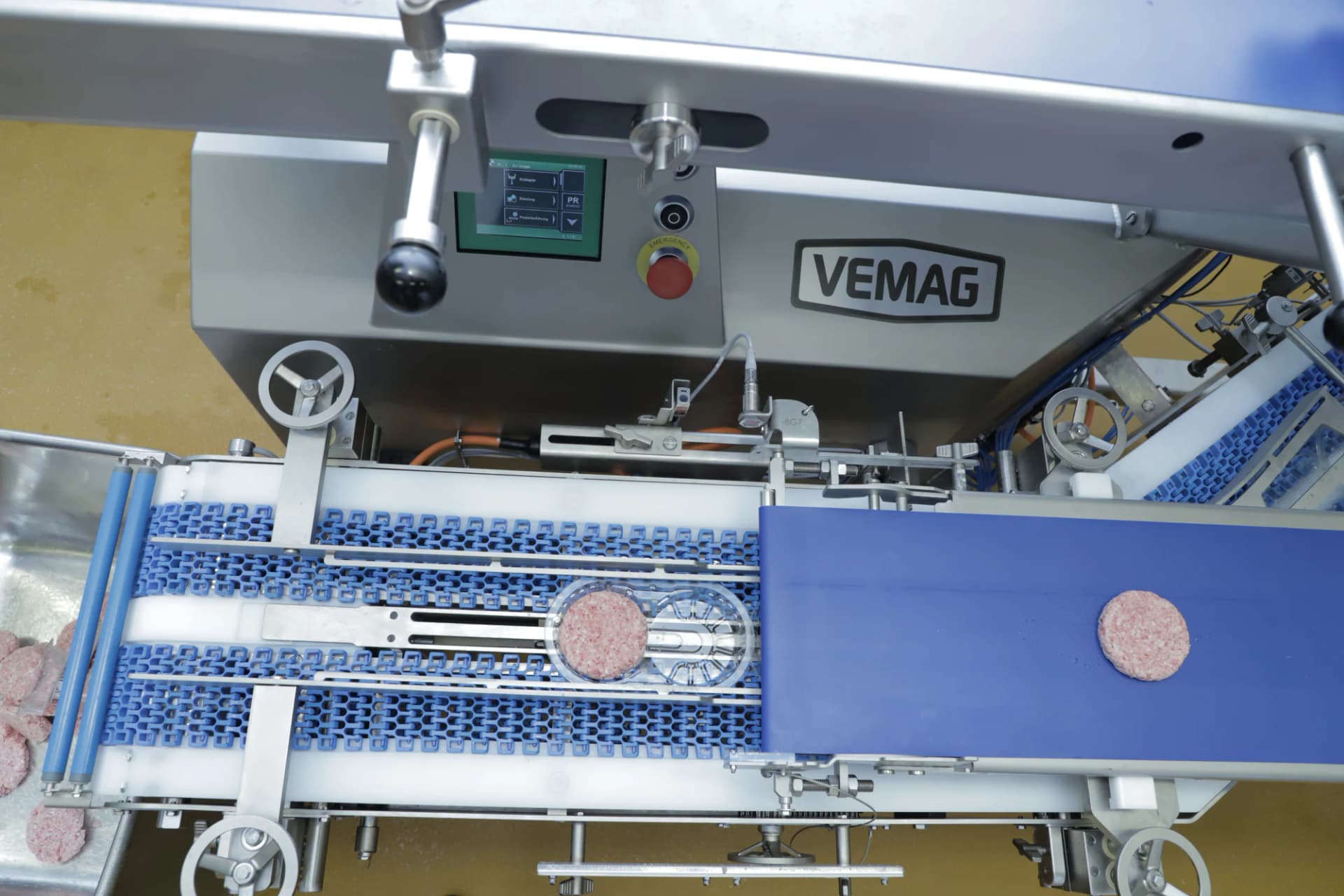
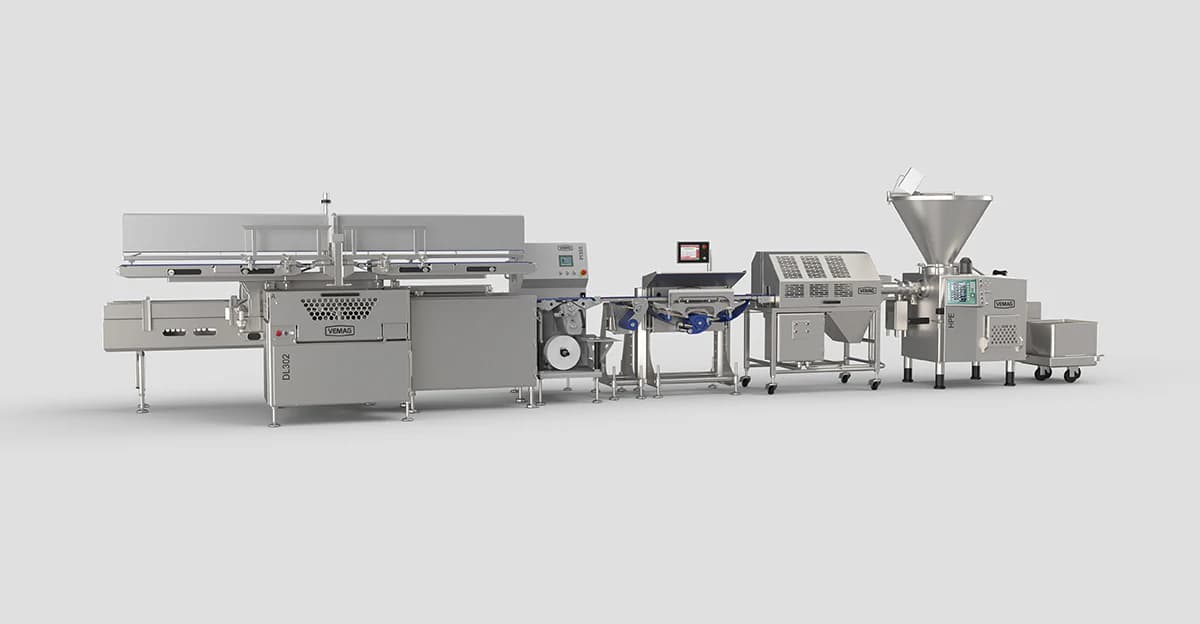
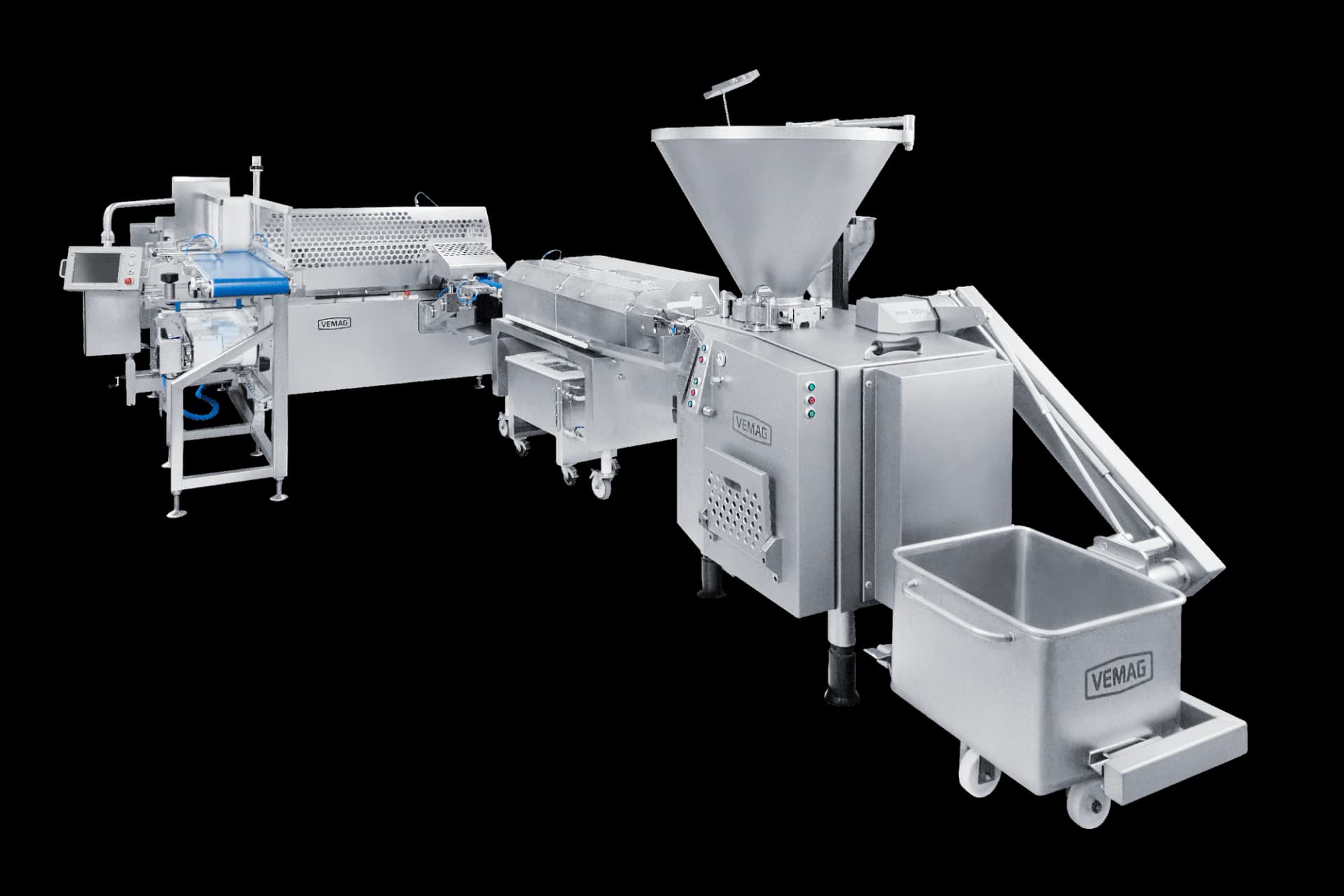
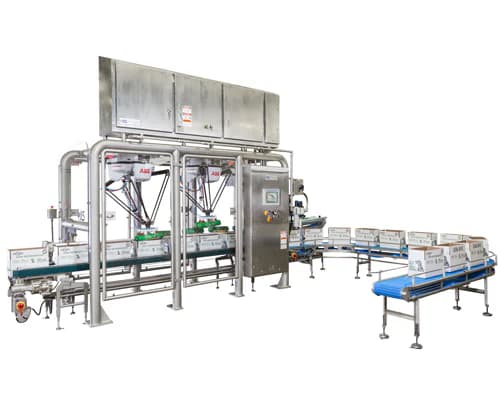
Filling trays by hand is slow and puts hands on the meat just before it is sealed. The SL309 loading line places minced meat, cevapcici, sliders, burger patties and meatballs into a range of tray types and formats, has a tray denester built in, and its data gives a maximum of 300 products a minute. The DL302 loading line is described for any product that can be conveyed in a stable state, goulash, schnitzel and chops included, and works with commercially available trays. The LL335 link loader lines up cut fresh sausage, natural casings included, and sets it into trays and thermoformed pouches, while the TD315 denester cassette supplies trays and changes format when the cassette is swapped. JLS builds vision-guided robots that load thermoformed packs, trays and vacuum skin packs.
- SL309Loading Line & Tray Denester
- DL302Loading Line
- LL335Link Loader
- TD315Denester Cassette
- JLS Robotic SystemsRobotic Packaging System
Stage 2Conveyors & line equipment
Interleaving burger patties
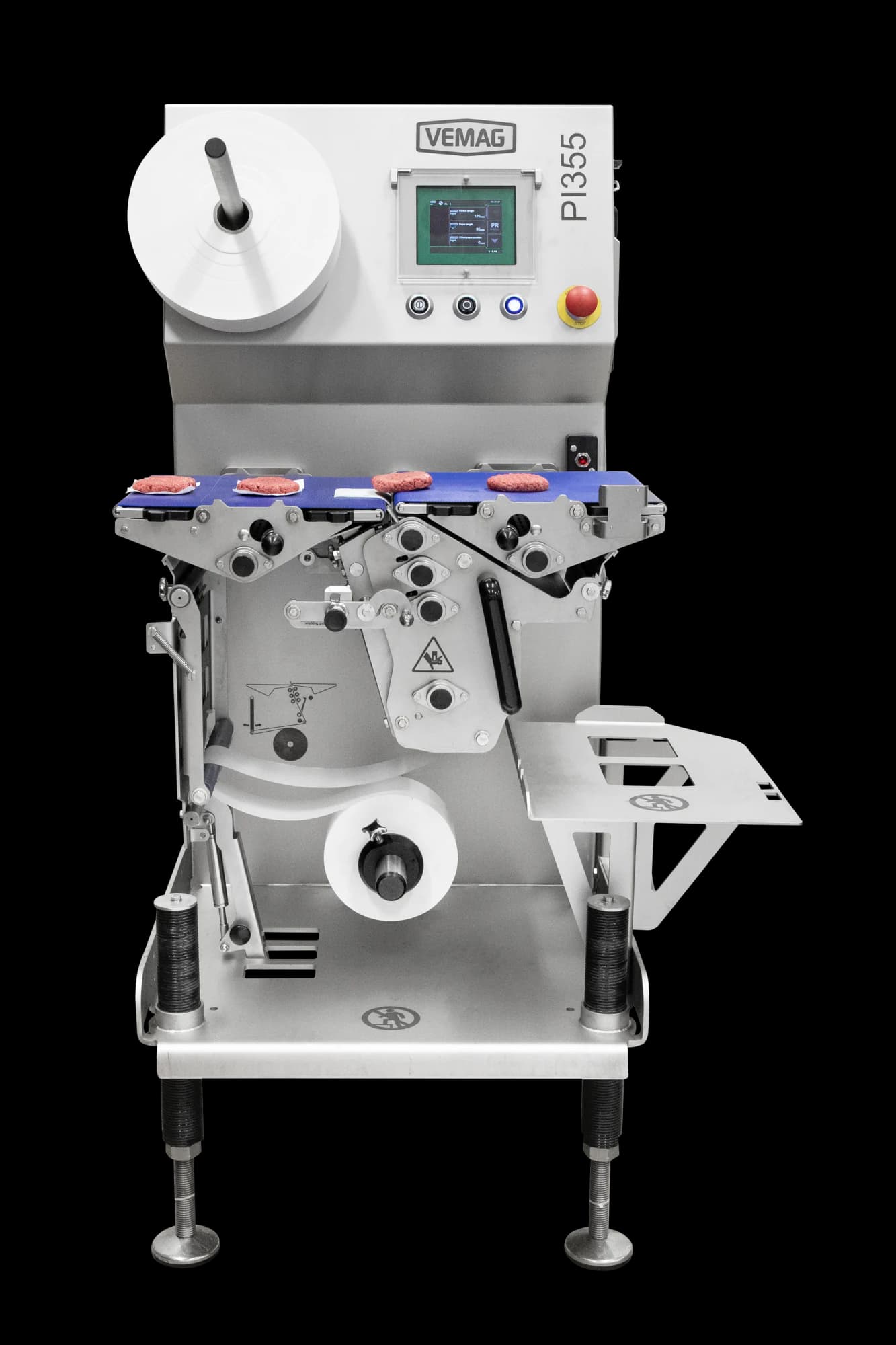
Patties stacked in a box are usually separated by a sheet so they come apart cleanly, especially once frozen. The PI355 paper interleaver deposits formed products onto paper or plastic film cut to a variable length and width, comes in single-lane and double-lane designs, and is built as an accessory to the FM250 forming machine, the ASV811 cutting device and the BF255 burger former.
- PI355Paper Interleaver
Stage 3Inspection & weight control
Checking for metal, bone and weight
A fault caught before sealing costs one portion; caught after sealing, it costs the pack, the film and the time to repack. The Aicon XR-500 HD is an X-ray system for quality control of unpacked products, and the Aicon XR-500 Poultry is built for checking raw meat, with a detector its data says finds calcified bone down to 1 mm. Of the Pulsotronic metal detectors, the M-Pulse3 BD-XD carries product on a conveyor belt through the detector and analyses it in real time, and the mobile M-Pulse2pro Inflex 65 is built to sit with stuffers and filling machines. For minced products, the VPC716 Process Check weighs every portion, adjusts the vacuum filler as it goes and rejects portions outside tolerance, and the Scale 877 is a digital scale for spot-checking weights.
- Aicon XR-500 HDX-Ray System
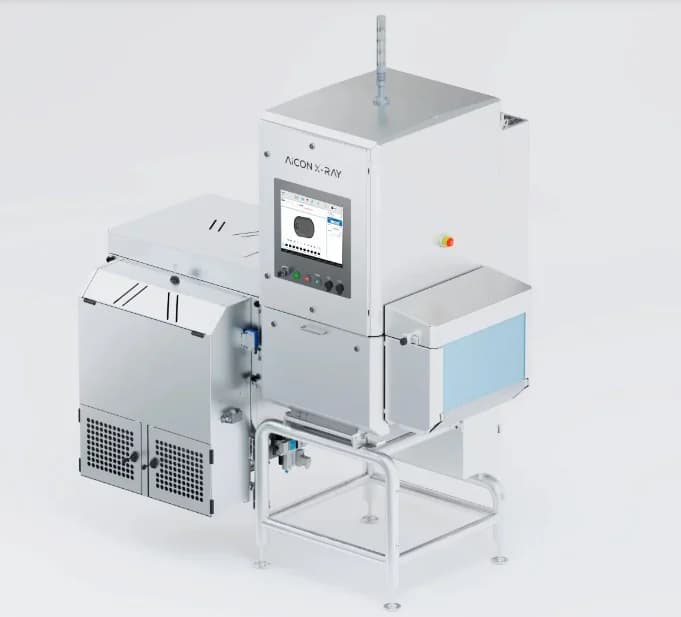
- Aicon XR-500 PoultryX-Ray System
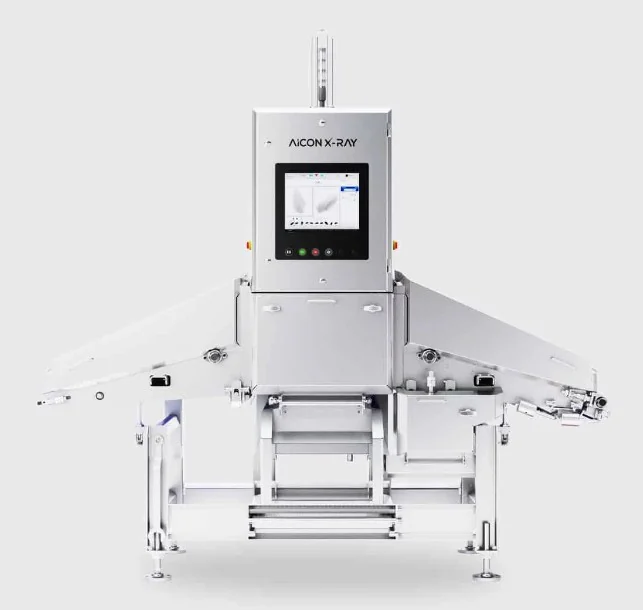
- M-Pulse3 BD-XDMetal Detector
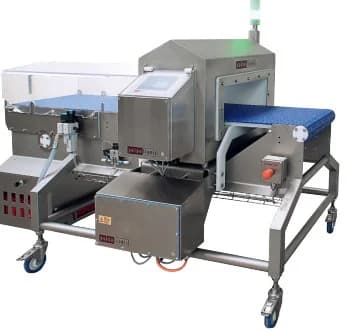
- M-Pulse2pro Inflex 65Metal Detector
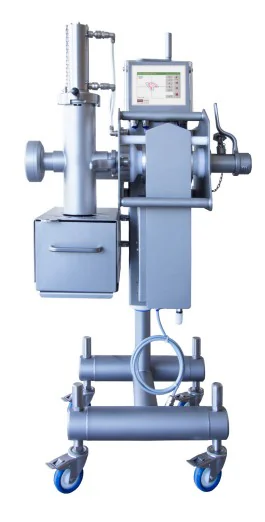
- VPC716Checkweigher
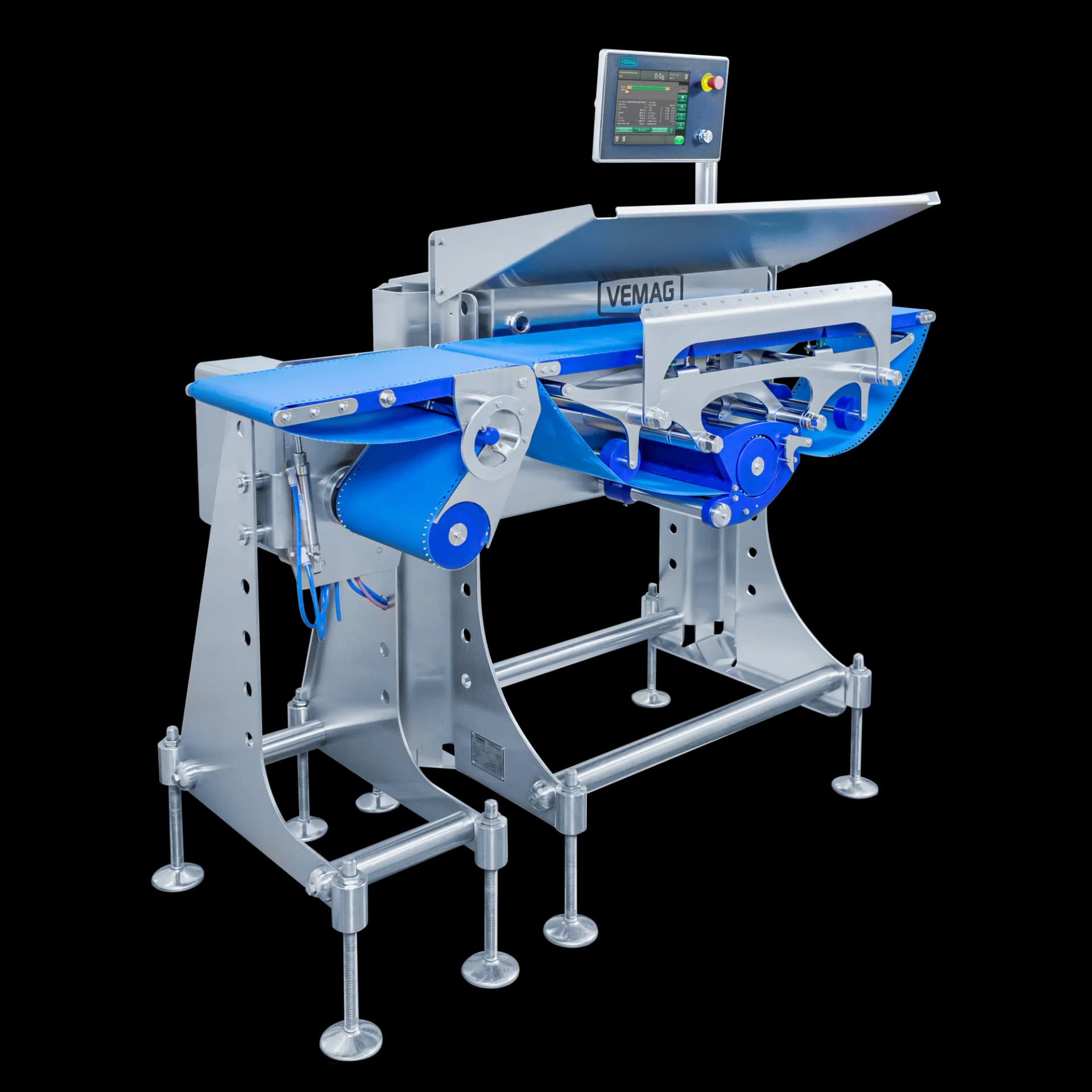
- Scale 877Digital Scale

Stage 4Thermoformers & packaging
Forming packs from film
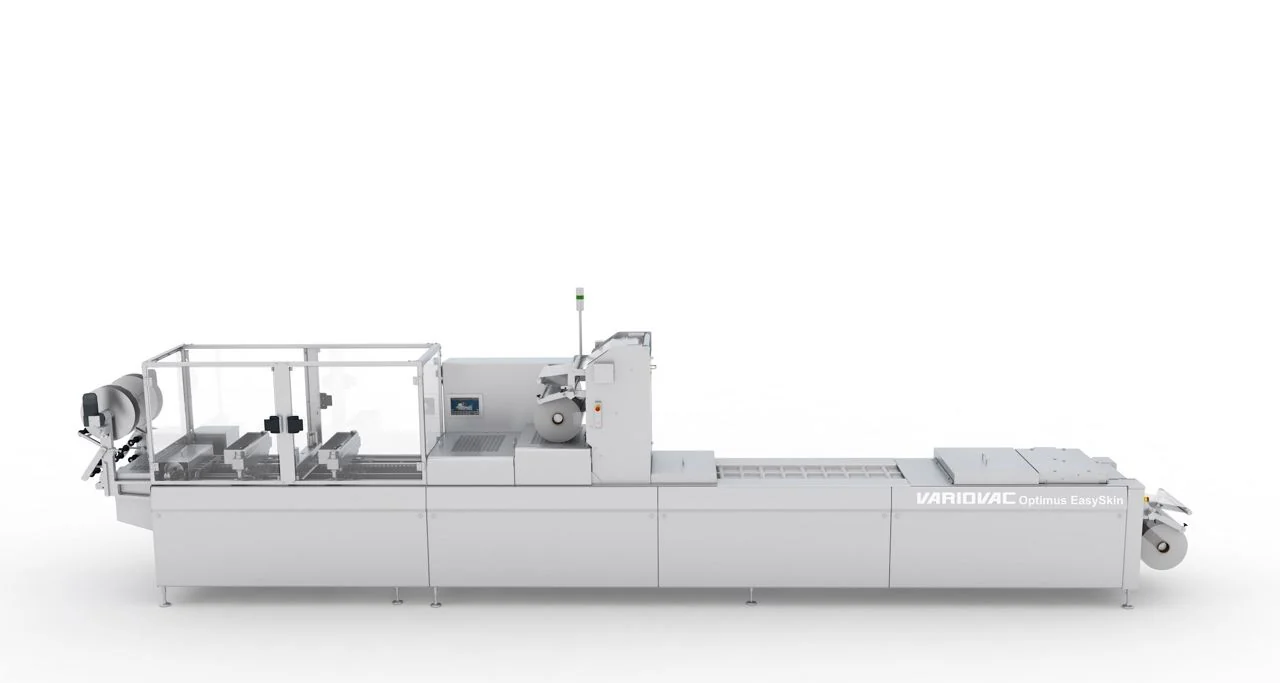
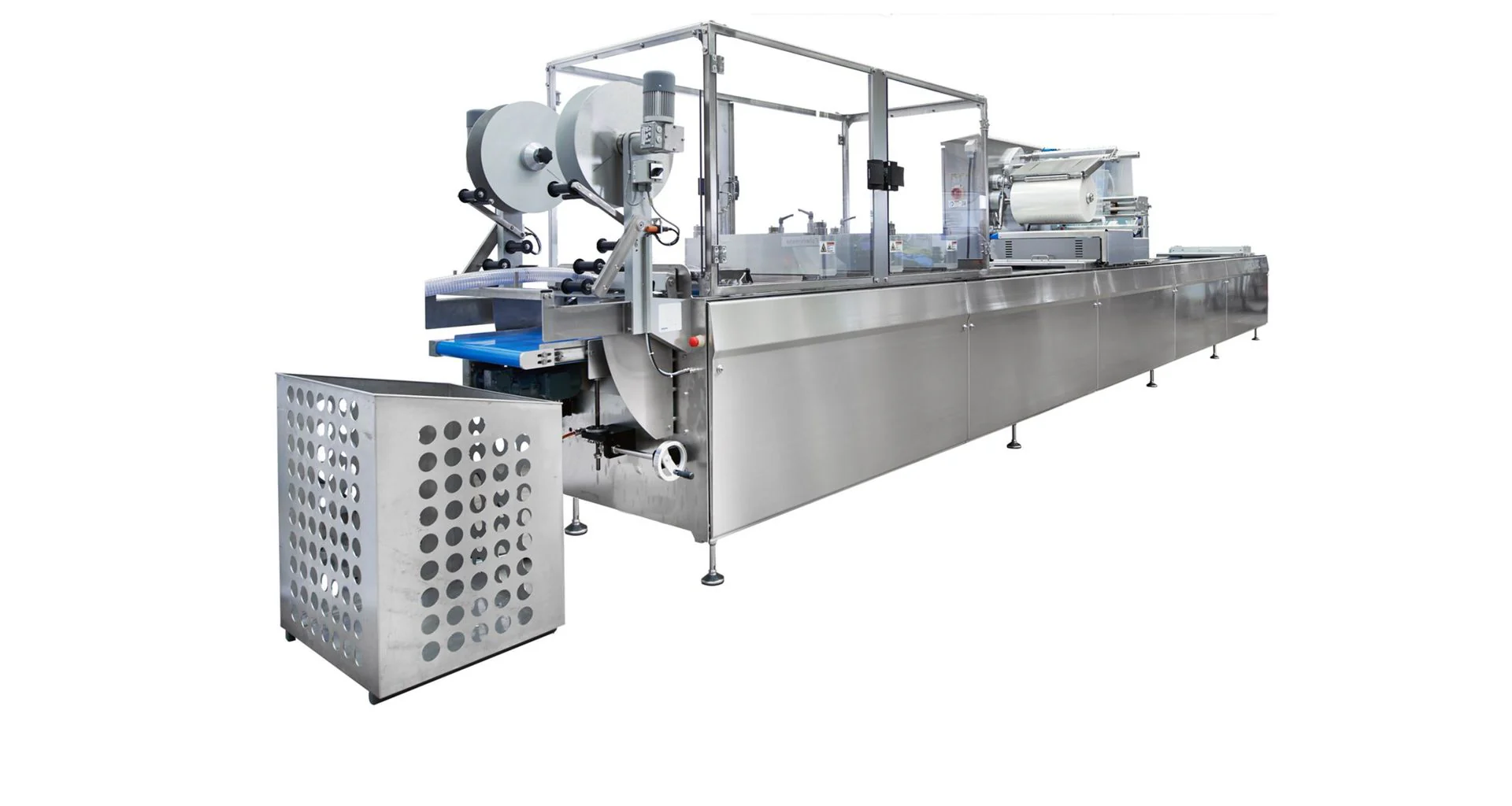
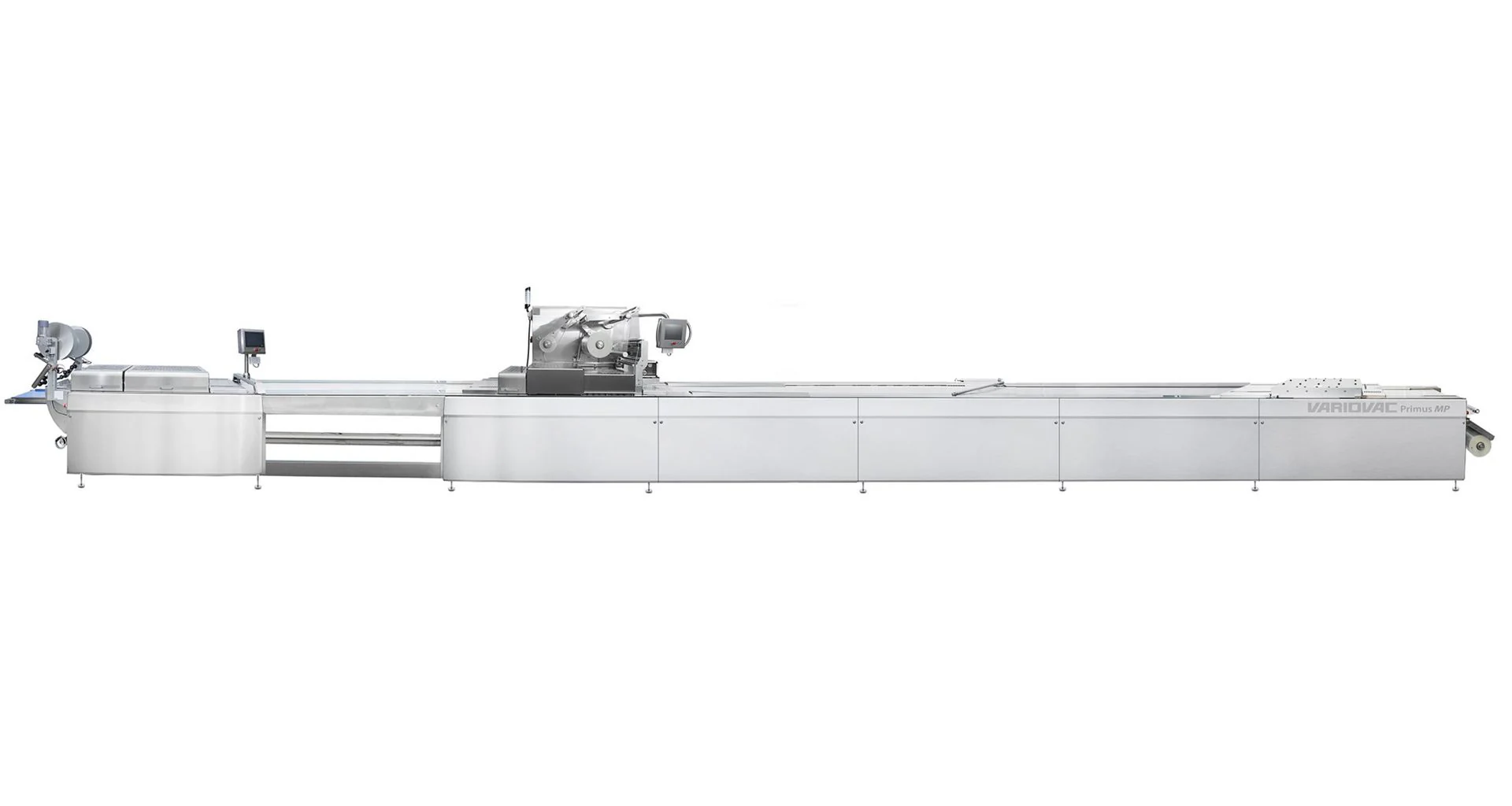
A thermoformer heats a bottom film into pockets, the product is loaded on the machine and a top film is sealed over it, so no trays are bought in or stored. The Optimus EasySkin is described for high-quality products such as meat and seafood: in skin mode it takes products protruding up to 55 mm, and its skin module can be switched to MAP by routing the film differently. The Maximus RE is aimed at smaller productions, and the Optimus SE/SEL are entry-level fully automatic machines. The Primus runs at up to 20 cycles a minute, and its published pack types extend to steam and shrink packs as well as vacuum, MAP and skin; the Primus MP keeps every Primus application and adds further modules and special equipment.
- Maximus REThermoformer
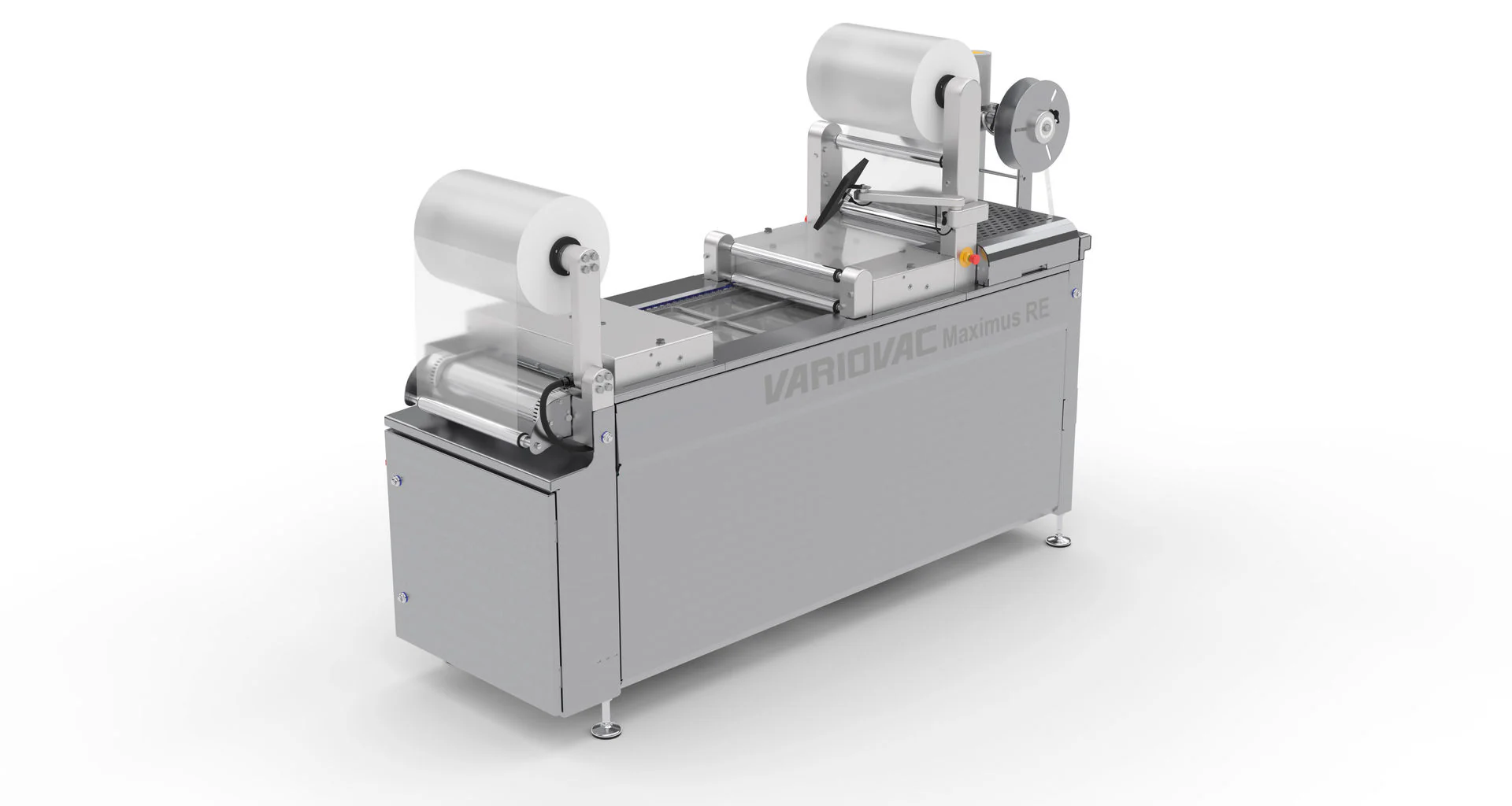
- Optimus SE/SELThermoformer
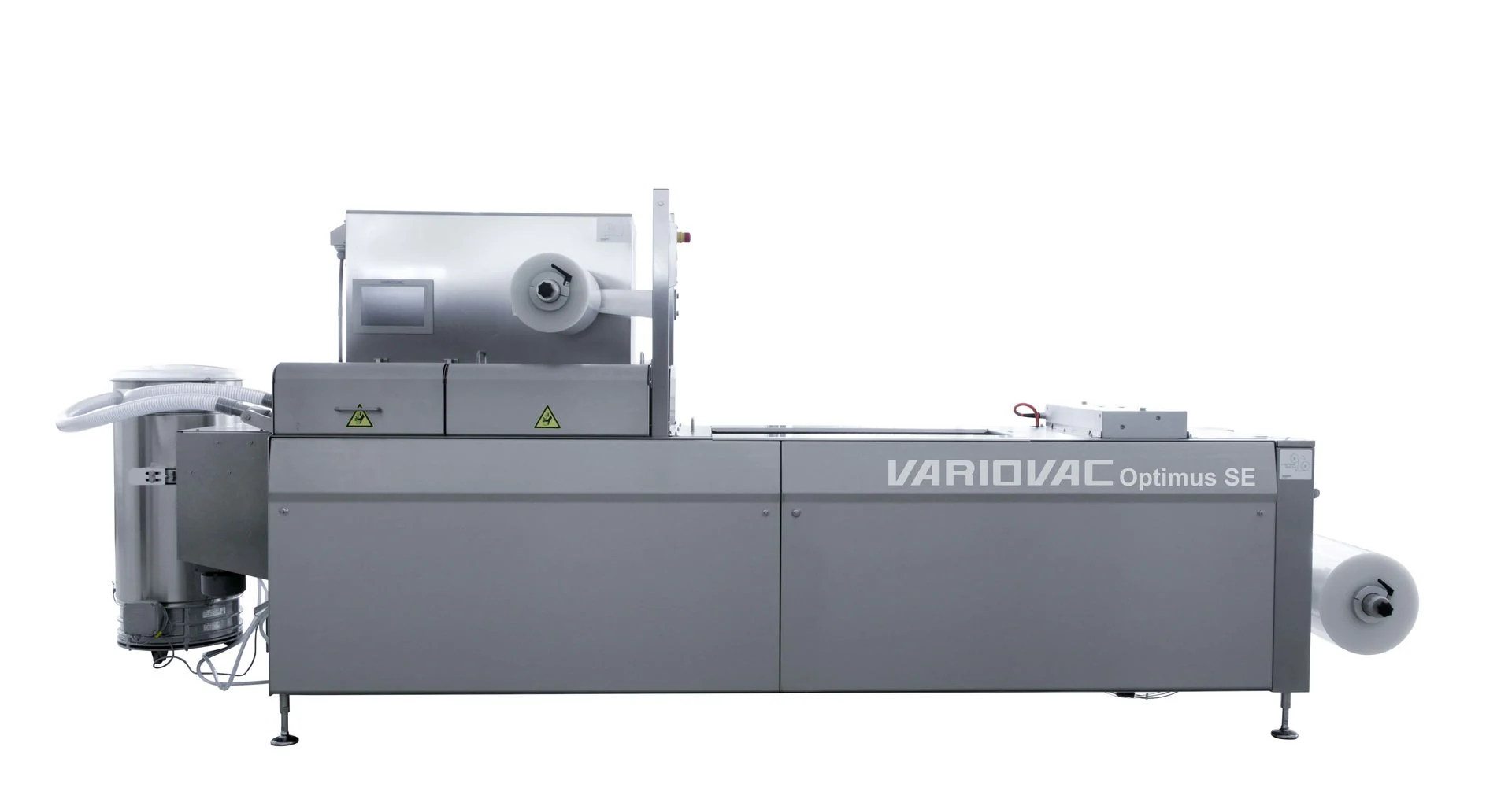
- Optimus EasySkinThermoformer
- PrimusThermoformer
- Primus MP (Multiperformance)Thermoformer
Stage 5Tray sealers
Sealing pre-made trays
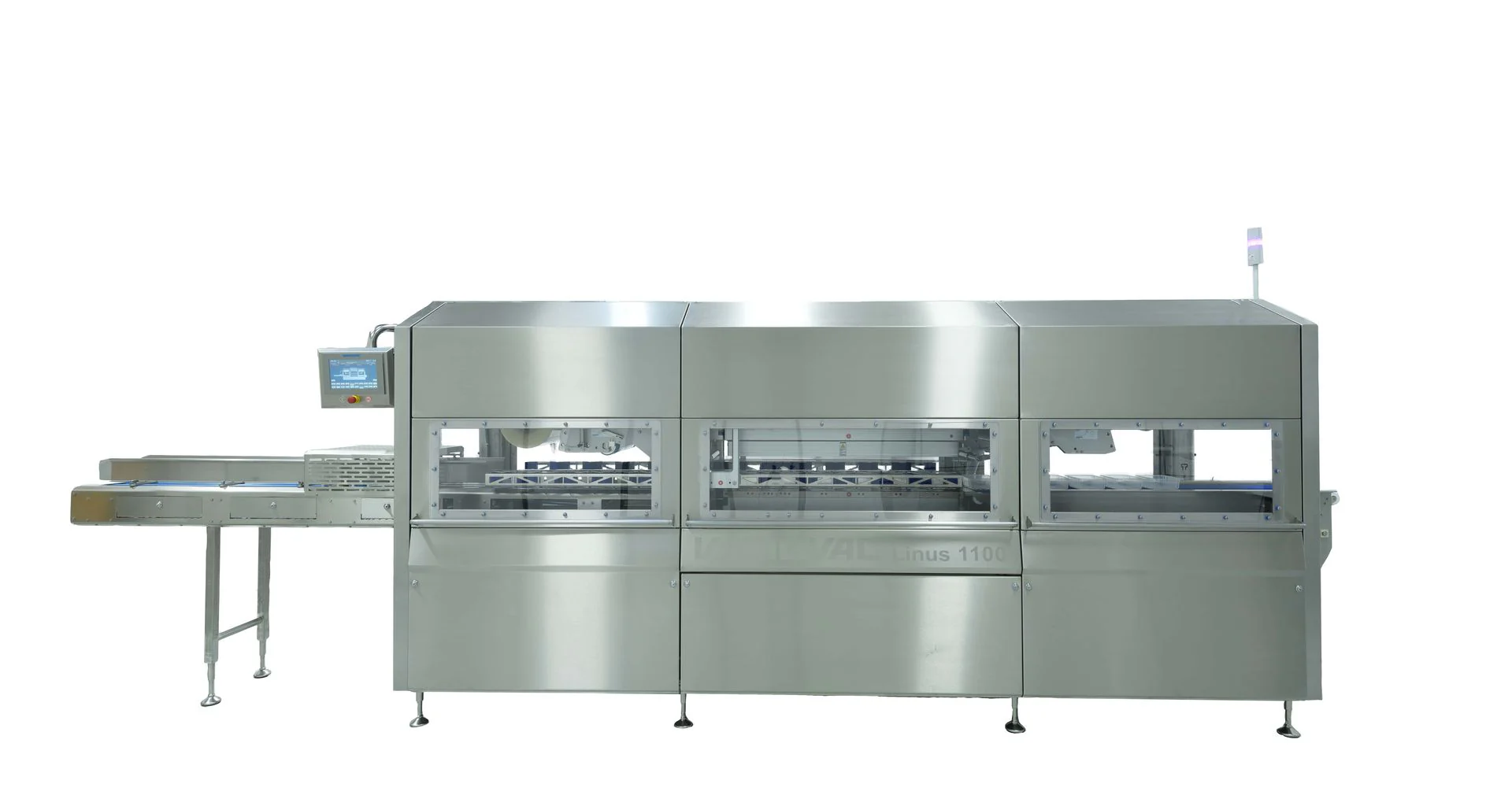
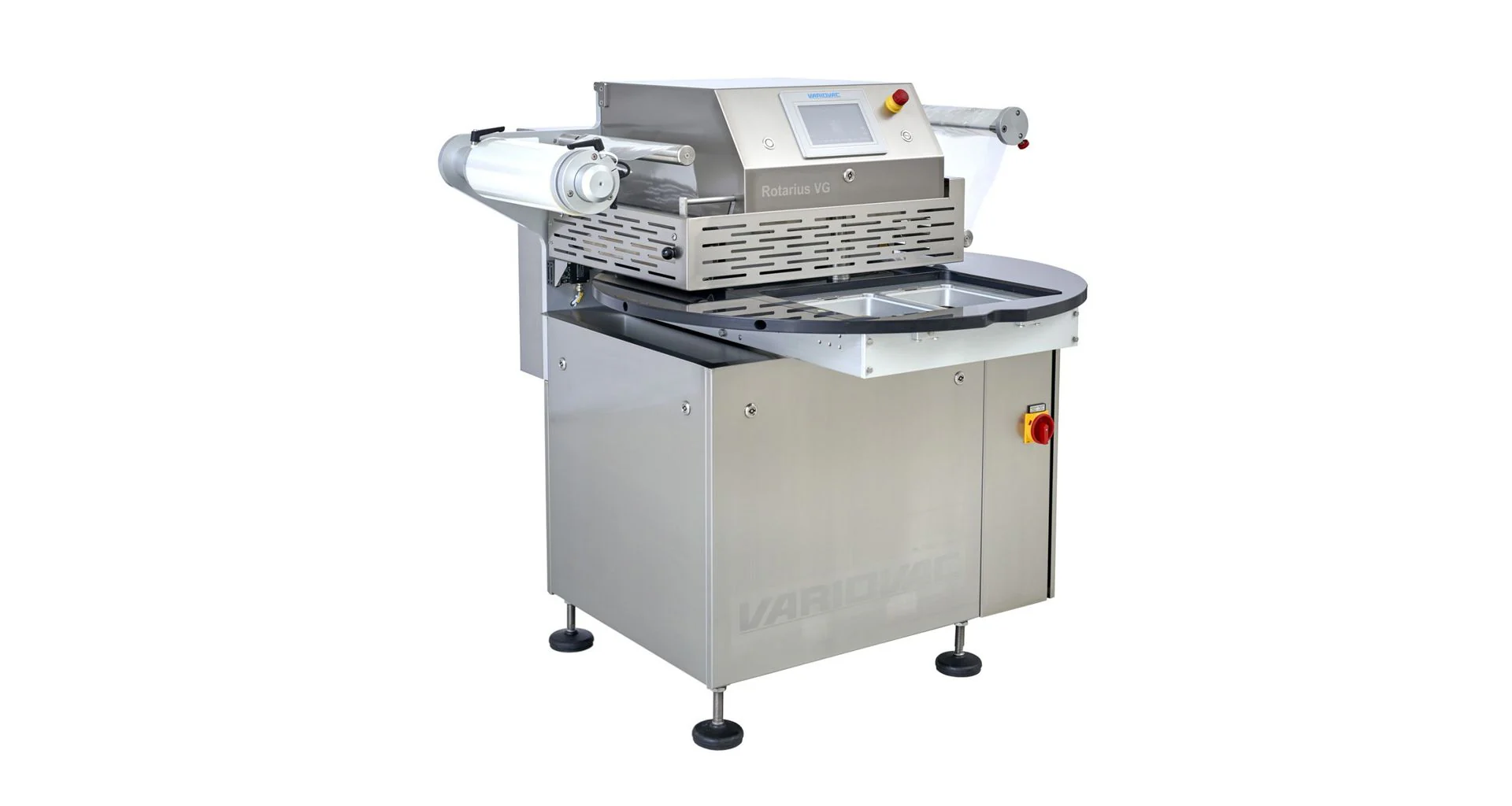
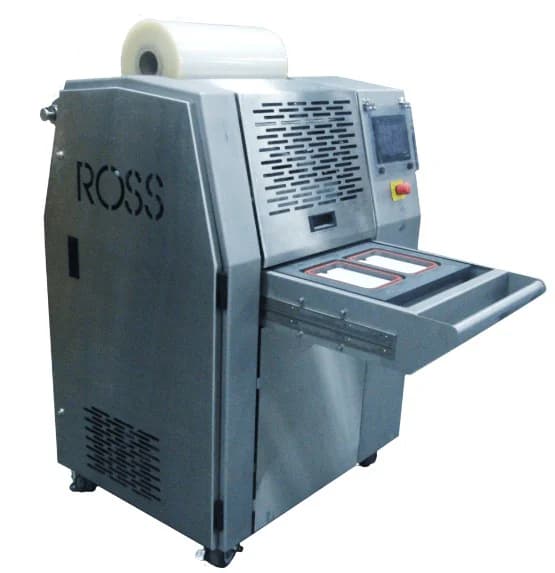
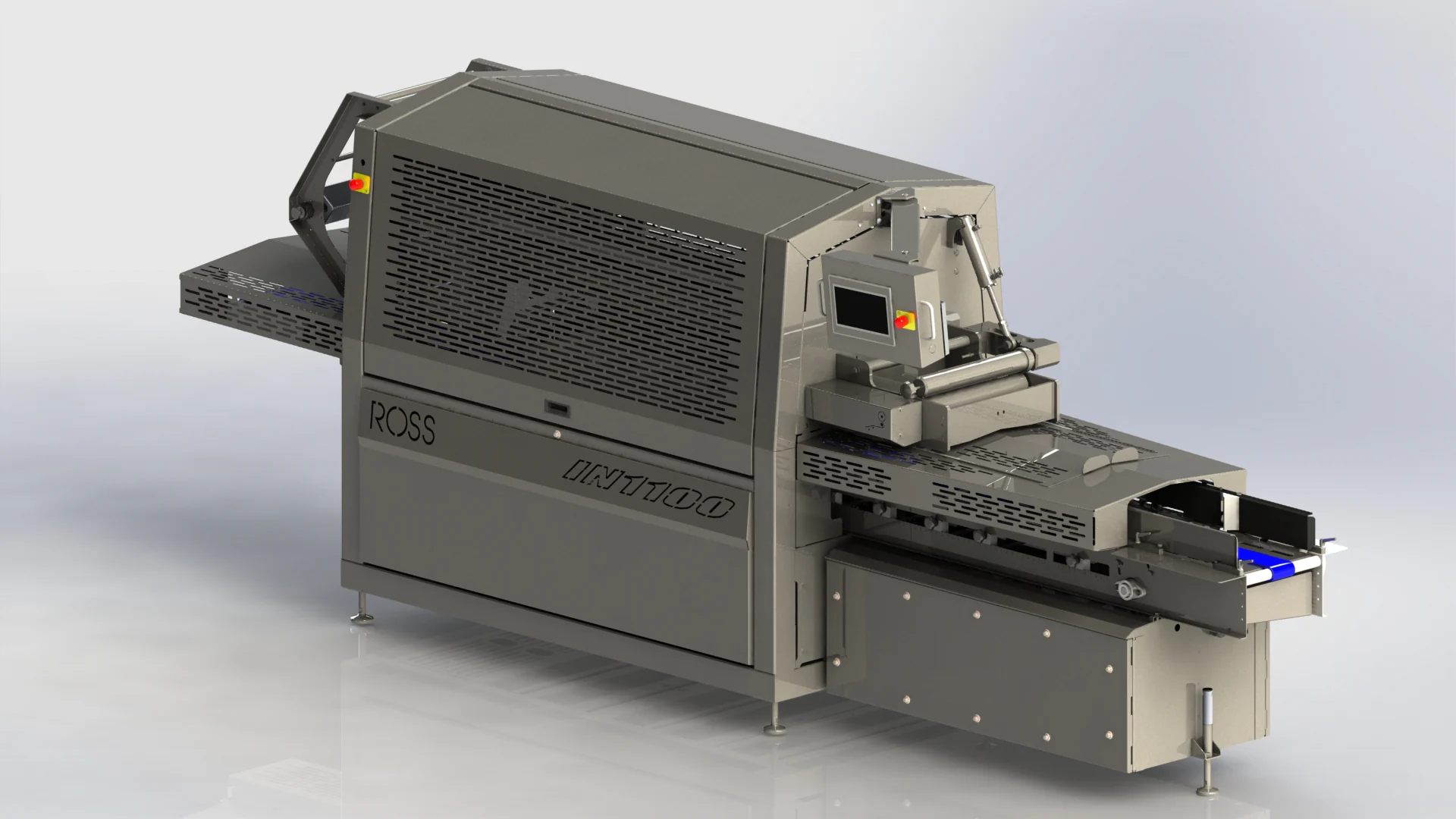
Retail steaks, mince and diced meat are often sold in a rigid tray under a lidding film, either with a protective gas in the headspace or with the film drawn down as a skin. The Variovac Linus 1100 lists fresh meat and sausages among the products it is suited to; it is fully automatic, takes PP, PE, PET, PS and aluminium trays, and seals them plain, under protective gas or as skin packs. For smaller runs, the Rotarius is a semi-automatic sealer with two tools on a rotary table and lists MAP and skin sealing, and the Ross X450 is made for small processors, stores and food lab settings. The Ross IN 1100 is a fully automatic machine for MAP and VSP packs.
- Linus 1100Tray Sealer
- RotariusTray Sealer
- X450 Semi-AutomaticTray Sealer
- IN 1100Tray Sealer
Stage 6Thermoformers & packaging
Vacuum packing in bags
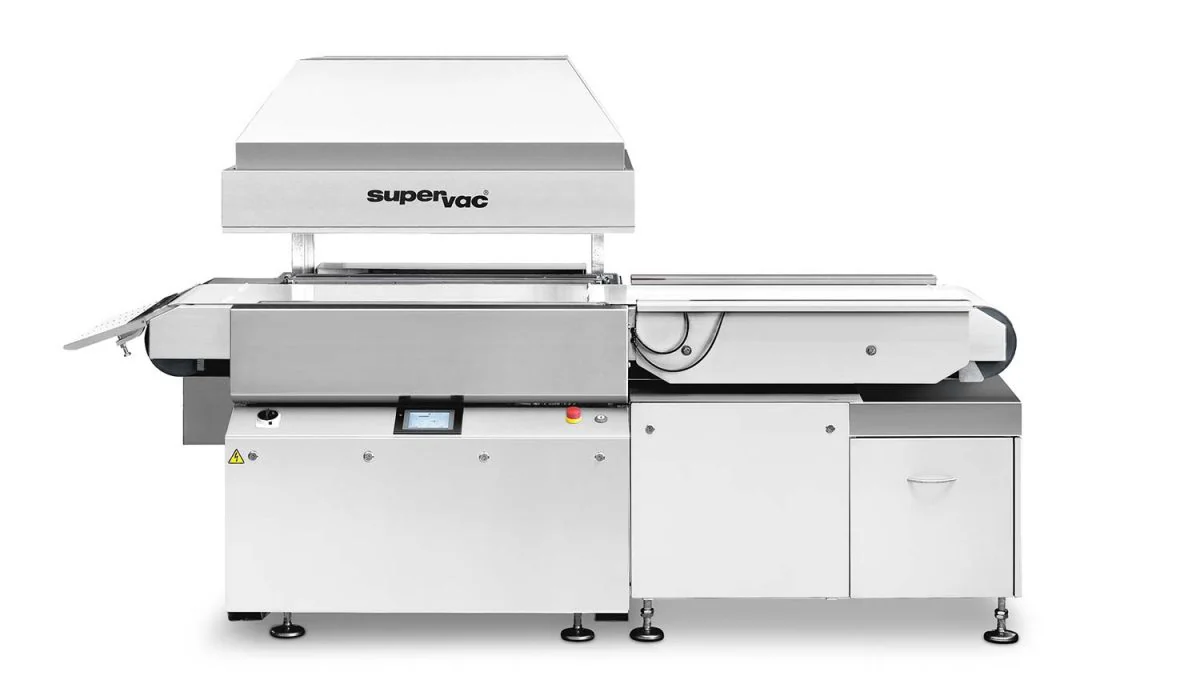
Primals, whole-muscle pieces, bacon slabs and cooked hams commonly leave the plant in vacuum bags, often shrink bags. The product goes into the bag first, and the vacuum packaging machine draws out the air and seals it. The Supervac GK501B is conveyorised and built in stainless steel, and its listing describes more output from a single operator.
- GK501BVacuum Packaging Machine
Stage 7Thermoformers & packaging
Shrinking, cooling and drying bagged meat
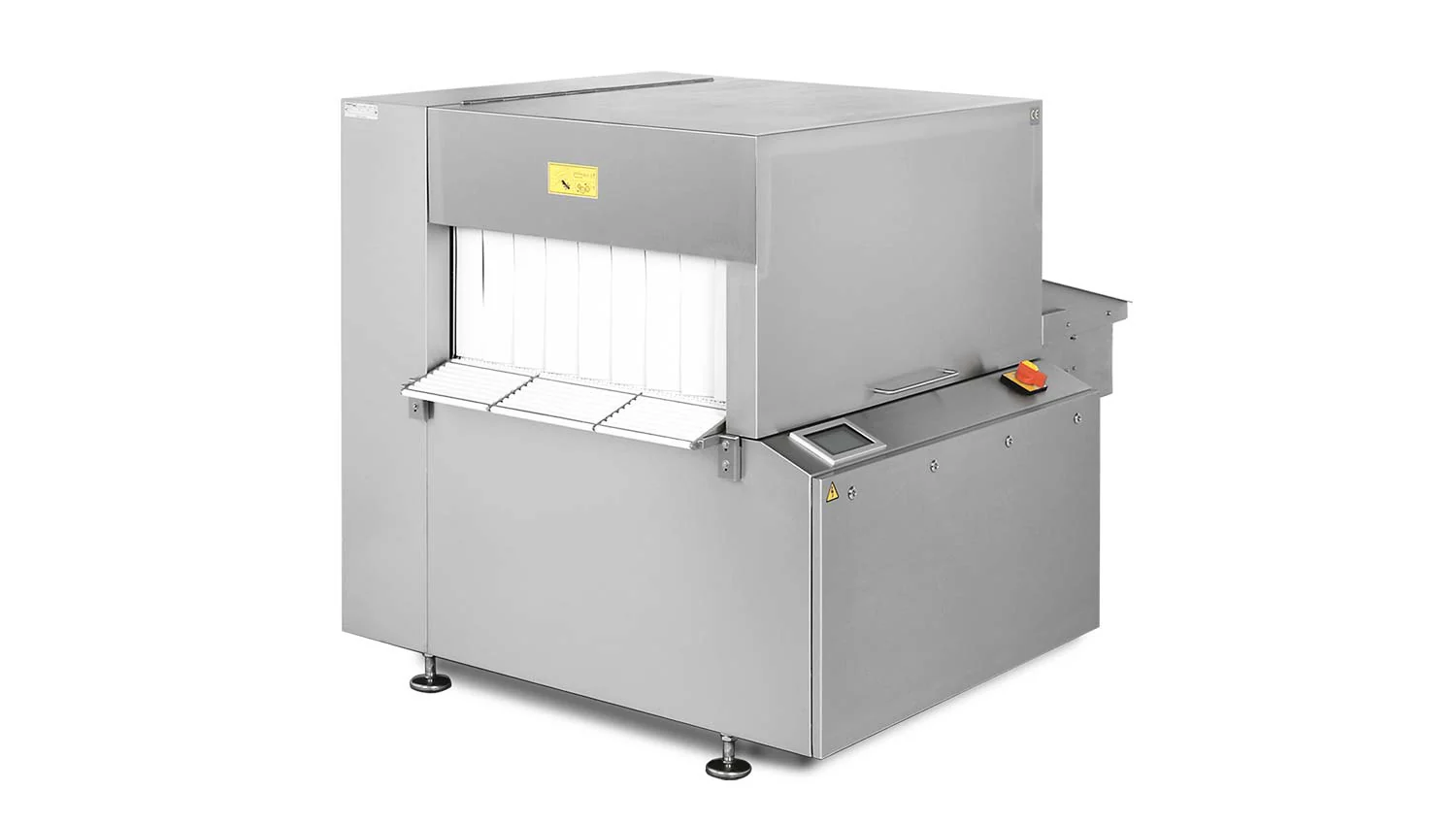
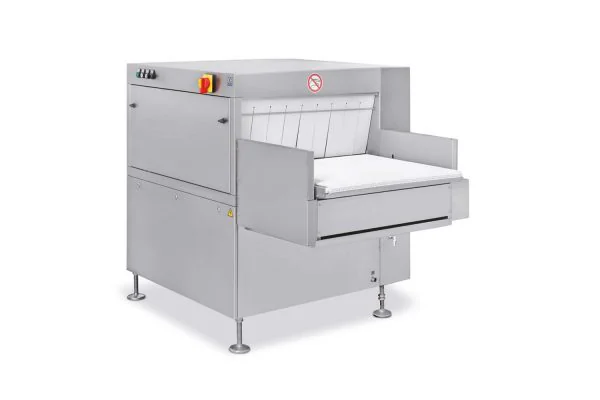
A shrink bag sealed loosely around a piece of meat is tightened in hot water, which gives a closer fit and a tidier pack. Supervac's AT shrink tanks immerse the pack fully in water: the AT 6 and AT 7 suit all single-chamber and double-chamber machines, and the AT 8 and AT 15 are listed for conveyorised machines, the AT 8 up to and including the GK 501 B. The AC 15 Cooling Tank then lowers the meat's surface temperature quickly, which its listing says increases the shelf life of vacuum-packed products, and the BL 15 Drying Tunnel dries the packs with top nozzles that follow the product's contours.
- AT 6Shrink Tank
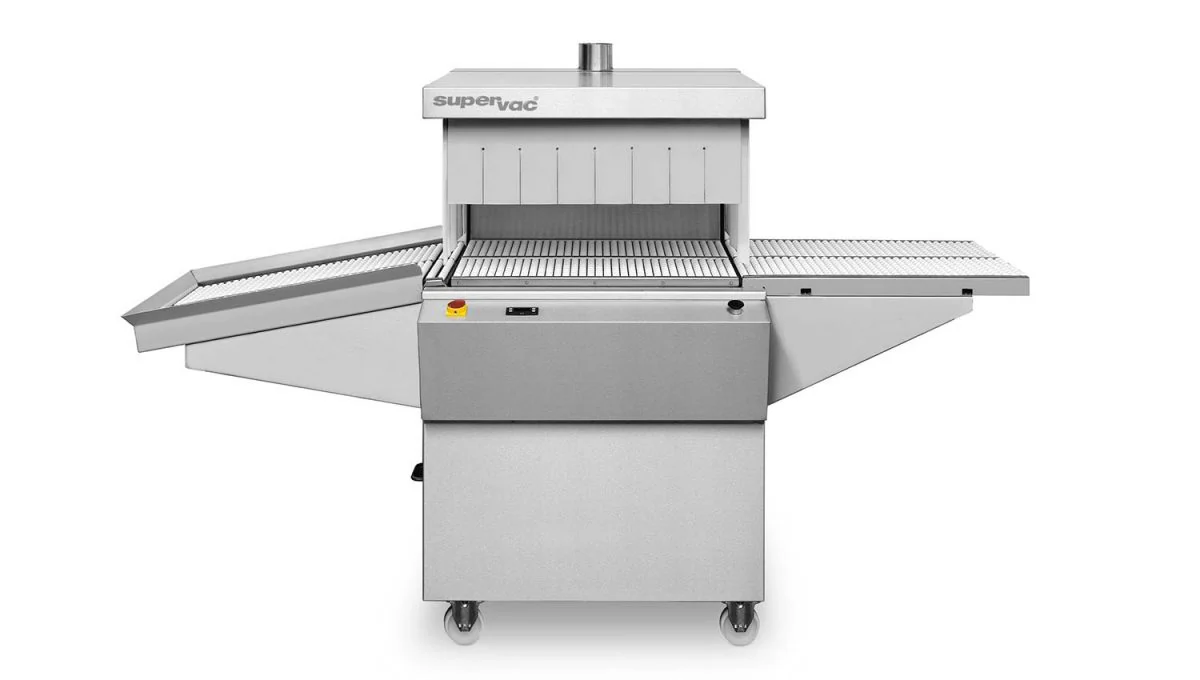
- AT 7Shrink Tank
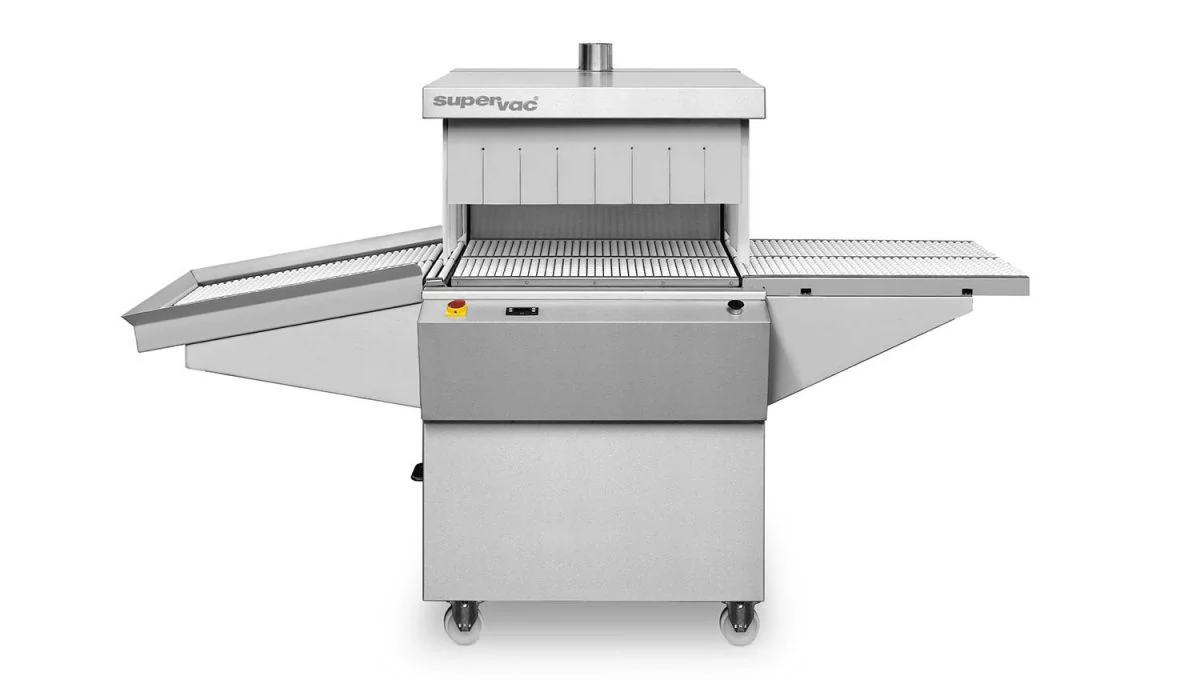
- AT 8Shrink Tank
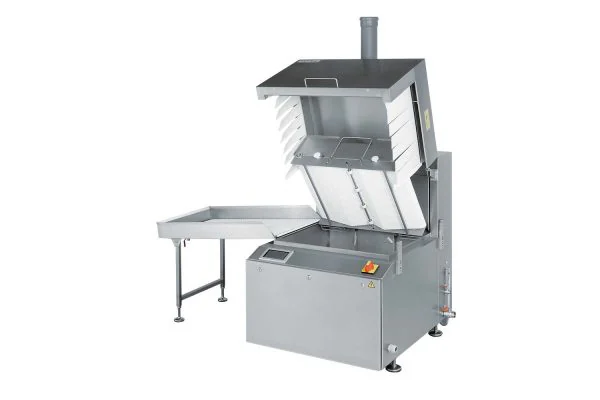
- AT 15Shrink Tank
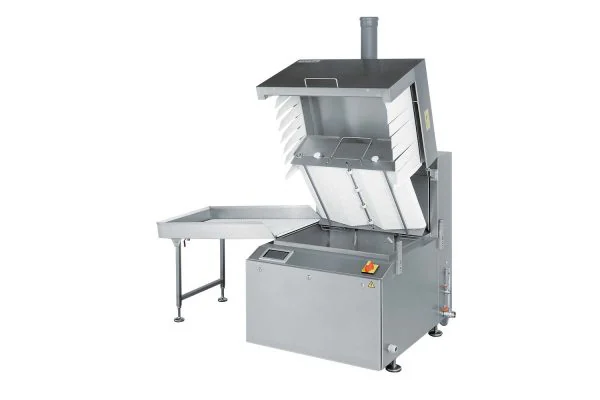
- AC 15 Cooling Tank
- BL 15 Drying Tunnel
03Illustrations
How four meat products could be packed
The table puts those stages together for four common meat products. Each column is an illustration assembled from machine types we list, not a line we have supplied, and the machines a column implies have not been matched to one another. The right combination depends on your product, the pack your customers expect, your volumes and the equipment already on your floor.
| Row | Steaks and fresh cuts | Mince, burgers and meatballs | Fresh sausage | Bacon, ham and whole muscle |
|---|---|---|---|---|
| Comes to packing from | The boning or portioning room | A vacuum filler with a forming or portioning attachment | A sausage line that links and cuts the portions | Curing, cooking or smoking, then chilling |
| Into the pack | By hand, or by robot into trays or formed pockets | A loading line that denests trays and places portions; paper interleaving for stacked patties | A link loader into trays or thermoformed pouches | By hand into bags, or into formed pockets on a thermoformer |
| Checks | X-ray of the unpacked product | Weighing every portion, then metal detection | A pipe metal detector at the filler | X-ray of the unpacked product |
| Pack | Skin pack from a thermoformer or tray sealer, or a MAP tray | MAP tray from a tray sealer, or a MAP pack formed from film | MAP tray or a pack formed from film | Vacuum bag, or a vacuum or shrink pack from a thermoformer |
| After sealing | Labelling and boxing, outside our catalogue | Labelling and boxing, outside our catalogue | Labelling and boxing, outside our catalogue | Shrink tank, cooling tank and drying tunnel for shrink bags |
The ground meat, fresh sausage, bacon, whole muscle and cooked meat and deli pages list every machine tagged for each product. To work through a layout with our team, start with planning a processing line.
04Buying
What to settle before choosing meat packaging equipment
Packaging machines are specified around the pack, so most of the decision follows from a few facts about your product and the customers who buy it. Work through these before you compare models.
- Bag, tray or formed pack: primals and foodservice cuts usually go out in vacuum bags, while retail cuts are often sold in trays or skin packs. If you already buy in trays, a tray sealer keeps them; if you would rather make the pack from roll film, look at thermoformers.
- Pack type: vacuum and MAP are among the published pack types of the Maximus RE, Optimus EasySkin, Primus and Primus MP. Skin packing is published for the EasySkin, Primus and Primus MP among the thermoformers, and for the Rotarius and Linus 1100 among the tray sealers, with the IN 1100 listing VSP.
- Product height: thick steaks and roasts need deep pockets or room for a skin dome. The Maximus RE draws up to 90 mm, the Optimus SE/SEL packs 60 or 110 mm deep, the Primus up to 135 mm and the Primus MP 195 mm. The Rotarius takes trays up to 100 mm deep, 40 mm for skin packs, with product overhanging the tray by up to 25 mm.
- Bone-in cuts: exposed bone can puncture film, so bone-in product usually calls for a heavier bottom film, bone guards or a different pack. The Primus takes bottom film up to 550 µ and the Primus MP up to 1000 µ; settle the film with your supplier and test it on your own cuts.
- Output: thermoformer and tray sealer speeds are published as cycles a minute, up to 6 for the Maximus RE and Optimus EasySkin, up to 20 for the Primus and 4 to 8 for the Rotarius. Packs a minute depend on how many packs each cycle makes, so bring your pack size and target output to the first conversation.
- Floor space and changeovers: the Rotarius needs 1.6 m², the Optimus SE and SEL frames are 3 m and 3.5 m long, and Primus frames run from 5 m to 12 m. Where one line packs several products, the Linus 1100 changes tray size from either side of the machine and stores 80 recipes.
- After the vacuum packer: if you shrink bags, leave room behind the packing machine for a shrink tank and, where the product needs them, a cooling tank and a drying tunnel.
Send us those answers, with one of your current packs or a photo of it, and our sales team can put a shortlist together quickly.
05Support
Trials, installation and parts across Australia and New Zealand
We are the official Australia & New Zealand distributor of Variovac, Supervac and Ross, and the JLS, Aicon and Pulsotronic equipment on this page is available in both countries through Vemag Australia. Working from our offices in Redland Bay and Auckland, our technicians and parts team look after the machines we supply.
01
Customer Centre
Bring your own meat product and see it packed on our machines under real production conditions before you decide.
02
Service
Installation, maintenance, repairs and operator training for the packaging machines we supply, booked through your local office.
03
Spare parts
Genuine parts held in stock, with help identifying the right part for your machine.
06FAQ
Meat packaging equipment questions
What is the difference between vacuum, MAP and skin packing for meat?
A vacuum pack has the air drawn out and the film or bag sealed close around the meat. MAP (modified atmosphere packaging) replaces the air with a protective gas and leaves headspace under the lid. A skin pack pulls a heated top film down over the product so it holds the meat in place with no headspace. Which suits depends on the cut, how it should look on display and how long it has to keep; the tray sealers and thermoformers pages show which machines publish each pack type.
Should I choose a thermoformer or a tray sealer for meat?
A thermoformer makes its own pack from roll film, so there are no trays to buy or store, and it suits long runs of one format. A tray sealer closes trays you buy in, which suits packers who move between tray formats or who want a smaller machine to start with. Most meat processors settle the pack their customers want first and choose the machine from there.
What meat packaging equipment suits a butcher shop or small processor?
In our catalogue, the Variovac Rotarius is a semi-automatic tray sealer described as suited to small companies, the Ross X450 is made for small processors, stores and food lab settings, and the Variovac Maximus RE is a thermoformer aimed at smaller productions, with an integrated control cabinet that saves space.
Can bone-in meat be vacuum packed or skin packed?
It often is, but bone can puncture film, so the film has to be chosen for the cut. A heavier bottom film, bone guards or a different pack format are the usual answers, and your film supplier and a trial on your own product will settle which. We do not publish film recommendations for particular cuts.
Do I need a shrink tank after vacuum packing?
Only if you pack in shrink bags and want the film pulled tight against the meat. Supervac shrink tanks, a cooling tank and a drying tunnel are listed for that work, with their published data, in the vacuum packaging section of the packaging page.
Can I trial my meat product before buying a packaging machine?
Yes. Our Customer Centre lets customers test their own products on our machines under real production conditions. Tell us the product and the pack you have in mind when you enquire, and we will say which machines are available for the trial.
Do you supply and service meat packaging equipment in New Zealand?
Yes. The Variovac, Supervac and Ross machines on this page are distributed by us for Australia and New Zealand, the JLS, Aicon and Pulsotronic equipment is available in both countries through us, and our service technicians cover both, with offices in Redland Bay and Auckland.
How much does meat packaging equipment cost?
We do not publish prices, because the figure depends on the machine, its tooling and options, and the equipment around it. Send us the product, the pack and the volumes, and our sales team will prepare a quotation.