
01Scope
Packing prepared vegetables, not running a packhouse
Two quite different jobs get called vegetable packing. A packhouse takes whole vegetables from the paddock, washes, grades and sorts them, then weighs them loose into bags, nets, punnets or cartons. A food plant takes vegetables that are already prepared and turns them into a sealed retail or foodservice pack: a tray of cut vegetables, a salad bowl, a vacuum bag of cooked beetroot, a cup of dip or a tray of vegetable balls.
Our catalogue serves the second job. We do not supply washing, grading, sorting or loose-weighing equipment, so a packhouse line needs a specialist in that field. If your vegetables reach the packing area ready to go into a tray, a formed pack, a bag or a cup, read on: that is the part of the job our machines cover.
The produce industry page lists every machine in our catalogue tagged for produce and fresh food, and the fresh-cut produce and whole produce application pages list the machines tagged for each.
- Covered here: forming vegetable balls and shaped products, filling cups and jars, X-ray and metal checks, loading product into packs, tray sealing, thermoforming and vacuum packing.
- Not covered: receiving, washing, grading and sorting whole vegetables, weighing loose produce into bags, nets or punnets, and labelling, none of which is in our catalogue.
02Stages
Vegetable packaging equipment by stage
For every stage you will find the machines whose own published data fits the work, plus a link to the machine type page with everything we list in that group. A simple tray of cut vegetables may need only one of these stages; a formed vegetable product can pass through four or five.
Stage 1Portioning & forming machines
Forming vegetable balls and shaped products
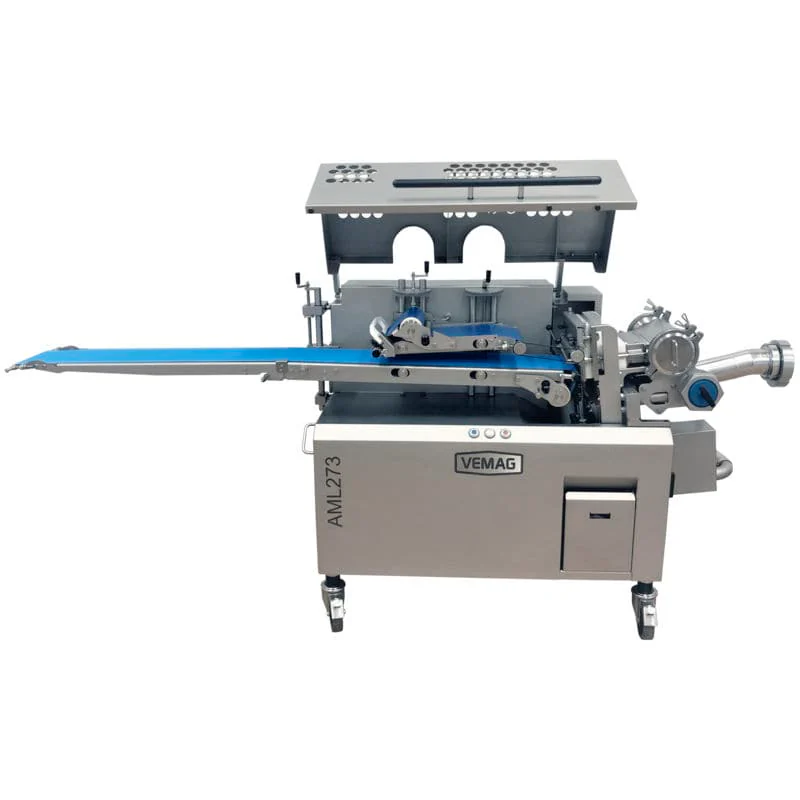
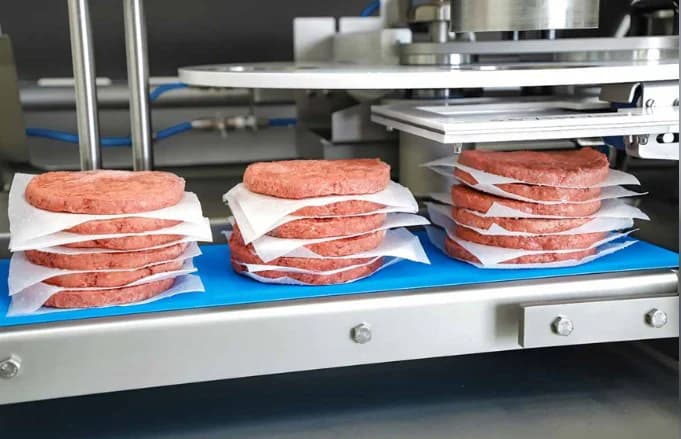
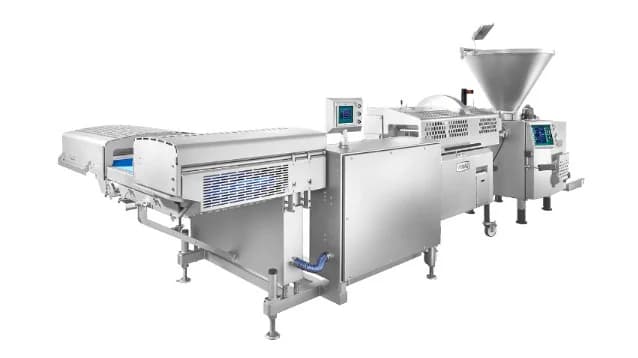
Instead of going into the pack loose, a mixed vegetable mass can be formed into pieces first. The AML273 forms meatballs, vegetable balls, croquettes and skinless sausages in ball, cylinder, ellipse and droplet shapes, and loads them automatically onto trays, which saves a hand-placing step before the sealer. The APF253 Automated Product Former makes round, oval or custom shapes from meat, vegetable or fish and is described for small and mid-sized companies.
- AML273Forming Machine
- Automatic Product Former 253Forming Attachment
Stage 2Depositors
Filling cups, jars and cans
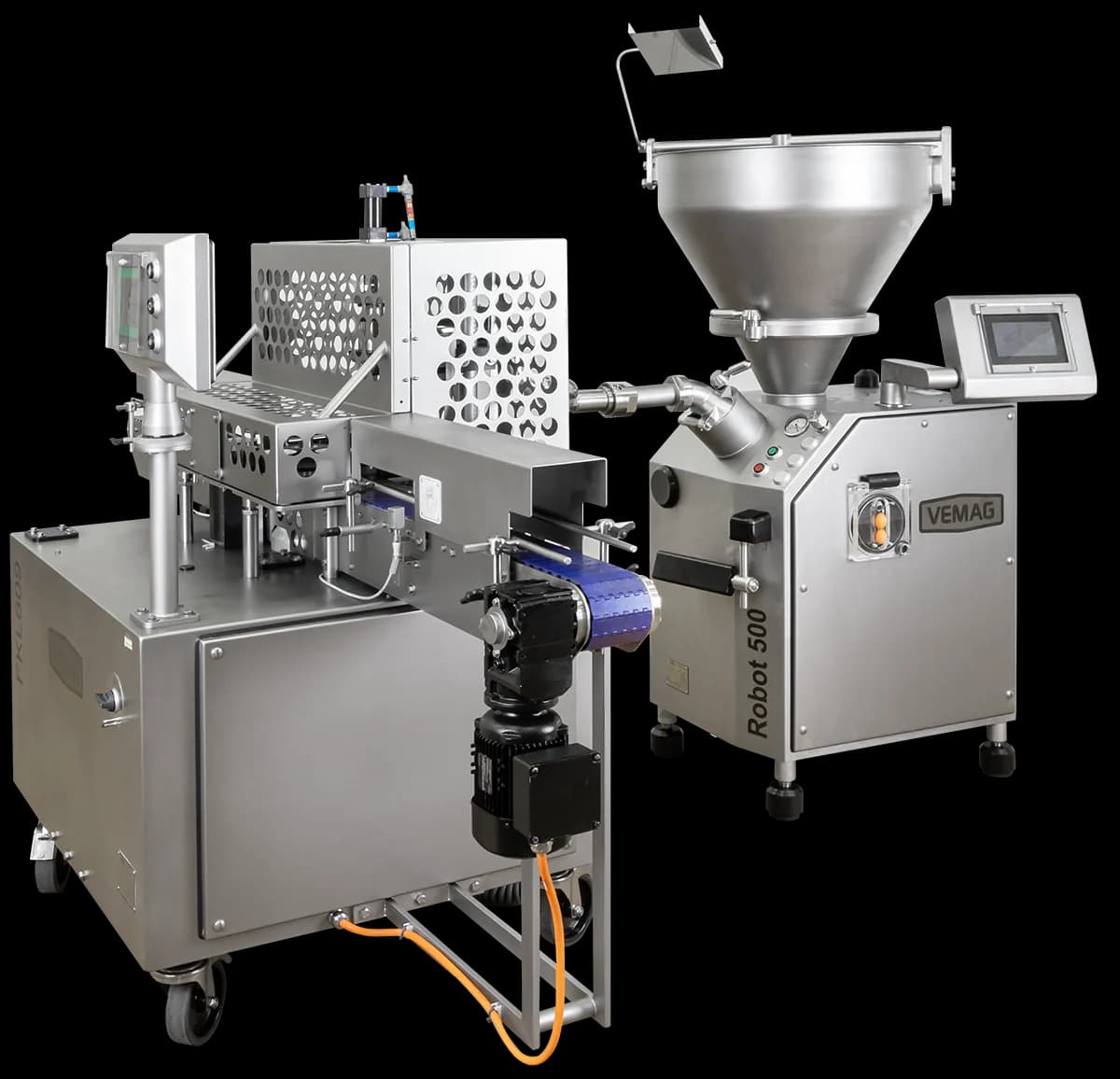
Pumpable vegetable products such as dips, spreads and purées are dosed into containers rather than trays. The FKL609 fills cans, jars and cups and fits any VEMAG vacuum filler, and its filling head with an inner pipe closure or piston keeps the process clean. Its catalogue listing places it under spreads and dips, whole produce and prepared salads.
- FKL609Container Filling System
Stage 3Inspection & weight control
Checking for foreign bodies
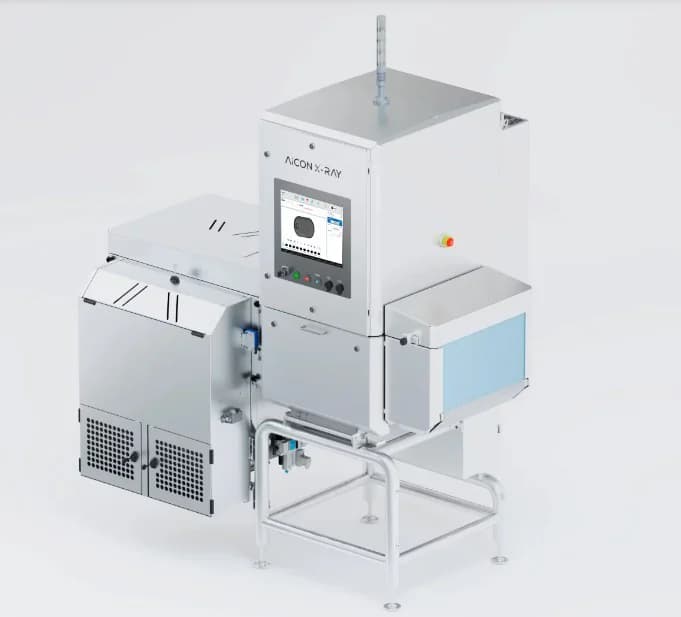
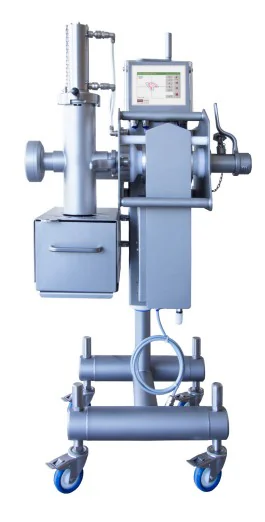
Stones, metal and other foreign bodies can arrive with raw vegetables and survive washing. The Aicon XR-500 HD is an X-ray system for the quality control of unpacked products, with a hygienic construction that supports cleaning in food production. For a vegetable mass pumped from a filler, the Pulsotronic M-Pulse2pro Inflex 65 is a mobile metal detector built to sit with stuffers and filling machines.
- Aicon XR-500 HDX-Ray System
- M-Pulse2pro Inflex 65Metal Detector
Stage 4Conveyors & line equipment
Loading product into packs
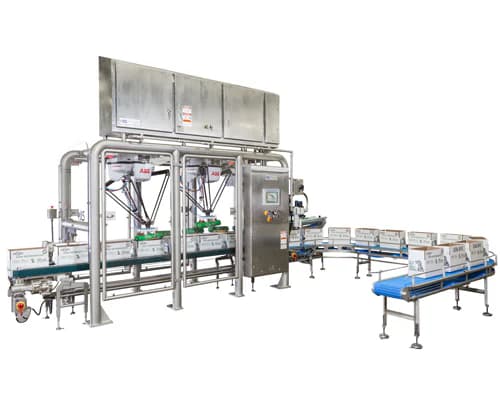
On a busy line, placing product into trays or formed pockets is often the step that ties up the most people. The MLR380 distributes products from one lane across several and positions them for the next machine. JLS builds vision-guided robotic systems that load food into thermoformed packs, trays and vacuum skin packs, and can also load cartons and pack cases.
- MLR380Multi-Lane Loader
- JLS Robotic SystemsRobotic Packaging System
Stage 5Tray sealers
Sealing bought-in trays
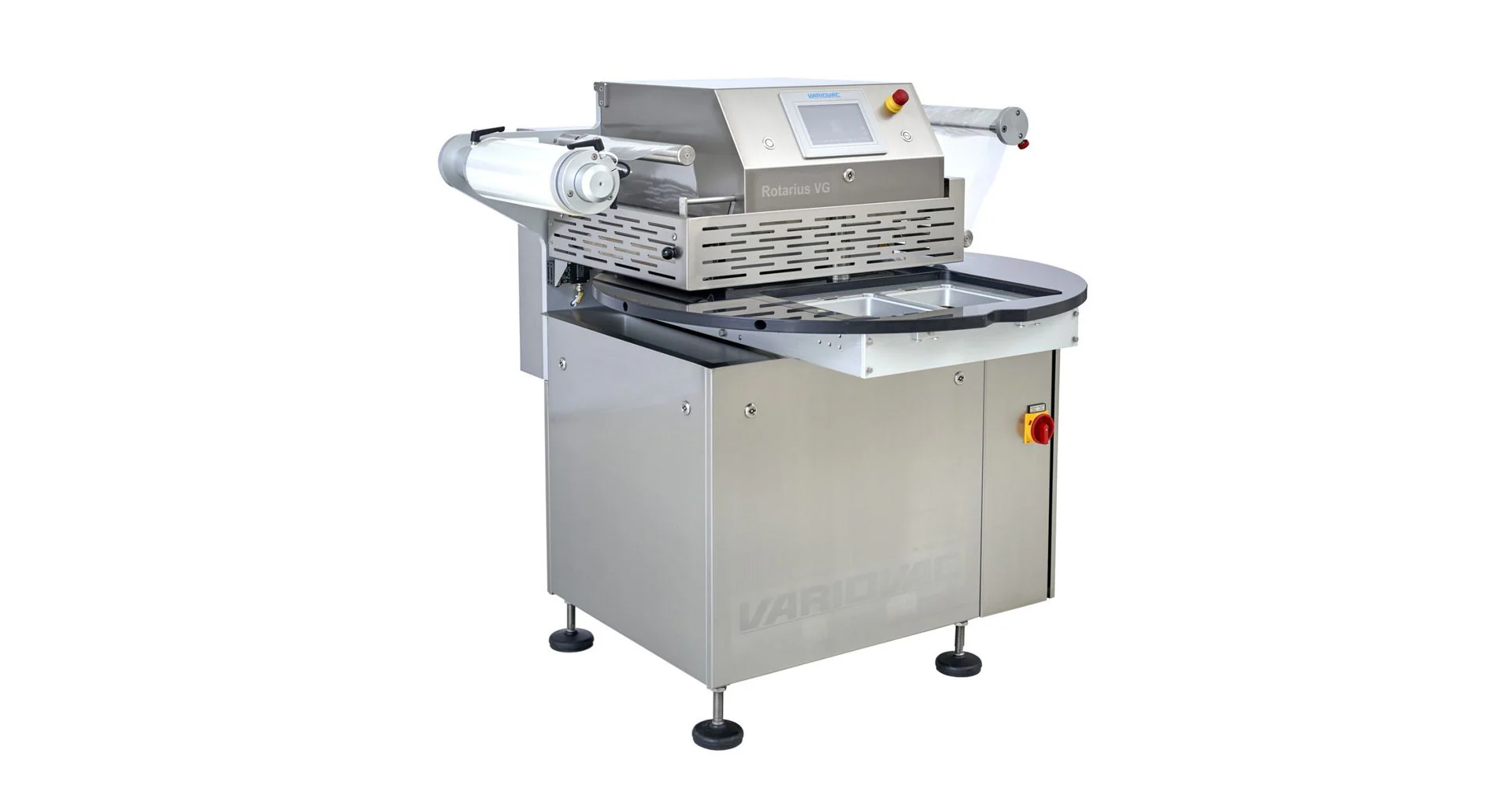
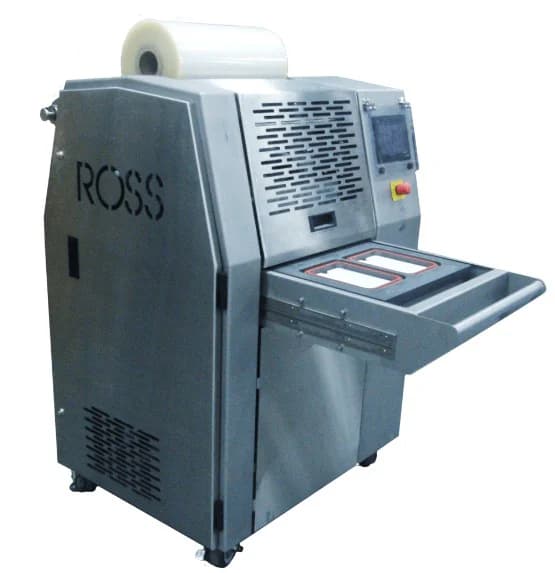
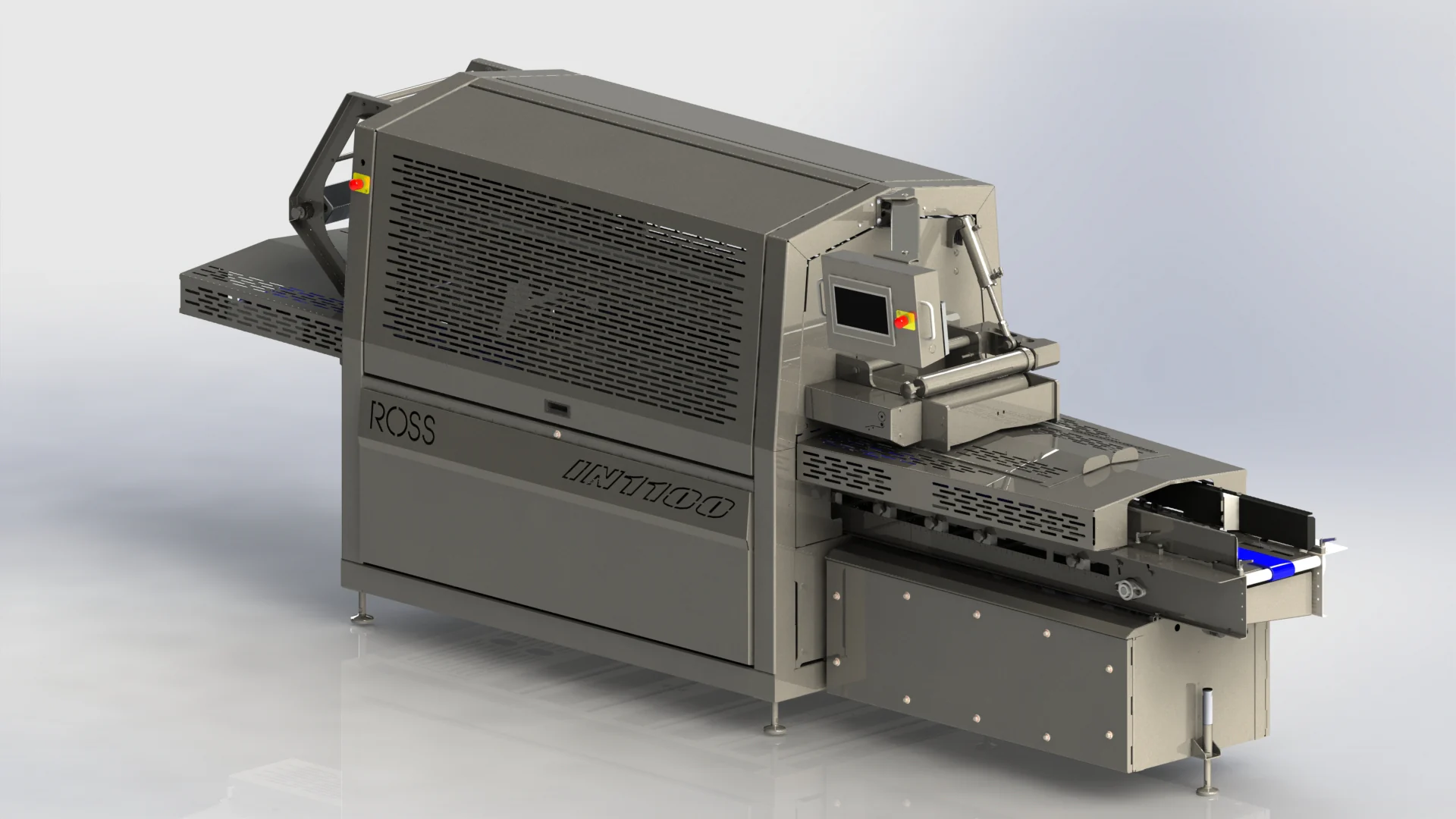
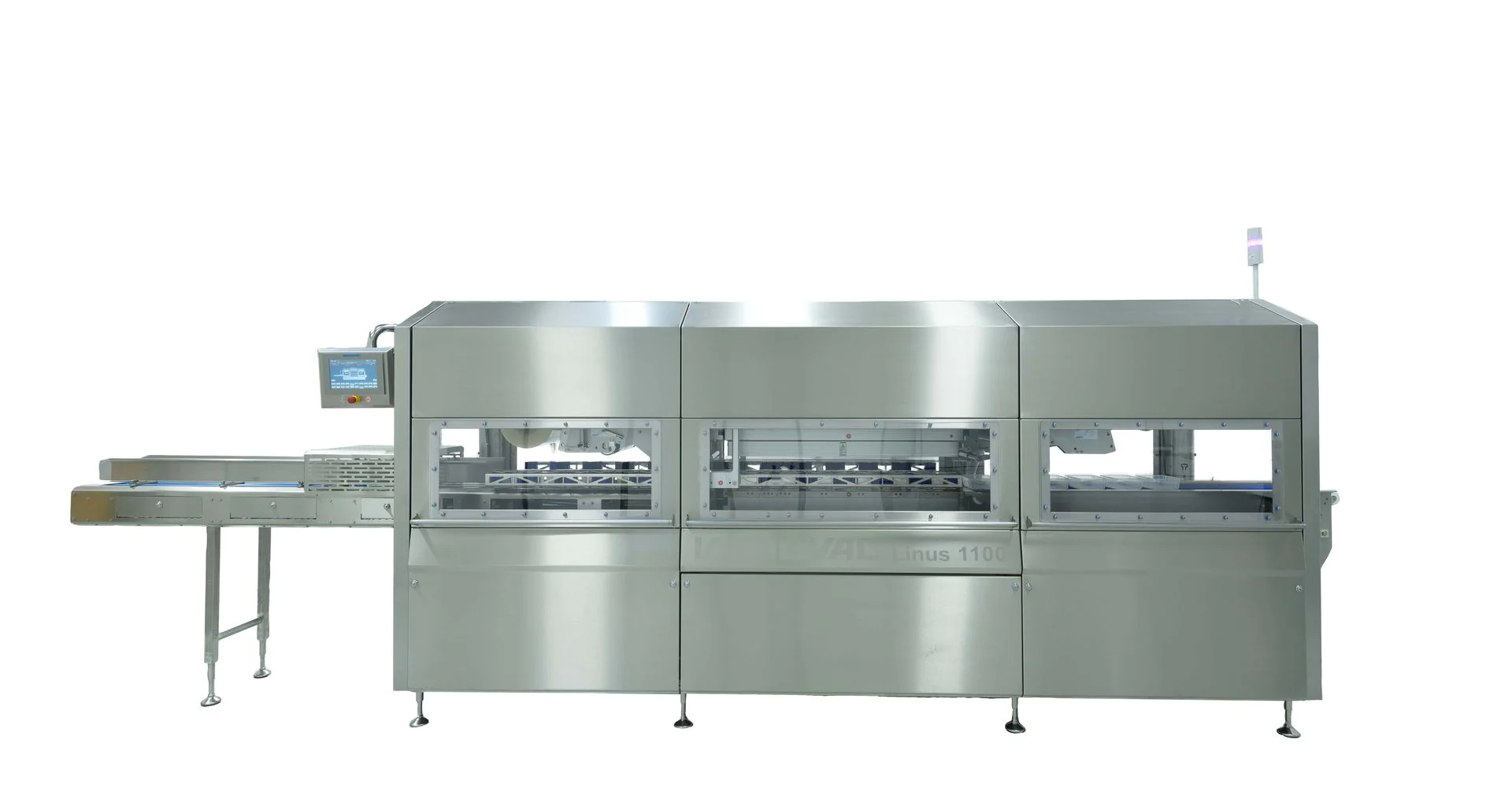
A tray sealer lids trays that are filled before they reach it. The Variovac Rotarius is a semi-automatic sealer for fresh, refrigerated and frozen food and menu components in ready-made trays, suited to small companies. The Ross X450 is for small processors, stores and food lab settings, and the Ross IN 1100 is a fully automatic machine for MAP and vacuum skin packs. The Variovac Linus 1100 is a fully automatic inline sealer for medium- and high-volume production that seals plain, under protective gas or with a skin film.
- RotariusTray Sealer
- X450 Semi-AutomaticTray Sealer
- IN 1100Tray Sealer
- Linus 1100Tray Sealer
Stage 6Thermoformers & packaging
Forming packs from film
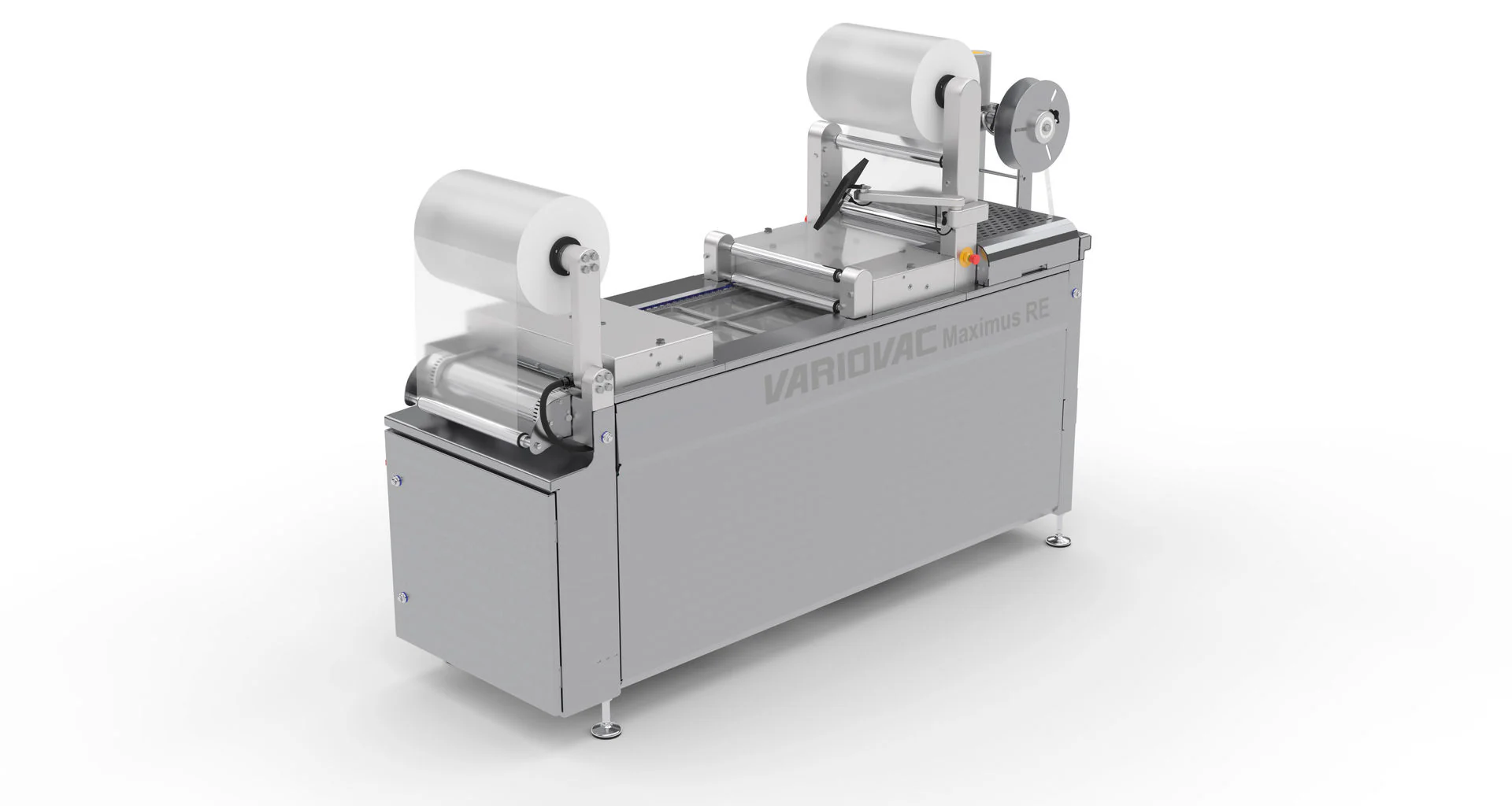
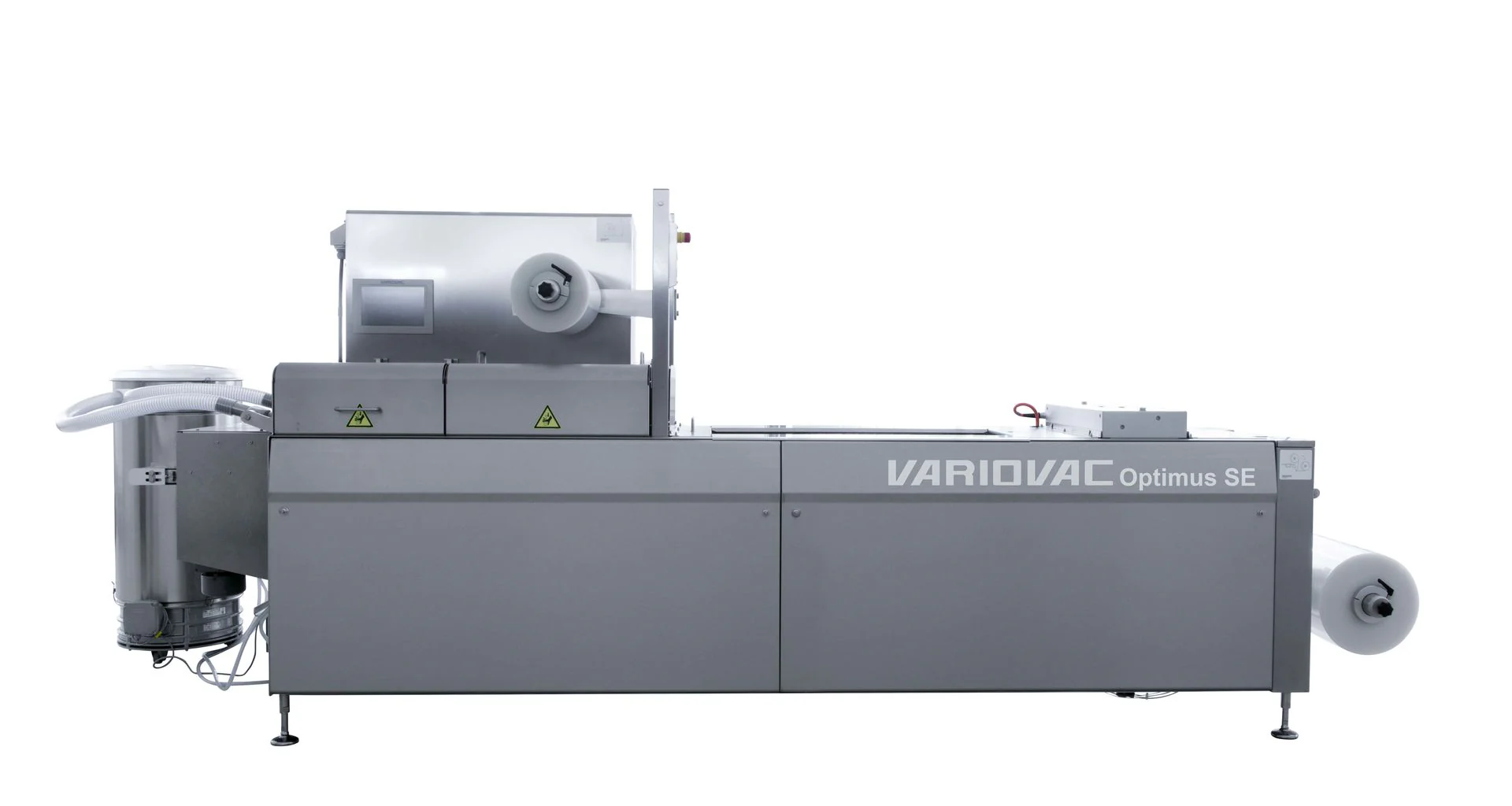
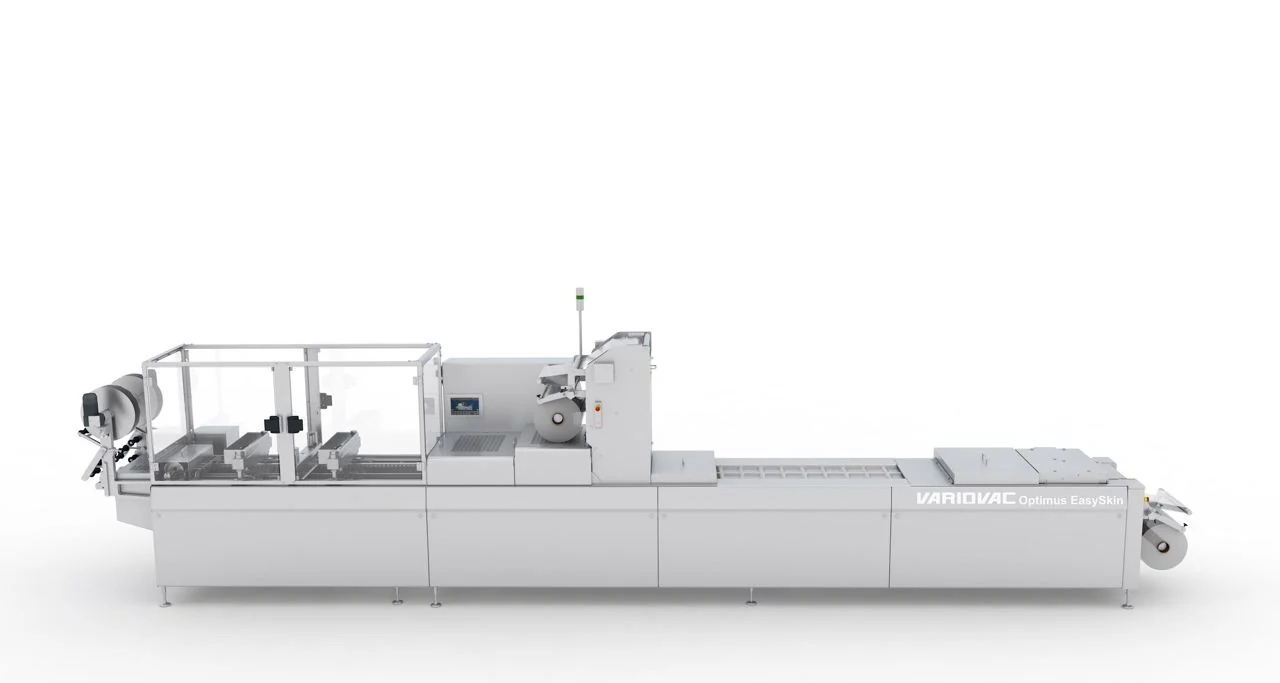
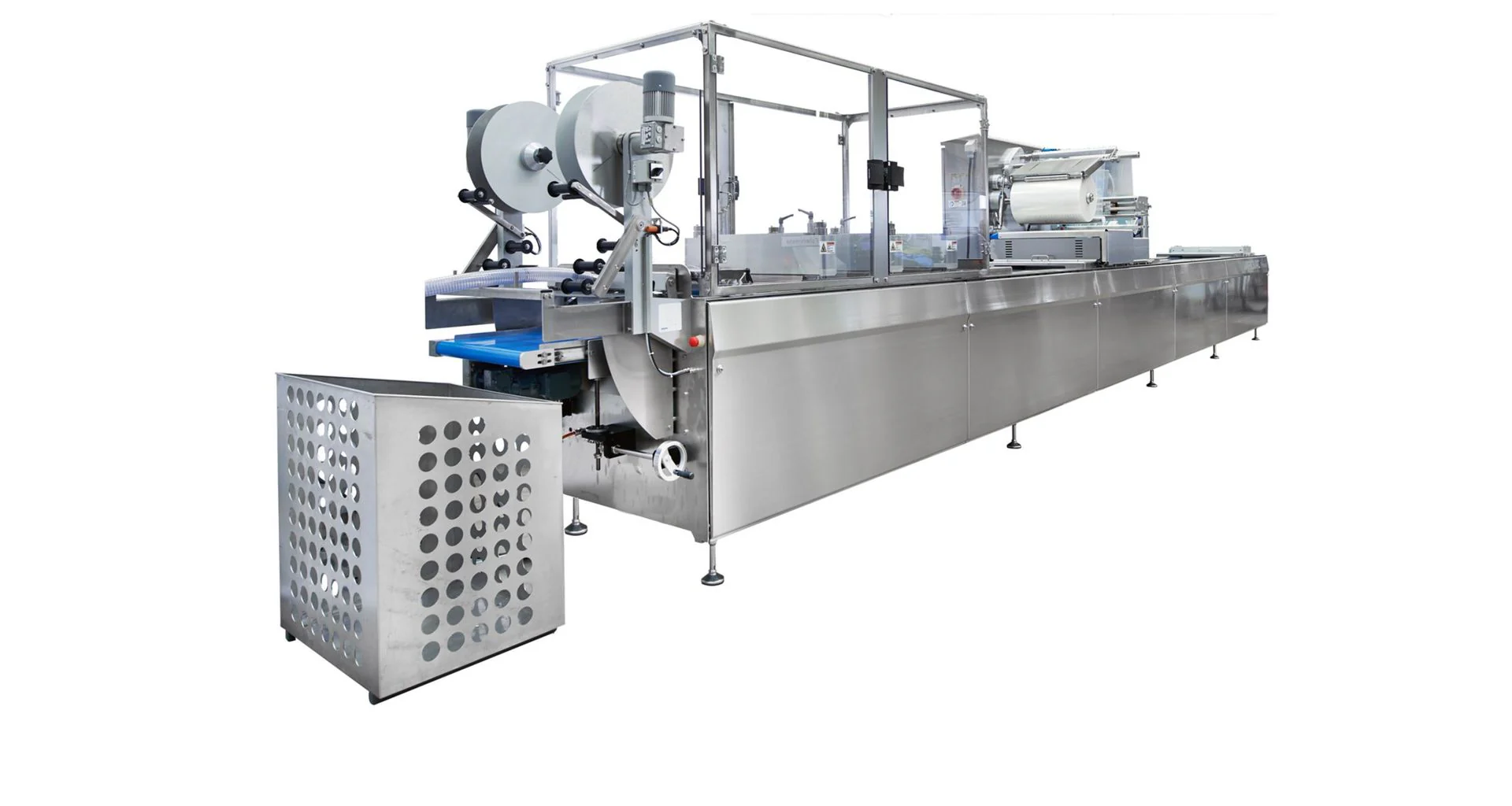
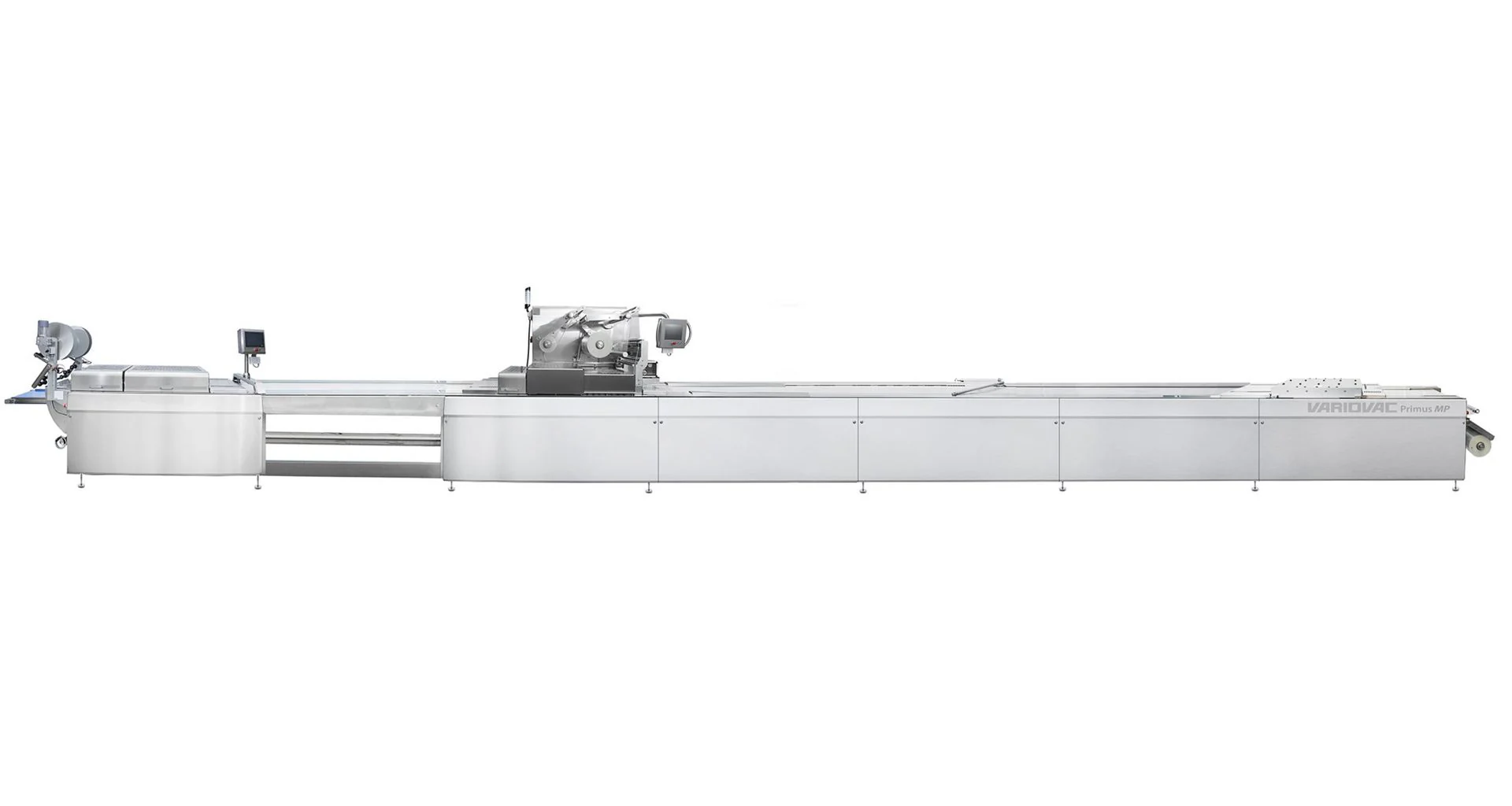
A thermoformer makes its own pockets from a roll of bottom film, fills them on the machine and seals a top film over them, so there are no pre-made trays to buy and store. Variovac thermoformers in the catalogue run from the Maximus RE, made for smaller productions, and the entry-level Optimus SE/SEL to the Primus and Primus MP. The Optimus EasySkin adds a skin module that can also be switched to MAP.
- Maximus REThermoformer
- Optimus SE/SELThermoformer
- Optimus EasySkinThermoformer
- PrimusThermoformer
- Primus MP (Multiperformance)Thermoformer
Stage 7Thermoformers & packaging
Vacuum packing in bags
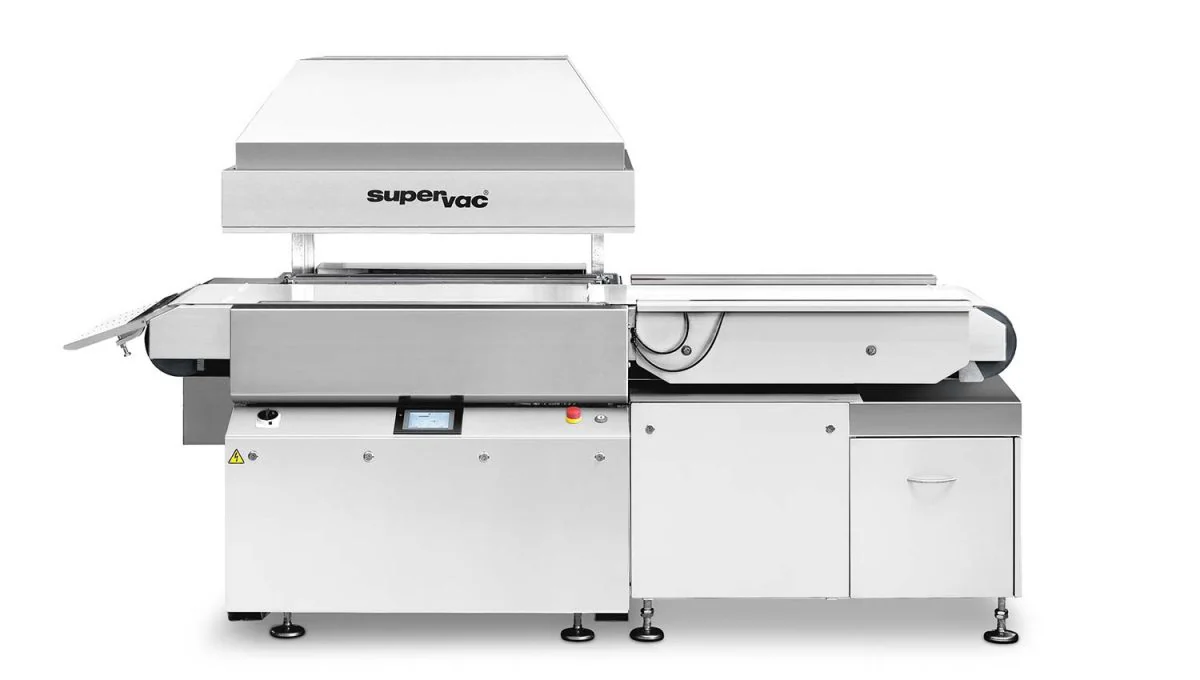
Firm products that will not crush, such as cooked or blanched vegetables, are often packed in vacuum bags. The Supervac GK501B is a conveyorised stainless steel vacuum packaging machine that lets one operator pack more bags. The vacuum packaging section of the packaging page covers the shrink, cooling and drying equipment that can follow it.
- GK501BVacuum Packaging Machine
03Illustrations
Three ways to pack vegetable products, as illustrations
Here is how those stages could combine for three common kinds of vegetable product. Read each column as an example assembled from machine types we list: none of them describes a line we have supplied, and the machines in a column have not been matched to one another. The right set-up for your plant comes down to the product, the pack, your volumes and what is already on your floor.
| Row | Cut vegetables and salad mixes | Cooked or blanched vegetables | Vegetable balls, patties and dips |
|---|---|---|---|
| Arrives at packing as | Washed, cut and dried vegetables or leaves | Vegetables cooked or blanched, then chilled | A vegetable mass mixed in a bowl cutter or mixer |
| Portioning | Into trays or bowls by hand or by equipment already on your line | Into trays, formed pockets or bags | A vacuum filler feeding a former, or the FKL609 filling cups |
| Checks | X-ray of the unpacked product | X-ray of the unpacked product | Metal detector at the filler outlet |
| Pack | Tray sealed under a protective gas, or a formed pack from a thermoformer | Vacuum bag, vacuum formed pack or skin pack | Trays loaded by the former and then sealed; cups and jars passed on for closing |
Washing, drying leaves, labelling, closing cups and jars, and weighing loose product all sit outside our catalogue. Let us know which equipment handles those steps and how product moves between them, so the machines we supply can take it over and pass it on cleanly. Planning a processing line explains how we work through a layout with you.
04Buying
What to check before choosing a vegetable packaging machine
Vegetables differ from meat and cheese in ways that change the pack: many are bulky for their weight, some bruise or crush, and fresh-cut produce keeps respiring after it is sealed. These are the questions that narrow the choice most.
- Trays or film from the roll: a tray sealer suits a pack built around a bought-in tray or bowl, while a thermoformer forms the pack itself. The Linus 1100 handles PP, PE, PET, PS and aluminium trays.
- Pack depth: bulky vegetables need deep pockets. The Maximus RE draws up to 90 mm, the Primus packs up to 135 mm deep and the Primus MP up to 195 mm. The Rotarius takes trays up to 100 mm deep, and the Optimus EasySkin packs up to 110 mm deep for MAP, with skin-packed products standing up to 55 mm proud.
- Atmosphere in the pack: MAP is among the published packaging types of the Primus, Primus MP, Maximus RE and Optimus EasySkin, and of the Rotarius and IN 1100 tray sealers. For fresh-cut produce the gas mix and the film are usually set with your film supplier and confirmed in your own shelf-life trials.
- Output: the Rotarius runs 4 to 8 cycles a minute and the Primus up to 20, but packs per cycle depend on how many pockets or trays the tooling holds, so bring your pack size and target output to the conversation.
- Changeovers: if one line packs several products, the Linus 1100 can be converted to a different tray size from either side of the machine and stores 80 recipes.
- Who loads the pack: hand loading suits short runs, while the AML273, the MLR380 and the JLS robotic systems take placing product into packs off the operators.
Have these answers ready, and one of your current packs if you can, when you first speak to our sales team; it narrows the shortlist quickly.
05Support
Trials, service and parts in Australia and New Zealand
Vemag Australia is the official distributor of Variovac, Ross and Supervac for Australia & New Zealand, and JLS, Aicon and Pulsotronic equipment is available through us in both countries. Our service technicians and parts desk look after the machines we supply, with offices in Redland Bay and Auckland.
01
Customer Centre
Run your own vegetable product on a range of our machines, in conditions close to a real shift, before you commit.
02
Service
Our technicians install, maintain and repair the machines we supply and train your operators; book through your local office.
03
Spare parts
Genuine parts kept in stock, and staff who help you find the right part for your machine.
06FAQ
Vegetable packaging machine questions
Do you supply machines for washing, grading or bagging whole vegetables?
No. Our catalogue starts once vegetables are prepared and ready to go into a tray, a formed pack, a vacuum bag or a cup. Washing, grading, sorting and weighing loose vegetables into bags, nets or punnets need a packhouse equipment supplier.
Should I use a tray sealer or a thermoformer for vegetables?
A tray sealer lids trays or bowls you buy in, which suits salad bowls and shaped retail trays and keeps changeovers simple. A thermoformer forms its pockets from a roll of film, which means there are no pre-made trays to buy and suits longer runs of one pack size. The tray sealers and thermoformers pages compare the machines in each group.
Can fresh-cut vegetables be packed under a modified atmosphere?
Several of our tray sealers and thermoformers list MAP among their packaging types. Cut vegetables and leaves keep respiring after packing, so the gas mix and film have to suit the product; most producers settle them with their film supplier and their own shelf-life tests. We do not publish shelf-life figures.
Can vegetables be vacuum packed?
Firm products such as cooked or blanched vegetables often are, either in bags on a vacuum chamber belt machine such as the GK501B or in vacuum packs formed on a thermoformer. Delicate leaves and cut salads crush under a full vacuum, so they are more often sealed in a tray or a formed pack with a protective gas.
Which machines make vegetable balls or patties?
The AML273 lists vegetable balls among its products and loads them straight onto trays, and the APF253 forms round, oval or custom shapes from meat, vegetable or fish. Both are on our portioning and forming page.
Can I trial my vegetable product before buying?
Yes. Our Customer Centre is set up for customers to test their own products on our machines under real production conditions. Mention the product and the pack you have in mind when you enquire, and we will tell you which machines can be used for the trial.
Do you supply vegetable packaging machines in New Zealand?
Yes. The Variovac, Ross and Supervac machines on this page are distributed by us for Australia and New Zealand, and our service technicians serve both countries, with offices in Redland Bay and Auckland.
How much does a vegetable packaging machine cost?
Prices are not published: the figure depends on the machine, the tooling and options it needs, and the equipment around it. Send us details of the product, the pack and the volumes, and our sales team will put a quotation together.