Bakery production lines
Plan the dividing, forming, depositing and packing stages of your bakery production line around your dough, portion weight and finished product.
Build the line around what you bake
A bread line and a cookie line place different demands on the equipment. Dough consistency, inclusions, temperature, portion shape and the receiving belt or tray all affect the choice. Vemag Australia supplies bakery equipment for Australia and New Zealand; start with the product and identify which stages of your existing process need to change.
Our catalogue covers dividing, portioning, forming, depositing, weight checks and packaging. It does not list dough mixers, rounders, provers or ovens. Include those stages in the layout discussion so equipment can be assessed around the process you already run.
Bread, buns and rolls
Divide and transfer dough portions for the shaping, proving and baking stages in your process.
Cookies and bars
Compare cutting and forming nozzles with depositing onto trays, according to the dough and shape required.
Batters, fillings and tray bakes
Place measured portions into tins, moulds, trays or jars, with the filling method selected for the mixture.
Map each production stage and its handoff
Start at the point where prepared dough or batter reaches the machine. Then follow the product through portioning, any weight checks and the next handling step. The stages below are a planning sequence, not a preconfigured line or an account of a customer installation.
Feed the prepared dough or batter
Record the condition in which the product reaches the machine and how it is loaded. Include batch size, temperature and how the existing mixer supplies it.
Divide, form or deposit
Choose between cutting portions from a metered flow, shaping through a nozzle and depositing into a container. The product and receiving format determine the operation.
Check portion weight
Decide where portions can be weighed and how a result is acted on. The VPC715 Process Check is listed for bakery lines; confirm its arrangement for your lanes and product.
Transfer into the next process
Agree belt height, lane spacing, tray movement and operator tasks. Include the rounder, prover, oven or other equipment already used after portioning.
Pack the finished product
Define the final tray or pack separately from the baking process. Compare suitable tray sealing or thermoforming equipment against the product and packaging material.
Machines for bakery production lines
These models cover different tasks and include alternatives to one another. They are not a matched set: confirm the filler, attachment, transfers and control connections for the proposed configuration. Open each model for its published information and quotation options.
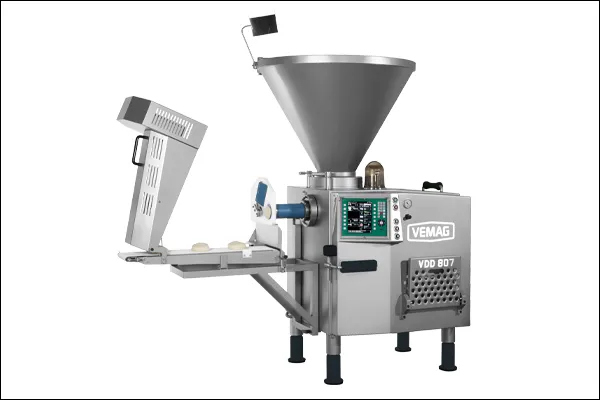
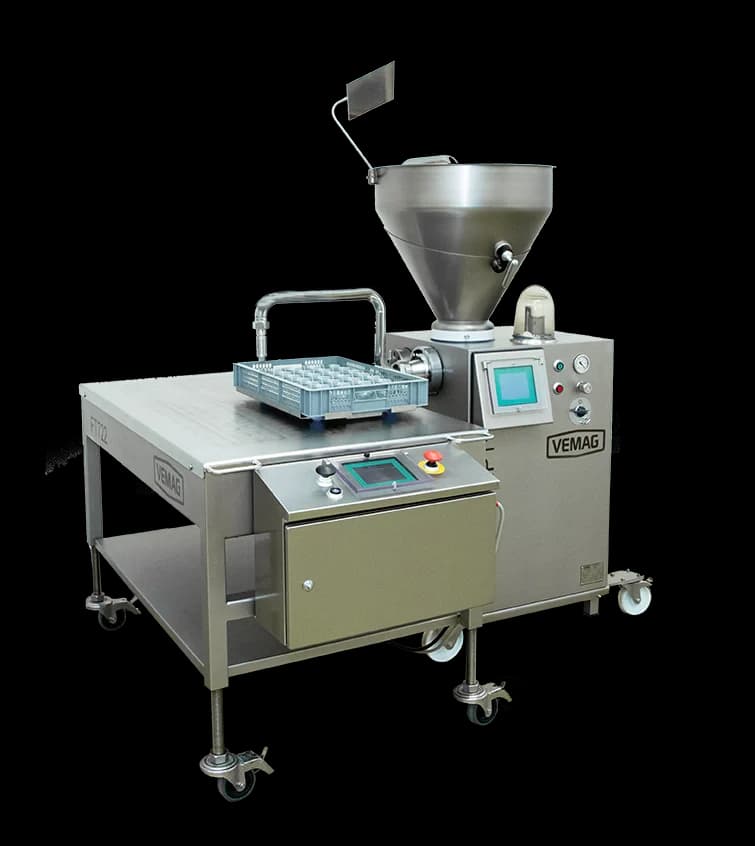
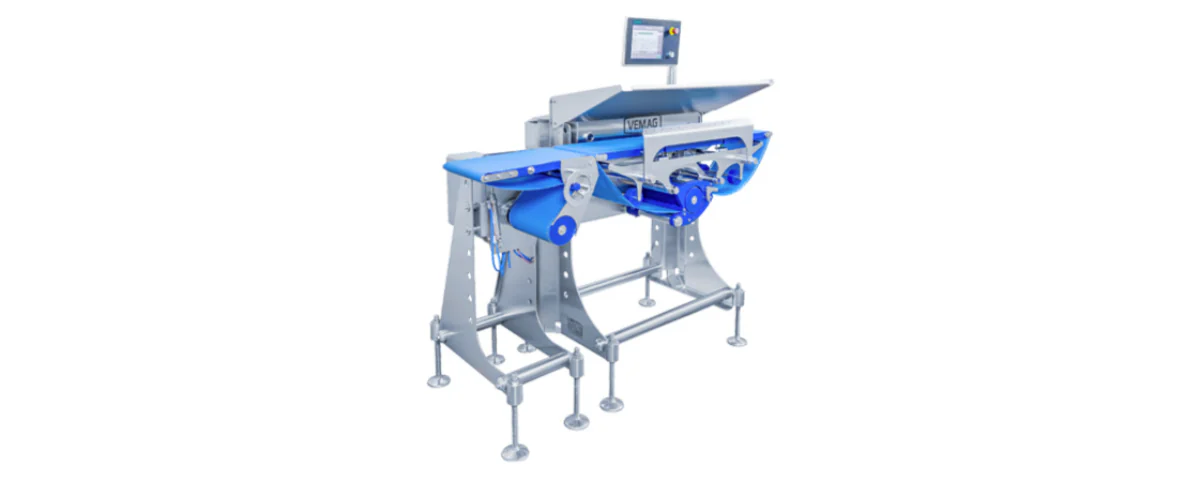
| Machine | Production task | Discuss with the sales team |
|---|---|---|
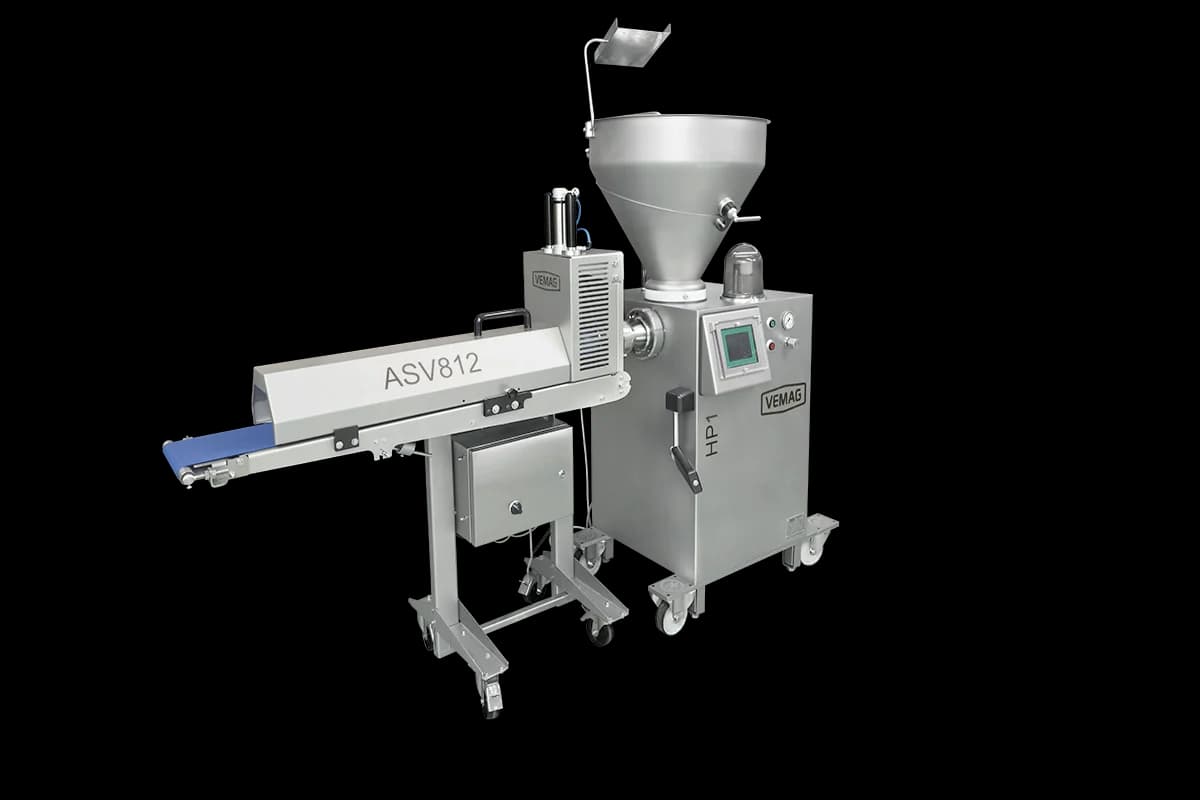
| ASV812 | Portions and shapes dough using forming nozzles and a cutter | Dough condition, shape, cutter and compatible feeding equipment |
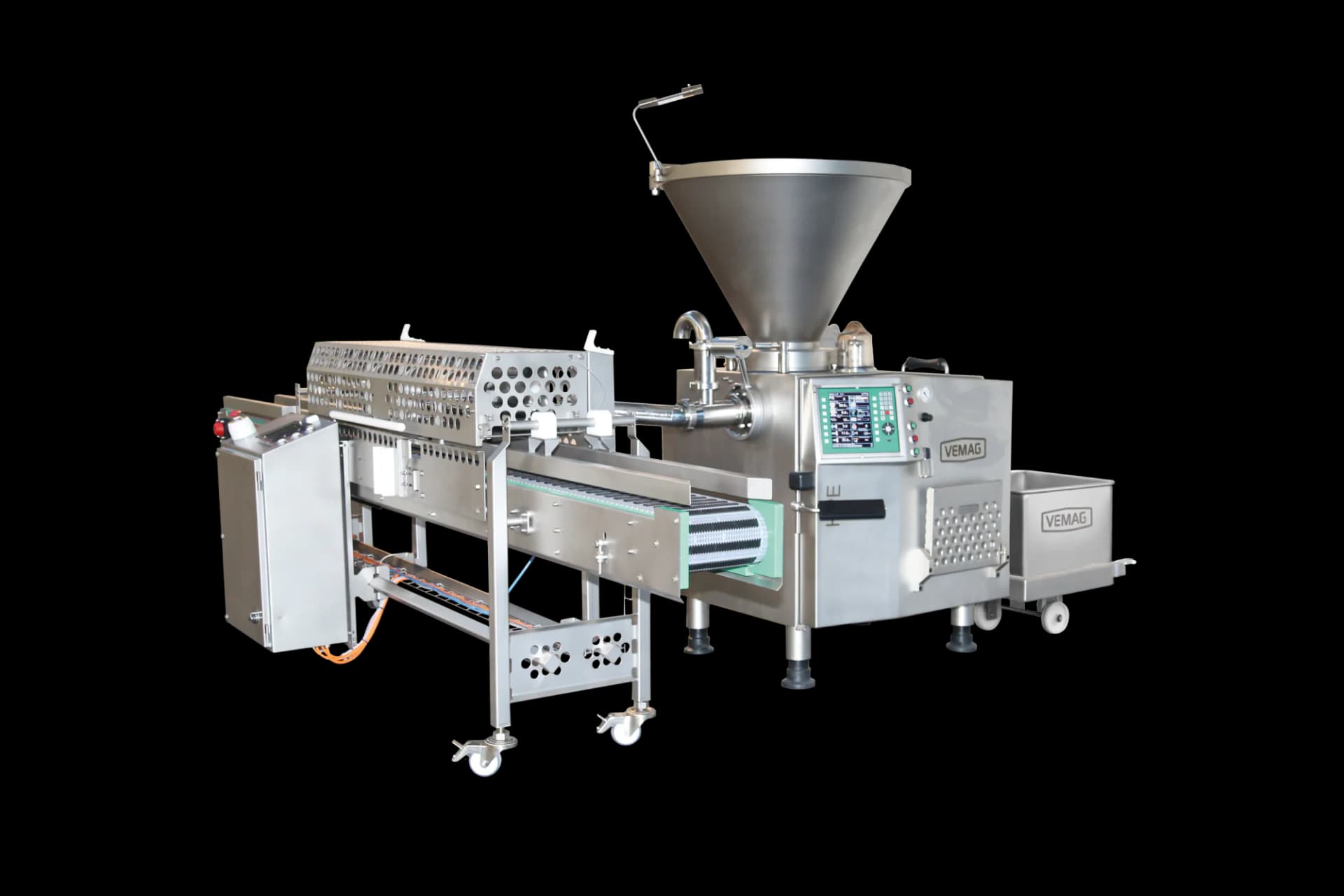
| Rotary Filling Head 863 | Portions dough and suitable mixtures directly into moulds | Recipe, mould, compatible filler and proposed layout |
| VDD807 | Divides high-wheat dough with an integrated cutter and conveyor | Portion format and transfer into the next stage |
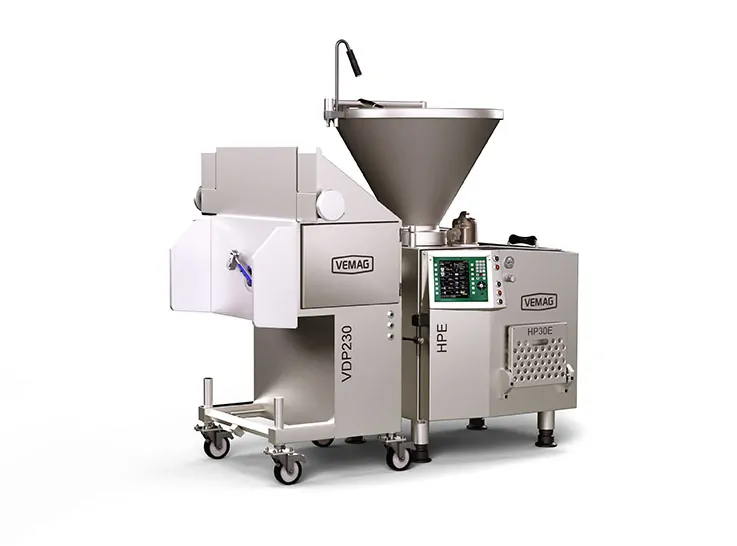
| VDP230 | Portions wheat-based dough through two independently driven lanes | Dough recipe, lane arrangement and the receiving process |
| FT722 | Positions trays for depositing and fills tins or jars | Mixture, tray or container dimensions and filling arrangement |
| VPC715 | Checks dough portion weights in bakery production | Product presentation, lanes, control connections and response to results |
Different products need different configurations
For wheat-based bread and pizza dough, the VDP230 portions through two independently driven lanes. The VDD807 is another dividing option, with an integrated cutting device and conveyor for doughs with a high wheat content. Decide how portions will enter your next stage before selecting either model.
For shaped cookies and bars, the ASV812 lists variable forming nozzles and an optional knife or wire cutter. The FT722 takes a different approach: it moves a tray in the X and Y directions while placing portions, and can also position tins or jars under the outlet.
For mixtures deposited into moulds, Rotary Filling Head 863 is listed for rye, wholemeal and gluten-free doughs, cake mixes and other mixtures. Product trials help establish which filling arrangement suits the recipe and mould.
Each example describes a production task supported by the catalogue. Output, product quality and compatibility depend on the actual recipe, machine configuration and connected equipment; discuss those details before specifying a line.
Plan transfers, cleaning and recipe changes
The transfer between machines deserves the same attention as the machine itself. A portion has to arrive at the right place and in the right condition for the next operation. Record where operators move trays, reposition product or wait for another stage to finish.
- Dough or batter condition at the inlet, including temperature and inclusions.
- Target portion weight, shape and dimensions, plus the number of lanes.
- Belt heights, lane spacing, tray or mould dimensions and the next machine’s receiving arrangement.
- Loading, unloading and cleaning tasks that remain with operators.
- Access to change a nozzle, cutter, recipe, tray or packaging format.
- Floor space, utilities and maintenance access for the proposed layout.
The food processing production lines guide explains the wider relationship between machines, transfers and controls. For batch patterns and changeovers across other food products, see commercial food manufacturing equipment.
Automate a defined task, then assess the next stage
Automation can start with one task, such as the FT722 moving and filling trays or tins. The VDP230 has separate servo drives for its two lanes, and the VPC715 Process Check is used to weigh dough portions in bakery production. Which controls and transfers connect those operations needs to be assessed for the proposed setup.
Packaging is a separate equipment choice. The Linus 1100 inline tray sealer lists baked goods among its applications and seals ready-made trays. Thermoformers and packaging equipment provide other pack formats. Confirm the product, tray or film, sealing method and required handling before choosing.
For the machine types used to reduce manual handoffs across food production, explore automated food processing lines.
Prepare a trial brief and a defined quotation
Discuss a product trial at the Vemag Australia Customer Centre using your own ingredients and recipe. Agree the machines available and the questions the trial should answer before arranging the visit. A useful brief describes both the product and what happens immediately before and after the equipment.
Send the sales team your dough or batter details, batch pattern, portion weight and shape, required output, existing machinery and floor plan. Include the tray, mould or final packaging format, your site location and planned timing. Ask the quotation to identify the models, attachments, utilities, transfer arrangements and installation scope.
Vemag Australia’s service team provides installation, operator and maintenance training, maintenance and repairs. Discuss the support and training required for your proposed bakery line, along with genuine spare parts. Confirm pricing, availability and the agreed project scope with the sales team.
Bakery production line questions
What equipment does a bakery production line need?
It depends on the product. Bread dough may need dividing and a transfer into existing shaping, proving and baking equipment. Cookies may need forming, cutting or depositing onto trays. Batters and fillings may be deposited into tins, moulds or jars. Vemag Australia’s catalogue covers portioning, forming, depositing, weight checks and packaging; it does not list dough mixers, rounders, provers or ovens.
Can the equipment work with my existing bakery line?
Compatibility needs to be assessed. Provide the current machine models, belt heights, lane spacing, controls, product condition and required rate. Ask the team to identify the proposed transfers and any work required to connect the equipment. The machines shown on this page are alternatives for different tasks, not a guaranteed matched line.
What is the difference between dividing and depositing?
Dividing separates a dough flow into individual portions. Depositing places a measured portion into a container or onto a tray or another product. The product, shape and receiving format determine which operation is needed.
Are there options for gluten-free dough and cake mixes?
The ASV812 lists gluten-free dough among its applications. Rotary Filling Head 863 lists gluten-free dough and cake mixes, and the FT722 describes handling doughs, batters, desserts, fillings and creams. Confirm the recipe and proposed configuration through a discussion and, where available, a product trial.
Can I automate part of the line first?
Vemag Australia quotes on individual machines as well as production lines. Identify the task you want to change, such as dividing dough or filling trays, and explain what equipment sits either side. If later expansion matters, discuss the transfer and control requirements before selecting the first machine.
How much does a bakery production line cost?
Pricing depends on the models, attachments, options and project scope. Send your product details, required portion format and output, existing equipment and site information to request a quotation. Ask the team to confirm availability, installation and training requirements as part of the proposal.
Contact
Plan the next stage of your bakery line
Tell us about your dough or batter, portion format and current equipment. Discuss the machines, transfers and trials to include in a bakery line quotation.
- Australia(07) 3829 3868
- New Zealand+64 9 415 0137
- Salessales@vemag.com.au