
Commercial food manufacturing equipment
Vemag Australia supplies commercial food manufacturing equipment for producers in Australia and New Zealand. Find machines for repeatable batches, from mixing and filling to forming and tray sealing, with product trials and support to help you choose.
Start with the product you want to manufacture
A commercial production process needs equipment that suits the recipe and the way it will be sold. Start with your finished product, then identify the preparation, portioning and packing tasks that need machinery. The examples below connect common products to the relevant VEMAG catalogue pages.
Sausages and smallgoods
Vacuum fillers meter mixtures into casings. The filler, linking method and attachments depend on the recipe, casing and production pattern.
Burgers and formed products
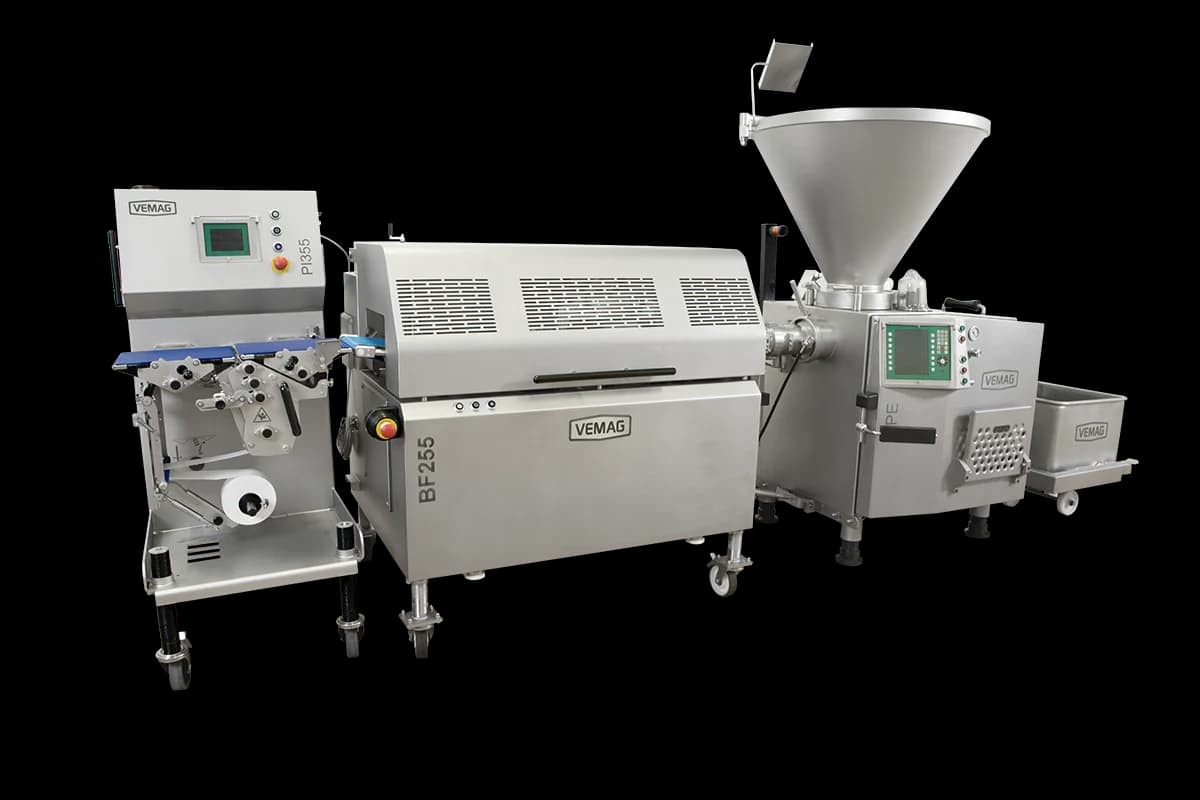
Burger formers and forming attachments shape portioned mixtures. Compare the BF255 and other forming options around the product you intend to make.
Mixed and emulsified products
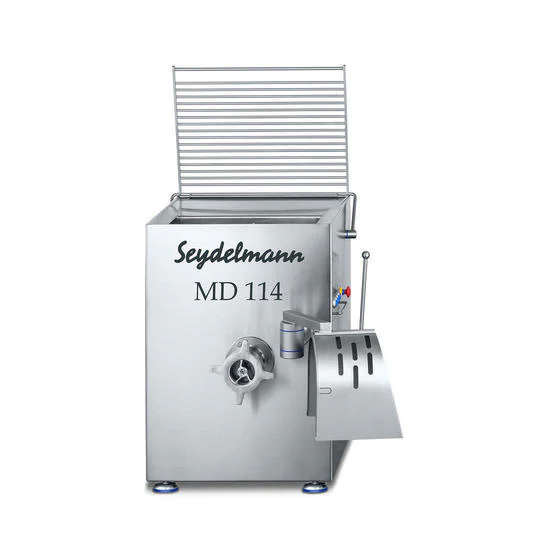
Mixing grinders mix material before grinding. Bowl cutters chop, mix and emulsify suitable ingredients, with the choice depending on the required texture.
Prepared foods in trays
Semi-automatic and automatic tray sealers close products into ready-made trays. Match the tray, film and sealing method to the proposed pack.
For bakery, dairy, alternative protein and pet food applications, browse products and applications. Equipment suitability needs to be checked for the actual recipe and handling conditions.
Commercial food manufacturing machines to compare
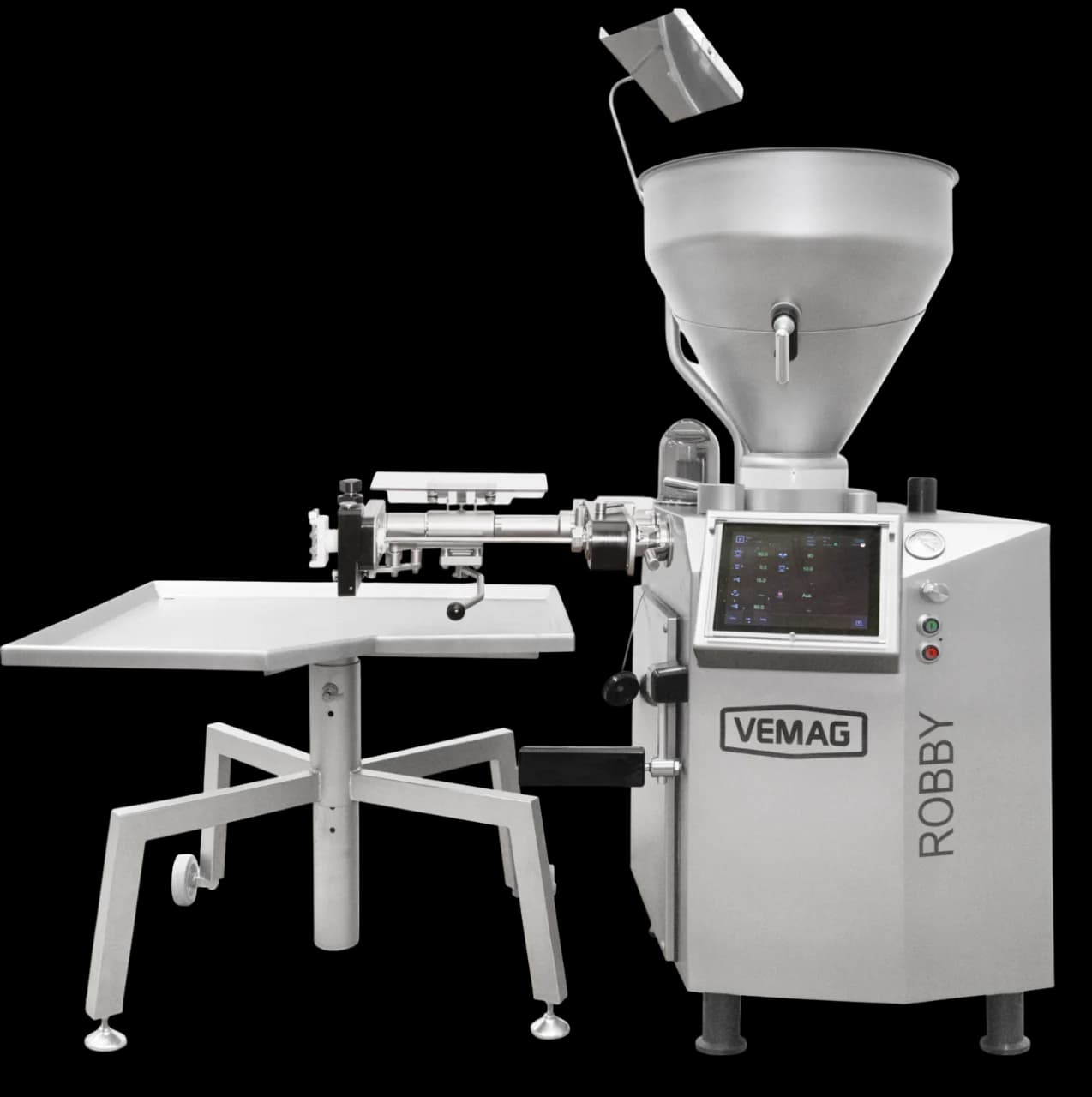
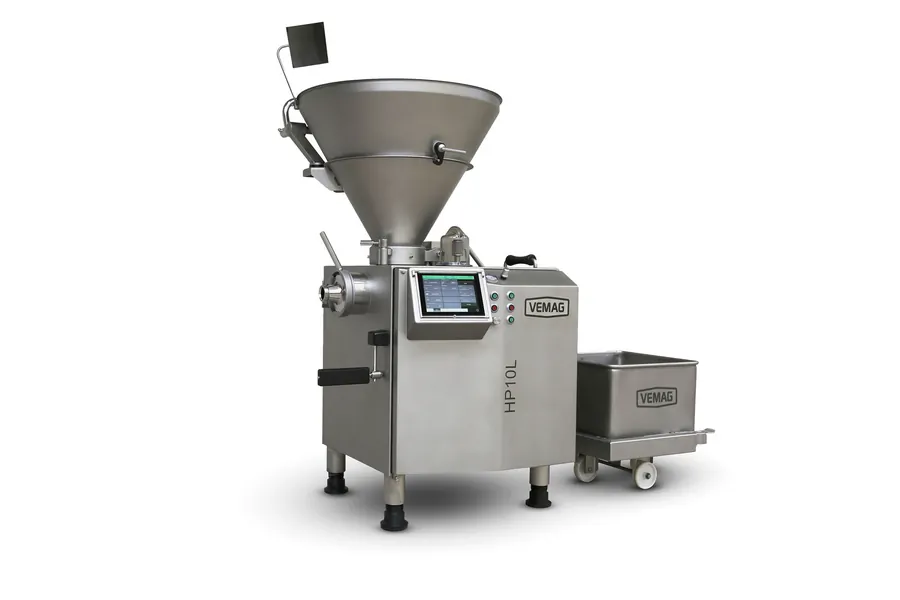
This selection includes equipment for different production tasks. Robby is described in the catalogue for smaller batches and frequent product changes; Rotarius is a semi-automatic tray sealer for ready-made trays. The other machines extend preparation, filling and forming options. Select each model for its technical information and quotation options.
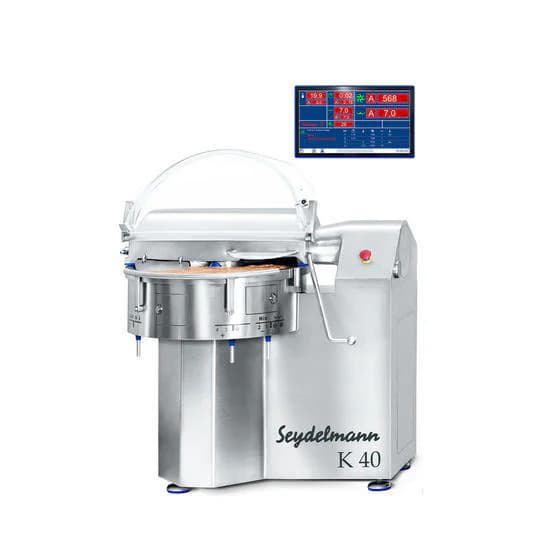
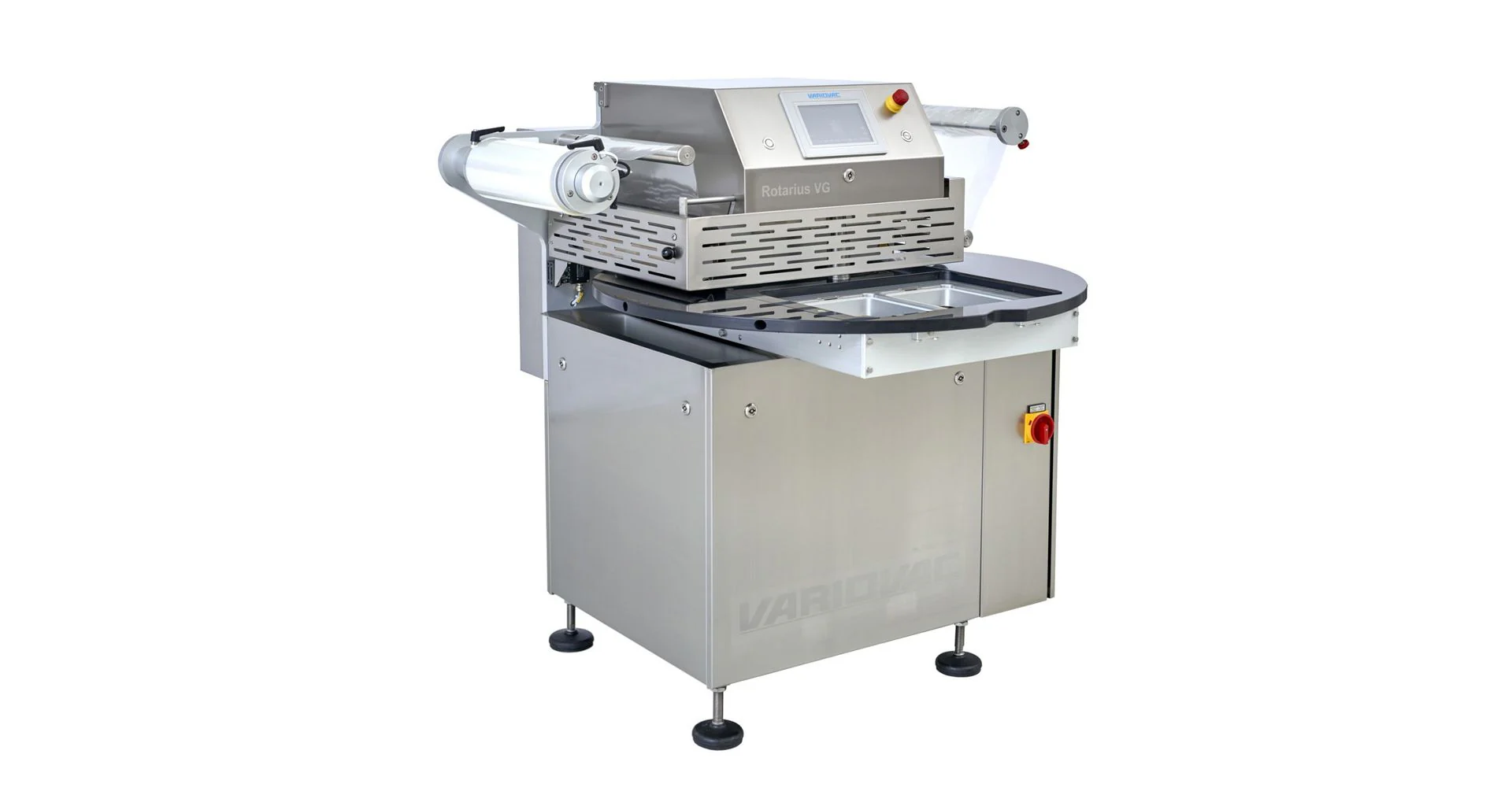
| Machine | Production task | Discuss with the sales team |
|---|---|---|
| Robby | Vacuum filling for smaller meat-production batches and frequent product changes | Recipe, casing, portion and changeover requirements |
| HP10L | Compact vacuum filler focused on sausage production and soft-mixture clipping applications | Sausage programme, attachments and the proposed clipping setup |
| BF255 | Forming burgers from meat or suitable meatless mixtures | Recipe, burger shape and compatible filler configuration |
| MD 114 | Mixing material before grinding, with arms or optional paddles | Material temperature, particle size and mixing requirements |
| K40 | Chopping, mixing and emulsifying suitable ingredients | Recipe, required texture and batch loading method |
| Rotarius | Semi-automatic sealing of ready-made trays on a rotary table | Tray and film, sealing method, operator tasks and utilities |
Plan for the whole batch, including changeovers
When expanding production, record the time taken to prepare ingredients, load the machine, run the batch, transfer product and clean down. A faster machine at one stage may leave the next task waiting for people or equipment.
Compare the output you need over a working shift with the production pattern you actually run. Several short batches with recipe changes can call for a different setup from a long run of one product.
- List batch sizes and the number of different products made each day.
- Identify which tasks are manual and where the current process queues up.
- Include loading, unloading, cleaning and setup time in your capacity discussion.
- Check access for operators, product transfer, maintenance and cleaning before choosing a layout.
- Confirm the receiving tray, casing, container or packaging machine before specifying the discharge from a filler or former.
For a wider overview of equipment by process stage, see industrial food equipment. For connected configurations, explore our production lines.
Choose the level of automation your operation needs
Semi-automatic equipment can leave product loading or unloading with an operator while the machine performs a defined task. Rotarius, for example, has a rotary table with two tools: the operator can unload and refill trays at the front while the other tool runs its packaging cycle.
A larger project may connect several production stages. Define the product transfer, required controls and operator tasks at each connection. Our automated food processing lines page covers catalogue equipment used for these handoffs.
Ask the sales team to compare the proposed arrangement against your batch pattern and available floor space. Expansion options depend on the model, attachments and compatibility of the actual machines.
Use your recipe to evaluate the equipment
Discuss a trial at the Vemag Australia Customer Centre using your own raw materials and recipes. Confirm the available machines and agree what to evaluate before arranging the visit. A useful trial brief records the product condition and the result you want to achieve.
Define a representative product
Bring the recipe and raw-material details for a product you expect to manufacture regularly. Include temperature, ingredient preparation and the required finished texture.
Agree what to assess
Discuss portion appearance, weight targets, handling, pack presentation and any problem in the current process. Identify which questions a machine trial can answer.
Review operation and changeovers
Ask how the proposed machine is loaded, adjusted and cleaned. Discuss operator responsibilities and what changes between recipes or pack formats.
Request a defined quotation
Confirm the proposed model, attachments, options, site requirements and installation scope. Ask the team to identify anything still needing evaluation.
From equipment selection to installation and service
Vemag Australia quotes on individual machines and complete production lines. Send the sales team your product, batch size, daily production target and current equipment, together with your site location and planned timing. Ask for pricing, availability and scope to be confirmed in the quotation.
The service team supports installation, operator and maintenance training, maintenance and repairs. The spare parts team helps identify genuine components. Discuss access, cleaning and maintenance needs when selecting the equipment.
The machinery on this page covers food processing and packaging. It is a starting point for food production equipment selection; any process or machine outside the catalogue needs to be discussed with the team.
Commercial food manufacturing equipment questions
What equipment do I need to manufacture food commercially?
The equipment depends on the product and how it will be sold. A sausage producer may need preparation, filling and linking equipment; a burger producer may need mixing, grinding and forming; a prepared-food producer may need portioning and tray sealing. Start with the recipe and finished pack, then assess each production task.
Does VEMAG have machines for smaller production batches?
The Robby vacuum filler is described for smaller meat-production batches and frequent product changes. The Rotarius semi-automatic tray sealer is described for smaller companies packing food in ready-made trays. Suitability still depends on your product, batch pattern and site.
Can I use the same equipment for different recipes?
Some machines support several products or configurations, but ingredients, temperature, texture, attachments and cleaning requirements can change between recipes. Tell the team which products you plan to run so the proposed setup and changeover process can be assessed.
Can I buy one machine before planning a complete line?
Vemag Australia quotes on individual machines as well as complete lines. Explain the equipment you already use and the production task you want to improve. If later expansion matters, discuss connection and attachment requirements before choosing the first machine.
How is commercial food manufacturing equipment priced?
The quotation depends on the machine, attachments, options and project scope. Include your product, batch sizes, output target, packaging format and site requirements when requesting a quote. Confirm prices and availability with the sales team.
Can I trial equipment and arrange training?
Discuss testing your raw materials and recipes at the Customer Centre, subject to the machines and trial scope available. Vemag Australia’s service offering includes operator and maintenance training; agree the training requirements for the proposed equipment with the team.
Contact
Plan your next food manufacturing equipment purchase
Send your product details, batch sizes and current production process. The sales team can discuss suitable machinery, product trials and the scope of a quotation.
- Australia(07) 3829 3868
- New Zealand+64 9 415 0137
- Salessales@vemag.com.au