
01Scope
What we mean by a poultry processing solution
For us, a solution is the machine or group of machines that fixes a specific problem in your plant, together with the work around it: understanding the product, trialling it, quoting, installing, training your people and keeping the equipment running. It can be one machine dropped into an existing line, or several stages planned at once.
All of it sits in further processing, after the birds have already been turned into fillets, pieces, thigh meat or mince. If you would rather see the machines laid out stage by stage than problem by problem, our guide to poultry processing equipment does exactly that, with the catalogue machines listed under each stage.
- In scope: injecting and marinating, tenderising and flattening, forming, chicken sausages, bone and weight checks, tray loading and packing.
- Out of scope: slaughter, stunning, scalding, defeathering, evisceration and deboning equipment, and coating, frying and freezing equipment. None of these is in our catalogue.
02Problems
Common poultry processing problems and where the solution starts
Each problem below names the machine type that usually answers it, links that type's catalogue page and lists machines whose own listings describe the work. Treat them as starting points for a conversation rather than a promise that a given machine suits your product; settling that is what a trial is for.
Problem 1Brine injectors
Marinade uptake that changes from batch to batch
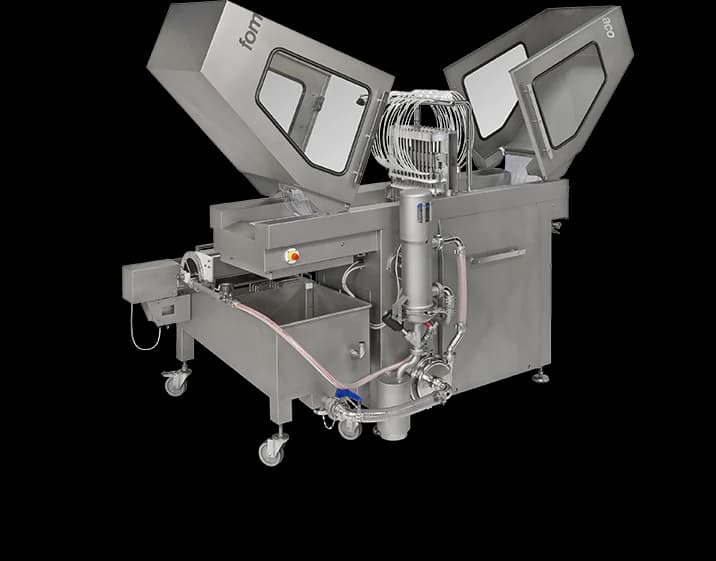
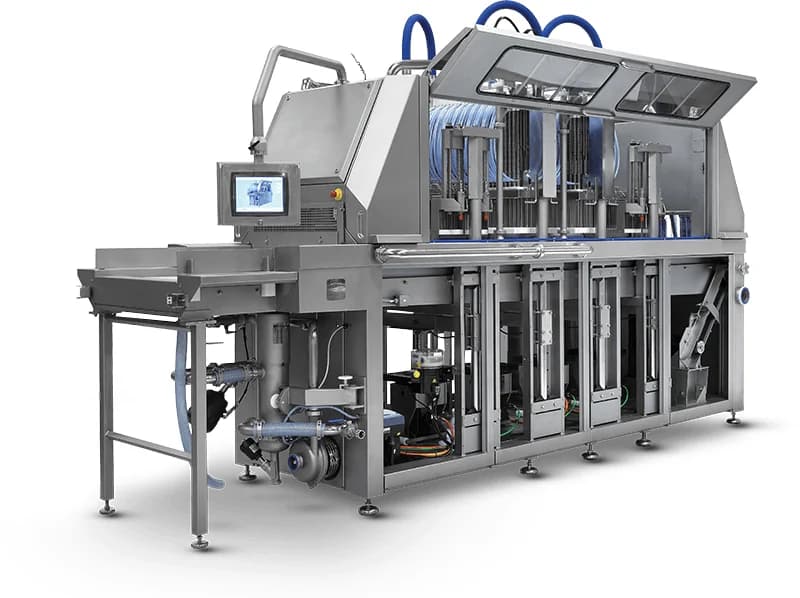
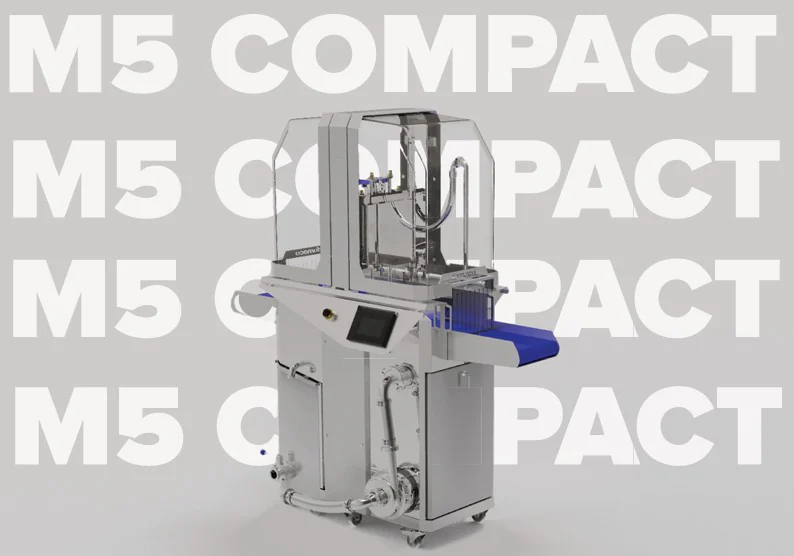
Soaking or hand marinating leaves the result to chance: some pieces take up plenty, others very little. A needle injector doses marinade into every piece instead. Fomaco M2 injectors such as the FGM 26 M2 inject only while the needles are in the product, which considerably reduces the marinade that runs back to the tank. To measure uptake rather than estimate it, Fomaco's IWC weighing units weigh product before and after the injector. Where one injector runs several marinades in a day, the M5 Compact keeps recipes in a library on its touch screen for recall.
- FGM 26 M2Brine Injector
- FGM 48Brine Injector
- M5 CompactBrine Injector
Problem 2Tenderisers & flatteners
Fillets that do not cook through evenly
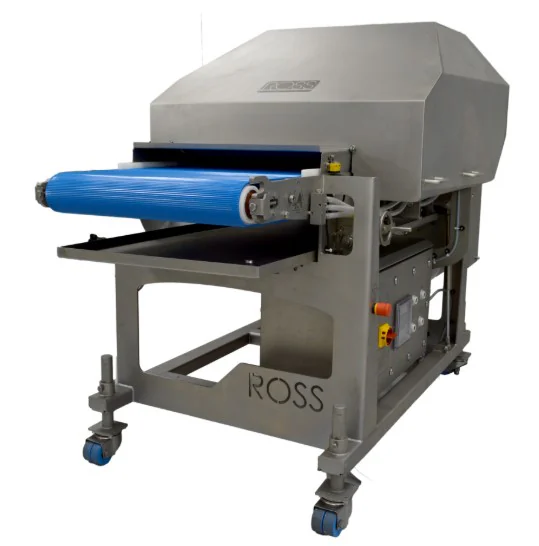
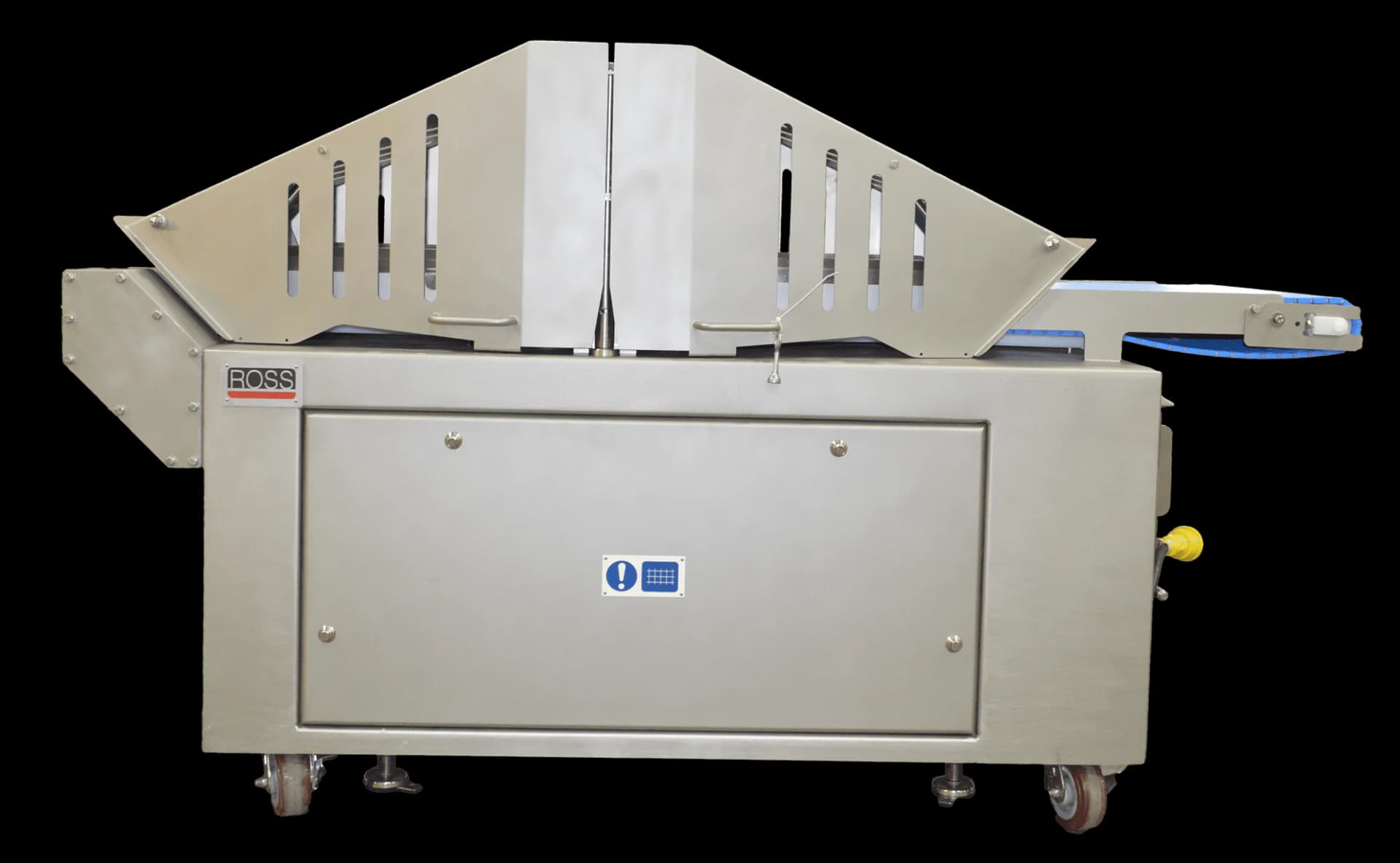
A breast fillet is thick at one end and thin at the other, so the thin end dries out while the thick end is still reaching temperature. Pressing fillets to a more even thickness narrows that gap. The Ross RCF-400 flattens fresh or soft frozen meat and poultry products, and the Ross TC710 Tenderizer tenderises and stretches bone-in and boneless cuts, poultry included, before frying or grilling. Tell us the thickness your fillets arrive at and the thickness you want.
- RCF-400Meat Flattener
- TC710 TenderizerTenderiser
Problem 3Portioning & forming machines
Trim and mince with no better outlet than bulk sale
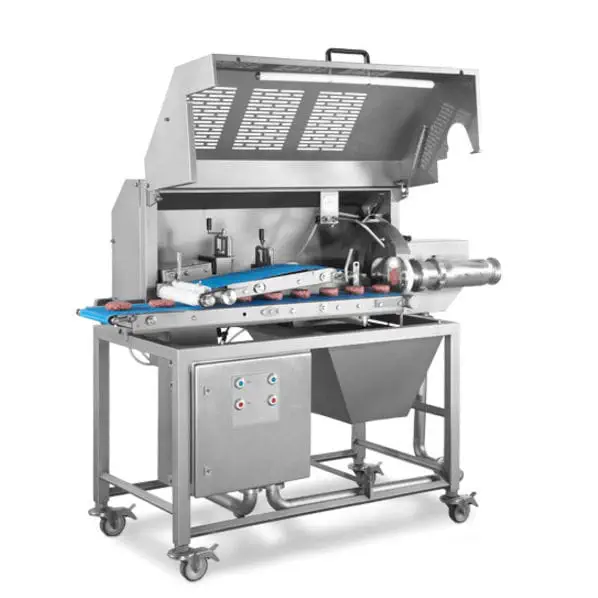
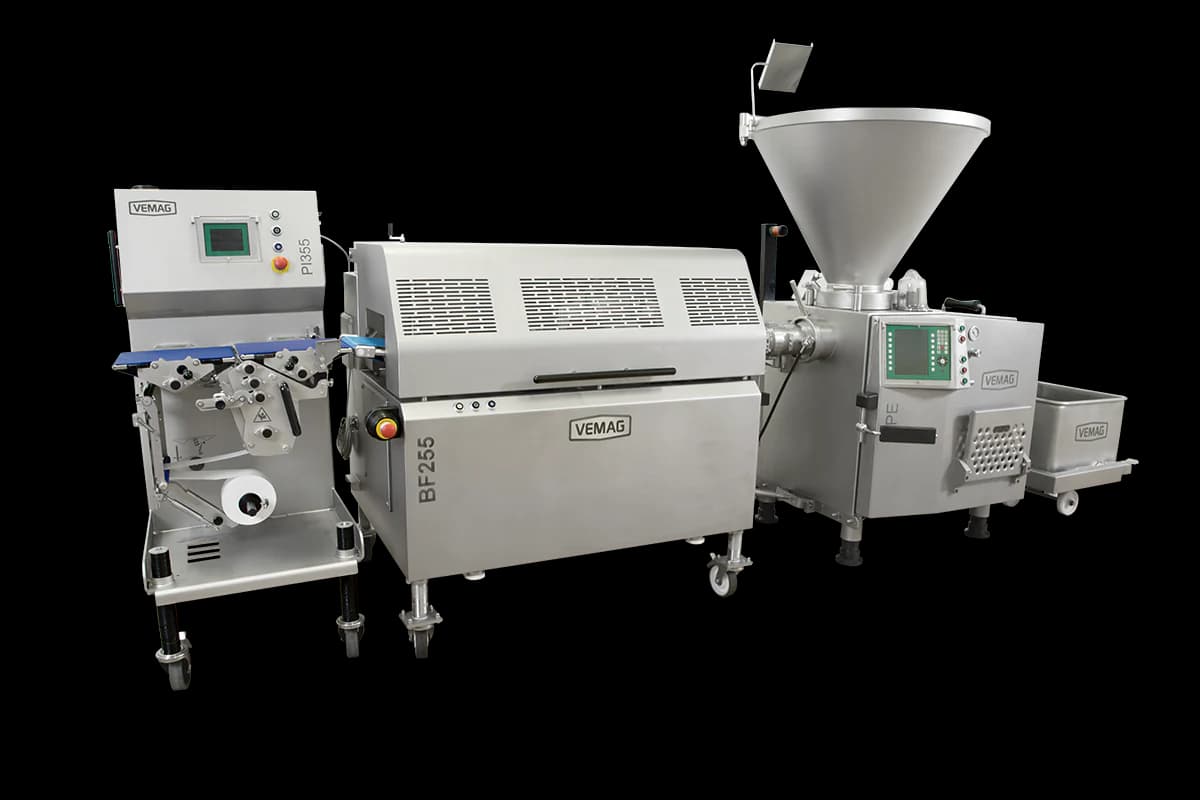
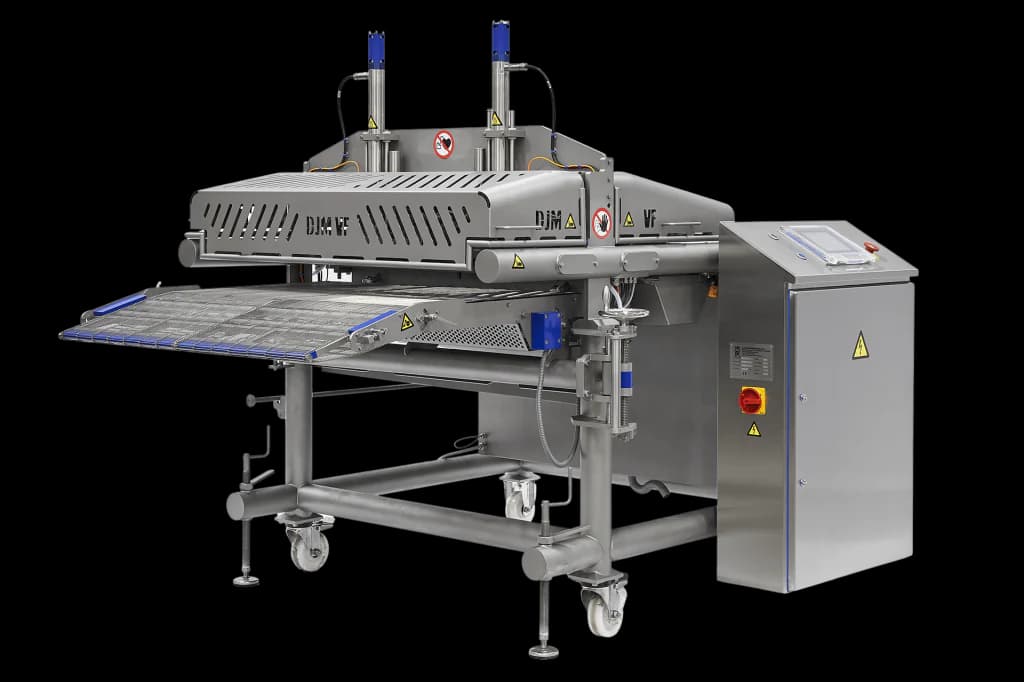
Thigh meat, trim and mince can be shaped into nuggets, burgers or schnitzels instead of being sold as bulk mince. One route is a former fed by a vacuum filler: the FM250 lists nuggets of 10 to 30 g among its products and changes shape with quick-change forming nozzles, and the BF255 forms burgers from poultry as well as beef and pork. The DJM-VF06 comes from a line of VacForm machines whose listing names chicken nuggets and schnitzels.
Problem 4Sausage linking, hanging & cutting
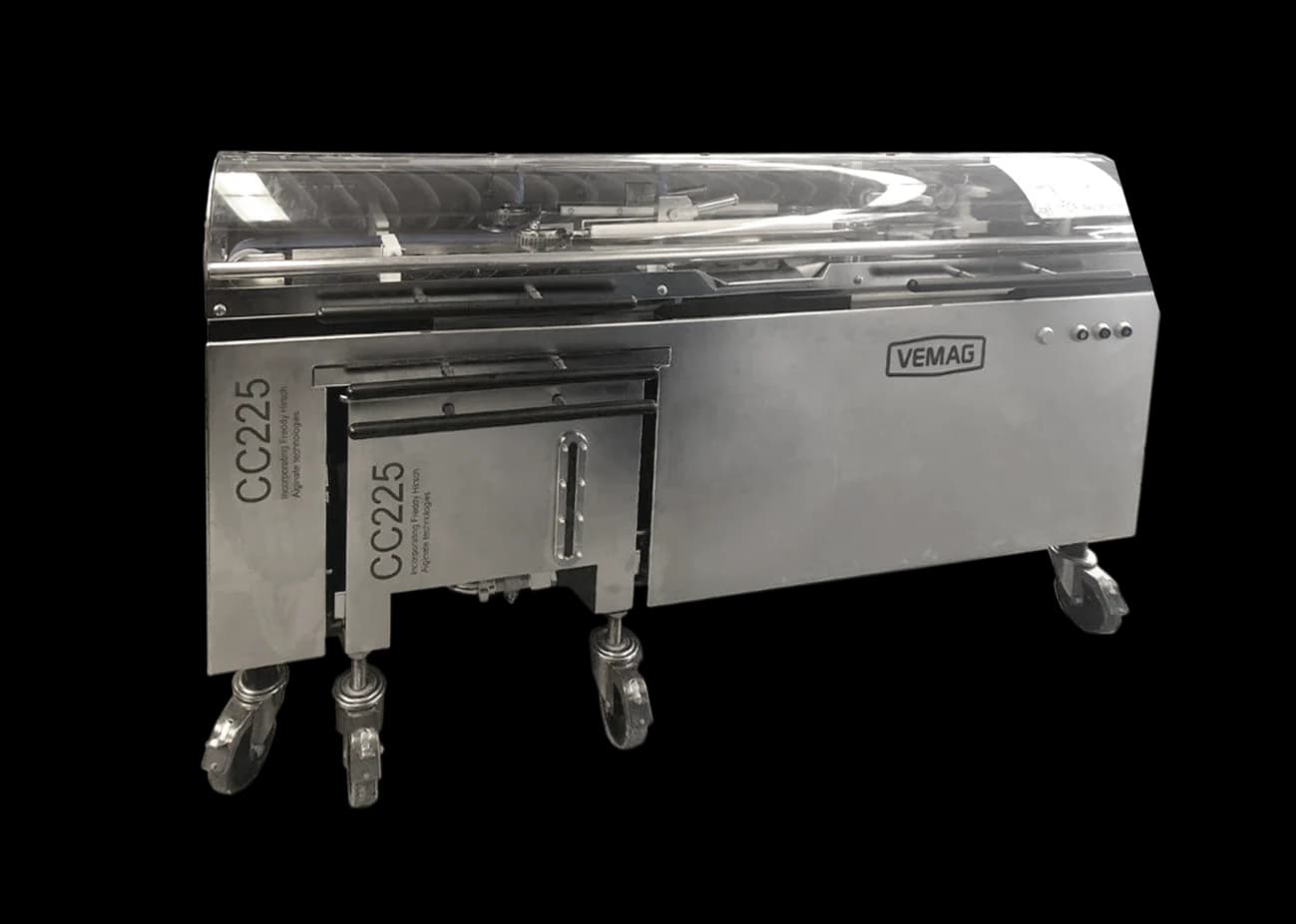
Chicken sausages without natural casings
Natural casings come from other animals, which can rule them out for a sausage sold as all-poultry or halal. The CC225 co-extrudes an alginate casing around the sausage as it is filled, and its listing says pure halal, poultry, vegetarian and kosher products are possible. It is described for cooked and thermally treated products, and it removes the time otherwise lost to casing changes. For fillers and the other casing types, see our sausage filler guide.
- CC225Coextrusion Sausage Line
Problem 5Inspection & weight control
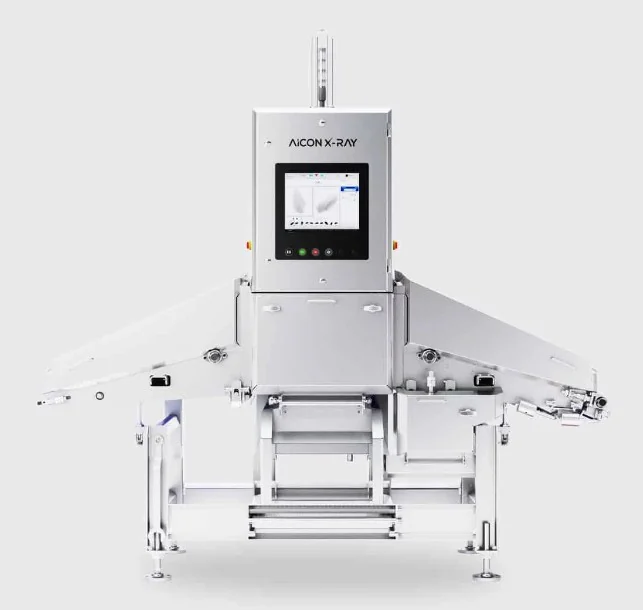
Customer complaints about bone
One bone fragment in a product sold as boneless is enough to start a complaint. A metal detector will not see it, because bone is not metal; X-ray can, because bone absorbs more of the beam than the meat around it. The Aicon XR-500 Poultry is an X-ray inspection system for the quality control of raw meat, listed as detecting calcified bone down to 1 mm. What it finds in your fillets depends on their thickness and how they lie on the belt, so we suggest testing with your own product.
- Aicon XR-500 PoultryX-Ray System
Problem 6Inspection & weight control
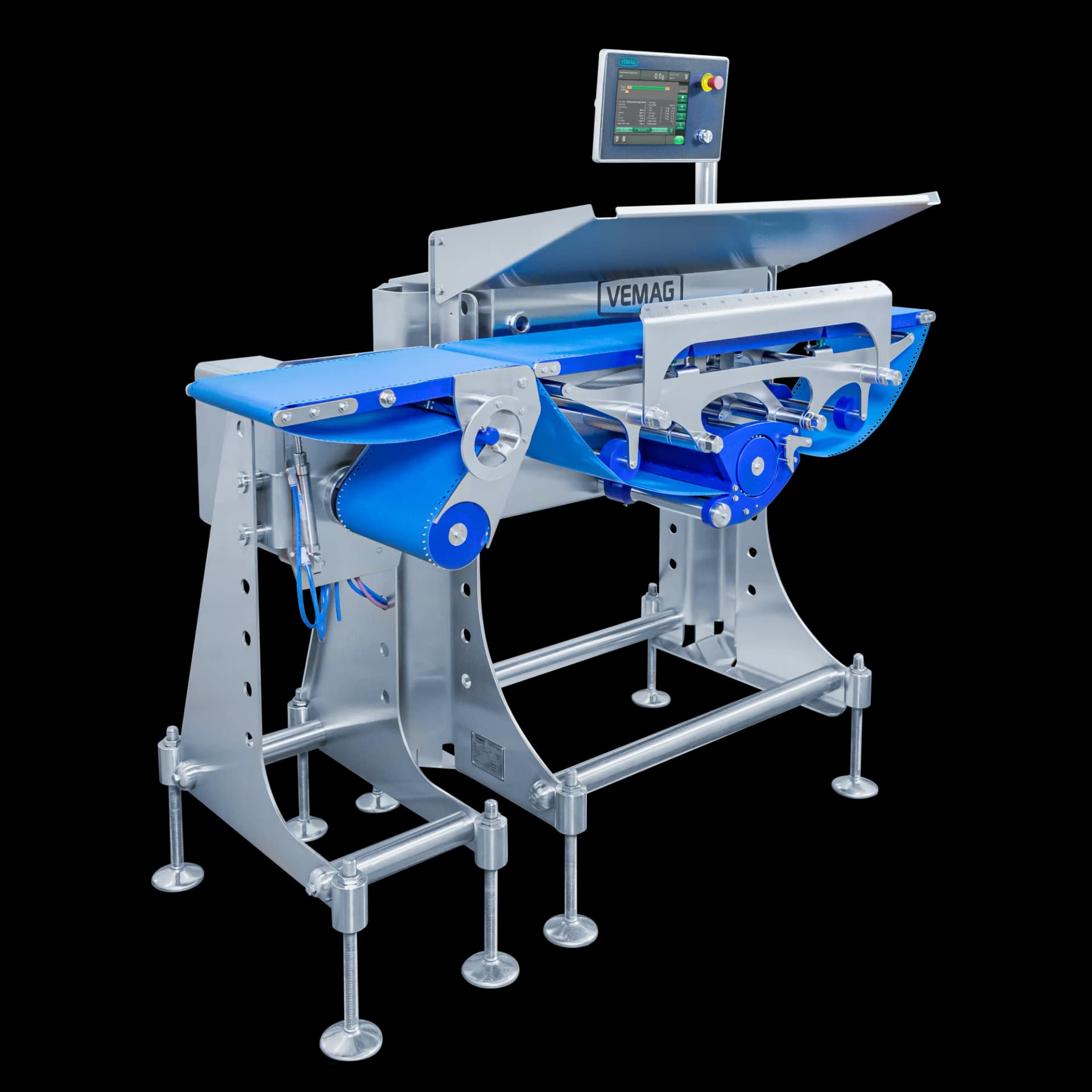
Formed portions that drift off their weight
Underweight packs break trade measurement rules, and overweight ones give product away. The VPC716 process check is described for minced meat products and forming lines: it weighs every portion continuously, regulates the vacuum filler from those weights so the portion size is corrected as the line runs, and sends portions outside tolerance off on an ejection belt. It also records production data and saves programs, so each product keeps its own settings.
- VPC716Checkweigher
Problem 7Conveyors & line equipment
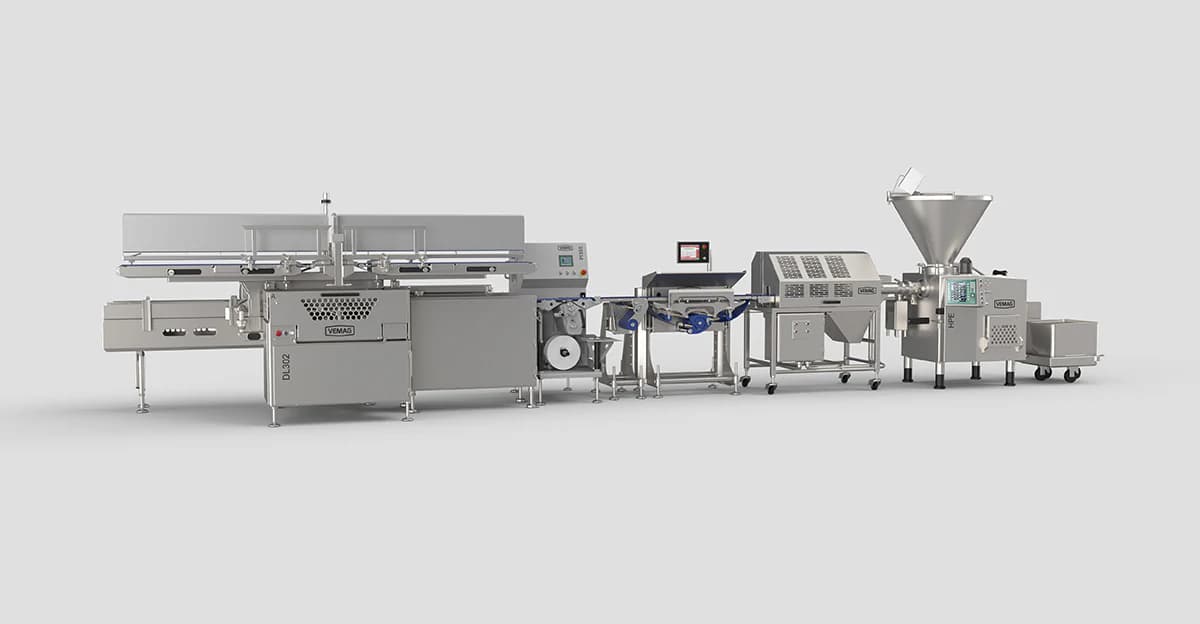
Staff tied up loading trays by hand
Placing portions into trays by hand is slow, repetitive work. The DL302 loading line was designed to take that job over: its listing names burgers, meatballs and schnitzel among the products it places in trays, says commercially available trays can be used, and says no modifications are needed when the product changes. Our page on automated food processing lines covers the other handoffs between machines that can be automated.
- DL302Loading Line
Problem 8Thermoformers & packaging
A customer asking for a different pack
Fresh and marinated chicken is commonly sold in sealed trays, thermoformed packs or vacuum bags, and the right one depends on what the customer specifies and how long the product has to last. Our page on meat packaging equipment compares those packs, and the tray sealers page lists the sealing machines. Send us the pack your customer has asked for and we will narrow the choice.
03Quick reference
Where each solution starts, and what to send us
The table condenses the problems above into a first step and the information that lets our sales team answer quickly. It is a planning aid built from machine types in our catalogue, not a list of systems we have installed or machines matched to one another.
| Problem | Where the solution usually starts | What to send us first |
|---|---|---|
| Uneven marinade uptake | Needle injection, with weighing before and after | The cuts, whether they are bone-in, the marinade recipe and the uptake you are aiming for |
| Fillets cooking unevenly | Flattening or tenderising before cooking | Fillet weights, the thickness they arrive at, the thickness you want and their temperature |
| Trim with no outlet | A former fed by a vacuum filler, or a VacForm machine | The mince or mass, the shapes and weights you want, and any vacuum filler you already run |
| Chicken sausages without natural casings | Alginate co-extrusion | Sausage length and calibre, whether the product is cooked, and any halal requirement |
| Bone complaints | X-ray inspection of the raw product | The product and its thickness, how it is presented, and samples for testing |
| Portion weights drifting | Continuous weighing that regulates the filler | Target weights, your tolerance and the filler and former in use |
| Hand loading of trays | An automatic loading line | Tray sizes, the products and how they leave the machine before |
| A new pack format | Tray sealing, thermoforming or vacuum bags | The pack your customer specifies and your current volumes |
04Process
How we put a poultry solution together
Most poultry projects with us run through the same six steps, whether the answer turns out to be a single flattener or several machines planned together.
Describe the problem
Tell our sales team what you make, what is going wrong and what you already run. Samples, recipes and the make and model of your existing machines all help.
Agree a shortlist
We suggest machines from the manufacturers we represent for the stage in question, and say plainly when the job falls outside our catalogue.
Trial your own product
At our Customer Centre you can run your own raw materials and recipes on a range of our machines under real production conditions, and judge quality and cost before you commit.
Receive a quotation
Our sales managers prepare a quotation for your production needs, whether that is one stand-alone machine or a complete line.
Installation and training
Our service technicians install new machines and train your operators and maintenance staff.
Service and spare parts
After start-up, the same team handles maintenance, repairs and fault finding, and our spare parts desk keeps genuine components in stock and offers a blade sharpening service.
Already running machines from us? Book a visit through service, or order through spare parts.
06FAQ
Poultry processing solution questions
Can Vemag Australia supply a complete poultry processing plant?
Not a complete plant. We supply further-processing machines, from a single machine to several stages planned as one line, but no slaughter, defeathering, evisceration or deboning equipment, and no coating, frying or freezing equipment. If your line includes those stages, tell us what sits before and after our machines so the handover can be planned.
We have one problem, not a whole line. Is that worth a conversation?
Yes. Plenty of projects start with one machine added to an existing line. Tell us the problem and what the new machine has to sit between, and we will say whether something in our catalogue fits.
Which poultry products do the catalogue listings mention?
Between them, the listings mention injected and marinated cuts, flattened and tenderised fillets, nuggets, burgers, schnitzels and chicken sausages, plus X-ray checks for bone. For anything else, ask us: we will check the listings and suggest a trial.
Can we develop a new chicken product with you before we buy?
Yes. Our Customer Centre is set up for product development as well as demonstrations. Bring your raw materials and recipes, work through the application with our specialists, and look at the quality you get before you decide.
Who installs and services the equipment?
Our service technicians install new machines, train operators and maintenance staff, and handle maintenance, repairs and fault finding afterwards. To discuss or book a service, get in touch through our service page.
Do you hold spare parts for the machines you supply?
Yes. Our spare parts desk keeps a wide range of genuine components in stock, helps identify the correct part and offers a blade sharpening service. See spare parts for the details.
How much does a poultry processing solution cost?
It depends on the machines, their options and how much of the line changes, so we do not publish prices. Describe the problem and your volumes and we will prepare a quotation.