
Burger former machines for your production
Vemag Australia supplies burger former machines for meat and alternative-protein producers in Australia and New Zealand. Compare manual forming attachments and automatic burger forming equipment, then discuss the vacuum filler, interleaving and loading options for your patties.
Find a burger forming machine
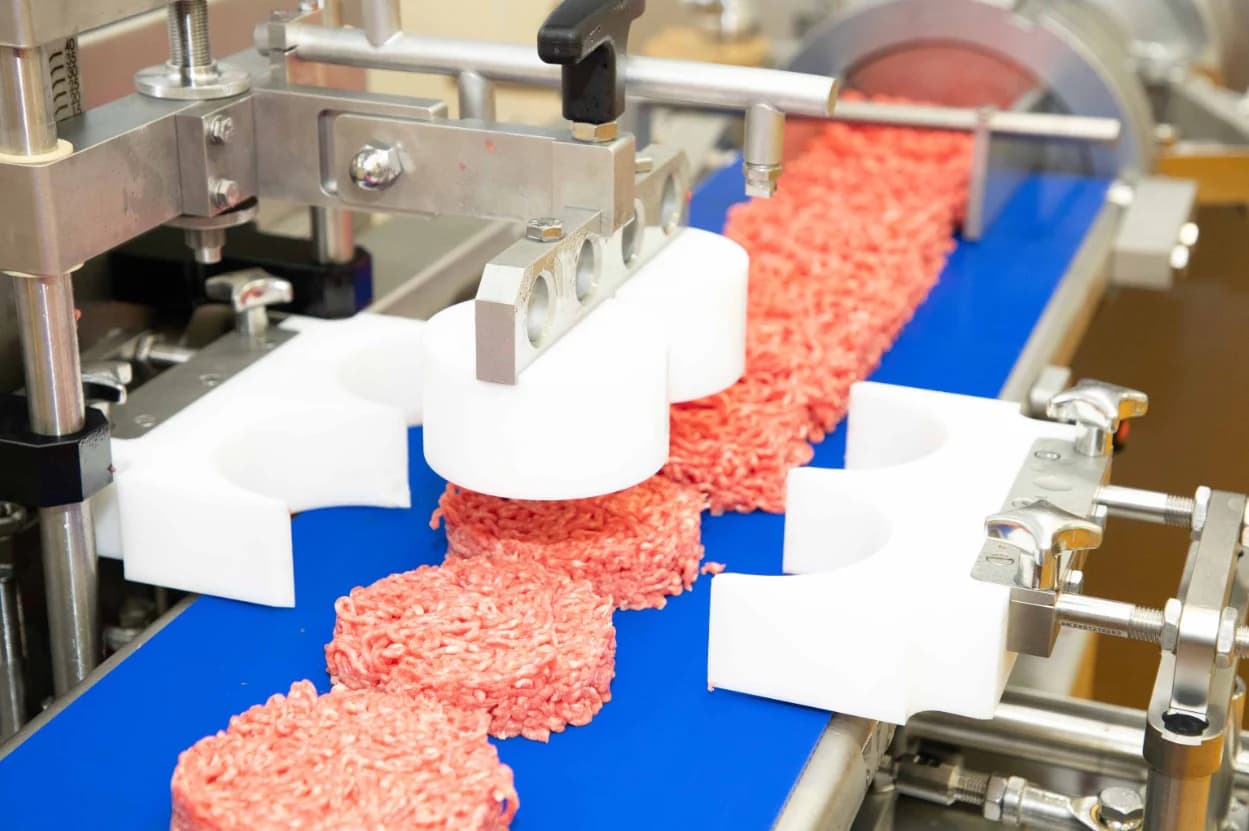
A burger former shapes a prepared mixture into individual patties. In a filler-fed system, the vacuum filler meters the mixture and the forming attachment creates the shape. The equipment you choose depends on your recipe, patty weight and dimensions, required output and how the patties will be handled next.
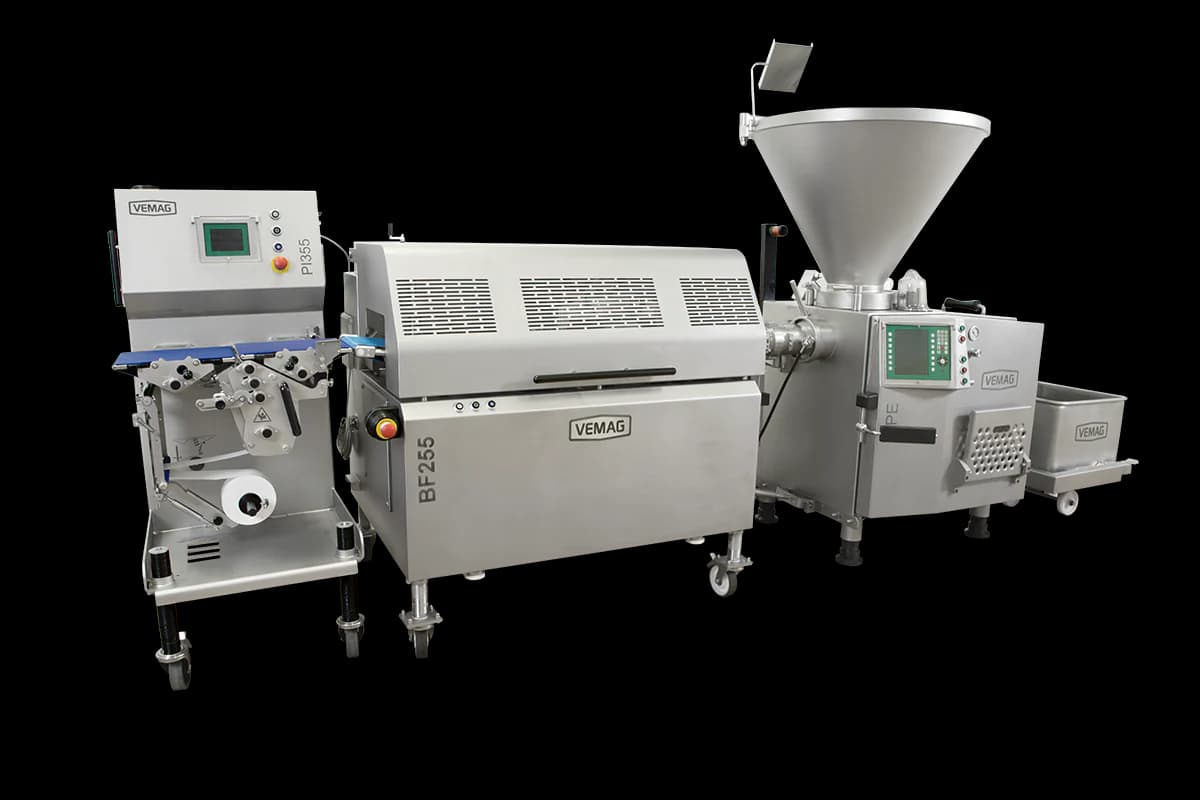
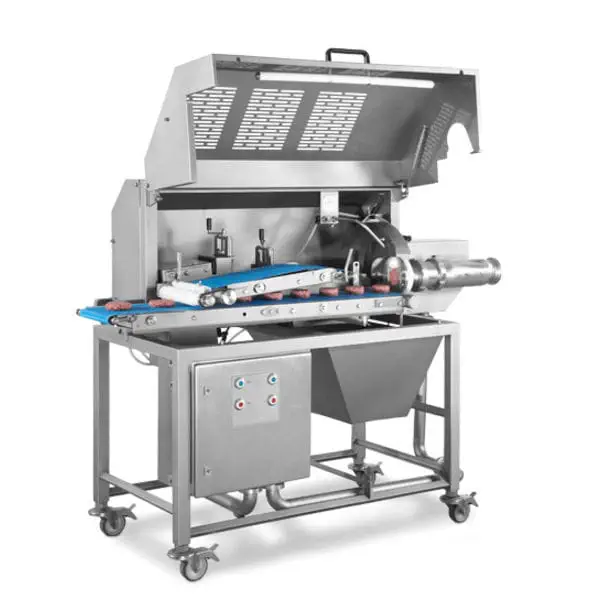
The MPF818 is a manually operated attachment for a VEMAG filling machine. The BF255 is a dedicated burger former, while the FM250 also forms products such as rissoles and nuggets. The catalogue includes BF Lite and the Automatic Product Former 253; ask our team for their current specifications and suitability before shortlisting them.
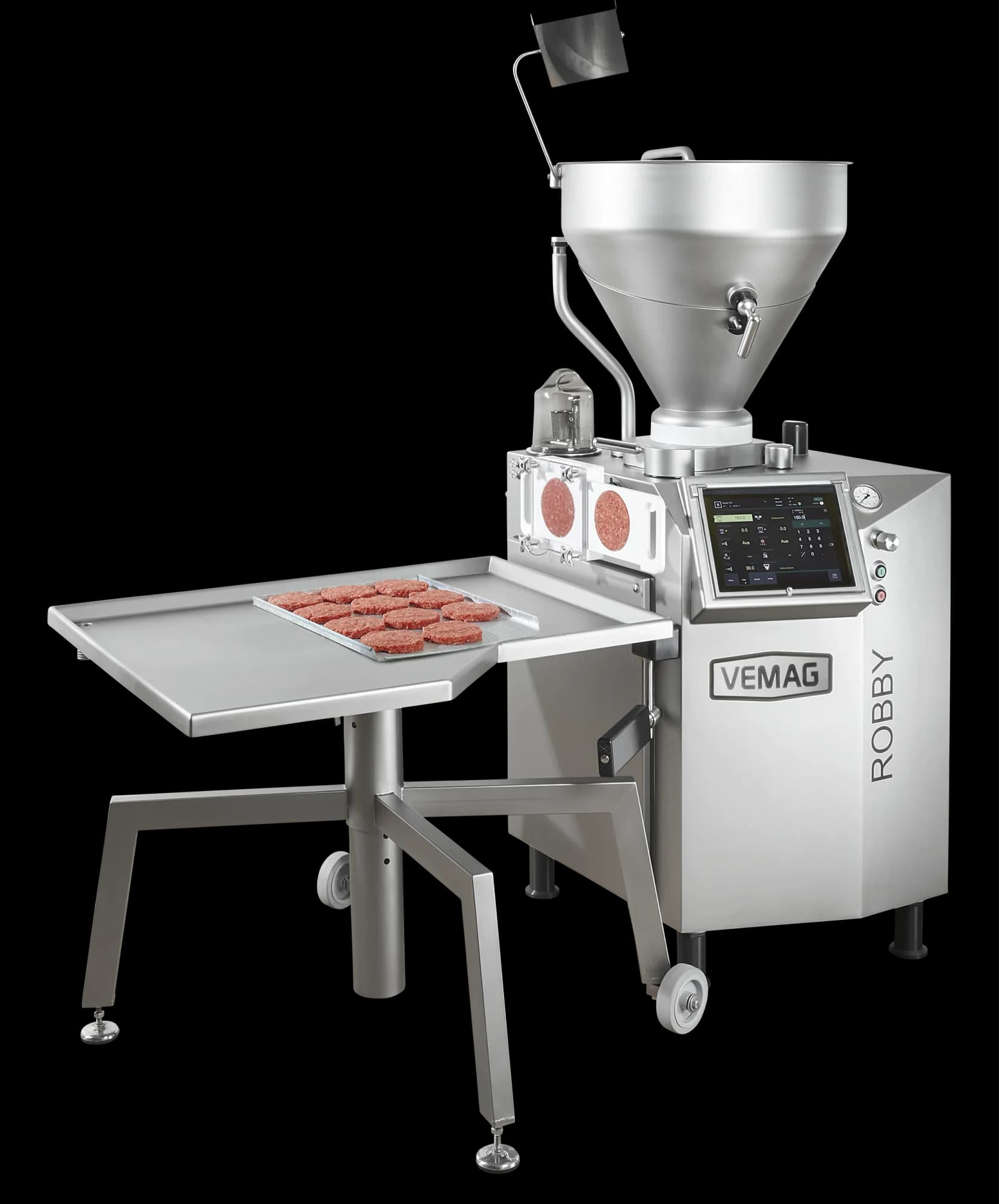
Compare burger and patty forming equipment
Start with the patty you want to make. Diameter and thickness affect the forming tooling, and the recipe affects how the portion holds together. A published machine rate describes a particular stage; it does not establish the output of a complete burger production line.
| Machine | Forming method | Size and weight | Published output | Quotation |
|---|---|---|---|---|
| MPF818 | Manual forming attachment | 60–120 mm diameter; 10–30 mm thickness | 20 portions/minute, manual operation | Quote for MPF818 |
| BF255 | Burger former: round, oval or special shapes on request | 50–300 g; up to 130 mm diameter | Confirm output for the proposed configuration | Quote for BF255 |
| FM250 | Forming machine for burgers, rissoles and other shapes | Confirm tooling and dimensions for your product | Up to 300 portions/minute; product dependent | Quote for FM250 |
These figures are published in the linked Australian machine listings. Confirm the current tooling, machine version and operating specification with our team. Trial your mixture to assess portion consistency, shape and handling before deciding on equipment.
Build a burger production line around your product
A forming machine is one part of the line. First establish how you prepare and feed the mix, then decide whether the patties will leave on paper, enter retail trays or transfer to another process. Our team can discuss the handover between machines, available floor space and the output required at the packing end.
For preparation, explore meat mixer grinders. For the equipment feeding the forming attachment, compare VEMAG vacuum fillers. The filler and former must be specified together for the mixture, portion size and forming method.
Discuss grind size, mixing, temperature and batch size, then select the vacuum filler and forming arrangement for the recipe.
Choose a manual forming attachment or automatic forming machine to suit the patty shape, handling and production target.
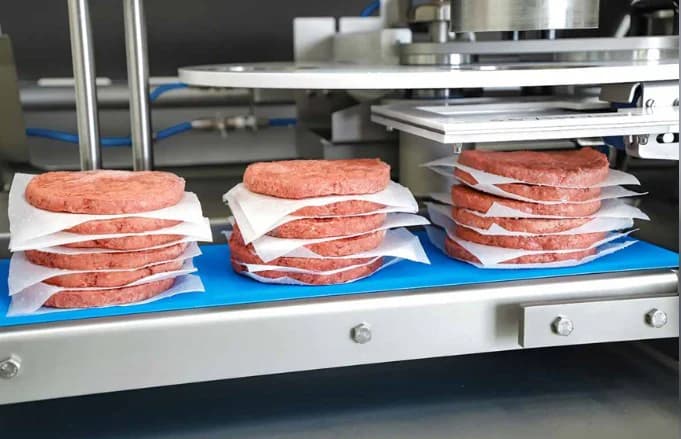
The PI355 paper interleaver is listed for use with the BF255 and FM250. Discuss the paper dimensions and single- or double-lane arrangement.
The SL309 loading line handles burger patties and sliders in trays. Confirm the product transfer, tray format and packing-machine interface for your line.
Paper interleaving and tray loading are options to assess for your product. The machines above are not a fixed package: compatibility, layout and line controls need to be confirmed for the proposed configuration. Browse meat packaging equipment for the packing stage.
What to specify before choosing a burger former
For smaller batches and regular product changes, consider how much work the operator will do at the former and how quickly plates can be changed. For an automatic line, consider the entire shift: feeding, forming, interleaving or tray changes, cleaning and the next machine’s capacity all affect usable output.
For beef, pork or poultry burgers, discuss the grind, fat content, inclusions and the texture you want after cooking. For plant-based patties, provide details of the mixture and binding behaviour. The BF255 and FM250 catalogue listings cover meat and meat-free or vegetable mixtures; suitability for your recipe should be assessed through a trial.
Send the details below with your enquiry. If you already have a filler or packing line, include the model and how product currently transfers between machines.
- Recipe and product condition: ingredients, grind size, inclusions and feed temperature.
- Patty specification: target weight, diameter or shape, thickness and finished appearance.
- Production target: patties per minute, kilograms per shift and number of recipes.
- Product handling: loose patties, paper interleaving, stacking, trays or further processing.
- Site requirements: existing machines, available floor space, services and cleaning routine.
Product trials and support in Australia and New Zealand
A Customer Centre product trial lets you discuss your own mixture and forming requirements with Vemag Australia. Ask the team about trial arrangements and the equipment available for your application. Define the checks in advance: raw and cooked shape, weight variation, texture and transfer into the intended pack.
Our service team supports machinery with repairs, maintenance, installation and operator training. Contact the spare parts team to identify replacement components. Discuss the installation, training and support scope when requesting a machine or line quotation.
Burger former machine questions
What is a burger former machine?
A burger former machine shapes a prepared mixture into patties. Depending on its design, it uses a forming plate, mould or nozzle and a cutting or flattening process. A filler-fed former works with a vacuum filler that meters the mixture into portions.
Does a manual burger former need a filling machine?
The VEMAG MPF818 is a manually operated forming attachment, not a stand-alone hand press. It connects to the filling horn holder of a VEMAG filling machine. Its catalogue listing describes forming plates from 60 to 120 mm in diameter. Confirm the connection and tooling for your filler.
What is the difference between the BF255 and FM250?
The BF255 is a burger former described for round, oval and custom shapes. The FM250 forms burgers as well as products such as rissoles, spiced mince fingers and nuggets. The choice depends on your recipe, required shapes, handling and line configuration; ask our team to assess the application.
Can burger forming machines handle plant-based mixtures?
The BF255 and FM250 listings describe meat-free or vegetable mixtures as well as meat products. A recipe’s binding, texture and inclusions affect how it forms and transfers. Discuss a product trial before confirming the machine and forming tooling for your plant-based patty.
Can I add paper interleaving or automatic tray loading?
The PI355 paper interleaver is listed for the BF255 and FM250. The SL309 loading line handles products including burger patties and sliders in trays. Confirm the former, product dimensions, tray format, transfer arrangement and controls with Vemag Australia when specifying a line.
How much does a commercial burger former cost?
Vemag Australia quotes equipment to your requirements. The price depends on the former, any required vacuum filler, forming tooling, handling equipment and installation scope. Send your recipe, patty size, output target and existing machine details to request a quotation.
Contact
Discuss your burger forming machine or line
Tell us your recipe, patty weight and dimensions, production target and packing format. Our team can discuss a former, the equipment around it and a product trial for your application.
- Australia(07) 3829 3868
- New Zealand+64 9 415 0137
- Salessales@vemag.com.au