
01Scope
Three kinds of produce packing, and the two we equip
Ask a grower what produce packing means and they will usually describe a shed: fruit or vegetables tipped from bins, sized and graded, then packed into cartons, punnets, clamshells or net bags. That is whole-produce packing, and it runs on graders, sizers, punnet fillers and baggers. None of those machines is in our catalogue.
The second kind starts once produce is cut. Melon chunks, apple slices, carrot sticks, salad leaves and stir-fry mixes are prepared, then sealed in a tray, tub or formed pack that carries them to the shelf. The third kind turns produce into a product in its own right: a purée, sauce, dip, filling or formed vegetable item that is blended and portioned before it is packed.
Our machines serve the second and third kinds. The sections below list them by pack format, then by the steps that come before sealing. The whole produce and fresh-cut produce application pages list the machines tagged for each, and the produce industry page lists everything in the catalogue tagged for produce and fresh food. If you pack vegetables only, our page on vegetable packaging machines takes them stage by stage.
- In our catalogue: tray sealers, thermoformers and vacuum packaging machines, container filling for pumpable products, bowl cutters and vacuum fillers for value-added produce, X-ray and metal detection, and equipment that loads product into packs.
- Not in our catalogue: washing and peeling lines, optical sorters, graders and sizers, punnet and clamshell fillers, weighers that bag or net loose produce, and labellers.
02Pack formats
Produce packing machines by pack format
Start from the pack you want on the shelf. Each format below names the catalogue machines whose published data fits it and links to the machine type page that lists every model in the group.
Format 1Tray sealers
Sealed trays, tubs and bowls
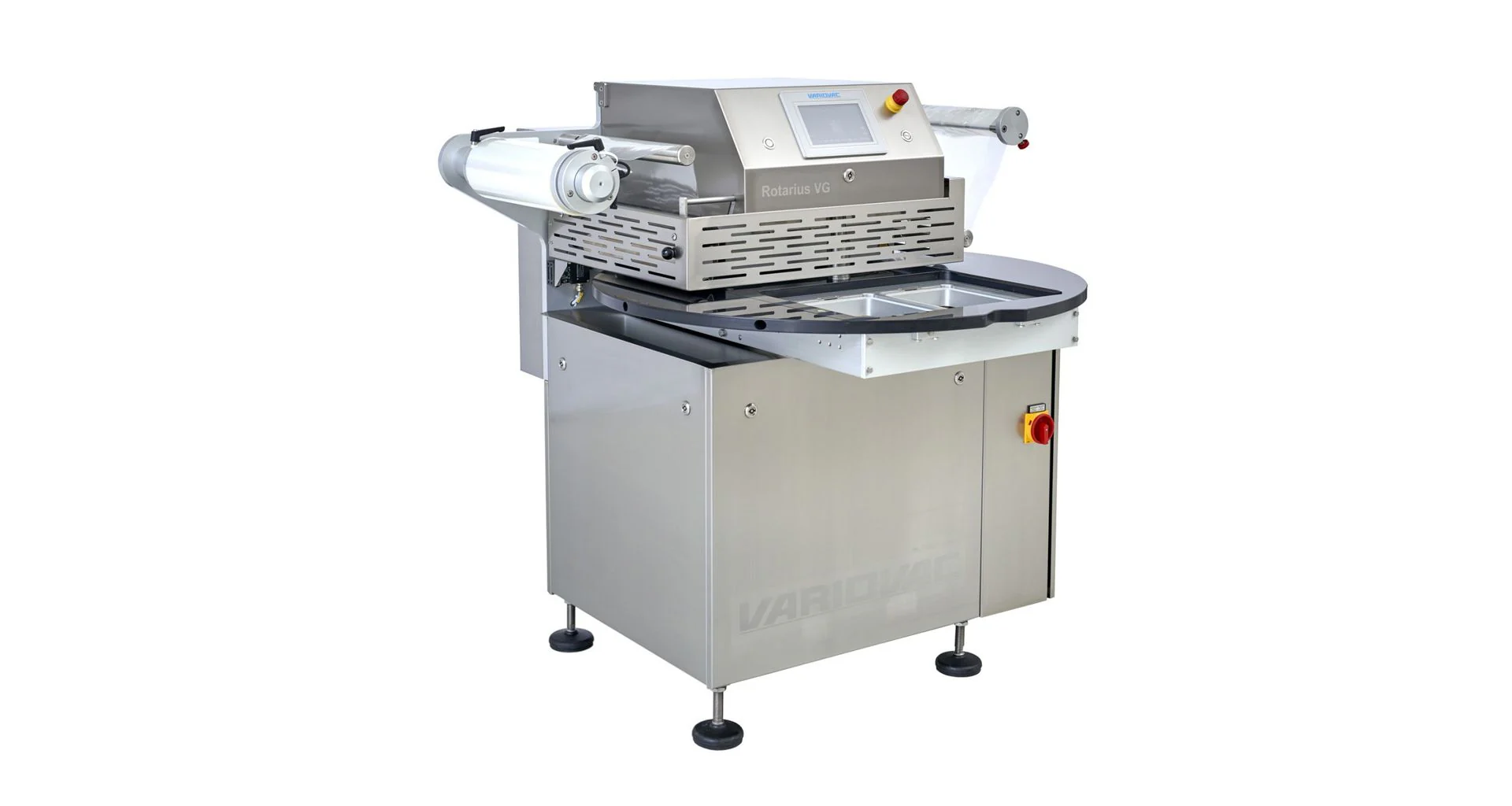
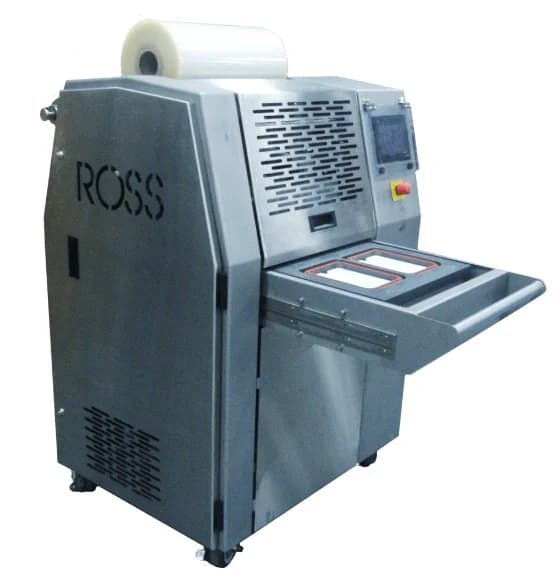
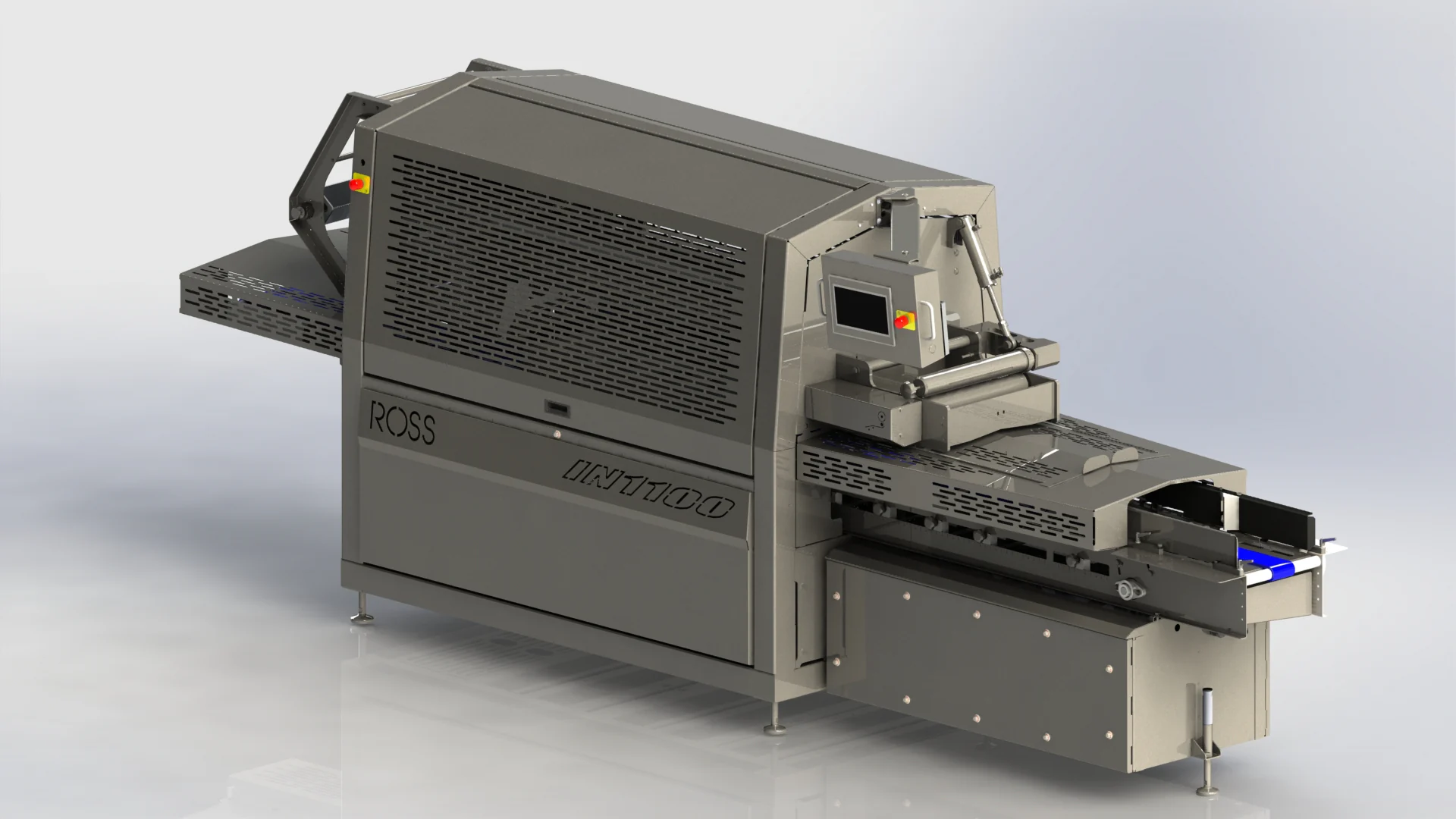
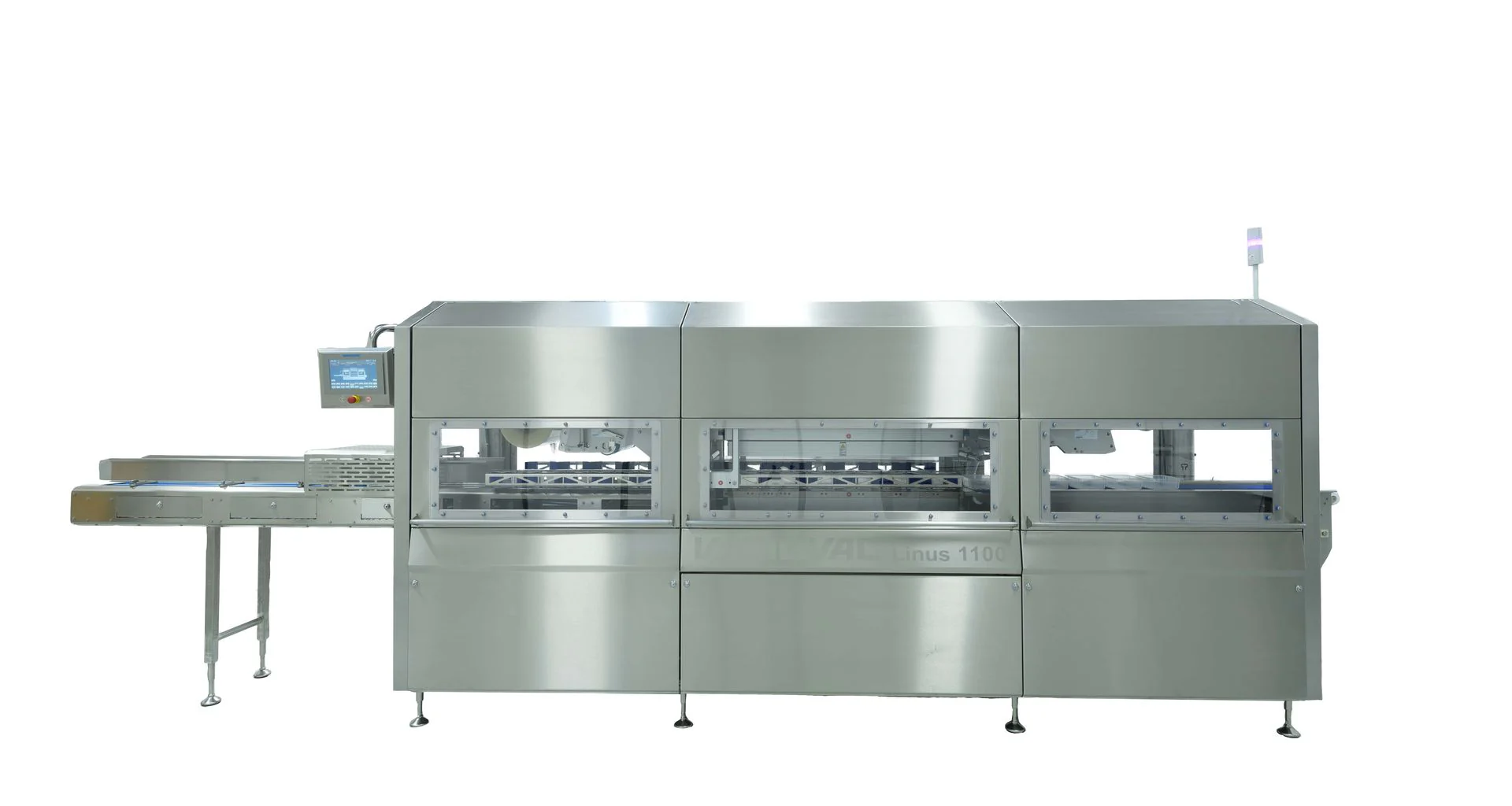
Cut fruit cups, salad bowls and vegetable trays are usually filled first and then lidded with film on a tray sealer. The Variovac Rotarius has two tools on a rotary table: while one tray set is vacuumised and gassed in the sealing tool, the operator unloads finished trays and puts in new ones. It takes trays up to 100 mm deep and needs 1.6 m² of floor. The Ross X450 is a compact, portable semi-automatic sealer for small processors, stores and food lab settings. For automatic production, the Ross IN 1100 handles MAP and vacuum skin packs, and the Variovac Linus 1100 runs inline, with fold-up wing doors and a tool trolley that pre-heats sealing tools to shorten changeovers.
- RotariusTray Sealer
- X450 Semi-AutomaticTray Sealer
- IN 1100Tray Sealer
- Linus 1100Tray Sealer
Format 2Thermoformers & packaging
Packs formed from a film roll
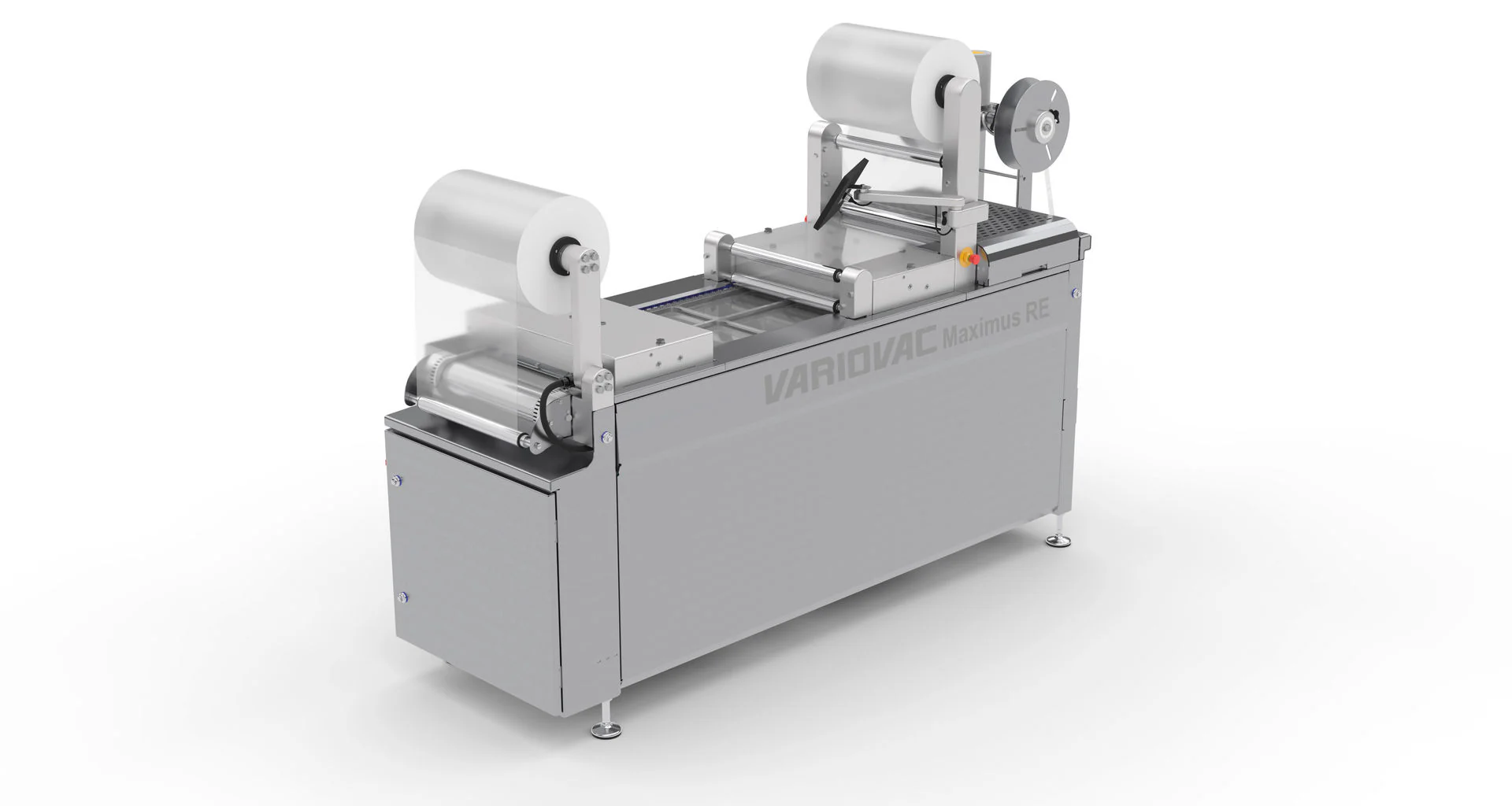
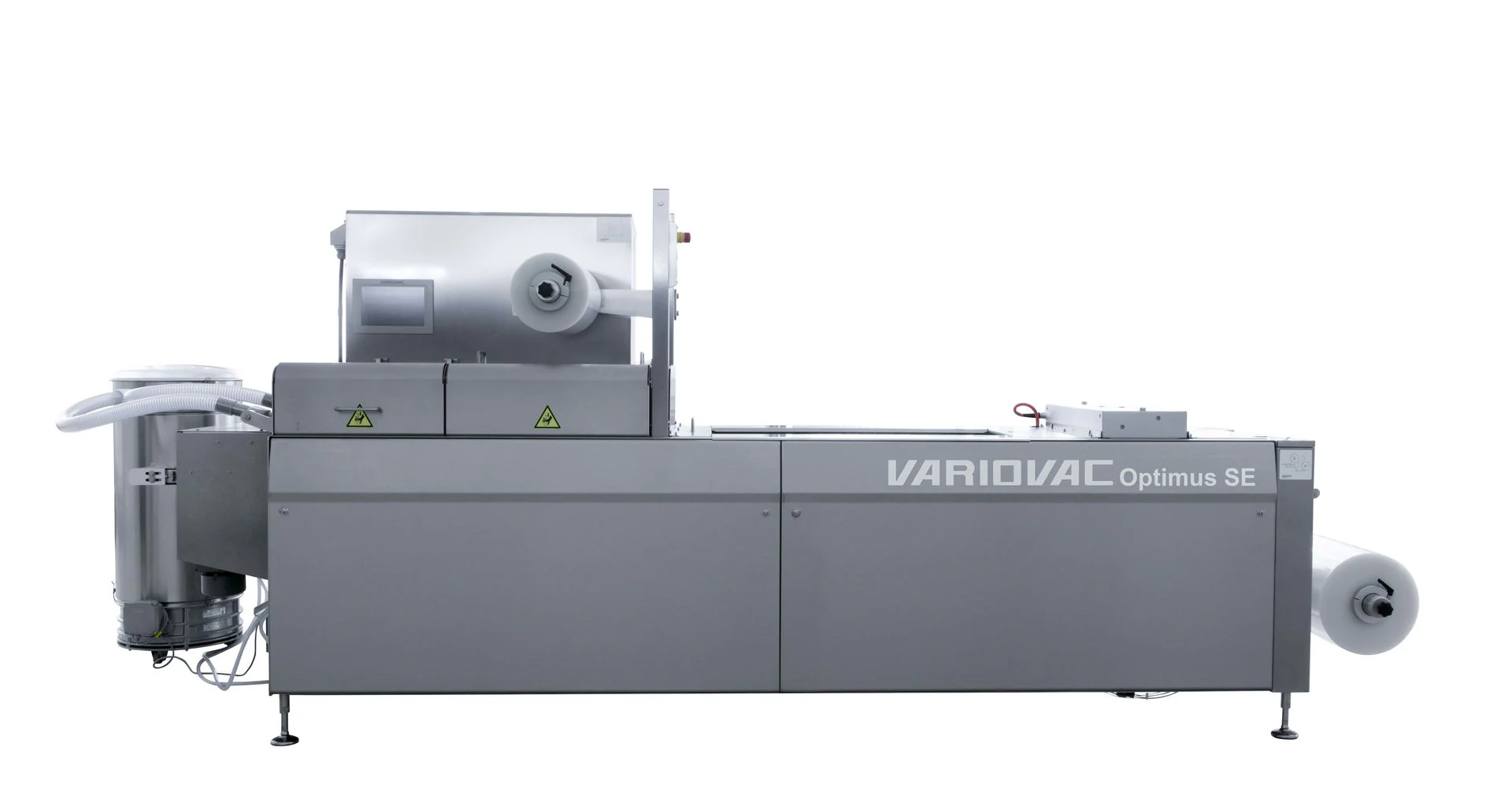
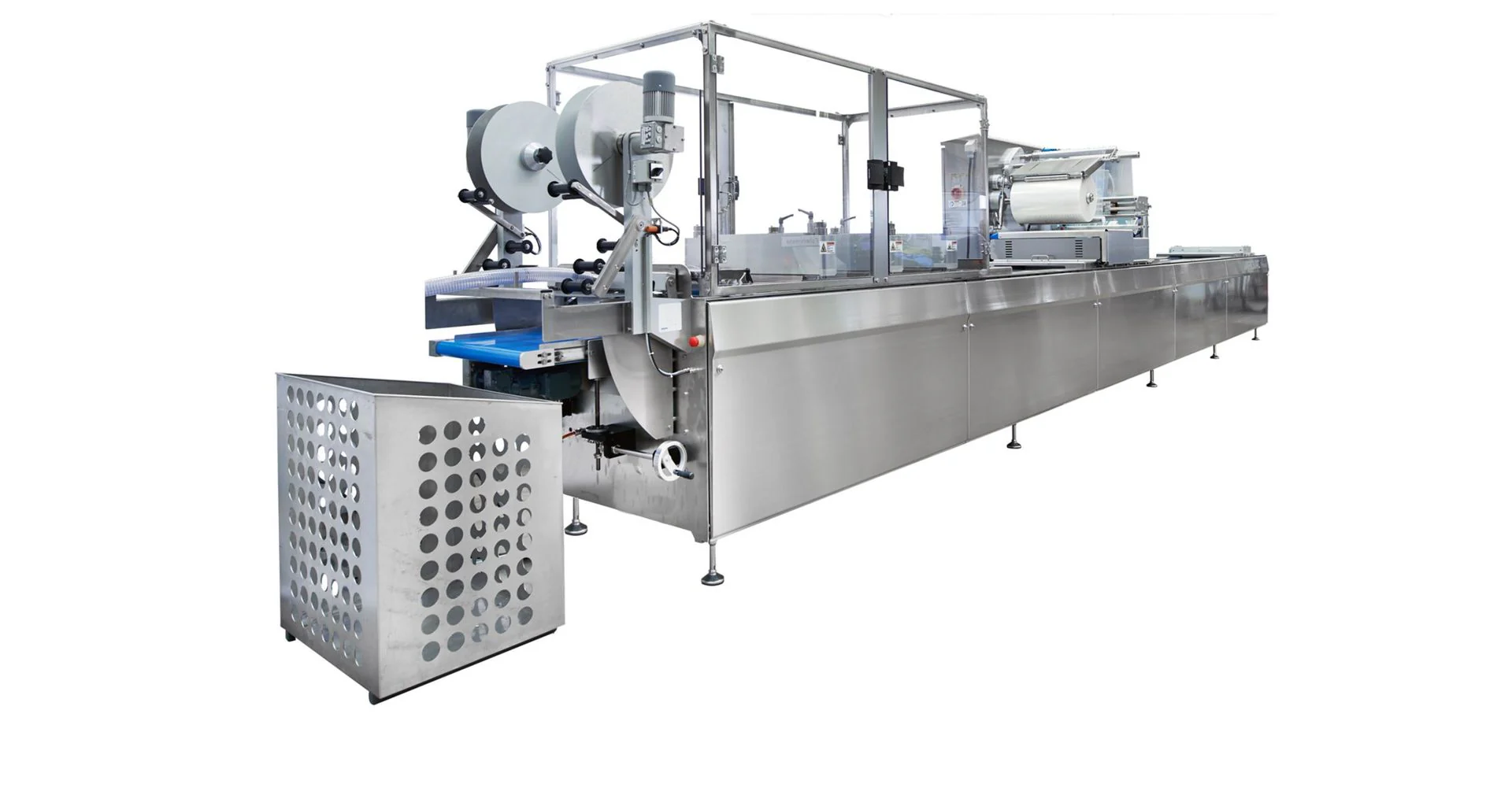
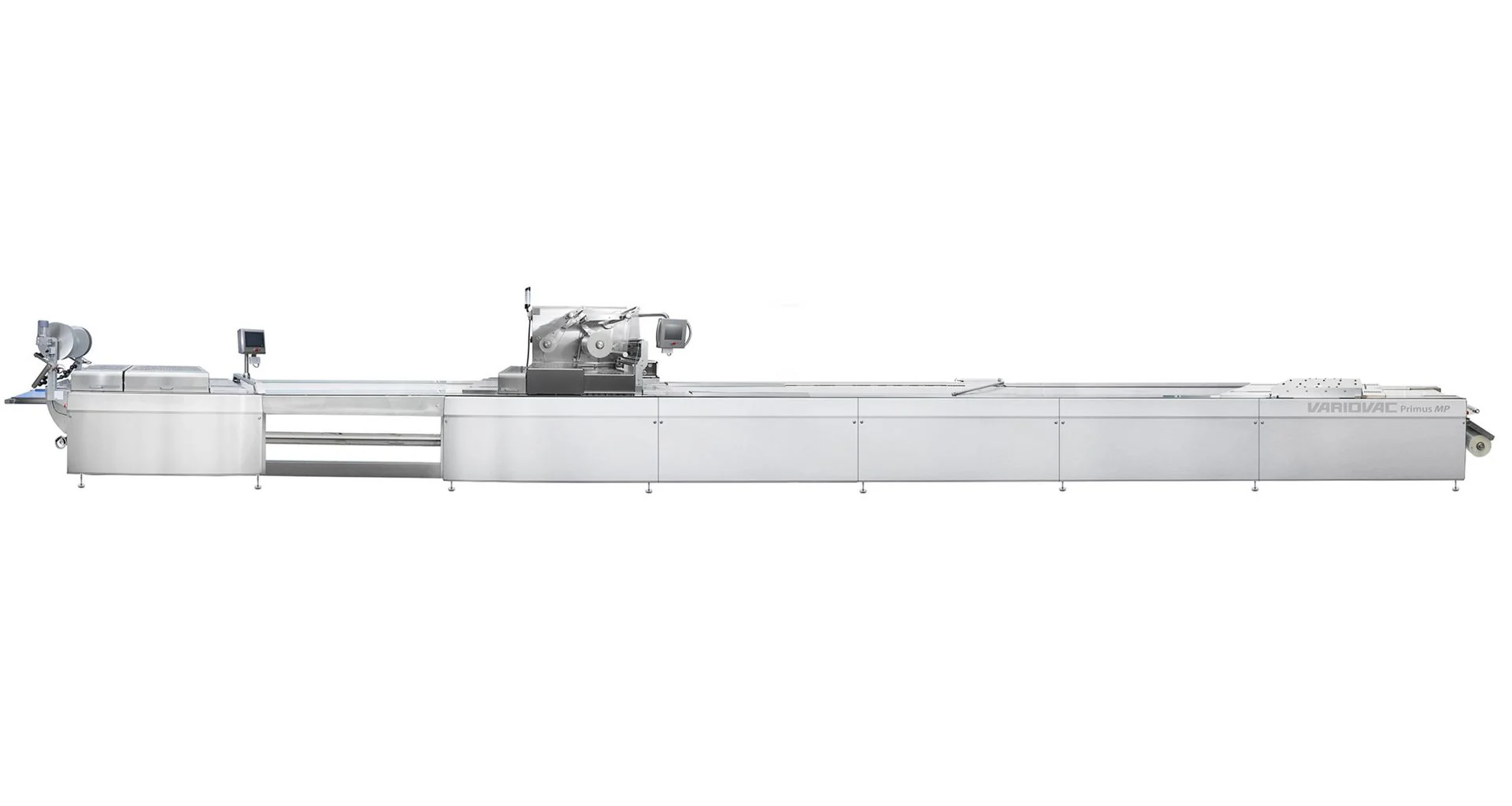
A thermoformer heats a bottom film into pockets, takes the product into them and seals a lid film over the top, all on one machine, so there are no bought-in trays. It makes most sense for long runs of a single pack size, such as portions of cooked potato or beetroot. The Variovac Maximus RE keeps its control cabinet inside the frame to save space and runs up to 6 cycles a minute. The Optimus SE and SEL, on 3 m and 3.5 m frames, are Variovac's entry-level fully automatic models. The Primus reaches up to 20 cycles a minute, and the Primus MP extends to a 195 mm pack depth on frames up to 30 m long.
- Maximus REThermoformer
- Optimus SE/SELThermoformer
- PrimusThermoformer
- Primus MP (Multiperformance)Thermoformer
Format 3Thermoformers & packaging
Vacuum bags
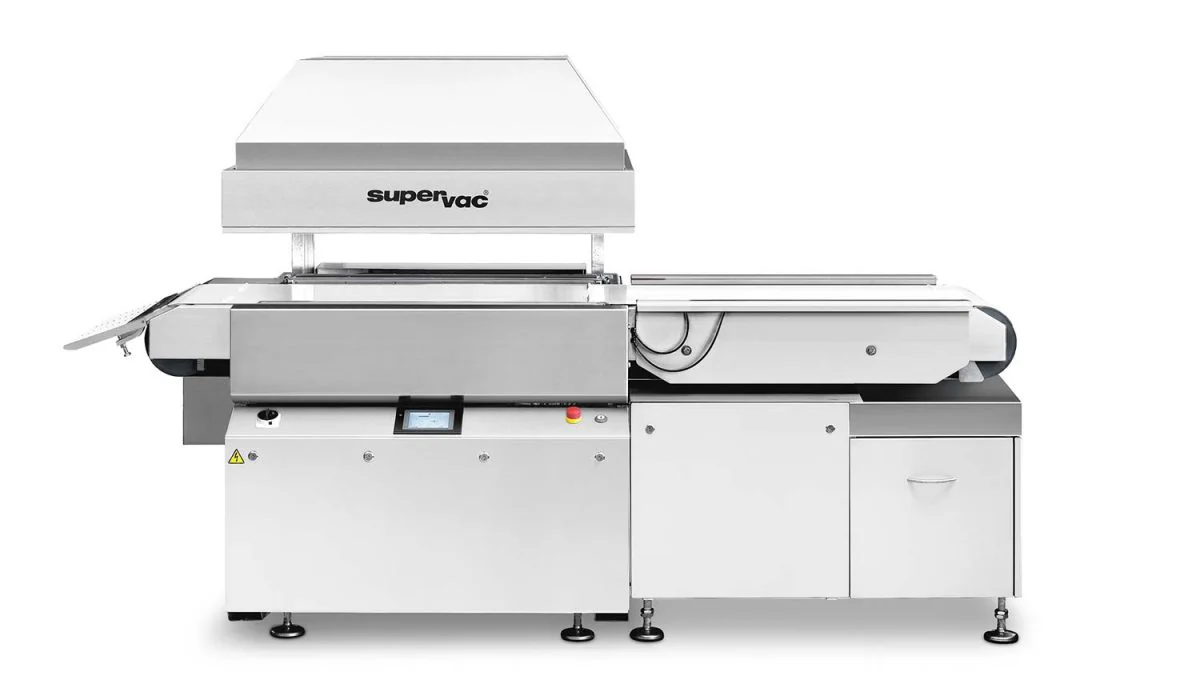
Firm produce products that hold their shape under vacuum, such as cooked whole potatoes or beetroot, can be bagged and sealed in a vacuum chamber. The Supervac GK501B is a conveyorised stainless steel vacuum packaging machine built to raise what one operator can pack. Berries, soft fruit and leaves are not candidates, because a full vacuum crushes them.
- GK501BVacuum Packaging Machine
Format 4Depositors
Cups, jars and cans
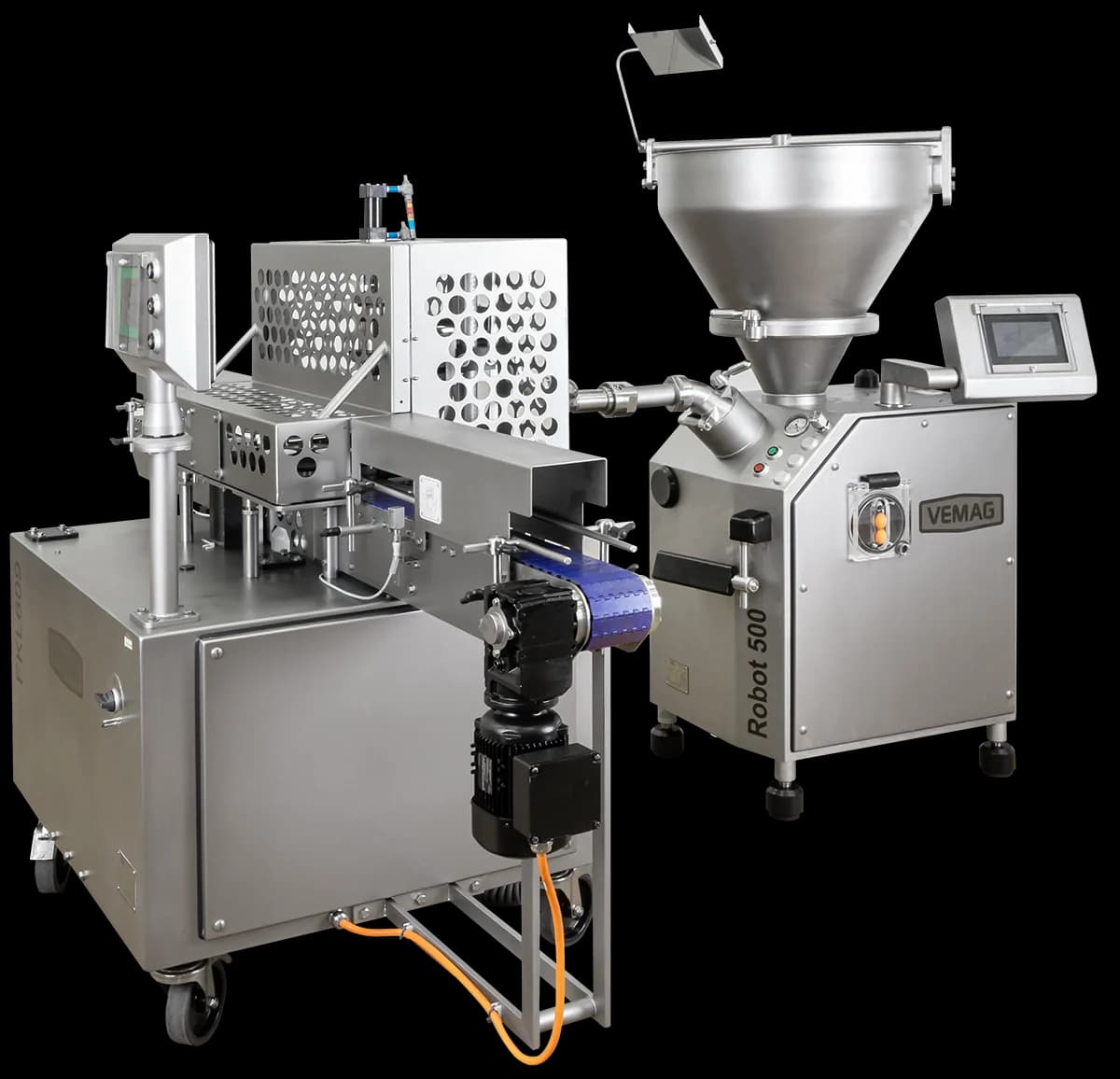
Purées, sauces, relishes and dips go into containers rather than trays. The FKL609 container filling system mounts on a VEMAG vacuum filler and fills cans, jars and cups up to 100 mm across and 140 mm tall, or 220 mm on request. Its filling head closes with an inner pipe or a piston, which keeps each fill clean. Closing the containers happens afterwards, on equipment outside our catalogue.
- FKL609Container Filling System
03Preparation and checks
Before the pack: blending, portioning, forming and checking produce
Fresh-cut fruit often moves straight from the cutting room to the sealer. Value-added produce passes through more steps first. These are the steps in our catalogue that can sit between your preparation area and the pack.
Step 1Bowl cutters & emulsifiers
Chopping and blending into a mass
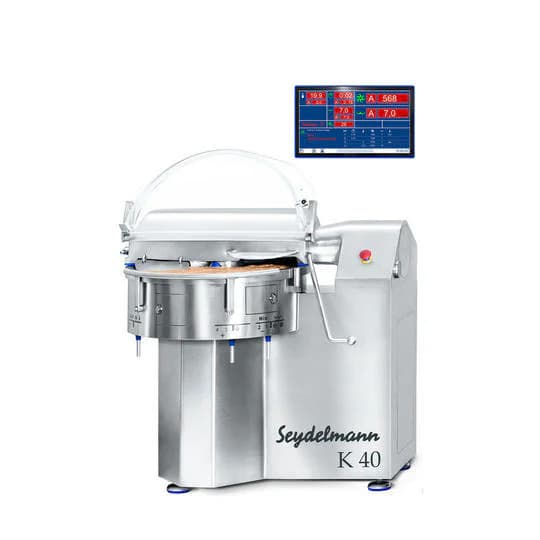
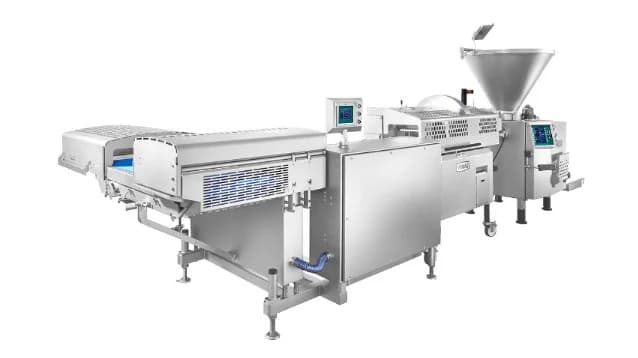
A bowl cutter reduces and mixes a batch in one bowl. The K40's description lists vegetables and fruits among the materials it chops, mixes and emulsifies, alongside meat, fish and plant-based proteins, at temperatures from −12 °C up to 85 °C. Its bowl holds 40 litres, and our bowl cutter guide compares it with the larger models.
- K40Bowl Cutter
Step 2Vacuum fillers
Portioning by weight
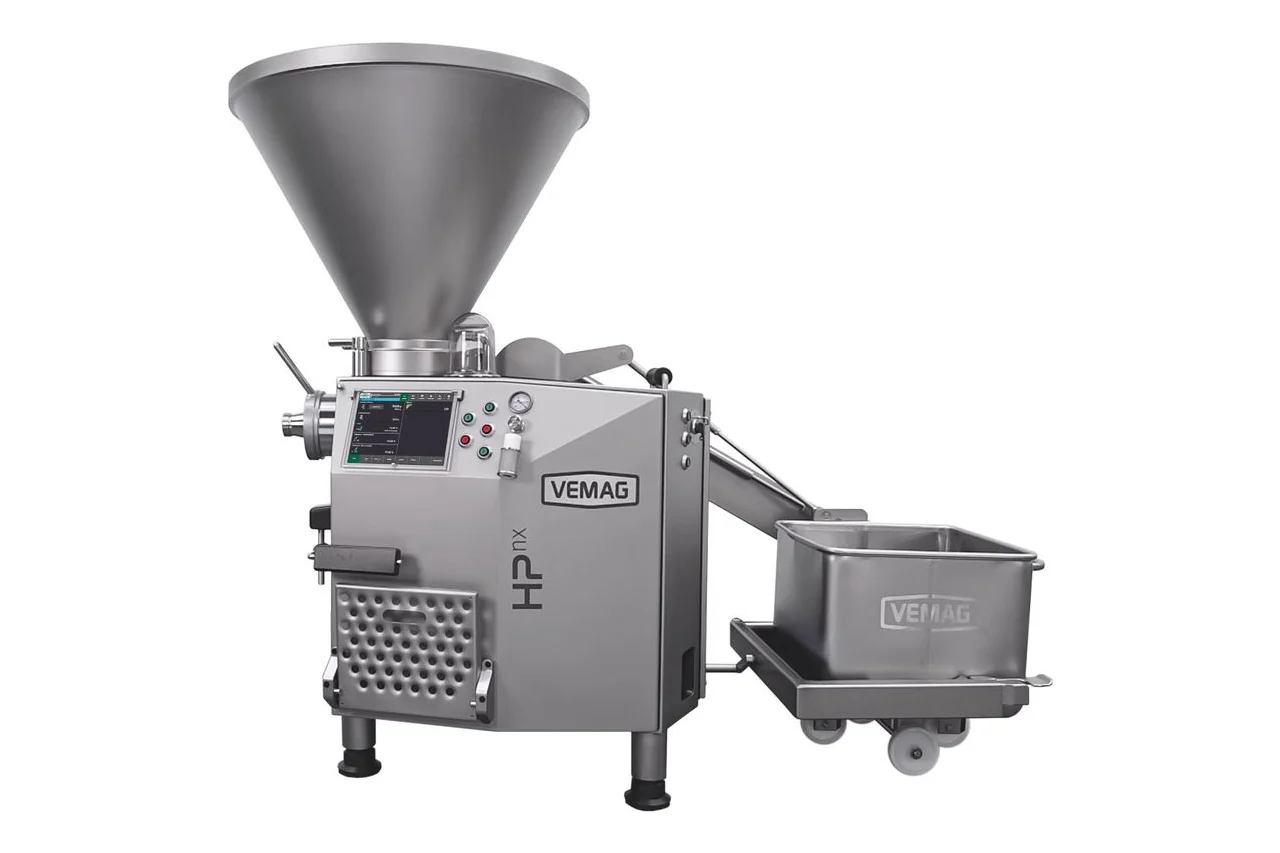
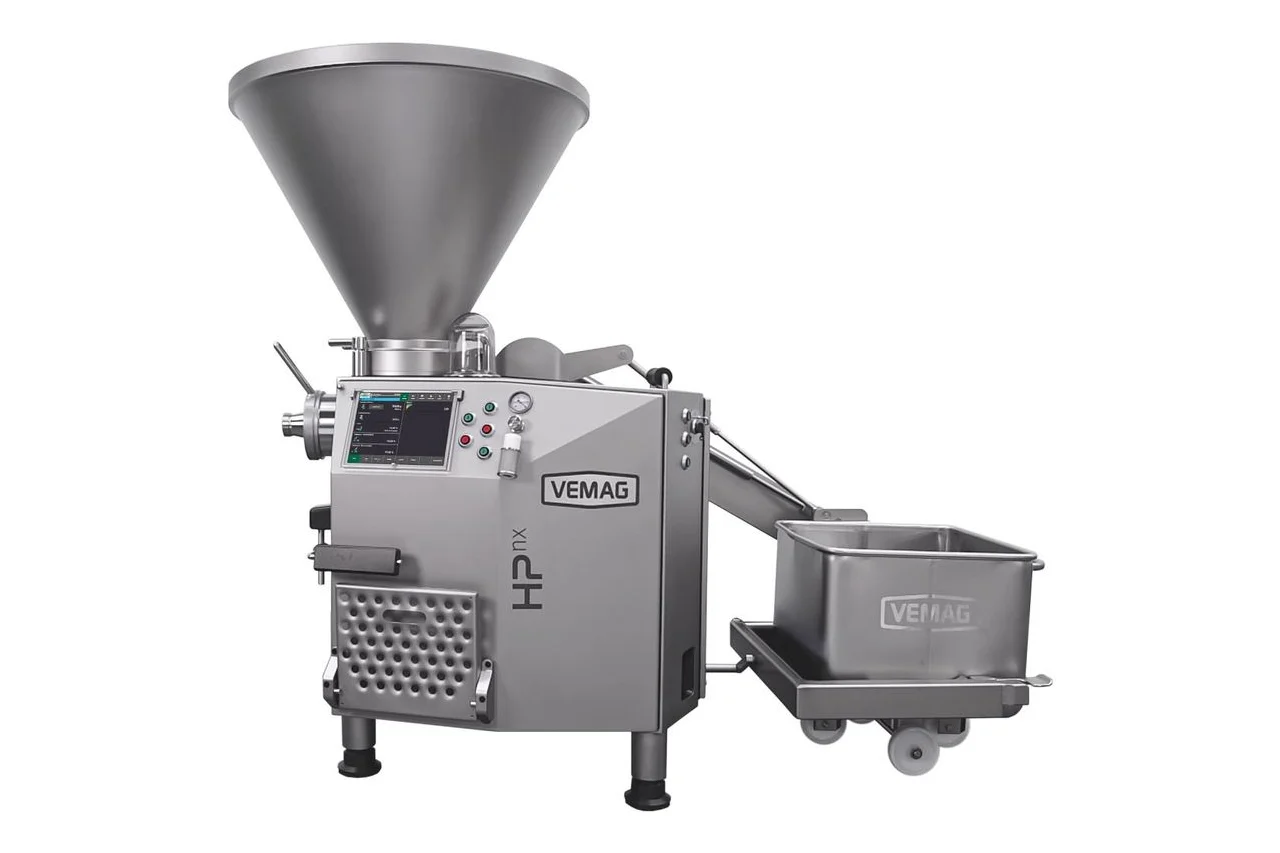
A vacuum filler takes a pumpable mass from its hopper and divides it into portions by weight. The HP10NX and HP30NX are described for gentle, weight-accurate portioning of a wide variety of products and raw materials, with portion weights set steplessly from 1 g up to 99,000 g. The HP30NX has a 350-litre hopper, against 250 litres on the HP10NX. Whether your purée, filling or vegetable mass runs well through a vacuum filler depends on its texture and the size of any pieces, which a trial settles faster than a data sheet.
Step 3Portioning & forming machines
Shaping vegetable balls and bites
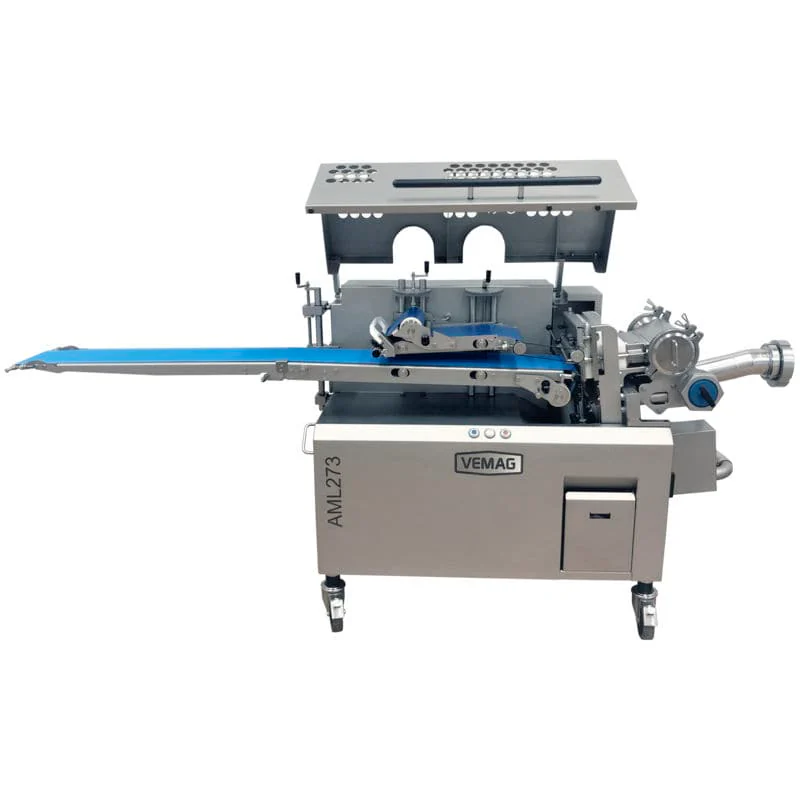
A blended vegetable mass can be shaped before it is packed. The AML273 lists vegetable balls and croquettes among its products, in ball, cylinder, ellipse and droplet shapes, and sets them straight onto trays so nobody has to place them by hand.
- AML273Forming Machine
Step 4Inspection & weight control
Checking for foreign bodies
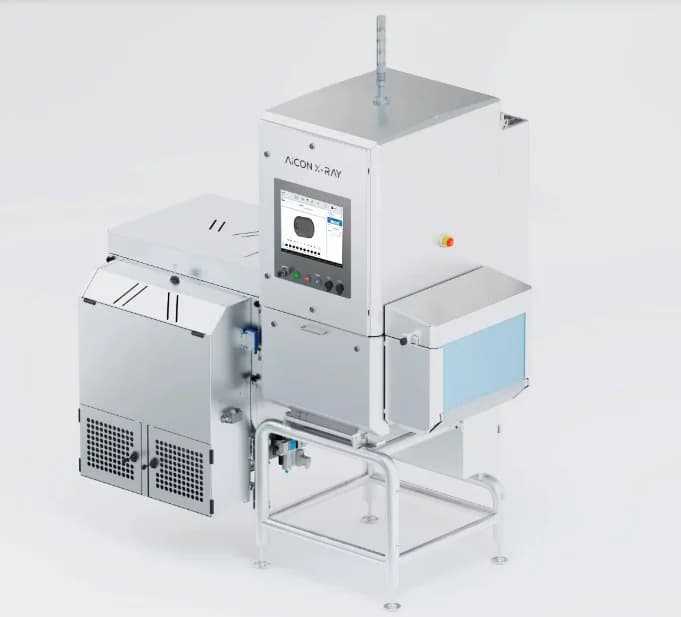
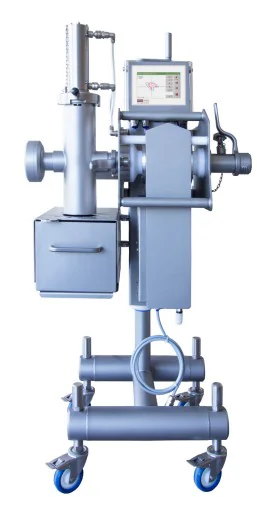
Stones, metal and other foreign bodies can travel in with harvested produce. The Aicon XR-500 HD is an X-ray inspection system for the quality control of unpacked products, with a published speed of 150 m/min. Where a produce mass is pumped through a filler, the Pulsotronic M-Pulse2pro Inflex 65 is a mobile, height-adjustable metal detector built for use with filling machines, with linking gear for automatic reject systems available as an option.
- Aicon XR-500 HDX-Ray System
- M-Pulse2pro Inflex 65Metal Detector
Step 5Conveyors & line equipment
Getting product into the pack
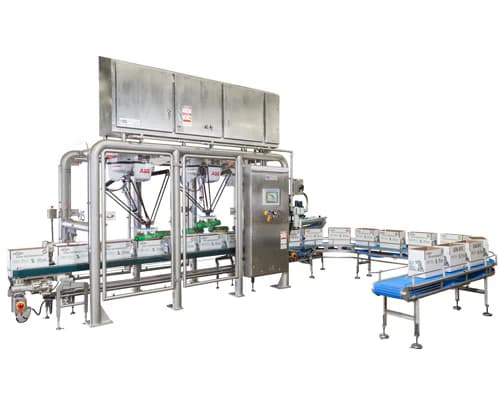
Placing cut produce into trays by hand is slow and needs a lot of people. The MLR380 spreads product from one lane across several, positions it for the next machine and changes product by switching programs. JLS builds hygienic, vision-guided robots that load trays, thermoformed packs and vacuum skin packs, and handles carton loading and case packing at the end of the line.
- MLR380Multi-Lane Loader
- JLS Robotic SystemsRobotic Packaging System
04Fruit
Fruit packing equipment: what changes when the produce is fruit
Much of the fruit packing equipment sold in Australia is built for orchards and packhouses: graders, sizers and punnet or carton packers for whole fruit. Those machines are not in our catalogue, so for whole apples, citrus, stone fruit or berries going into cartons and punnets, talk to a packhouse equipment specialist.
Cut fruit and fruit-based products are another matter, and the formats above apply to them. A few things about fruit shape the choice of machine and pack.
- Cut fruit browns and weeps. Apple, pear and banana darken once the flesh meets air, and melon, pineapple and citrus pieces release juice that collects in the pack. Treatment happens before packing, and juice is usually handled through the tray design or an absorbent pad, so tell us what you use and the tooling can be matched to it.
- Soft fruit crushes. Berries, cut mango and stone fruit pieces will not stand a full vacuum, so they are lidded in a tray or a formed pack, with or without a protective gas.
- Pack depth limits what fits. The Rotarius takes trays up to 100 mm deep, the Optimus SE/SEL is built for a maximum pack depth of 60 or 110 mm, and the Primus packs up to 135 mm deep.
- Purées and fillings are pumpable, which makes them vacuum filler work: a vacuum filler fitted with the FKL609 is the catalogue route into cups and jars. Viscosity and the size of any fruit pieces decide what runs well, so plan a trial.
- Cut fruit keeps respiring after it is sealed. The film and any gas mix are matched to the fruit with your film supplier and checked in your own shelf-life testing; we do not publish shelf-life figures.
05Illustrations
How the pieces could fit together for three produce products
Each column below is an example built from machine types we list. None describes a line we have installed, and the machines it mentions have not been matched to each other or proven on a particular fruit or vegetable. Your product, pack, volumes and existing equipment decide the real set-up.
| Row | Fresh-cut fruit cups and trays | Fruit or vegetable purées, sauces and dips | Firm cooked produce such as potato or beetroot |
|---|---|---|---|
| Before packing | Washed, peeled, cut and treated against browning on your own equipment | Cooked where needed, then chopped and blended, for example in a bowl cutter | Washed, cooked and chilled on your own equipment |
| Portioning | By hand or with equipment already on your line | A vacuum filler dividing the mass by weight | Into formed pockets or bags, by hand or with loading equipment |
| Checks | X-ray of the unpacked product | Metal detector working with the filler | X-ray of the unpacked product |
| Pack | Lidded tray or tub, often under a protective gas | Cups or jars filled by the FKL609, then closed on other equipment | Vacuum bag, or a vacuum pack formed on a thermoformer |
If other suppliers' equipment already sits on your line, tell us what it is and how product moves between the machines, so anything we supply fits around it. Our page on planning a processing line explains how we work through a layout with you.
06Buying
Questions to settle before you choose a produce packing machine
A handful of answers narrows the field faster than a catalogue does.
- What leaves the line: a lidded tray or tub, a formed pack, a vacuum bag or a filled cup. That one answer decides between a tray sealer, a thermoformer or vacuum packer and a container filler.
- How many pack sizes: long runs of one size favour a thermoformer, while several tray shapes on one line favour a tray sealer with quick tool changes. The Linus 1100 stores 80 recipes for switching between products.
- Floor space: the Rotarius needs 1.6 m², the Maximus RE fits its control cabinet inside the frame, and Primus MP frames run from 5 m to 30 m.
- Tray material: the Linus 1100 seals PP, PE, PET, PS and aluminium trays, which matters if you plan to change tray material.
- Gas or no gas: several tray sealers and thermoformers in the catalogue list MAP among their packaging types. Whether your produce gains from it, and with which mix, is settled with your film supplier.
- Cleaning: produce areas are washed down often, so look at how each machine is built for it. The K40, for example, has sloped surfaces that let cleaning water drain away completely.
Send these answers with your enquiry, along with a photo of the pack you use now or plan to use.
07Support
Trials, installation and parts across Australia and New Zealand
We are the official distributor of Variovac, Ross, Supervac and VEMAG for Australia & New Zealand, and Aicon, Pulsotronic and JLS equipment is available in both countries through us. Service and parts for the machines we supply are run from our offices in Redland Bay and Auckland.
01
Customer Centre
Bring your own fruit or vegetable product and run it on our machines under real production conditions before you decide.
02
Service
Installation, maintenance, repairs and operator training from our technicians, booked through your nearest office.
03
Spare parts
Order genuine parts from stock, with help matching the right part to your machine.
08FAQ
Produce packing machine questions
Do you sell fruit graders, sizers or punnet fillers?
No. Packhouse equipment for whole fruit and vegetables, such as graders, sizers, punnet and clamshell fillers and net baggers, is not in our catalogue. We supply equipment for packing cut, cooked and processed produce: tray sealers, thermoformers, vacuum packaging, container filling, portioning, inspection and loading.
Can cut fruit be packed under a modified atmosphere?
Several machines in our catalogue list MAP among their packaging types, including the Rotarius and IN 1100 tray sealers and the Maximus RE and Primus thermoformers. Cut fruit keeps respiring and some varieties brown quickly, so the gas mix, the film and any anti-browning treatment are worked out with your film supplier and proven in your own shelf-life testing. We do not publish shelf-life figures.
Which tray sealer suits a small produce business?
The Ross X450 is a compact, portable semi-automatic tray sealer for small processors, stores and food lab settings. The Variovac Rotarius is semi-automatic too, needs little storage space and is described as suited to small companies. Our tray sealers page lists both, with the automatic models.
Can a vacuum filler portion fruit purée or fruit fillings?
Vacuum fillers portion pumpable masses by weight, and the HP10NX and HP30NX are described for a wide variety of products and raw materials. Whether a particular purée, compote or filling runs cleanly depends on its viscosity and the size of any pieces in it, so trial it at our Customer Centre before deciding.
When does a thermoformer make sense for produce?
When you run long batches of one pack size, because it forms the pockets from film on the machine instead of using bought-in trays. If you pack many tray shapes, or in short runs, a tray sealer is usually simpler. The thermoformers in our catalogue run from the space-saving Maximus RE to the Primus MP.
Can you supply a whole produce line, from cutting to carton?
Not on our own. Washing, peeling, labelling and closing jars and cups sit outside our catalogue. We can supply the packing, portioning, inspection and loading steps described on this page and plan how they connect with the equipment you already have or buy elsewhere.
Do you supply produce packing machines in New Zealand?
Yes. The Variovac, Ross, Supervac and VEMAG equipment on this page is distributed by us in Australia and New Zealand, and we have an office in Auckland as well as Redland Bay.
What does a produce packing machine cost?
We do not publish prices, because they depend on the model, its tooling and options, and what it connects to. Send us the product, the pack and the volumes you expect, and our sales team will prepare a quotation.