
Pet treat forming machines
Choose pet treat forming machines around the shape you want, the mixture you will feed and the way each portion leaves the former. Vemag Australia helps producers specify forming equipment for pet-food snacks. Compare nozzle-forming, round-product and tray-loading options, then assess the proposed setup with your recipe and intended handling process.
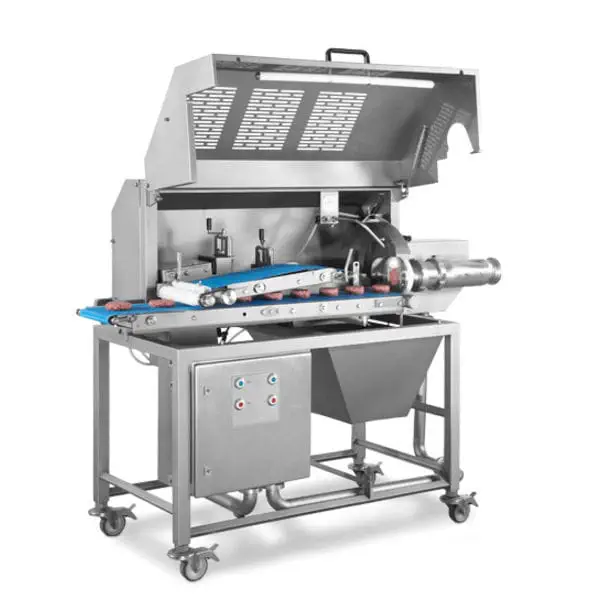
Make the treat shape a measurable specification
A drawing is more useful than a product name alone. A ball, a short cylinder and a flattened snack can have the same weight while needing different forming and handling arrangements. Show the portion’s length, width, height or diameter, and identify which dimensions matter most to the finished appearance.
Specify the portion at the forming stage separately from the treat you sell. If it is cooked, dried, cooled or otherwise processed afterwards, provide both the required fresh shape and the finished-product target. Agree how the recipe and subsequent process will be assessed rather than assuming that a former alone fixes the final dimensions.
This page compares pet treat forming machines by shape creation and portion placement. For an extrusion or filled-product project involving inner and outer mixtures, see pet food extruders and coextrusion. The pet food equipment catalogue covers the wider preparation and packaging stages.
Compare FM250, AML273 and BC237 forming roles
The FM250 uses interchangeable forming nozzles to vary product shape. VEMAG’s current technical page explicitly includes formed pet-food products and describes the knife cutting at the forming nozzle. Discuss the required profile, size and discharge arrangement for your treat.
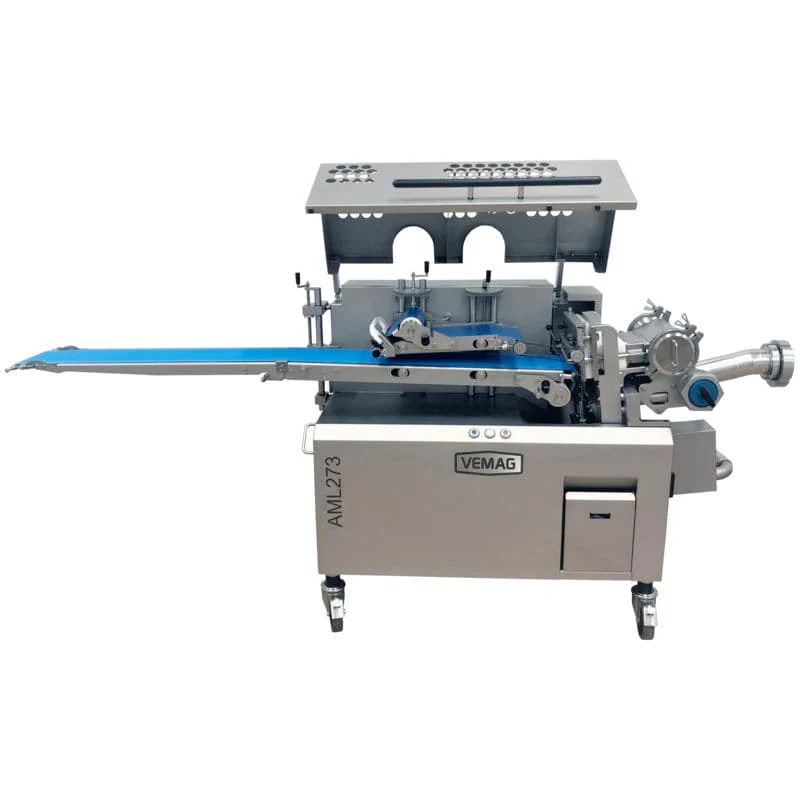
The AML273 combines forming with product placement. VEMAG’s pet-food snacks guidance describes round and long snacks and automatic tray loading. Consider this role when where the portion lands is as important as its shape.
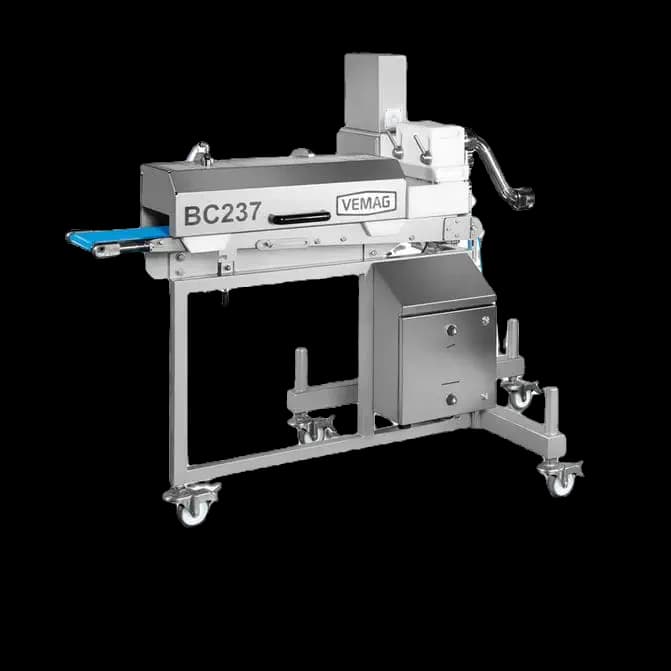
The BC237 is identified by VEMAG for round snacks. The local catalogue describes it as an attachment for unfilled products. Confirm the attachment version, suitable feeding machine and desired portion geometry; a round-snack listing does not validate every recipe or a filled-product configuration.
Choose the former around shape and placement
Compare the selected machine and its feeding and receiving equipment as one process. Identify the proposed tooling, cutting components, controls and product transfer in the quotation. The options above perform different jobs and are not presented as a matched line.
A defined nozzle profile
Discuss the FM250 when the product outline and thickness need to be specified at the forming outlet. Include the separation and discharge requirements.
Shaping and loading into trays
Discuss the AML273 when the formed snack must also be positioned on a receiving tray. Send the tray and required portion pattern.
Round, unfilled snacks
Discuss the BC237 with the mixture, target diameter and portion weight. Confirm the exact filler and attachment configuration.
Check the mixture before deciding on tooling
Describe the recipe at the point it reaches the forming equipment. Include preparation method, particle size, temperature and the proportions of ingredients that affect its consistency. State whether the product contains pieces or fibres whose appearance should be retained.
Explain how the prepared mixture will reach the feeding machine, the size of a normal batch and how long the mixture may wait before forming. Include the recipes you switch between during a shift. A forming trial should represent those production conditions rather than only one freshly prepared batch.
- Geometry: a drawing with the target profile, length, thickness or diameter and acceptable variation.
- Weight: the required fresh portion weight and how it will be checked during a trial.
- Mixture: recipe, preparation, particle sizes, working temperature and any inclusions.
- Appearance: surfaces, edges and ingredient distribution that need to be retained.
- Product changes: the range of recipes and shapes, with the changeover pattern you expect to run.
Plan the landing position and the next operation
Define the receiving surface before ordering the forming setup. For trays, provide their overall dimensions, usable area, edge height and the required pattern of portions. For a belt, include its width, transfer height and required spacing. Show whether portions should touch, remain separate or arrive in rows.
Check the treat as it leaves the former and again at the next handling step. Agree what counts as an acceptable landing position and which visible changes, marks or deformation would be rejected. Include any movement between the former and a subsequent dryer, cooker or packaging operation in the assessment.
Provide the required output as saleable portions per hour or shift, alongside the available operators, batch sizes and cleaning pattern. Machine maximum rates for another product do not establish the working output for your treat or the capacity of the receiving process.
Build the trial around the treat you intend to sell
Discuss a Customer Centre trial using your own mixture and the proposed receiving tray or belt arrangement. Confirm the machines available and agree the trial scope with the team before making arrangements.
Prepare a short acceptance sheet covering fresh portion weight and geometry, appearance, release from the outlet and landing position. If the final treat is dried or cooked, agree how representative portions will be assessed after that process as well.
Record the recipe condition, feeding machine, former, tooling, settings and receiving arrangement used. Where practical within the agreed trial, include a recipe or shape change. Ask which results are confirmed and what still needs engineering or process review.
- Measure repeated portions against the agreed fresh-weight and dimensional requirements.
- Observe outlet release, cut-off and the surface of the formed product.
- Check spacing and placement against the tray or belt pattern.
- Compare formed portions with the intended finished treat after the agreed downstream process.
- Review cleaning access, product changes and the handling work around the machine.
Request a pet treat forming quotation
Send the recipe brief, treat drawing, target weight, receiving arrangement and output requirement. Include the site location, available floor space and any existing filler, conveyor or tray-handling equipment you want to retain.
Ask the quotation to identify the former, feeding arrangement, tooling, controls and discharge scope. Confirm installation, training and support requirements for your site, with any trial work and unresolved product requirements listed alongside the proposed equipment.
Questions about pet treat forming machines
Which forming machines have documented pet-food applications?
VEMAG’s current manufacturer guidance names the FM250, AML273 and BC237 for pet-food snacks. Their roles differ: nozzle forming, forming with tray placement, and round-snack forming. The recipe, required shape and complete feeding arrangement still need assessment.
How should I specify the treat shape?
Provide a drawing with fresh portion dimensions and weight, plus an example or photograph of the finished treat. Identify the dimensional variation and appearance you need, and describe any cooking or drying after forming.
Can the machine place treats directly into trays?
The AML273 is documented for forming products and loading them into trays. Provide your tray dimensions, usable area and portion pattern so the exact machine and handling arrangement can be assessed.
Are filled treats the same forming task as unfilled snacks?
A filled treat introduces inner and outer mixtures and a required filling position or closure. Do not assume an unfilled-product attachment performs that task. Our pet food extruders guide explains the information to prepare for coextrusion enquiries.
Will the formed treat keep the same dimensions after drying?
The forming setup defines the portion at its outlet. The finished product must also be assessed with your recipe and downstream process. Agree trial checks for both the freshly formed portion and the finished treat.
What should we check before committing to an output target?
Assess the actual recipe, portion size, feed arrangement, product release and receiving process. Include normal product changes, handling and cleaning in the production plan. Confirm the working output for the specified system rather than relying on a maximum rate for a different product.
Contact
Discuss your pet treat forming project
Send your mixture, treat drawing and receiving-tray or belt details. Discuss the forming approach, product trials and the equipment scope to include in your quotation.
- Australia(07) 3829 3868
- New Zealand+64 9 415 0137
- Salessales@vemag.com.au