
Ready meal filling machines
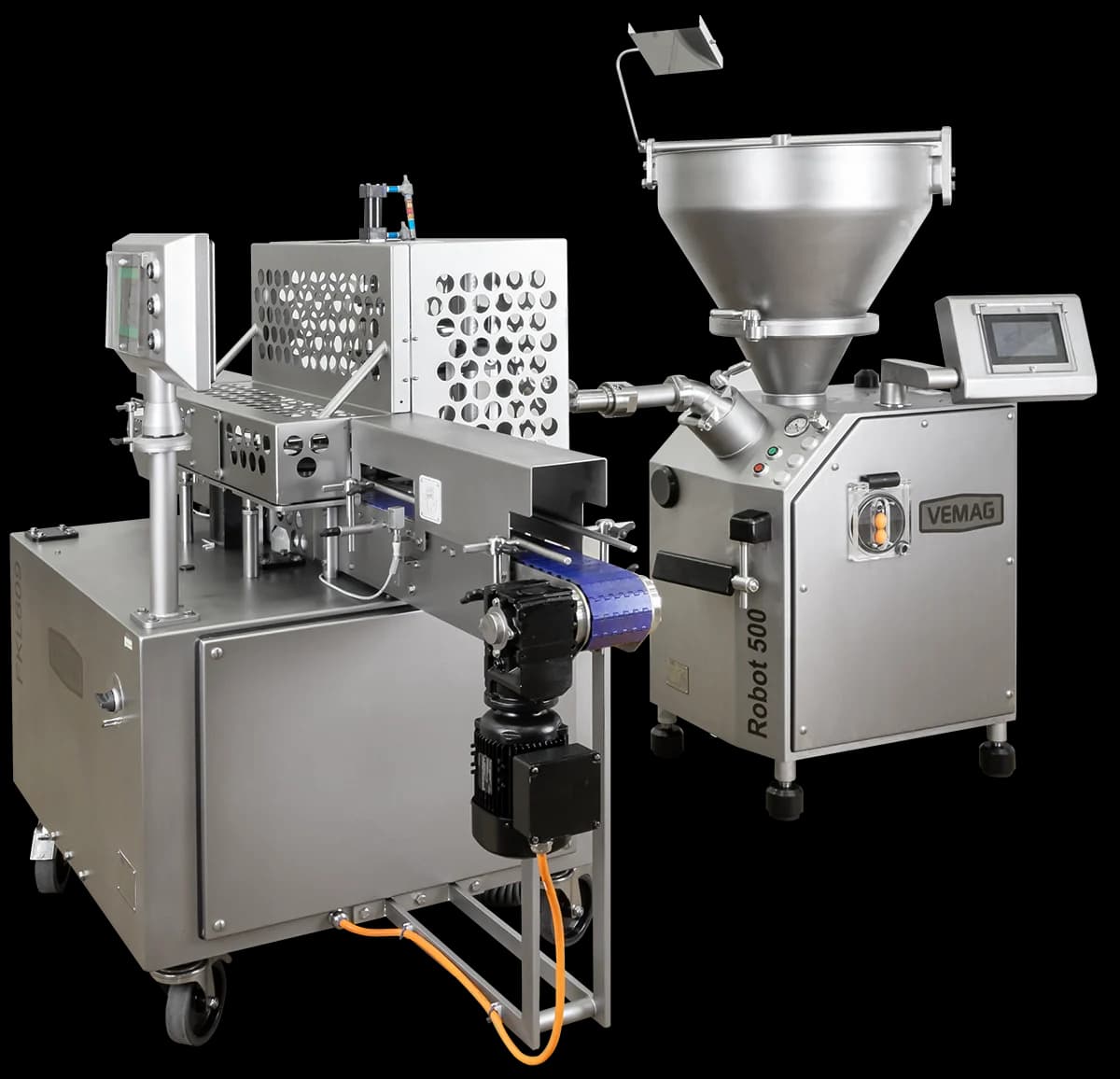
Ready meal filling machines need to suit the food at the filling point, the portion you want and the container opening. For prepared-food producers, Vemag Australia’s catalogue includes the FKL609 container filling system for cans, jars and cups, paired with a suitable VEMAG vacuum filler. Its listed applications include prepared salads; other recipes need assessment with the team.
Define the filling step in your ready meal process
Start with the component being filled. A prepared salad placed in a cup presents a different handling task from assembling several separate ingredients in a compartmented meal tray. Tell us whether you need one measured component in a container, or several filling and loading stages around a complete meal.
This guide focuses on container filling with the FKL609 and the equipment that supplies it with product. Its documented container formats are cans, jars and cups. A tray-filling enquiry needs its own assessment of the tray geometry, required positions and available outlet arrangement; a cup-filling specification does not establish suitability for every meal tray.
The prepared food industry catalogue covers other stages, including forming, cutting and packaging. For the range of filling heads and tables used across food production, see depositors and container fillers.
Specify the container filler and its feeding machine
The FKL609 fills cans, jars and cups. Its listing states that it fits all VEMAG vacuum fillers and uses a filling head with an inner pipe closure or a piston. The catalogue associates it with prepared salads, as well as other applications. Recipe behaviour, the required head and the final configuration still need to be agreed for your product.
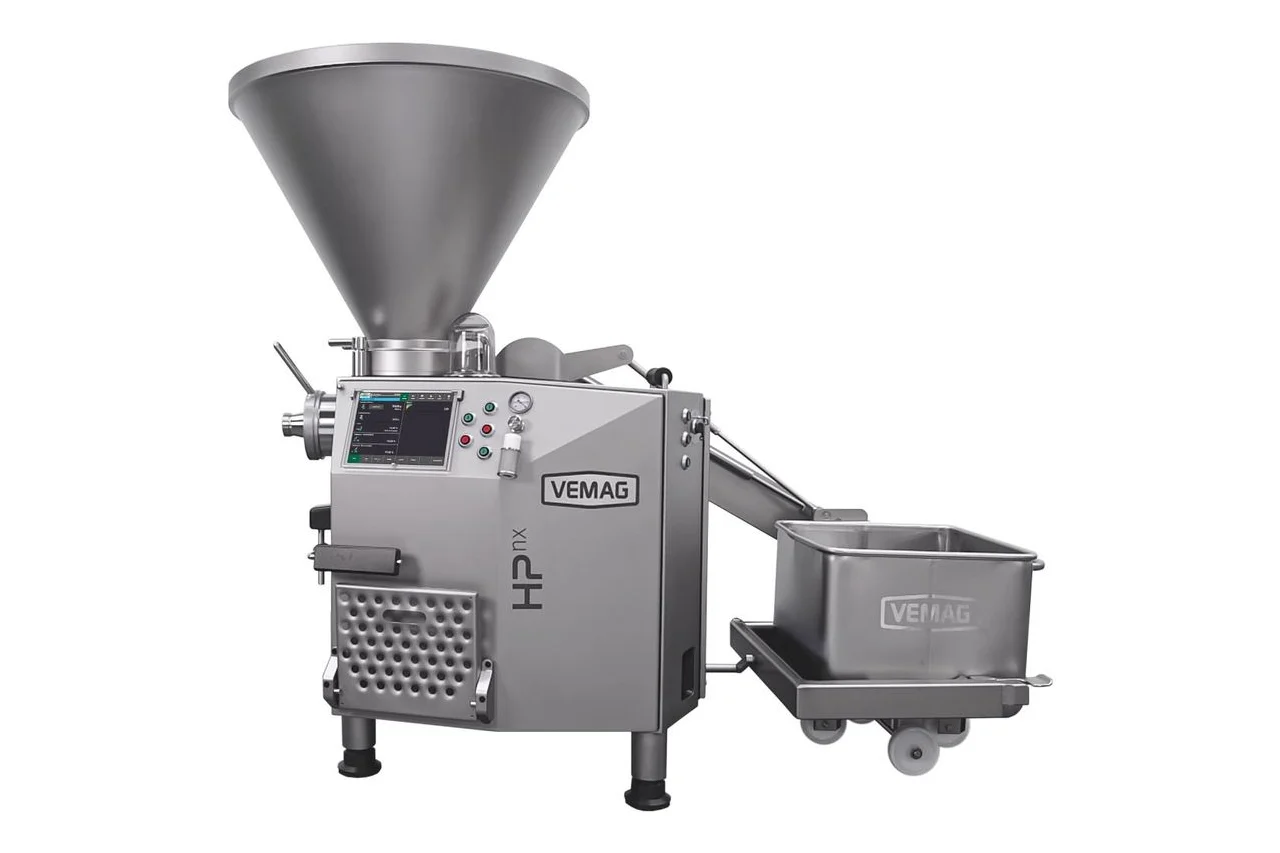
The HP20NX is one vacuum filler option listed for prepared food. It meters the mass and supplies the filling arrangement; the FKL609 provides the container-filling function. The HP20NX has a 350-litre hopper in its published data. Other VEMAG fillers are available, so choose the feeding machine around the process rather than treating this example as a fixed package.
Discuss the complete setup: filler, feeding element, filling head, product supply and container handling. A machine’s maximum filling capacity does not by itself establish containers per minute for your recipe.
Check the container envelope before the output target
The FKL609 listing gives a container diameter of 100 mm and a height up to 140 mm, with heights up to 220 mm on request. Send your actual container or a dimensioned drawing so the opening, body and height can be checked against the proposed arrangement. Do not read one published diameter as a universal range of container sizes.
Include the target fill quantity and the space required above the food. Show the rim or other area that must remain clear for the next closing operation. If the container has a liner, an unusual opening or more than one compartment, identify that detail at the start.
For a tray rather than a cup, jar or can, provide its complete layout and the sequence of ingredients. Ask which parts of the filling requirement can be supported before planning the line around this container filler.
- Container: material, opening, overall dimensions and any features that affect positioning under the outlet.
- Portion: required fill weight, acceptable variation and the intended level or presentation in the container.
- Recipe: ingredients, particle sizes, consistency and temperature as the food reaches the filling head.
- Presentation: areas to keep clear, required spacing and how the container moves to sealing or the next process.
Assess the recipe at its normal filling condition
Supply the prepared recipe rather than just the finished meal name. Explain how the ingredients are mixed, how long the product may wait before filling and its condition at the outlet. A change in preparation or temperature can change the mixture presented to the machine, so describe the normal production window and the changes you expect between batches.
For products with pieces, define the particle dimensions and the presentation you need to retain. Ask the team to assess feeding, passage through the proposed filling head and release into the container. The FKL609’s prepared-salad application is a starting point for that discussion, not validation of every salad or ready meal recipe.
If the meal includes separately placed components, show them separately on the process plan. A container filler and a multi-lane product distributor perform different jobs; neither description alone establishes a complete multi-component meal assembly line.
Plan product supply, container handling and sealing
Map the process immediately before and after filling. Identify how product reaches the vacuum filler, how an empty container is presented and how a filled container leaves. Include the existing equipment, transfer heights, access for operators and space for cleaning and product changes.
Closing the pack is a separate operation from putting food into it. For pre-made trays, compare the tray sealing equipment catalogue. The selected filler and sealer must be assessed around the actual container and the transfer between them; listing both machines does not confirm a matched line.
For a wider project, our guide to automated food processing lines explains the handoffs to specify. Keep the required output, container changes and cleaning time in the same plan so a quoted configuration reflects the work it must do.
Agree the checks for a filling trial
Discuss a Customer Centre trial with your recipe and intended containers. Confirm the equipment available and agree what the trial needs to demonstrate before making arrangements. Include the version of the recipe and its filling temperature so the result can be related to your production process.
Check repeated fill weights against your requirement, the presentation of pieces, the release at the outlet and the condition of the container rim. Observe how containers enter and leave the filling position. Include the recipe and container changes that matter to a normal shift.
Record the machine configuration, filling head and results. Ask which requirements have been demonstrated and which remain to be resolved before the final quotation.
Request a ready meal filling quotation
Send your recipe description, container dimensions, target fill weight and required saleable output. Add the site location, available space and details of the equipment before and after filling. Explain whether this is a replacement for hand filling, a new container size or part of a larger meal production project.
Ask the quotation to identify the feeding machine, container filler, filling head, handling arrangements and any trial work. Confirm the scope of installation, training and support with the team, together with the recipe and container requirements used to specify the equipment.
Questions about ready meal filling machines
Which catalogue system is listed for prepared-food container filling?
The FKL609 fills cans, jars and cups and is listed for prepared salads. It fits VEMAG vacuum fillers. The filler supplies the mass and the container-filling arrangement places the portion into the container; specify the complete configuration with the team.
Can the FKL609 fill any ready meal tray?
Its listing names cans, jars and cups, with a published container diameter of 100 mm and heights up to 140 mm, or up to 220 mm on request. It does not establish suitability for all meal trays. Send the tray drawing, recipe and filling sequence for assessment.
Does this equipment assemble a complete meal from separate ingredients?
The documented system fills product into a container. A meal with separately placed components may require several preparation, dosing and handling operations. Define each component and its position so the team can assess the supported scope.
Which vacuum filler should feed the container filler?
The FKL609 listing states it fits all VEMAG vacuum fillers. The HP20NX shown here is one model tagged for prepared food, not a mandatory choice. Compare the vacuum filler range and confirm the feeding element, product supply and filling arrangement for your project.
How fast will the system fill my recipe?
Define your required saleable output and assess it with the actual recipe, fill quantity, container and handling arrangement. A vacuum filler’s maximum mass flow or a container filler’s published example does not establish the working rate for a different ready meal product.
Can I trial the filling arrangement with my product?
Discuss a trial at the Customer Centre. Supply the prepared recipe, filling conditions and intended containers so the team can confirm the trial scope and the equipment to assess.
Contact
Discuss your ready meal filling process
Send your recipe, container and fill-weight requirements. Discuss the feeding and filling arrangement, a product trial and the scope to include in your quotation.
- Australia(07) 3829 3868
- New Zealand+64 9 415 0137
- Salessales@vemag.com.au