
Multi-lane tray filling systems
Plan multi-lane tray filling systems around the food and the pack together. Vemag Australia can discuss the feeding, flow distribution, filling heads and container movement needed for your tray format.
Specify the filling arrangement as a complete system
VEMAG documents a Filling Head Line that fills viscous masses into cups, trays and thermoformed packs in multiple lanes. Its main elements are a vacuum filler, a filling flow divider and product-specific filling heads. The illustrated filling heads lower into the containers during filling.
A useful enquiry identifies what must happen at every outlet and how the trays arrive there. Draw the pack layout, name the food at each filling position and show the movement between filling and sealing. The project assessment can then address the complete arrangement.
Feed and portion
The vacuum filler supplies the product to the filling arrangement. Specify the mixture, portion weight and overall filling demand when discussing the feeding machine.
Distribute the product flow
The filling flow divider supplies multiple lanes. The layout must account for which outlets fill which positions, including any second product or separate filling station.
Fill and transfer the tray
Filling heads and container movement must be assessed together around the pack. Include the filling position, head movement and handoff to the packaging equipment in the quotation brief.
Turn the tray drawing into a lane and station plan
Mark the direction of travel on your pack drawing. Identify the lanes across the line and the rows or compartments reached during each filling sequence. Include the distance between filling positions and the space available above and beside the pack.
State whether you use separate pre-made trays or cavities formed in a packaging web. Include the tray or cavity dimensions, depth, flange area and required fill position. Show the usable area for food and the sealing surface that must remain clear.
For a pack with more than one product, label every component and its target quantity. Explain whether products are mixed before filling, placed in separate compartments or added at different stations. Include the recipes and required filling sequence for assessment.
- Tray or cavity drawing with internal dimensions and sealing area.
- Direction of travel, lane spacing and rows or compartments to fill.
- Product and portion quantity at each filling position.
- Current packaging-machine format and the formats you need to change between.
Choose the filling approach around the actual mixture
Provide the food in the condition it reaches the hopper: recipe, filling temperature, holding time and preparation method. Describe its consistency and the size and proportion of inclusions. List all recipes that the system is expected to run.
Define the filling pattern you want inside the pack. Tell the team how closely the product can approach the edges, how the surface should look and which inclusions must retain their appearance. Discuss the outlet, head movement and product separation against those requirements.
VEMAG’s published multi-lane filling guidance covers viscous masses. Its customised-solution examples also describe pet food filled into thermoformed packs through multiple filling stations. These manufacturer applications are starting points for discussing your product and pack; they do not confirm the result for a different recipe or installation.
For the wider container-filling decision, our ready meal filling machines guide covers recipe and container checks. This page develops the additional lane, station and packaging-interface requirements.
A catalogue vacuum filler is one component to assess
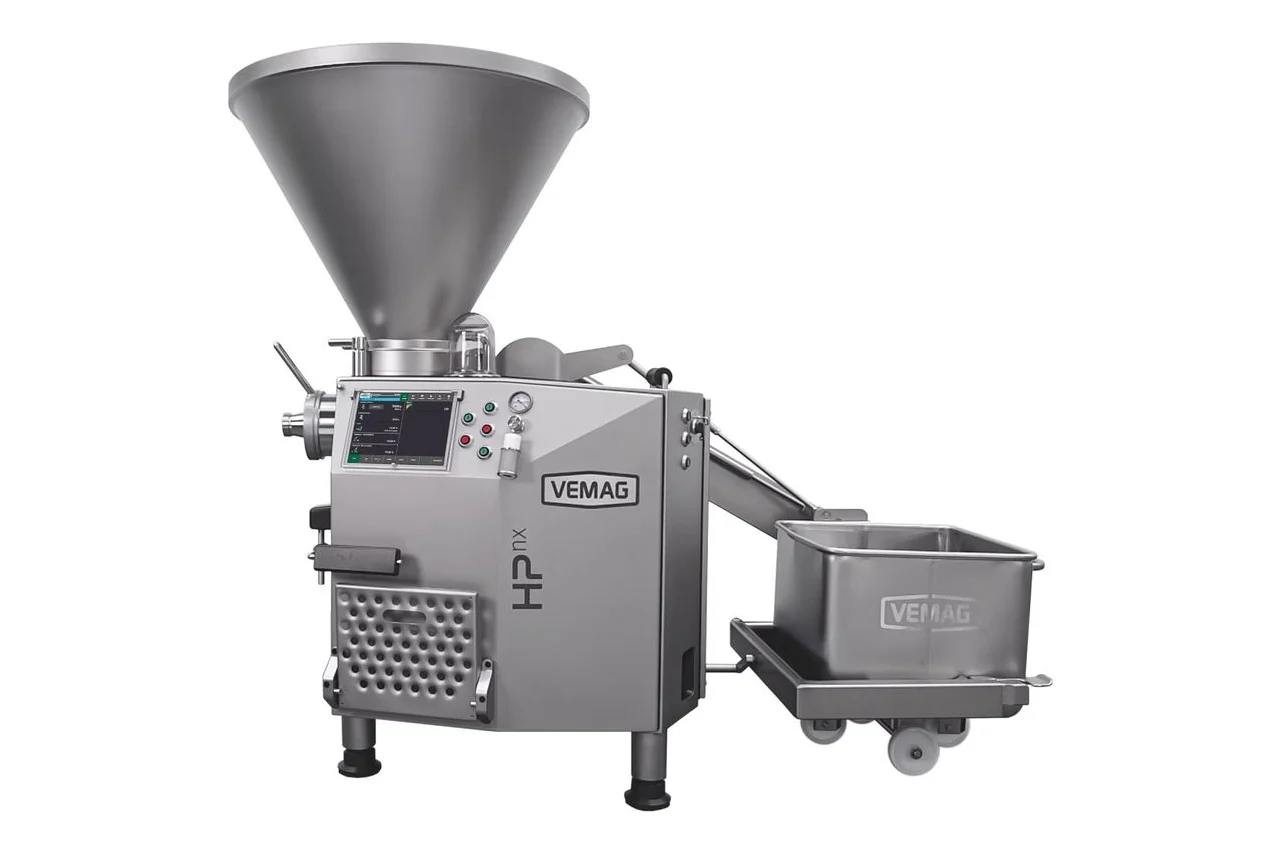
The HP10NX is a vacuum filler in our catalogue. Its listing provides the published feeding, portioning and machine data to discuss with Vemag Australia. The filling-head line still requires a project-specific assessment of the filler, flow divider, heads, controls and container handling.
Ask the team to identify the filler and feeding element proposed for your complete system. A filler’s published maximum capacity does not establish the working output of each filling head or the finished packaging line.
Our catalogue also lists multi-lane handling and portioning equipment. The MLR380 distributes already portioned products across lanes; its listing does not establish dosing viscous food through filling heads. The 4-Up Portioning System is listed with an integrated discharge conveyor, which alone does not specify a tray-filling-head arrangement.
Agree the interfaces with the packaging line
For existing equipment, provide the packaging-machine make, model, format drawings and available controls information. Record transfer heights, tray pitch, direction of travel and the space available for the filling system. Include photographs of the line and access routes.
Discuss what tells the filler that containers are correctly positioned, what happens when a tray is missing and how filling stops or resumes with the packaging machine. Ask which signals and controls are included, and who is responsible for their implementation and testing.
For pre-made trays, include empty-tray presentation and the transfer of filled trays to the tray sealing equipment. For a thermoformer, include the web format and filling window in the assessment. Confirm the proposed equipment interfaces rather than assuming that a shared lane count establishes compatibility.
- Product supply and refill arrangements at the vacuum filler.
- Container presentation, indexing and transfer responsibilities.
- Required production sequence, stop conditions and restart behaviour.
- Access for operators, cleaning and changing product-contact parts.
- Any pack-format changes and the corresponding tooling or setting changes.
Check every lane during the agreed trial
Discuss a Customer Centre trial with the team. Agree which parts of the proposed system can be represented, the machines available and the product and pack formats to use. Record any interfaces that will need later engineering or site testing.
Identify each outlet in the trial records. Compare repeated fill quantities and product placement across all active lanes. Inspect the pack edges after filling, and agree how changes in recipe condition or holding time will be assessed.
State output in acceptable filled packs per hour or shift, with the number of portions in each pack. Include the receiving packaging process, normal product replenishment and the planned cleaning and changeover work. Use the trial and engineering review to confirm the working target.
- Record repeated fill weights by lane and filling position.
- Inspect surface appearance, inclusion distribution and the agreed filling pattern.
- Check product release from the heads and cleanliness of sealing areas.
- Review tray movement, clearances and placement at each station.
- Document cleaning access, product changes and any unresolved interface checks.
Request a multi-lane tray filling quotation
Send the recipe brief, portion quantities, pack drawing and proposed lane layout. Include the site location, output requirement, packaging-machine details and equipment you want to retain.
Ask the quotation to name the feeding machine, flow divider, heads, filling stations, controls and container-handling scope. Include the format-change requirements, trial work, installation and training responsibilities. Record any engineering decisions still needed before the system is finalised.
Questions about multi-lane tray filling systems
What makes a filling system multi-lane?
The filling arrangement serves more than one lane of containers or pack positions. VEMAG documents systems using a vacuum filler, filling flow divider and filling heads for that task. The lane and filling-station layout must be specified for the actual pack.
Can the system fill thermoformed packs as well as pre-made trays?
VEMAG documents multi-lane filling into trays and thermoformed packs. Provide your pack format and packaging-machine details so the filling layout, movement and controls can be assessed for the project.
Can one pack contain two different foods?
VEMAG describes a customised pet-food filling project with two products in one thermoformed pack. For your enquiry, identify each product, quantity and filling position. The feeding and station arrangement must be assessed around those requirements.
Does the HP10NX constitute a complete multi-lane tray filling system?
The HP10NX is a vacuum filler. A complete tray filling system also needs the proposed flow distribution, filling heads, container handling and controls assessed together. Confirm the exact configuration for your project with Vemag Australia.
Is a multi-lane product distributor the same as a filling-head line?
A product distributor moves portions that have already been made into different lanes or patterns. A filling-head line doses food into containers through filling heads. Specify which operation your product requires before choosing equipment.
How should the trial compare the lanes?
Label the outlets and record repeated fill weights and placement for each active lane. Assess the pack edges, product release and receiving arrangement against agreed criteria. Include the recipe condition and system settings in the trial record.
Contact
Discuss your multi-lane filling project
Send your recipe, tray drawing and packaging-line details. Discuss the filling arrangement, product trials and the scope to include in your quotation.
- Australia(07) 3829 3868
- New Zealand+64 9 415 0137
- Salessales@vemag.com.au